FREE Ground Shipping site-wide. No minimums. Excludes PR, HI, AK, AS, VI, WA.
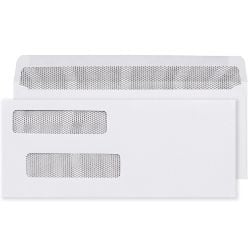
A standard #10 envelope with a single window handles the recipient's address. A double window check envelope handles both. The upper window shows your return address from the check or voucher. The lower window shows the payee's address. No labels, no writing, no printing on the envelope face. Load the check with the address fields aligned to the windows, fold the tab up, press the flap down, sealed. This is the format that businesses running weekly or biweekly payroll and accounts payable programs standardize on because it eliminates two manual steps from every envelope in every run. This version uses a flip-and-stick self-seal closure with a security tinted interior. Compatible with QuickBooks, Quicken, Sage, and standard business check formats. Available from Business Envelopes with free shipping and no minimums.
Every check that goes out in a standard window envelope still requires an addressed outer envelope unless the check is formatted to show the payee's address through the window. Double window check envelopes eliminate that by using both address fields already printed on the check or check stub. The payroll check carries the employee's name and address. The accounts payable check carries the vendor's address. Both are already on the document. The double window puts them both in view without any additional work on the mailing side.
For businesses writing 20 to 200 checks per pay cycle, that elimination of the separate addressing step saves meaningful time per run. For organizations using QuickBooks or another standard accounting platform, the check templates are already formatted to align with the left double window position. The left-side window placement is the industry standard, which is why "left double window check envelopes" is a specific search that lands on this format. Both windows are on the left side of the envelope face, matching the standard left-column address layout on business checks.
Both are self-seal closures that require no moisture. The difference is the mechanism. Peel-and-seal has a protective liner you pull off before pressing the flap. Flip-and-stick has no liner. A small tab on the flap folds up to expose the adhesive, then the flap presses down. One step, nothing to remove, nothing to discard. For payroll runs or check batches where you're sealing 50 or 100 envelopes in sequence, the flip-and-stick format is marginally faster per piece and cleaner at the sealing station. The bond strength is the same as peel-and-seal. Both seal permanently on contact pressure.
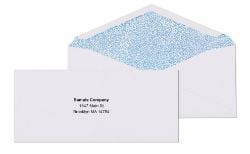
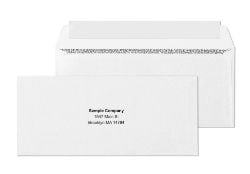
For the same double window check format with a peel-and-seal closure, see the Double Window Check Envelopes Peel and Seal. For the gum flap version, see the Double Window Check Envelopes Gum Flap. For invoices and statements rather than checks, see the Double Window for Invoices and Statements Self Sealing. Browse the full double window envelope range for all configurations. Ships same or next business day.
Does the job, no problems so far. I’d get these again
Great fit. Strong seal. No fuss.
Durable, secure, and easy to use—these Flip & Stick double window envelopes are perfect for mailing checks efficiently.