shipping icon business envelopes Free shipping

FREE Ground Shipping site-wide. No minimums. Excludes PR, HI, AK, AS, VI, WA.


* More info

Envelope Blogs

    10x13 Envelopes: When to Size Up from 9x12, What Fits, and Clasp vs Tyvek

    The 9x12 is the standard for flat-document mailing in the United States. It holds an 8.5 x 11 sheet flat with clearance on all sides, mails at USPS flat rate, and covers the majority of flat-document programs. But there are specific situations where a 9x12 is the wrong choice: when the document stack is too thick for the 9x12 to seal cleanly, when legal-size 8.5 x 14 documents need to mail flat, when a multi-component packet includes a cover sheet plus attachments that together push against the 9x12 walls, or when interoffice routing needs a more durable envelope that opens and reseals reliably over multiple handling cycles.

    That is where the 10x13 earns its place. This guide covers the 10x13 completely: exact dimensions and what fits, the specific situations where it outperforms the 9x12, the two formats we carry (clasp and Tyvek) and how to choose between them, USPS postage classification, and the size decisions that follow from the 10x13 when even larger is needed.

    10x13 Envelope Dimensions: Exact Specs

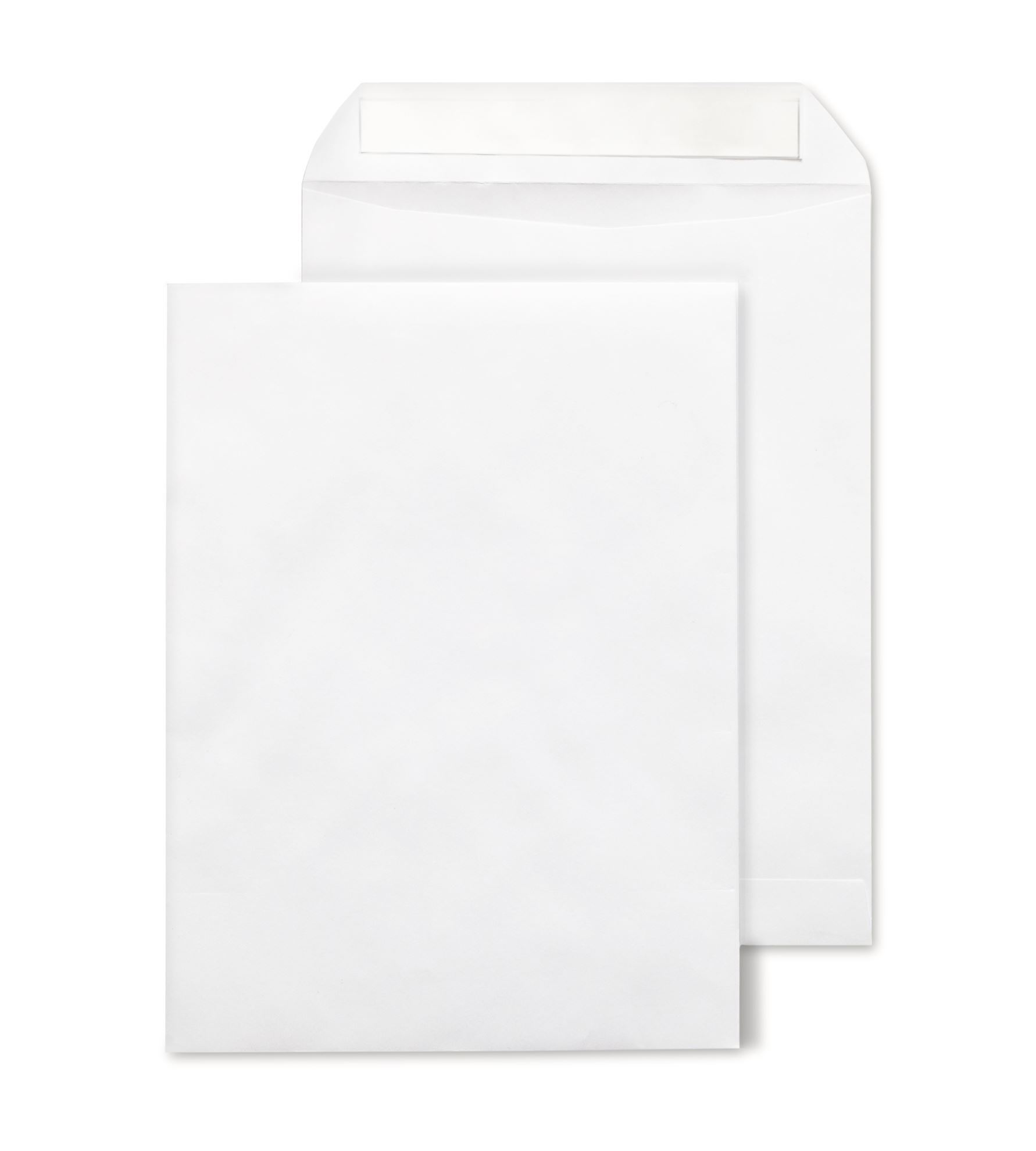
    A 10x13 envelope measures 10 x 13 inches. Maximum enclosure size is approximately 9-3/4 x 12-3/4 inches. This provides approximately 1/4-inch clearance on all four sides of a standard 8.5 x 11 sheet mailed flat, and is large enough to hold a legal-size 8.5 x 14 sheet flat with approximately 1/4-inch clearance in height and 1-1/2-inch clearance in width.

    USPS classification: the 10x13 always mails as a flat (large envelope). At 13 inches tall, it exceeds the letter-rate maximum height of 6-1/8 inches. First-Class flat rate starts at $1.63 for the first ounce in 2026, with $0.20 per additional ounce. Maximum First-Class flat weight is 13 ounces. For comparison, a 9x12 envelope also always mails as a flat at the same starting rate. The 10x13 does not cost more in postage than a 9x12 on the same weight contents both are classified as flats from the first ounce.

    Spec 9x12 Envelope 10x13 Envelope
    Dimensions 9 x 12 inches 10 x 13 inches
    Max enclosure 8-3/4 x 11-3/4" 9-3/4 x 12-3/4"
    Holds 8.5x11 flat Yes, 1/4" clearance each side Yes, 3/4" clearance each side
    Holds 8.5x14 flat No, 14" exceeds 11-3/4" max Yes, with 1/4" clearance in height
    USPS class Always flat, $1.63 starting Always flat, $1.63 starting
    Thick packet capacity Moderate Higher 1" additional clearance each dimension

    When to Use 10x13 Instead of 9x12

    Mailing legal-size documents flat

    Legal paper (8.5 x 14 inches) is 2 inches taller than the maximum enclosure height of a 9x12 (approximately 11-3/4 inches). A legal sheet in a 9x12 either does not fit at all or must be inserted at an angle with the edges compressed against the seams, causing seam damage and delivering a wrinkled, bent document. The 10x13 interior at 9-3/4 x 12-3/4 inches holds a legal sheet flat with approximately 1/4-inch clearance in height the correct format for any program mailing 8.5 x 14 documents without folding. Law firms mailing executed contracts, real estate offices sending disclosure packages, and government agencies distributing legal-format forms use the 10x13 specifically for this reason.

    Thick multi-page packets that push against 9x12 walls

    A single 8.5 x 11 sheet in a 9x12 fits with comfortable clearance. A six-page report with a cover sheet and appendix begins creating the seam-stress conditions that lead to torn corners and distorted envelope faces on arrival. A 10-page packet in a 9x12 requires forcing the flap shut. The 10x13 provides approximately one inch of additional clearance in both dimensions enough that moderately thick document packets insert without compression, seal without seam stress, and arrive in the same condition they left.

    Catalogs, brochures, and large-format marketing materials

    Full-color printed materials with wide borders and bleeds look significantly better arriving flat and uncreased in a 10x13 than compressed with corner damage in a too-small 9x12. For catalog mailings, real estate marketing packets, insurance disclosure kits, and any program where presentation quality on arrival matters, the extra clearance the 10x13 provides is worth the marginal additional cost per piece.

    Interoffice routing that cycles through multiple departments

    The clasp format (metal clasp plus gum flap) opens and reseals reliably over multiple handling cycles without adhesive failure. For HR packets, legal review packages, and any document set that routes through three or more departments before final filing, the 10x13 clasp handles the additional clearance needed for growing document stacks between routing stops. A 9x12 clasp at full capacity seals increasingly tightly as pages are added, eventually failing to close cleanly.

    Two 10x13 Formats: Clasp vs Tyvek

    10x13 Brown Kraft Clasp the interoffice and document routing standard

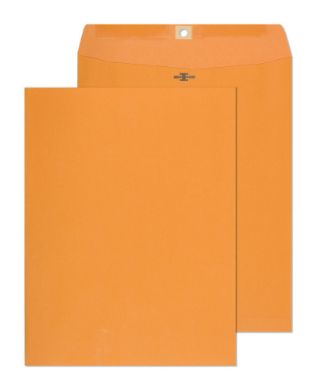
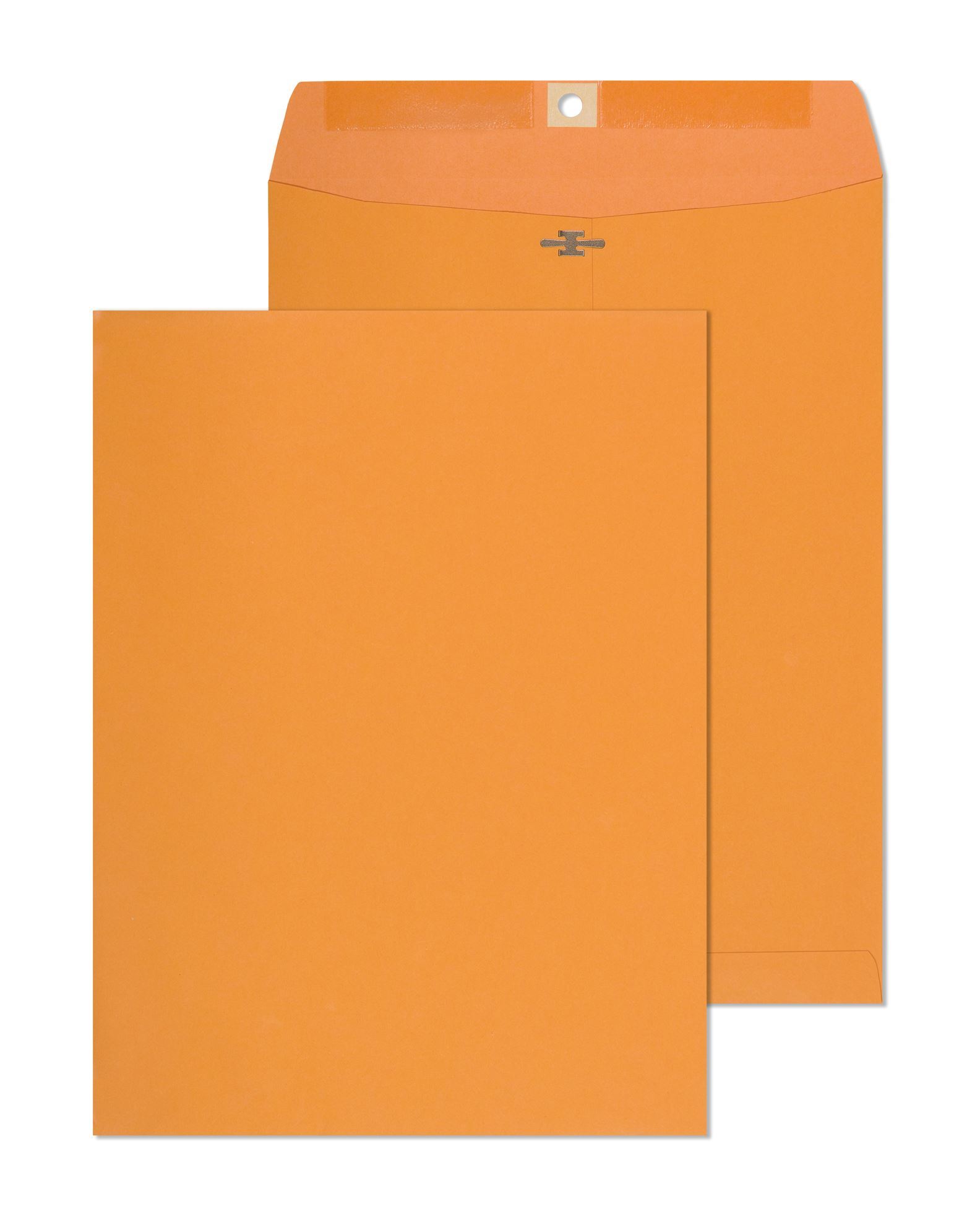
    28 lb brown kraft construction with a metal clasp through a punched reinforced eyelet, plus a moistenable gum flap as secondary closure. The metal clasp opens by bending the two metal prongs back and reseals by folding them over the flap. This open-reseal cycle degrades very slowly a well-made clasp envelope handles 20 or more open-close cycles before the eyelet shows fatigue.

    The clasp is why this format is the standard for interoffice document routing. A law firm sending a multi-exhibit package through four reviewers before final filing uses a clasp envelope specifically because it reseals after each review stop without tape, additional labels, or a new envelope. The brown kraft stock is durable 28 lb (104 GSM) kraft is significantly more resistant to tearing and corner damage than standard 24 lb white wove. Browse all clasp sizes at clasp envelopes.

    The clasp format is for mailing and internal routing, not for programs where the document must arrive in pristine visual condition regardless of handling. Kraft shows handling marks and minor scuffs over time, and the gum flap leaves a slight impression on the envelope body when sealed firmly over thick contents.

    10x13 Tyvek Peel-and-Seal the non-negotiable arrival condition standard

    DuPont Tyvek is not paper. It is high-density polyethylene fiber the same material USPS uses for its own Priority Mail packaging. Tyvek does not tear, does not absorb moisture, does not wrinkle at the seams under compression, and does not develop corner weakness during postal sorting. At approximately 14 lb (roughly half the weight of 28 lb kraft), Tyvek also costs less in postage per piece at any volume where weights approach flat-rate brackets.

    Tyvek is the right choice when the document must arrive in the same condition it left, regardless of what happened to it in transit: legal contracts that must be executed with clean signatures, medical records for clinical review, architectural drawings that cannot show handling marks, tax filings with supporting schedules, and any program where damaged arrival has a real operational consequence beyond inconvenience. The Kwik-Tak peel-and-seal closure on our 10x13 Tyvek seals permanently on contact with no moisture required. Browse all Tyvek sizes at Tyvek envelopes.

    Tyvek cannot be run through a laser printer or copier. Do not attempt to print addresses or content directly on Tyvek in any desktop printer. Use adhesive address labels for addressing, or use a label printer compatible with polyethylene film materials.

    Choosing Between Clasp and Tyvek at 10x13

    Need Choose Why
    Document must arrive pristine regardless of handling Tyvek Tear-proof, moisture-proof, no seam weakness
    Envelope will be opened and resealed multiple times Clasp Metal clasp opens and reseals without adhesive failure
    Heavy document packet over 1/4 inch thick Tyvek or Clasp Both handle thick contents; Tyvek lighter per piece
    Interoffice routing with multiple stops Clasp Reseal cycle; Tyvek peel-and-seal is one-time only
    Outbound mail, single-use, arrival condition critical Tyvek Weather resistance, transit durability, no seam failure
    Budget-sensitive programs at high volume Clasp Lower per-unit cost; still far more durable than white wove
    Legal documents requiring chain-of-custody integrity Tyvek One-time peel-and-seal closure is tamper-evident; Tyvek does not degrade

    What Fits in a 10x13 Envelope: Practical Examples

    Letter-size flat (8.5 x 11 inches): fits with approximately 3/4-inch clearance each side. No folding required. Up to approximately 50 sheets of 20 lb paper.

    Legal-size flat (8.5 x 14 inches): fits with approximately 1/4-inch height clearance and 1-1/2-inch width clearance. No folding. The correct format for legal-size correspondence mailed flat.

    Multi-page report with cover sheet plus 15 exhibits: a typical audit package or legal filing that a 9x12 cannot close cleanly. Fits in 10x13 with working room for assembly and sealing.

    Catalog with 32 glossy pages: a standard saddle-stitched 8.5 x 11 catalog that would compress and corner-damage in a 9x12 fits the 10x13 with clearance.

    Architectural ARCH B drawing (12 x 18 inches): does not fit in a 10x13 (max enclosure 9-3/4 x 12-3/4 inches). For ARCH B and larger architectural drawings, use a 10x15 or custom oversized format. See clasp envelopes for 10x15 options.

    When to Step Up Further: 10x13 vs 9.5x12.5 vs 10x15

    The 9.5x12.5 envelope (9-1/2 x 12-1/2 inches) sits between the 9x12 and 10x13. It is often the right choice when a 9x12 is marginally too small for a packet but a full 10x13 provides more room than needed. For programs with document sets slightly larger than a 9x12 can handle but smaller than legal-size, the 9.5x12.5 reduces per-unit cost versus the 10x13.

    The 10x15 (10 x 15 inches) is the maximum standard size in the Business Envelopes catalog. For legal-size documents at 8.5 x 14 inches, the 10x13 provides 1/4-inch height clearance enough for a single legal sheet but tight for a legal-size packet with multiple exhibits. Use 10x15 when the 10x13 is marginally insufficient for legal-size multi-page packets or when oversized marketing materials exceed 12-3/4 inches in height. Browse 9x12 envelopes and all large formats at our catalog.

    Why Choose Business Envelopes for 10x13 Envelopes

    Business Envelopes carries the 10x13 in both formats that matter: 28 lb brown kraft clasp with metal clasp and gum flap for interoffice routing and document programs where resealing is required, and DuPont Tyvek peel-and-seal for outbound mail where arrival condition is non-negotiable. Both formats are in stock. No minimums. Free ground shipping on every order. Same or next business day on blank stock. For all large flat-mail formats from 6x9 through 10x15, browse the full range at clasp envelopes and Tyvek envelopes.

    Frequently Asked Questions

    What are the dimensions of a 10x13 envelope?

    A 10x13 envelope measures 10 x 13 inches, with a maximum enclosure size of approximately 9-3/4 x 12-3/4 inches. It holds a standard 8.5 x 11 sheet flat with about 3/4-inch clearance on each side, and holds a legal-size 8.5 x 14 sheet flat with approximately 1/4-inch height clearance.

    What is the postage for a 10x13 envelope?

    A 10x13 always mails as a USPS flat (large envelope) because it exceeds letter-rate maximum dimensions. First-Class flat postage starts at $1.63 for the first ounce in 2026, with $0.20 per additional ounce. A 9x12 and 10x13 cost the same in postage on identical weight contents both are classified as flats from the first ounce.

    Does a 10x13 hold legal-size paper?

    Yes. Legal paper measures 8.5 x 14 inches. The 10x13 interior at approximately 9-3/4 x 12-3/4 inches holds a legal sheet flat with about 1/4-inch height clearance and 1-1/2-inch width clearance. A 9x12 cannot hold legal paper flat the 14-inch height exceeds the 9x12 maximum enclosure height of approximately 11-3/4 inches.

    What is the difference between 10x13 clasp and Tyvek envelopes?

    The 10x13 clasp is 28 lb brown kraft with a metal clasp and gum flap it opens and reseals reliably for interoffice routing, document review cycles, and programs requiring multiple access. The 10x13 Tyvek is DuPont polyethylene fiber tear-proof, moisture-proof, lighter weight, and sealed permanently with peel-and-seal. Tyvek is for outbound mail where the document must arrive pristine; clasp is for programs requiring repeated opening and resealing.

    When should I use 10x13 instead of 9x12?

    Use 10x13 when: your document is legal-size (8.5 x 14 inches) and must mail flat; your packet is too thick for a 9x12 to seal cleanly; you are mailing catalogs or thick brochures where corner damage in a 9x12 is a quality problem; or you route documents through multiple departments and need an envelope that provides working clearance as pages accumulate.

    Can I print on a 10x13 Tyvek envelope?

    Tyvek cannot be run through any laser or inkjet desktop printer the material softens and deforms at laser fuser temperatures and does not accept inkjet ink consistently. Use adhesive address labels for addressing Tyvek envelopes. For custom printing with your organization name and return address, contact a commercial printer with equipment rated for polyethylene film materials.

    How many sheets of paper fit in a 10x13 envelope?

    Approximately 50 sheets of standard 20 lb (75 GSM) paper, or approximately 35 sheets of 24 lb (90 GSM) paper, lying flat without compression. For thicker document sets, ensure the total stack thickness does not exceed approximately 1/2 inch to allow clean sealing. Beyond this, consider the 10x15 or a gusseted expansion envelope.


    6x9 Envelope Postage: Letter Rate, Flat Rate, and How to Pay the Right Amount

    HomeEnvelope Guides6x9 Envelope Postage

    6x9 Envelope Postage: Letter Rate, Flat Rate, and How to Pay the Right Amount

    How much postage for a 6x9 envelope depends on one thing USPS cares about more than the size printed on the box: whether the sealed piece is thin enough to qualify as a letter. Most people assume a 6x9 is automatically a large envelope requiring extra postage. It usually is not. A flat, flexible 6x9 envelope qualifies for First-Class letter rate at $0.82 with one Forever stamp. It only jumps to the $1.63 flat rate when contents make it too thick, too heavy, or too rigid for automated postal sorting.
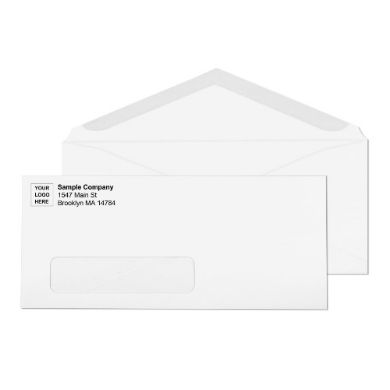
    Understanding 6x9 envelope postage before mailing saves real money on single pieces and significant money on volume mailings. This guide covers every factor that determines the right rate , the exact 2026 USPS rates for every weight, the hidden surcharge most buyers miss on clasp envelopes, and the practical rules for keeping a 6x9 mailing at letter rate.

    All rates on this page reflect the USPS price increase effective July 12, 2026. Business Envelopes has supplied 6x9 envelopes to US businesses since 1997 and carries the complete range of booklet, open-end, kraft, Tyvek, and clasp formats.


    #11 window envelopes with logo option business envelopes


    Why a 6x9 Envelope Can Mail as Either a Letter or a Flat

    USPS classifies mail by physical characteristics of the sealed piece, not by what the envelope size is called on the box. The letter-rate size limits are: maximum 6-1/8 inches tall, 11-1/2 inches long, 1/4 inch thick, and 3.5 ounces in weight. A 6x9 envelope at exactly 6 inches tall fits comfortably within all four of those limits by dimension alone.

    The problem comes from the contents. When a 6x9 envelope holds a thick brochure, multiple folded documents, a bound booklet, or anything rigid, the sealed piece exceeds the 1/4-inch thickness limit or becomes too stiff to bend through automated sorting equipment. At that point, USPS reclassifies it as a flat regardless of the envelope's printed dimensions. The envelope did not change. The contents pushed it into a different rate class.

    This is why two identical 6x9 envelopes can cost completely different amounts to mail. One holds a single half-folded document and mails as a $0.82 letter. The other holds a multi-page brochure and mails as a $1.63 flat. The envelope is the same. The postage is not.


    The Four Rules That Determine Your 6x9 Envelope Postage Rate

    USPS applies four tests to determine whether a sealed 6x9 piece mails at letter rate or flat rate. All four must pass for letter rate to apply.


    Rule 1: Thickness , the most common reason 6x9 envelopes pay flat rate

    The sealed piece must be 1/4 inch thick or less for letter rate. This is the test that most 6x9 pieces fail. A single half-folded sheet of 20 lb paper is approximately 0.008 inches thick , well under the limit. Four such sheets are approximately 0.032 inches , still under. A folded brochure on 80 lb coated stock, a program booklet, or three sheets plus an enclosure card can push past 1/4 inch easily. If you are unsure whether your assembled piece qualifies, measure the thickest point with a ruler before buying postage.


    Rule 2: Weight , maximum 3.5 ounces for letter rate

    A 6x9 envelope holding one to four standard sheets of paper typically weighs under one ounce. Weight becomes a concern when the mailing includes multiple sheets on heavier paper, multiple enclosures, or folded inserts. Standard 8.5 x 11 copy paper weighs approximately 0.16 ounces per sheet. Four sheets plus a standard 6x9 envelope weigh approximately 0.7 ounces combined , one Forever stamp covers it. Beyond about 20 sheets, weight alone can exceed 3.5 ounces.


    Rule 3: Flexibility , the piece must bend

    Letter-rate mail must pass through automated postal sorting equipment that bends and flexes pieces as they move through the system. A sealed 6x9 envelope that is rigid and cannot flex is classified as non-machinable and either assessed a $0.49 non-machinable surcharge (if it still meets size limits) or reclassified as a flat. Contents that cause rigidity include thick cardstock, CD cases, photo prints on glossy backing, plastic cards, and any non-flexible enclosure.


    Rule 4: Shape , must be rectangular with no protrusions

    Square envelopes trigger the non-machinable surcharge automatically. The 6x9 envelope is rectangular and avoids this. However, anything that creates a protrusion, lump, or uneven thickness across the face of the sealed piece also triggers the surcharge. Coins, irregular objects, and thick clustered enclosures all cause this.


    6x9 Envelope Postage by Weight: Complete 2026 USPS Rate Table

    Weight Letter Rate (thin and flexible) Flat Rate (thick or rigid) Stamps at Letter Rate
    1 oz (up to 28g) $0.82 $1.63 1 Forever stamp
    2 oz (up to 57g) $1.11 $1.90 1 Forever + 1 additional ounce stamp
    3 oz (up to 85g) $1.40 $2.17 2 Forever stamps
    3.5 oz (up to 99g) $1.55 $2.31 2 Forever stamps
    4 oz (up to 113g) Not eligible $2.44 Flat rate only , 3 Forever stamps or metered
    5 oz Not eligible $2.71 Flat rate only

    Source: USPS Notice 123, effective July 12, 2026. Rates shown are retail (post office counter). Metered postage is $0.05 less per ounce at letter rate ($0.77 first ounce). Additional ounce rate at letter: $0.29. Additional ounce rate at flat: $0.27.


    The Non-Machinable Surcharge on 6x9 Envelopes: What Most Buyers Miss

    Beyond the letter-rate vs flat-rate question, one specific 6x9 envelope format triggers a separate $0.49 non-machinable surcharge: the clasp envelope with an exposed metal clasp.


    Why clasp envelopes cost more to mail

    A 6x9 clasp envelope uses a metal butterfly clasp on the flap to allow repeated opening and resealing. When the clasp is on the exterior of the sealed piece, USPS automated sorting equipment cannot process it safely. The metal clasp creates a protrusion that jams sorting mechanisms. USPS assesses the non-machinable surcharge of $0.49 per piece when the clasp is present on the exterior.

    This surcharge applies even if the piece is thin, flexible, and otherwise qualifies for letter rate. A 6x9 clasp envelope with a single sheet inside would be $0.82 plus $0.49 equals $1.31 in postage. That is more expensive than a flat-rate letter at $1.63? No , but it is significantly more than the $0.82 you would pay for a peel-and-seal 6x9 with the same content.

    The practical solution is to use a 6x9 peel-and-seal envelope for postal mailing programs. The clasp envelope format is best used for internal routing, document filing, and interoffice programs where it does not enter the postal mail stream. See all self-seal options at self seal envelopes.


    #10 white tinted self sealing envelopes from business envelopes


    Which 6x9 Envelope Format Costs the Least to Mail?

    Not all 6x9 envelopes have the same postage implications. The format you choose directly affects your 6x9 envelope postage , whether you pay the base rate or trigger a surcharge.

    6x9 Format Best For Postage (1 oz, light contents) Surcharge Risk
    6x9 white booklet, peel-and-seal General mailing, statements, photos $0.82 None
    6x9 open-end, peel-and-seal Catalog-style loading, document mailing $0.82 None
    6x9 kraft booklet, peel-and-seal Eco-friendly programs, premium mailing $0.82 None
    6x9 starburst colored Marketing mail, event invitations $0.82 None if flexible
    6x9 Tyvek, peel-and-seal Durable document mailing $0.82 (Tyvek is lightweight) None
    6x9 clasp envelope Internal routing, interoffice, filing $1.31 (base $0.82 + $0.49 surcharge) Always non-machinable with exposed clasp

    For any mailing program, a peel-and-seal 6x9 is the lowest-postage option. It qualifies for letter rate with light contents and carries no non-machinable surcharge. Tyvek has an additional advantage for volume mailings. At approximately 14 lb per ream, it weighs roughly half what standard 24 lb paper stock weighs. This helps keep piece weight under the one-ounce threshold when mailing documents near the boundary. See all Tyvek options at Tyvek envelopes.


    6x9 tyvek envelopes from business envelopes


    Letter Rate vs Flat Rate: The Postage Savings on Volume Mailings

    On a single piece, the difference between letter rate and flat rate is $0.81 (from $0.82 to $1.63). That is meaningful but not dramatic. Over volume, it compounds quickly.

    Monthly Volume Letter Rate Total ($0.82) Flat Rate Total ($1.63) Monthly Savings at Letter Rate Annual Savings
    100 pieces $82 $163 $81 $972
    250 pieces $205 $407.50 $202.50 $2,430
    500 pieces $410 $815 $405 $4,860
    1,000 pieces $820 $1,630 $810 $9,720

    For organizations mailing 6x9 envelopes at monthly volume, the decision to keep contents thin enough for letter rate is an operational choice worth making deliberately. If your document needs to arrive flat and cannot be half-folded, a 6x9 is not the right envelope , use a 9x12 and budget for flat-rate postage. But if your document can be half-folded to 5.5 x 8.5 inches and is fewer than four pages, a 6x9 at letter rate is the most cost-efficient choice for a document mailing.

    For the complete 6x9 envelope range including all formats and closure types, see 6x9 envelopes. For the full size reference across all formats, see all sizes envelopes.


    Practical Tips for Reducing Your 6x9 Envelope Postage Cost

    Test Your 6x9 Envelope Postage Before a Large Run

    Assemble one complete piece exactly as it will go out: insert all documents, fold the flap, and seal. Then test two things. First, measure the thickness at the thickest point. If it exceeds 1/4 inch, you are paying flat rate. Second, try to bend the piece gently. If it is rigid, you are paying flat rate or the non-machinable surcharge. Bring a sealed sample to a Post Office counter and ask for a postage check before committing the full run.


    Use lighter paper for enclosures

    Switching from 24 lb copy paper to 20 lb copy paper for enclosures reduces both thickness and weight per sheet. For programs where the document can tolerate lighter stock, this keeps more sheets within letter-rate thresholds.


    Print double-sided to reduce page count

    A four-page letter printed double-sided on two sheets is half the thickness and half the weight of the same content on four single-sided sheets. For letter programs near the thickness limit, double-sided printing is the fastest way to reduce piece count without reducing content.


    Choose peel-and-seal over clasp for mail programs

    Reserve clasp envelopes for internal routing and document storage. For anything entering the postal system, a peel-and-seal closure eliminates the $0.49 non-machinable surcharge that clasp formats trigger. See the full guide to envelope types at booklet envelope guide.


    Use metered postage for high-volume mailings

    Metered postage costs $0.77 per ounce at letter rate in 2026, versus $0.82 for a retail stamp. For 500 pieces per month, metered postage saves $25 per month compared to buying Forever stamps at the counter. Approved platforms include USPS Click-N-Ship, Stamps.com, Pitney Bowes, and others. For a complete guide to postage options, see the postage stamps buying guide.


    Know the difference between booklet and open-end for loading speed

    A 6x9 booklet envelope opens on the long 9-inch edge, making it easy to load half-folded documents from the wide side. A 6x9 open-end envelope opens on the short 6-inch edge, similar to how a standard letter envelope loads. For hand-loading at volume, most offices find the booklet format faster. Neither format affects postage classification , both are treated identically by USPS. See the complete 6x9 product range at regular envelopes.


    6x9 Envelope Postage Summary: What You Need to Know Before Mailing

    The answer on 6x9 envelope postage is $0.82 at First-Class letter rate with one Forever stamp if the sealed piece is thin, flexible, and under 3.5 ounces. It jumps to $1.63 at flat rate if the piece is over 1/4 inch thick, rigid, or over 3.5 ounces. A 6x9 clasp envelope with an exposed metal clasp adds a $0.49 non-machinable surcharge on top of the base letter rate.

    For most standard document mailings in a 6x9 peel-and-seal envelope, one Forever stamp at $0.82 is the correct postage. Test a sealed sample before committing any volume mailing to a postage rate. When in doubt, bring the assembled piece to a Post Office counter and ask for a classification check before buying postage in bulk.


    Brown Kraft Envelopes: All Sizes, 28lb Construction and When Kraft Is the Right Choice

    Brown kraft envelopes exist because standard white wove envelopes fail under certain conditions. Aggressive postal handling tears corners on thin white stock. Thick document packets push through white wove seams. Interoffice routing cycles put repeated handling stress on envelopes designed for single-use mailing. The brown kraft construction addresses all three failure modes through heavier paper weight, different fiber composition, and in the clasp format a metal closure that handles dozens of open-reseal cycles without adhesive failure.

    This guide covers all the brown kraft envelope formats in our catalog: what 28 lb kraft actually means compared to 24 lb white wove, every size from #11 to 10x15, the clasp format and why it exists, coin envelopes in brown kraft, when kraft is the operationally correct choice, when white is still better, and the one printing consideration that trips up kraft first-timers.


    What 28 lb Brown Kraft Actually Means

    The "28 lb" specification on brown kraft envelopes refers to the bond basis weight: 500 sheets of the base paper at 17 x 22 inches weigh 28 pounds. In GSM terms, 28 lb bond is approximately 104 GSM. Standard office copier paper is typically 20 lb bond (75 GSM). Standard white business envelope stock is typically 24 lb bond (90 GSM). Our brown kraft envelopes are 28 lb (104 GSM), which is approximately 15% heavier per unit area than standard business envelope stock and approximately 38% heavier than copier paper.

    The practical consequence of 28 lb vs 24 lb construction: more resistance to tearing at corners and seams during postal handling, greater rigidity that helps thick document packets resist the compression that distorts thinner envelopes, and more structural integrity at the metal clasp eyelet where repeated open-reseal cycles put concentrated stress on the paper around the clasp attachment point. For white envelopes, the 28 lb weight is a premium upgrade. For brown kraft envelopes in our catalog, 28 lb is the standard specification it is the correct weight for the document routing and mailing purposes that kraft serves.

    Every Brown Kraft Envelope Format We Carry

    #11 Brown Kraft, Gummed Flap

    4-1/2 x 10-3/8 inches. The #11 in brown kraft is the correct format when you need the extra clearance a #11 provides over a #10 (for thick letter packets, check-plus-letter combinations, or multi-enclosure programs) but want the durability of 28 lb kraft rather than 24 lb white wove. Legal offices and accounting firms that regularly send payment-with-letter packages keep #11 brown kraft as a standard stock item. The gummed flap is compatible with mailing machine inserters. Mails at USPS First-Class letter rate. See all #11 formats at window envelopes.

    6x9 Brown Kraft Clasp, Gummed Flap

    6 x 9 inches. The most postage-efficient clasp format. At exactly 6 inches tall, it clears the USPS letter-rate maximum height of 6-1/8 inches light contents qualify for First-Class letter postage ($0.78) rather than flat rate ($1.63). Holds an 8.5 x 11 sheet folded once horizontally, 5 x 7 photos flat, small booklets, folded brochures, and multi-card document packets. For programs where per-piece postage cost matters at volume, this is the clasp format that keeps postage at letter rate rather than flat rate.

    9x12 Brown Kraft Clasp, Gummed Flap

    9 x 12 inches. The standard for flat-document mailing in brown kraft. Holds a standard 8.5 x 11 sheet flat with clearance on all sides. Contracts, certificates, real estate disclosures, financial reports, and any correspondence important enough to arrive unfolded. USPS flat rate. The dual closure (metal clasp plus gum flap) allows both secure initial mailing and repeated resealing without a new envelope.

    9.5x12.5 Brown Kraft Clasp, Gummed Flap

    9-1/2 x 12-1/2 inches. The bridge size between 9x12 and 10x13. Provides additional clearance for letter-size packets that push against the 9x12 walls without the full step to 10x13. For programs where the 9x12 is marginally insufficient but the 10x13 provides more room than needed. Also appropriate when the document set includes a 9x12 rigid backer (a stiff insert to keep contents flat) that barely fits in the 9x12 interior.

    10x13 Brown Kraft Clasp, Gummed Flap

    10 x 13 inches. Holds legal-size 8.5 x 14 documents flat, accommodates thick multi-page packets, and provides the most practical clearance for multi-component packages including cover sheets, exhibits, and attachments. Law firms, real estate agencies, and accounting practices use 10x13 clasp as their primary routing format for substantial document sets. See full details at clasp envelopes.

    10x15 Brown Kraft Clasp, Gummed Flap

    10 x 15 inches. Maximum standard size in the brown kraft range. For legal-size multi-page packets that exceed the 10x13 capacity, oversized marketing materials, large-format architectural drawings, and any program requiring the largest standard document mailer before custom packaging. At 15 inches tall, it handles 8.5 x 14 legal documents with substantial clearance and accommodates thick legal filings without seam stress.

    #1 Brown Kraft Coin, Gummed Flap

    2-1/4 x 3-1/2 inches. Small coin storage and presentation envelope. Used for individual coins, watch parts, small gems, seeds, tiny hardware fasteners, and any small item requiring individual packaging. Brown kraft at this size provides a more durable and opaque storage container than white coin envelopes for items that will be filed, stored in drawers, or handled repeatedly. Not mailable as a standalone piece (below USPS minimum size of 3.5 x 5 inches). See all coin formats at coin envelopes.

    The Clasp Mechanism: What It Does That Gum Flap Alone Cannot

    The metal clasp is the defining feature of the clasp envelope format. It is a two-pronged metal fastener inserted through a reinforced punched eyelet in the envelope flap. To open: bend the prongs back. To close: fold the prongs forward over the flap. The closure is secure enough to survive postal handling without additional tape, and it reseals reliably through 20 or more open-close cycles before the metal shows fatigue at the bend.

    The gum flap is the secondary closure used for outbound mailing. When sending via USPS, moisten the gum flap and seal it over the clasp. This provides a sealed, tamper-evident appearance for the postal journey. The recipient breaks the gum seal to access the clasp, then can use the clasp alone for subsequent routing and filing.

    No envelope with only a gum flap can be opened and resealed reliably. Once the gum bond is broken, the flap either loses adhesive or must be taped closed. The clasp is specifically what makes the format practical for document packets that cycle through multiple hands before final filing a use case that standard gum-only envelopes cannot serve without replacement at each station.

    When to Choose Brown Kraft Over White

    Situation Brown Kraft White Wove
    Document routing multiple department stops Yes clasp reseals; 28 lb handles handling cycles Not ideal gum seal is single-use
    Thick document packets (5+ pages) Yes 28 lb resists seam distortion Adequate for lighter loads; shows stress on heavy
    Legal documents mailed flat Yes 10x13 clasp is the professional standard Adequate in 9x12 for single sheets, not for thick filings
    Standard single-sheet business correspondence No more expensive and darker background Yes #10 white wove is the correct and economical choice
    Financial statements and invoices No white security tint is the professional standard Yes with security tinting
    Direct mail and donation appeals No colored or starburst envelopes perform better Colored or starburst, not standard white
    Interoffice mail and internal routing Yes standard in most US organizations Acceptable but less durable
    Storage and filing use (not mailing) Yes 28 lb kraft is durable for file storage Adequate but lighter weight

    Printing on Brown Kraft: What Works and What Fails

    Brown kraft creates printing challenges that white envelopes do not. The natural dark brown color of the paper absorbs and alters ink colors. Standard process color (CMYK) printing on brown kraft produces muted, darker results than the same design on white paper because brown subtracts from every color channel. A bright red logo on white becomes a brownish-red on kraft. Yellow disappears almost entirely on natural brown kraft.

    What works on brown kraft: single-color black printing (highest contrast, cleanest result), dark single-color printing (navy, dark green, dark red), metallic inks (gold, silver, copper the contrast against the kraft background creates a premium appearance). What does not work: full-color photography, bright or light colors, pastels, yellow, white. For return address and organization name printing on our brown kraft envelopes, black one-color printing produces a clean, professional result. For premium branding with high visual impact, black with a single metallic spot color is the standard for kraft-envelope custom printing programs.

    Custom printing with return address and organization name is available on all brown kraft formats through custom printed envelopes.

    Why Choose Business Envelopes for Brown Kraft Envelopes

    Business Envelopes carries the complete brown kraft range: #1 coin, #11 commercial, and the full clasp series from 6x9 through 10x15. All at 28 lb (104 GSM) brown kraft the correct weight for document routing and flat-mail programs, not the lighter 24 lb substitution common from general supply retailers. Metal clasp with reinforced punched eyelet on all clasp formats. Dual metal prongs rated for repeated open-reseal cycles.

    No minimums. Free ground shipping on every order. Same or next business day on blank stock. Custom printing in black and single metallic colors available on all brown kraft formats. Browse all clasp sizes at clasp envelopes and the full catalog including all Tyvek envelopes, 9x12 envelopes, and coin envelopes at all items.

    Frequently Asked Questions

    What is 28 lb brown kraft?

    28 lb refers to the bond basis weight: 500 sheets at 17 x 22 inches weigh 28 pounds, equivalent to approximately 104 GSM. Standard business white envelope stock is typically 24 lb (90 GSM). Our brown kraft envelopes at 28 lb are approximately 15% heavier per unit area than standard business envelope stock, providing better tear resistance at corners and seams and greater structural integrity around the clasp eyelet.

    What is a clasp envelope and why does it have a metal clasp?

    A clasp envelope has a two-pronged metal fastener through a reinforced eyelet in the flap. The clasp opens by bending the prongs back and reseals by folding them forward. Unlike a gum flap (which is single-use), the clasp handles 20 or more open-reseal cycles before showing fatigue. The clasp exists specifically for document packets that route through multiple departments or reviewers before final filing a use case that gum-only envelopes cannot serve.

    Can I use brown kraft envelopes for regular business mail?

    Brown kraft is functional for business mail but is typically not the default for standard correspondence. For invoices, statements, and professional business letters, white envelopes (especially security tinted for sensitive content) are the professional standard. Brown kraft performs better than white for document routing, flat-document mailing, and thick packets but not for single-sheet correspondence where white is both cheaper and more conventionally appropriate.

    Does brown kraft cost more to mail than white?

    No. USPS postage is determined by size (letter vs flat) and weight, not by envelope color or material. A 10x13 brown kraft clasp costs the same in postage as a 10x13 white envelope on identical weight contents. The weight difference between 24 lb white and 28 lb kraft adds a small amount to the total piece weight, which is relevant only when contents are near a postage bracket threshold.

    Can I print on brown kraft envelopes?

    Yes, with important limitations. Brown kraft absorbs and darkens standard CMYK ink. Black single-color printing produces the cleanest result. Metallic inks (gold, silver, copper) create high contrast and a premium appearance against the natural brown. Avoid bright colors, pastels, yellow, and full-color photography they produce muddy or near-invisible results on dark kraft. Return address and logo printing in black is the practical standard for kraft custom printing.

    What sizes do brown kraft envelopes come in?

    Business Envelopes carries brown kraft envelopes in #1 coin (2-1/4 x 3-1/2 inches), #11 commercial (4-1/2 x 10-3/8 inches), and the full clasp series: 6x9, 9x12, 9.5x12.5, 10x13, and 10x15 inches. All clasp sizes use 28 lb brown kraft with metal clasp and gum flap dual closure.

    What is the difference between brown kraft and Tyvek for large document mailings?

    Brown kraft is heavier paper (104 GSM) stronger than standard white wove but still paper. It resists tearing better than white in normal handling but can be torn or moisture-damaged under aggressive conditions. Tyvek is DuPont polyethylene fiber genuinely tear-proof, moisture-proof, and lighter at approximately 14 lb. Brown kraft is the correct choice for budget-sensitive programs and interoffice routing that requires resealing. Tyvek is correct when the document must arrive pristine regardless of handling and a permanent peel-and-seal closure is acceptable.


    Premium Envelope Upgrades for Holiday Mailings: The Complete Business Guide

    A holiday card in a plain white #10 envelope arrives looking exactly like every other piece of routine business mail in the stack. The recipient picks it up, sees the standard white rectangle with a typed return address label, and places it with the bills. The card may get opened, but the moment of arrival, the one chance the envelope had to signal that something different was inside, is already gone.

    Premium envelope upgrades for holiday mailings fix that. Switching from plain white to a colored envelope costs very little per piece and creates a noticeably different experience for the recipient. Adding a custom-printed return address or choosing a peel-and-seal closure for your sealing team are equally low-cost changes with meaningful results. This guide covers every practical upgrade available for business holiday mailings, from the simplest color swap to the full custom-printed program, along with timing guidance, postage considerations, and the one ordering mistake most businesses make every year.

    Business Envelopes has supplied commercial envelope programs to US businesses since 1997. Every upgrade described in this guide uses products available in the catalog, with free ground shipping and no minimum order requirement.


    Why the Envelope Is the First Impression in Holiday Mailings

    The average American household receives between 454 and 520 pieces of mail per year according to USPS volume data. During November and December, that daily volume increases significantly as businesses, nonprofits, and individuals all execute their seasonal mailings simultaneously. In that environment, a plain white business envelope carries no signal that distinguishes it from routine correspondence.

    A colored envelope carrying a custom-printed return address does something different. Before the recipient reads the card, before the card is even opened, the envelope has communicated that the sender made a deliberate choice. That perception of intentionality is the value of a premium envelope upgrade. It signals care before a word is read.

    For businesses, this matters beyond sentiment. A holiday card that gets opened and read extends the relationship touchpoint. A holiday card that sits in the pile until it is thrown away, still sealed, does not. The envelope's job is to get itself opened. Every upgrade described in this guide serves that objective.


    Upgrade 1: Colored Envelopes for Holiday Mailings

    Switching from plain white to a colored envelope is the single highest-impact, lowest-cost upgrade available for holiday mailings. The change requires no design work, no print setup, and no adjustment to existing card stock. You order colored envelopes in place of white envelopes. That is the entire change.


    Which colors work best for business holiday mailings

    Color selection for business holiday envelopes depends on the organization's brand, the tone of the holiday communication, and the recipient audience.

    Red and green

    The most immediately recognizable holiday colors. Red and green envelopes produce the strongest seasonal signal in a mailbox and work well for retail businesses, consumer-facing companies, and organizations where warmth and celebration are appropriate. The trade-off is that they read as overtly festive, which may not suit all professional contexts.

    Burgundy and deep navy

    More formal color options that carry seasonal associations without the explicit Christmas color coding. Appropriate for law firms, financial institutions, consulting practices, and other professional services organizations that want a premium seasonal feel without overt holiday branding.

    Kraft brown

    A warm, natural tone that reads as premium and artisanal. Works particularly well for businesses in creative industries, food and hospitality, and any organization whose brand leans toward warmth and authenticity over traditional corporate formality. Kraft has become a popular choice for holiday cards that want to feel handcrafted without being handmade.

    White wove (premium weight)

    When the card inside is the premium element, a clean white envelope in heavier stock (28 lb) lets the card speak for itself while still providing a more substantial feel than standard 20 lb or 24 lb stock. This is the right choice when the card is a luxury printed piece and the envelope is meant to complement rather than compete with it.

    The full range of colored envelopes available for holiday programs is at colored envelopes. Colors are available in standard #10 size for letter-format holiday mailings and in smaller sizes for card formats.


    Starburst envelopes for holiday mailings

    Starburst envelopes are a colored envelope option with a distinctive starburst or sunburst pattern on the outer face, typically in a contrasting color or metallic accent. For holiday card programs, a starburst envelope creates visual texture in the mailbox that a flat-colored envelope does not. This format is particularly effective for nonprofit holiday appeals and retail customer programs where standing out in a competitive holiday mail environment is the primary objective.


    Upgrade 2: Custom Printed Return Address and Logo

    A custom-printed return address and logo on the envelope face is the upgrade that most directly represents the organization's brand at the moment of delivery. Every label-applied return address communicates that the mailing was assembled manually and ad hoc. A printed return address communicates that the organization has a mailing program, not just a one-off mailing.


    What to print on a holiday envelope

    The envelope face carries two elements that matter for holiday mailings: the return address and the delivery address. Custom printing handles the return address (and logo, if desired) in print quality that no label can match. The delivery address can be printed directly on the envelope face, applied as a label, or, for window-format envelopes, shown through the window from the document inside.

    For most business holiday card programs, the recommended approach is:

    • Custom-print the organization name, logo, and return address on the upper left of the envelope face in one or two colors that match the brand.
    • Print the recipient address directly on the envelope via laser printer in the office, using an address merge from the contact list.
    • Use a colored envelope as the base stock so the combination of color, logo, and printed address creates a cohesive, premium appearance.

    This approach eliminates labels entirely from both the return address and delivery address positions. The result is an envelope that looks as though it was produced by a professional print shop, not assembled at a kitchen table.


    Printing options for custom holiday envelopes

    Custom printing is available at Business Envelopes in single color, two-color, and full color. For most holiday envelope programs, a one-color or two-color print in the organization's brand colors on a colored base stock is the most cost-effective specification. Full-color printing is appropriate when the envelope carries a holiday graphic or seasonal design element alongside the return address.

    PDF proof before production. Artwork on file for reorders. Custom orders ship within 7 to 10 business days from proof approval. No minimum order requirement.


    Return address printing as a year-round strategy

    Many businesses that upgrade to custom-printed envelopes for the holiday season discover that the same envelope works for their year-round mailing program. A custom-printed #10 in the organization's brand color with the logo and return address pre-printed eliminates label application for every outgoing piece, not just the holiday mailing. The holiday card season is often the catalyst for a permanent upgrade to the organization's standard envelope program.


    Upgrade 3: Peel-and-Seal Closure for Volume Holiday Sealing

    For most businesses, the most underestimated element of a holiday mailing program is the sealing step. Sealing 200, 500, or 1,000 envelopes with a sponge and water, or worse, by licking gummed flaps, is slow, inconsistent, and physically unpleasant. The quality of the seal also varies: gummed flaps that are not fully moistened fail to bond completely, producing pieces that arrive with a partially open flap or with the seal popping open in transit.

    Peel-and-seal envelopes eliminate all of this. The release liner protects the adhesive strip until you are ready to seal. Peel the liner, fold the flap, press firmly, and the seal is complete. No moisture, no sponge, no licking, no inconsistent activation. The adhesive bond is immediate and tamper-evident.


    Which self-seal format to choose for holiday mailings

    Closure Type How It Works Best For Speed
    Peel-and-seal Release liner over adhesive strip; peel and press Any volume; laser printer safe; reliable seal Fast
    Flip-and-stick Dual adhesive surfaces bond on flap fold Very high volume where fastest per-piece speed matters Fastest
    Gummed flap Water-activated adhesive; moisten to seal Inserter machine programs; long-term storage before sealing Slow by hand

    For a holiday card program assembled by hand without inserter equipment, peel-and-seal is the correct upgrade. It is faster than gummed flap, more consistent than gummed flap, and fully compatible with office laser printers used to print delivery addresses on the envelope face. See the complete self-seal range at self seal envelopes.


    Upgrade 4: Choosing the Right Envelope Size for Holiday Cards

    The envelope size determines the postage classification, the card format, and how the assembled piece feels in the recipient's hand. Choosing the wrong size creates either a mailing that costs more in postage than it should, or a mailing where the card rattles around in an envelope that is too large.

    Card Format Envelope Size Dimensions Postage (2026)
    Tri-folded letter, standard holiday message #10 4-1/8 x 9-1/2 in $0.82 (first oz, letter rate)
    A2 greeting card (4.25 x 5.5 in card) A2 4-3/8 x 5-3/4 in $0.82 if flexible; $1.31 if non-machinable
    5x7 or larger flat card A7 or 6x9 5-1/4 x 7-1/4 in or 6 x 9 in $1.63 flat rate if rigid; $0.82 if flexible and within limits
    Multi-page holiday letter with brochure insert #10 4-1/8 x 9-1/2 in $0.82 to $1.11 depending on total weight

    See all available envelope formats and sizes at all sizes envelopes.


    Upgrade 5: Paper Weight and Stock Quality

    The paper weight of an envelope affects how it feels in the recipient's hand before it is opened. A 20 lb envelope feels thin and lightweight. A 24 lb envelope feels like standard commercial correspondence. A 28 lb envelope feels noticeably more substantial: it has body, it does not crinkle easily, and it signals that the contents inside are worth the upgrade.

    For holiday mailings where the goal is to create a premium experience, upgrading from 20 lb to 24 lb wove is the minimum worth doing. Upgrading to 28 lb for a holiday card program sends an additional physical signal before the card is touched. The postage cost difference between a 20 lb and 28 lb envelope is negligible for single-ounce pieces, but the impression difference for the recipient is meaningful.

    Standard stock at Business Envelopes across all formats is 24 lb white wove, which is the commercial standard for business correspondence. For the full range of available formats, see regular envelopes.


    Postage Guidance for Business Holiday Envelope Mailings in 2026

    The USPS First-Class letter rate is $0.82 per ounce as of July 2026. This rate applies to envelopes that are rectangular, uniformly thick, flexible (not rigid), and within letter-size dimensions (minimum 3.5 x 5 inches, maximum 6-1/8 x 11-1/2 inches for thickness up to 1/4 inch).

    Most business holiday card mailings in a standard #10 envelope qualify for letter rate at $0.82. The key factors that can increase postage above the base rate are:

    • Weight over one ounce: Each additional ounce adds $0.29 in 2026. A typical holiday card with a single-page letter insert weighs less than one ounce. Adding a thick brochure or photo insert may push the assembled piece into the two-ounce bracket.
    • Rigid contents: A stiff card that makes the sealed envelope inflexible triggers the non-machinable surcharge of $0.49 per piece. Test flexibility by bending a fully assembled sealed envelope before committing the mailing.
    • Square envelopes: Any square envelope triggers the non-machinable surcharge regardless of other factors.
    • Odd shapes: Envelopes with an aspect ratio outside the range of 1.3 to 2.5 are non-machinable.

    The practical recommendation for most business holiday mailings: assemble one complete piece (envelope, card, all inserts, sealed) and weigh it before ordering stamps. Bring a sealed sample to a Post Office counter for a postage check if you are uncertain about machinability.


    Holiday Envelope Ordering Timeline for 2026

    Target Mailing Date Order Blank Stock By Submit Custom Print Artwork By Notes
    December 1, 2026 November 20 November 10 Allows 7-10 days production + shipping buffer
    December 15, 2026 December 5 November 25 Thanksgiving shipping delays may affect transit
    December 22, 2026 December 10 December 1 Cutting close , blank stock only; not recommended for first-time custom orders
    New Year cards (Jan 2, 2027) December 20 December 10 New Year cards allow more planning time; often less rushed than December programs

    Blank colored envelope stock ships same or next business day. Custom-printed envelopes require 7 to 10 business days from proof approval plus transit time. Plan artwork submission earlier than the table suggests if your design requires multiple revision rounds before proof approval.


    Common Holiday Mailing Mistakes to Avoid

    Ordering too late for custom printing

    Custom envelope printing requires artwork submission, proof review, production time, and shipping. Submitting artwork in late November for a December 1 mailing target is too late for a custom print run. Blank colored envelopes shipped same-day are the correct solution for programs that have missed the custom printing window. A colored envelope with a printed address (from the office printer) and a return address label is a workable fallback that still upgrades the presentation from plain white.


    Using the wrong envelope size for the card format

    A 5x7 greeting card in a #10 envelope fits but looks wrong: the card slides around, the piece feels light, and the mismatch between card and envelope signals a lack of attention. Use the correct size envelope for the card format. A 5x7 card belongs in an A7 envelope (5-1/4 x 7-1/4 inches). A 4x5.5 card belongs in an A2 (4-3/8 x 5-3/4 inches).


    Forgetting the non-machinable surcharge on rigid cards

    A thick cardstock holiday card or any card with a stiff insert can make the sealed envelope rigid enough to trigger the USPS non-machinable surcharge. Budget $0.49 extra per piece if your card is printed on heavy stock, or test a sealed sample at the Post Office before the mailing. Discovering the surcharge after 500 pieces have been dropped at the post office adds unexpected cost.


    Printing address labels on colored envelopes and calling it a premium upgrade

    A colored envelope with a plain laser-printed address label on the face and a typed return address label in the upper left is not a premium upgrade. It is a plain-white-envelope experience in a colored wrapper. The complete upgrade combines colored stock with custom-printed return address (or at minimum a printed return address from the office printer) and a directly-printed delivery address. Labels on a colored envelope signal that the mailing was assembled piecemeal, not planned.


    Buying retail packs at the last minute

    Retail office supply stores carry a limited selection of colored envelopes at high per-unit prices. Planning the holiday envelope order through a commercial supplier produces better per-unit pricing, a wider color selection, and the option of custom printing that retail stores do not offer. The organization that orders blank colored stock from a commercial supplier in October has more options, better pricing, and less stress than the organization buying retail packs in December.


    What Customers Appreciate About Business Envelopes

    The following insights are drawn from publicly available reviews on Trustindex (107 verified reviews, 4.8 average rating) and ResellerRatings (30 reviews) as of 2026. All summaries reflect genuine customer feedback; no reviews have been fabricated.


    Print quality for custom orders

    Customers who order custom-printed envelopes consistently note that the logo reproduction and return address printing match their submitted artwork accurately. A 2026 Trustindex reviewer noted that the company communicated proactively before production to confirm the design layout, addressing a printing concern quickly. For holiday card programs where brand consistency matters, accurate color and logo reproduction is the outcome customers report most consistently.

    ★★★★★

    "This company offers quality products at the lowest rates. They communicate well before printing to ensure you're pleased with the design layout, and with any printing errors they are quick to make things right."

    Cortney Curtis | Trustindex, April 2026

    Source: Trustindex verified reviews , businessenvelopes.com

    Envelope quality vs retail alternatives

    Several reviewers specifically compare the paper quality of Business Envelopes stock to what they previously purchased at retail office supply chains. The consistent finding: the commercial-grade paper feels noticeably more substantial. For holiday mailings where the physical quality of the envelope contributes to the premium impression, this is a meaningful distinction.

    ★★★★★

    "The quality of the paper feels much more substantial than envelopes I have ordered from sites like Office Depot. The tinting is solid, and you cannot see through it at all. Definitely will be re-ordering."

    Anonymous | Trustindex verified buyer

    Source: Trustindex verified reviews , businessenvelopes.com

    Ordering experience and custom printing process

    The ordering process receives positive comments across both platforms, particularly for first-time custom print orders. Reviewers describe the process from artwork submission through proof approval as clear and responsive. One 2026 reviewer noted that the experience of ordering custom-printed envelopes with a logo was easier than expected and described the result as professional-looking. For holiday programs where teams may not have experience ordering custom print jobs, the guided process reduces friction.

    ★★★★★

    "I am very pleased with the envelopes I ordered with my logo on them. The process to order was easy and I greatly appreciate their pricing being affordable. I will order from them again."

    Cindy Wells | Trustindex, January 2026

    Source: Trustindex verified reviews , businessenvelopes.com

    Shipping speed for blank stock

    For organizations that discover they need envelopes quickly, same or next-business-day shipping on blank stock is the feature most valued by time-sensitive customers. Reviewers on ResellerRatings note receiving orders faster than expected. For holiday programs with compressed timelines, the combination of no minimums and fast blank stock shipping provides a meaningful safety net. 


    #6 3/4 Envelopes: Security Tinted Reply, Remittance Flap and Everything In Between

    A #6 3/4 envelope is a commercial reply and return envelope measuring 3-5/8 x 6-1/2 inches that fits inside a standard #10 outgoing envelope with room for a folded letter alongside it. It is the format built around one specific job: making it easy for a donor to give, a patient to return a form, or a customer to send back a payment. The only friction required is finding a pen and a stamp.

    The #6 3/4 is smaller than a #9, smaller than a #10, and serves a completely different purpose than either. Where the #9 is a standard return envelope and the #10 is the outgoing workhorse, the #6 3/4 is the response device. Its size is not a limitation. It is the point.

    We carry the #6 3/4 in two distinct formats. The security tinted format serves payment and billing reply programs where the returned contents carry sensitive data. The remittance format serves nonprofit and donation programs where the large flap is the response form. This guide covers both completely, including dimensions, nesting math, what to print, how each format works, return mail options, and the programs that use each one.

    What Is the #6 3/4 Envelope and What Are Its Exact Dimensions?

    Core specifications

    • Closed size: 3-5/8 x 6-1/2 inches (3.625 x 6.5 inches) | 92 x 165 mm
    • Maximum enclosure: approximately 3-3/8 x 6-1/4 inches
    • Paper weight: 24 lb white wove (standard)
    • Postage (2026): USPS First-Class letter rate, $0.82 for the first ounce
    • Aspect ratio: approximately 1.79 , within USPS machinable range of 1.3 to 2.5
    • USPS classification: Letter rate , rectangular, uniformly thick, not rigid
    • Compatible outgoing: Nests inside a #10 with 1/4-inch height and 2-3/4-inch length clearance

    The "6 3/4" designation comes from William Irwin Martin's 1876 commercial envelope numbering system, where sizes between whole numbers received fractional designations. The 6 3/4 sits between the #6 and #7 in the original catalog sequence. It is one of the most consistently ordered reply and remittance envelope sizes in the US market, specifically because of its nesting relationship with the #10 outgoing envelope.


    Why the #6 3/4 Fits Inside a #10 Outgoing Envelope

    A #10 interior is approximately 3-7/8 x 9-1/4 inches. A #6 3/4 at 3-5/8 x 6-1/2 inches fits with approximately 1/4-inch clearance in height and 2-3/4-inch clearance in length. The height clearance is tight but workable: the #6 3/4 slides in without forcing. The length clearance is generous enough that a folded one- or two-page letter fits alongside it comfortably in the same #10 outgoing envelope.

    Compare this with the #9 reply envelope (3-7/8 x 8-7/8 inches): the #9 fits in a #10 with essentially no height clearance and only about 3/8-inch length clearance. A full one-page letter folded alongside a #9 in a #10 is a tight fit that requires careful assembly and produces a bulky piece near the non-machinable thickness threshold.

    The #6 3/4 inside a #10 provides meaningful working clearance for the return envelope and any enclosures alongside it. The assembled package consistently falls below the non-machinable surcharge threshold. This is the operational reason that donation programs and billing programs with multiple inserts choose the #6 3/4 over the #9 for their return envelope.


    The Two #6 3/4 Formats: Security Tinted and Remittance

    #6 3/4 security tinted for payment and billing reply programs

    The security tinted #6 3/4 is the correct format for any program where the returned contents carry sensitive data. Healthcare billing programs sending statement packages: the patient returns a payment authorization form with credit card details. Financial services programs sending monthly statements: the customer returns a check with account information. Legal programs: a signed authorization or settlement agreement comes back with personal identification information.

    In all of these cases, the contents of the returned envelope contain information that should not be readable through the envelope during postal return handling. The security tint interior, a dense printed crosshatch or geometric pattern on the full interior surface, blocks transmitted light through the paper, making any document inside unreadable when the envelope is held to a light source. This is exactly the same function the security tint serves on outgoing #10 envelopes, applied now to the return envelope for programs where the reply is as sensitive as the original mailing.

    The security tinted #6 3/4 is available with a gummed flap as standard. It is also available with a peel-and-seal closure for programs where the recipient seals the envelope themselves and a moisture-free closure is preferred. See the full self-seal range at self seal envelopes.

    For a complete guide to how security tinting works and when it is required, see security tinted envelopes guide.


    #6 3/4 remittance for nonprofit donations and pledge programs

    The remittance format is a different product from the standard security tinted #6 3/4. It shares the same outer dimensions (3-5/8 x 6-1/2 inches) but has an oversized flap, a larger-than-standard flap that folds over the sealed envelope face and carries a printed response form. The flap is the response device. Gift amount checkboxes, donor name and address fields, payment method options, and gift purpose lines are all printed on the large flap.

    When the donor fills in the form and seals the envelope, the flap folds down to become the outward face of the sealed piece. The completed form and the payment are enclosed together inside. This design collapses the separate reply card into the envelope itself. Instead of a three-piece package (letter, reply card, return envelope), the program becomes a two-piece package: the appeal letter and the remittance envelope. The donor experience is simpler: fill in the flap, enclose payment, seal, stamp, mail.

    For a complete guide to designing the flap, field layout, print specifications, and USPS compliance for the remittance format, see the 6 3/4 remittance envelope template guide.


    What to Print on Each #6 3/4 Format

    Security tinted #6 3/4 face (for billing and payment reply)

    Organization name and return address in the upper left. Delivery address in the OCR zone. A "Please affix postage" instruction near the upper right if using Courtesy Reply Mail. Nothing in the barcode clear zone at the bottom 5/8 inch. For Business Reply Mail programs, the face must include the FIM mark, permit number, and Intelligent Mail barcode in USPS-compliant positions.


    Remittance #6 3/4 large flap (for nonprofit and donation programs)

    The flap carries gift amount options in checkboxes (typically three to four amounts plus a write-in box), donor name and address fields, payment method options, a brief gift purpose line, and an email field if collecting for receipt acknowledgment. Keep the flap concise: every additional field reduces completion rate. The flap is a transaction device, not a survey form. The organization name and return address on the envelope face (not the flap) identify where the sealed piece mails to.


    Return Mail Options: Business Reply Mail vs Courtesy Reply Mail

    Any #6 3/4 return envelope can be set up as a Courtesy Reply Mail (CRM) piece or a Business Reply Mail (BRM) piece. The choice affects who pays the return postage and how many pieces come back.


    Courtesy Reply Mail (CRM)

    A CRM envelope is pre-addressed with your organization's return address and pre-printed with the postal barcode, but the sender affixes their own stamp before dropping it in the mail. Your organization pays nothing on envelopes that are never returned. CRM is the lower-cost option per piece and requires no USPS permit beyond the standard printing requirements.

    CRM is appropriate when the respondent is already motivated to reply, for example in utility billing programs where the customer intends to pay their bill regardless of who covers the postage. The presence of a pre-addressed, pre-barcoded envelope eliminates one friction point without adding per-piece postage cost.


    Business Reply Mail (BRM)

    A BRM envelope allows the sender to return it postage-free. Your organization pays the postage only on pieces actually returned, plus an annual USPS permit fee and a per-piece surcharge on top of the standard postage. BRM requires a USPS First-Class Mail BRM permit and must follow strict USPS formatting rules for the FIM mark, permit number, and Intelligent Mail barcode placement.

    BRM typically generates higher response rates than CRM because removing the postage barrier reduces the effort required to respond. Fundraising campaigns commonly use BRM for this reason: even a small reduction in friction between the donor and the donation matters for response rate, especially with first-time or lapsed donors.

    USPS compliance note: Both CRM and BRM envelopes must meet USPS letter-size and machinability requirements when sealed. Coins or rigid enclosures inside the sealed #6 3/4 can trigger the non-machinable surcharge of $0.49 per piece. If your program commonly receives coins (school fundraisers, church collections), note on the flap that coins may require additional postage from the recipient.
     

    #6 3/4 vs #9: Choosing the Right Reply Format

    Factor #6 3/4 #9
    Dimensions 3-5/8 x 6-1/2" 3-7/8 x 8-7/8"
    Fits in #10 alongside letter Comfortably , 2-3/4" length clearance Tightly , 3/8" length clearance
    Remittance large-flap format Yes , standard remittance format Yes , also available in #9
    Security tinted format Yes Yes
    BRM industry standard size Less common Yes , BRM programs typically specify #9
    Best for Donation programs, multi-insert billing, nonprofit appeals Standard billing reply, single-form return, BRM programs
    Total package weight (with #10 outer and letter) Typically under 1 oz , single-stamp rate Near or slightly over 1 oz , potentially two stamps

    The #9 is better when the program sends only a single document alongside the return envelope. It is also the right choice when BRM design requirements specify #9, or when the reply card needs the extra length a #9 provides. The #6 3/4 is better when the outgoing package includes multiple inserts that need clearance in the #10. It is also the right choice for programs using the remittance flap format, or when total package weight is near the single-ounce threshold and a smaller return envelope keeps the assembly under the single-stamp rate.


    Postage on the #6 3/4: What Goes Out, What Comes Back

    The #6 3/4 is always enclosed inside an outgoing #10 (or occasionally a 6x9 for larger nonprofit packages). The outgoing postage is paid on the #10 outer at $0.82 for the first ounce in 2026. The #6 3/4 is what the recipient uses to return their response. They pay the return postage with a stamp unless the program uses BRM, in which case your organization pays only on pieces actually returned.

    A typical outgoing package weighs roughly 12 to 14 grams. That includes the letter (approximately 5 grams), the #6 3/4 return envelope (3 to 4 grams), and the #10 outer envelope (4 to 5 grams). This falls well within the first-ounce bracket at approximately 28 grams. Adding a second insert (a response card or donation slip) adds approximately 2 to 3 grams, still comfortably within a single stamp for most single-sheet programs.

    Coin surcharge reminder: A sealed #6 3/4 with coins inside becomes non-machinable and triggers a USPS surcharge of $0.49 per piece on the return. If your program collects cash donations, note on the flap that coins require additional postage, or request that checks or money orders be used instead.
     

    Custom Printing on #6 3/4 Envelopes

    Custom printing is available on all #6 3/4 formats through custom printed envelopes. For security tinted formats, printing goes on the envelope face: organization name, return address, logo, and postal barcode if using CRM or BRM. The interior tinting is separate from the exterior print process and is not affected by printing on the face.

    For the remittance format, printing covers both the envelope face (organization name and return address, which identifies where the sealed piece mails to) and the extended flap (the response form: giving tiers, donor fields, payment options). The flap artwork is typically provided by the ordering organization to match their donation program design. A PDF proof is generated before production begins. Artwork stays on file for reorders, so future orders pull the same specifications without re-uploading.

    Custom printed orders on all #6 3/4 formats ship within 7 to 10 business days from proof approval. Blank stock ships same or next business day. No minimums. Free ground shipping on every order. See all available formats in the regular envelopes range, or browse the complete catalog at all items.


    Why Choose Business Envelopes for #6 3/4 Programs

    Business Envelopes has supplied #6 3/4 reply and remittance envelopes to nonprofits, healthcare billing offices, financial services organizations, schools, and churches across the United States since 1997. The security tinted stock uses full interior coverage that blocks read-through on the front face, where interception actually occurs. The remittance format uses a properly proportioned extended flap that provides adequate writing surface for standard donation form layouts without crowding the fields.

    No minimums on any order. Free ground shipping on every order to the contiguous 48 states. Blank stock ships same or next business day. Custom-printed orders ship within 7 to 10 business days from proof approval. Artwork stays on file for reorders. PDF proof before every production run. For the complete outgoing program alongside your #6 3/4 return envelopes, browse #10 envelopes, colored envelopes for starburst and wove color outer options, and window envelopes for outgoing billing programs.


    6 3/4 Remittance Envelope Template: Size, Design, and Printing Guide

    white remittance envelopes 6 3/4 size business envelopes

    A 6 3/4 remittance envelope template is the layout file that shows exactly where your organization can print on the extended flap of a #6 3/4 remittance envelope. It maps the safe print area and marks the seal zone, fold lines, and bleed zones that must remain clear. It also gives your designer or print vendor the exact dimensions they need to produce artwork that aligns correctly when the flap is folded.

    The #6 3/4 remittance envelope is the standard format for simple donation programs, billing return mail, and payment remittance where a compact, cost-efficient return piece carries a short form and a check back to the sender. Getting the template right means understanding the envelope dimensions, knowing which fields to include on the flap, following USPS postal rules for the sealed piece, and choosing the right printing and closure options for your mailing volume. This guide covers all of it. Business Envelopes has supplied remittance envelopes with custom printing to nonprofits, billing offices, and membership organizations across the United States since 1997.


    What Is a 6 3/4 Remittance Envelope?

    A #6 3/4 remittance envelope is a specialized return envelope with an oversized, extended flap that unfolds to create a printable form on the back of the envelope. When sealed and closed, it measures 3 5/8 inches by 6 1/2 inches, the same outer dimensions as a standard #6 3/4 letter envelope. What distinguishes it is the flap: on a standard envelope, the flap is a small triangle used only for sealing. On a remittance envelope, the flap extends across the full back panel when opened, giving the organization a printable surface for collecting donor or payer information.

    When the recipient fills out the flap fields, folds the flap closed, and seals the envelope, the completed form faces inward. The information is enclosed alongside the check or payment, protected from view during transit, and arrives at the organization's processing department intact. This design is why remittance envelopes are the standard format for donation campaigns, utility bill returns, membership dues, and any program where a detachable or fold-and-seal form is part of the return piece.


    Standard Size and Specifications for the #6 3/4 Remittance Envelope

    Core specifications

    • Closed size (sealed): 3 5/8 inches x 6 1/2 inches
    • Paper weight: 24 lb white wove (28 lb available for premium programs)
    • Closure: Gummed flap (standard); peel-and-seal available
    • Flap type: Extended, oversized flap spanning the full back panel when open
    • USPS classification: First-Class letter rate (falls within letter-rate dimensions)
    • Window: Not standard on remittance formats; organization's return address printed on face
    • Compatible insert: Half-folded 8.5 x 5.5 sheet or check and payment slip

    The 3 5/8 by 6 1/2 inch sealed dimension places the #6 3/4 remittance envelope firmly within USPS letter-rate dimensions (minimum 3.5 by 5 inches, maximum 6 1/8 by 11 1/2 inches for First-Class letters). As long as the sealed piece is rectangular, uniformly thick, and not rigid from coins or rigid enclosures, it mails at First-Class letter postage. This is one of the practical advantages of the #6 3/4 over larger return formats: the smaller size keeps postage at the letter rate for the organization and the sender.

    When choosing between the #6 3/4 and the #9 remittance format, the deciding factor is form complexity. The #6 3/4 is the right choice for simple programs with a name, address, amount field, and one or two checkboxes. If the flap needs to carry multiple gift designation options, recurring payment selections, credit card fields, or multiple inserts, the larger #9 provides more room without cramping the fields. For most standard nonprofit appeals and billing return programs, the #6 3/4 is the cost-efficient standard.


    What Is a Remittance Envelope Template?

    A 6 3/4 remittance envelope template is a layout file, typically a PDF, that shows the printable area of the extended flap and envelope face in exact dimensions. It marks the regions your designer can use for artwork, fields, and branding. Clearly indicated are the areas that must stay clear: the seal strip along the flap edge, the postal barcode zone at the bottom of the face, the fold score lines, and any bleed zones.

    Working from the correct template is not optional for a production print run. The extended flap on a remittance envelope has fold score lines at specific positions. If artwork crosses those fold lines in ways not accounted for in the template, text or design elements end up split or misaligned when the flap is opened by the recipient. The seal strip area along the top of the flap must be kept clear of printing; ink or design in the seal zone interferes with the adhesive bond and can cause the envelope to fail to seal properly. Template crop marks also guide the cutter when the flap is trimmed to its finished shape.

    When ordering custom-printed remittance envelopes from Business Envelopes, the correct template dimensions and specifications are provided with the artwork setup process. A PDF proof is generated before production begins so you can verify that all field positions, branding elements, and fold alignments are correct before a single envelope is printed.


    Why Businesses and Nonprofits Use the 6 3/4 Remittance Envelope

    The 6 3/4 remittance envelope solves a specific mailing problem. It lets organizations send a return piece that is compact, low-cost, and complete enough to carry all the information needed to process a payment or donation. No separate inserts, pledge cards, or detachable forms are required.


    Nonprofit and fundraising programs

    The most common use for the #6 3/4 remittance envelope is nonprofit fundraising. The oversized flap carries pre-printed giving levels with checkboxes, a donor name and address field, a gift designation field, and a recurring gift option. The donor fills out the flap, folds it shut, encloses a check, and drops it in the mail. When the envelope arrives at the organization's processing office, the form is inside, complete, and attached to the envelope. Nothing gets separated, lost, or mismatched.

    For annual appeals, membership renewals, event donation drives, and church offering collections, the #6 3/4 remittance envelope is the format organizations have relied on for decades. It is compact enough to include in a standard #10 outgoing mailer and efficient enough to keep per-piece cost low even at modest mailing volumes.


    Billing and payment return programs

    Utility companies, property management firms, healthcare billing offices, and professional service practices include remittance envelopes with outgoing statements. The flap carries the account number (often pre-printed by the organization), balance due, and payment fields. The payer tears off the payment stub from the statement, encloses it with a check in the remittance envelope, folds and seals, and returns it. The pre-printed account number on the flap eliminates the most common processing error: payments received with no account identifier attached.


    Schools and membership organizations

    School fundraisers, parent-teacher organizations, alumni associations, and club membership programs use the #6 3/4 remittance envelope because it fits in a standard letter mailer and provides enough flap space for the essential fields without requiring a separate enclosure. At small mailing volumes, custom-printed remittance envelopes keep the program looking professional without requiring large print run minimums.


    Flap Design Best Practices for a 6 3/4 Remittance Envelope Template

    The extended flap is the functional element that makes a remittance envelope different from any other return envelope. Designing it correctly determines whether the program processes cleanly or creates avoidable errors.

    Keep fields large enough for handwriting

    The donor or payer is filling out the flap by hand, often in imperfect lighting at a kitchen table or office desk. Fields that are too narrow or too small to write in produce illegible returns and processing errors. A name and address block should allow at least three lines of handwriting space with adequate line height. Amount fields should be wide enough to write dollar amounts clearly. Do not try to include more information than the flap can accommodate with comfortable field sizing.


    Pre-print the account or reference number

    For billing programs, pre-printing the account number or reference number on the flap before it goes out is the single most effective error-reduction step available. A return envelope with a pre-printed account number can be processed correctly even when the payer forgets to include the payment stub. An envelope with only a blank amount field and a check inside may need manual investigation before it can be applied to the correct account.


    Use pre-set giving levels for donation programs

    Checkboxes for pre-set giving tiers reduce decision fatigue and anchor donors toward specific amounts. Common tiers are $25, $50, $100, $250, and $500, with an open write-in box for custom amounts. A monthly or quarterly recurring gift checkbox is worth including on any program that benefits from predictable recurring revenue. Keep the number of tiers to four or five; more than six options begins to slow the response and clutter the flap.


    Clear the seal zone

    The top edge of the extended flap contains the adhesive seal strip. No printing, no field labels, and no design elements should appear in the seal zone. Most template files mark this zone explicitly as a clear area. Printing in the seal zone can interfere with adhesive bonding and cause the envelope to fail to seal or produce a weak seal that opens during postal handling.


    Mark fold lines clearly in the template

    The extended flap has a fold score at the point where the flap transitions from the open form surface to the part that folds under and seals. Design elements that cross this fold line need to account for how the artwork will look both when the flap is open and when it is folded closed. Typically, the organization's mailing address appears in the lower portion of the flap (visible when folded closed and placed face-down for return mailing), while the form fields appear in the upper portion of the open flap.


    Printing Recommendations for the 6 3/4 Remittance Envelope

    Offset printing vs digital printing

    For remittance envelopes with consistent branding, logo colors, and a fixed form layout that will not change between runs, offset printing produces the sharpest output at the lowest per-unit cost when ordered in quantity. For shorter runs, digital printing is more cost-efficient and allows faster turnaround. Both methods are available for remittance envelope printing at Business Envelopes.


    Ink colors and postal automation

    USPS optical character recognition systems read delivery addresses from the face of the envelope. Dark-colored envelopes or low-contrast ink can interfere with automated reading. The safest specification for a return remittance envelope is black ink on white or off-white stock. If your branding requires a specific color, confirm that the organization's return address on the face maintains sufficient contrast for postal reading.


    Paper stock for writing quality

    The flap will be written on by hand. 24 lb white wove is the standard specification and accepts ballpoint, gel, and roller ball pens without bleeding through to the other side or feathering along the edges. Coated or glossy stocks are not appropriate for remittance flaps because most pens do not write cleanly on coated surfaces, leading to donor frustration and illegible fields.


    USPS postal compliance for the sealed piece

    When the flap is folded and sealed, the #6 3/4 remittance envelope must be rectangular, uniformly thick, and flexible to qualify for First-Class letter postage. A single check and a paper form inside produce no compliance issues. Problems arise when donors enclose coins, rigid cards, or multiple folded documents that make the envelope lumpy or too thick to bend. If your program commonly receives coins, noting on the flap that coins may require additional postage prevents returns and processing friction.


    Custom Printed 6 3/4 Remittance Envelopes from Business Envelopes

    Custom-printed #6 3/4 remittance envelopes are available at Business Envelopes with printing on both the envelope face (organization name, return address, logo) and the extended flap (form fields, giving tiers, account lines, and pre-printed reference numbers). Custom printing options include single-color, two-color, and full-color printing depending on the design requirements.

    The process works as follows. Upload your artwork file using the template specifications. A PDF proof arrives within one business day of submission. Production begins immediately after proof approval. Custom-printed remittance envelopes ship within 7 to 10 business days. Artwork stays on file for reorders, so future orders pull the same specifications automatically without re-uploading.

    For organizations ordering in volume across a full fiscal year campaign, blank remittance envelope stock is available at lower per-unit cost for programs that print their own variable data (account numbers, donor addresses) in-house on the flap. Blank #6 3/4 remittance stock ships same or next business day. See the full remittance envelope range in the complete catalog, and the full range of sizes across the regular envelope lineup at regular envelopes.


    Industries That Rely on 6 3/4 Remittance Envelopes

    Industry Typical Use Common Flap Fields
    Nonprofits and charities Annual appeals, campaign donations, event fundraising Name, address, giving tiers, designation, recurring gift checkbox
    Churches and religious organizations Offering envelopes, special campaigns, building fund drives Name, envelope number, amount, fund designation
    Healthcare billing Patient statement return, copay and balance payment Pre-printed account number, balance due, payment amount, payment method
    Property management Rent payment return, HOA dues, assessment fees Pre-printed unit/account number, amount due, payment amount
    Schools and alumni associations Annual fund, event registration, reunion giving Name, class year, giving level, designation
    Utilities and service billing Utility payment return, subscription renewal Pre-printed account number, amount due, check or card field
    Professional services Invoice payment return, retainer renewal Invoice number, amount, payment method

    What Customers Say About Business Envelopes

    The following review insights are drawn from publicly available reviews on Trustindex (107 verified reviews, 4.8 average rating) and ResellerRatings (30 reviews) as of 2026. All summaries reflect genuine customer feedback; no reviews have been fabricated.


    Print quality and envelope quality

    Multiple customers across both platforms comment specifically on the quality of the printed output and the paper stock. Reviewers consistently note that the physical quality of Business Envelopes stock feels noticeably better than what is available at retail office supply chains. One 2026 Trustindex reviewer described the printing process as collaborative, noting that the company communicated proactively before production to confirm the design layout and addressed a printing concern quickly after delivery.

    ★★★★★

    "This company offers quality products at the lowest rates. They communicate well before printing to ensure you're pleased with the design layout, and with any printing errors they are quick to make things right. I love that they are real people, in a world full of AI assists, and the fact that you can easily get ahold of them regarding your recent purchase."

    Cortney Curtis | Trustindex, April 2026

    Source: Trustindex verified reviews , businessenvelopes.com

    ★★★★★

    "Great prices, super-easy website for online ordering, instant shipping , really, what more could you ask for. This was our first experience with Business Envelopes, but it surely won't be our last!"

    taxtimes2 | ResellerRatings verified review

    Source: ResellerRatings , businessenvelopes.com

    Ordering experience and customer service

    Ease of ordering through the website is a recurring positive across both review platforms. Several reviewers mention that the process from artwork submission to proof approval to delivery was faster than expected. A 2026 Trustindex reviewer from the Willis Alford Christian Caregiving Ministry described a situation where they made an ordering error with a time-sensitive deadline, and the customer service team resolved the situation with patience and provided practical assistance.

    ★★★★★

    "I am very pleased with the envelopes I ordered with my logo on them. The process to order was easy and I greatly appreciate their pricing being affordable. I will order from them again."

    Cindy Wells | Trustindex, January 2026

    Source: Trustindex verified reviews , businessenvelopes.com

    Shipping speed and packaging

    Fast delivery and well-protected packaging are noted consistently. One Trustindex reviewer noted that envelopes arrived in sturdy packaging and the order was 100% correct. ResellerRatings reviewers mention receiving orders faster than expected. One reviewer flagged that a box arrived with some damage, which is consistent with an isolated packaging concern rather than a recurring pattern.


    Value for custom-printed orders

    For custom-printed envelope programs, reviewers describe the per-unit cost as competitive and the logo reproduction as accurate to the submitted artwork. A Community Painters reviewer from early 2026 on Trustindex described the printing as perfect, the production prompt, and the delivery on time. For organizations comparing the cost of custom remittance envelope printing against retail options, multiple reviewers note that the direct-supplier pricing makes dedicated custom runs practical even at lower volumes.


    Security Tinted Envelopes: What the Interior Pattern Actually Does and When You Need It

    Every paper envelope is slightly translucent. Hold any standard white business envelope up to a bright window or a desk lamp and you will see whatever is inside it: the address, the dollar amounts, the account numbers, the patient name. The paper is thin enough that backlighting reveals the content. Security tinting addresses that vulnerability by printing a dense pattern on the inside of the envelope that blocks the transmission of light through the paper, making the contents unreadable regardless of the light source behind it.

    This guide covers everything about security tinted envelopes: what the tinting actually is, how it works physically, the difference between tint patterns and quality levels, every format and size available in our catalog, which industries use security tinting as their standard and why, when tinting is not enough protection on its own, and the one thing most buyers overlook when ordering tinted envelopes for window formats.

    What Is Security Tinting and How Does It Work?

    Security tinting is a dense printed pattern applied to the entire interior surface of an envelope during manufacturing. The pattern is printed in dark ink, typically dark blue, dark gray, or black, in a geometric or randomized design that covers the full interior without gaps. Common pattern types include crosshatch (intersecting diagonal lines), confetti (randomized shapes), geometric tessellation, and proprietary patterns unique to specific manufacturers.

    The physical mechanism is straightforward. Paper transmits light when it is thin and the light source is intense enough. A document inside an untinted envelope can often be partially read when the envelope is held to a window, a lamp, or any sufficiently bright light because the transmitted light illuminates the ink on the document through the paper. The security tint pattern interrupts this transmission by adding a dense, high-contrast print layer between the paper and the document. When light passes through the envelope paper, it encounters the tint pattern before reaching any document inside, producing a visual noise layer that makes text unreadable.

    Tinting quality varies significantly. The two failure modes that separate acceptable tinting from inadequate tinting are fold-zone gaps and pattern density. Envelopes are folded during manufacturing to create the body and flap. At fold zones, multiple layers of paper overlap and the tint pattern from one layer may not be continuous with another. Low-quality tinting leaves gaps at these fold intersections where transmitted light reads through. Full-coverage tinting covers the interior including all fold zones. Pattern density matters too: a widely spaced geometric pattern with open areas between elements provides less protection than a dense crosshatch where the ink elements overlap continuously. Our security tinted envelopes use full interior coverage with a dark crosshatch pattern that eliminates visible gaps at fold zones and prevents content visibility at any normal indoor or outdoor light intensity.

    Security Tinted Envelope Formats: Every Size and Closure We Carry

    Format Size Closure Window Primary Use
    #10 Security Tinted, Gummed 4-1/8 x 9-1/2" Moistenable gum No Standard business correspondence with sensitive content; machine inserter compatible
    #10 Security Tinted, Peel and Seal 4-1/8 x 9-1/2" Hot-melt peel-and-seal No Hand-sealing operations; tamper-evident for financial and legal mail
    #10 Security Tinted, Flip and Stick 4-1/8 x 9-1/2" Flip-and-stick No High-speed hand sealing where liner removal step slows throughput
    #10 Window, Security Tinted, Gummed 4-1/8 x 9-1/2" Moistenable gum Single window Invoice and billing programs; address from document, content hidden
    #10 Window, Security Tinted, Peel and Seal 4-1/8 x 9-1/2" Hot-melt peel-and-seal Single window Billing with tamper-evidence; healthcare statements; financial notices
    #10 Window, Security Tinted, Flip and Stick 4-1/8 x 9-1/2" Flip-and-stick Single window High-volume billing where speed is primary, security tint is standard
    #10 Double Window, Security Tinted 4-1/8 x 9-1/2" Gummed or peel-and-seal Double window Check mailing, payroll; both addresses from check face, all other content hidden
    #6 3/4 Security Tinted, Gummed 3-5/8 x 6-1/2" Moistenable gum No Reply/return envelopes for programs with sensitive return contents

    Window Envelopes with Security Tinting: The Most Important Detail Most Buyers Miss

    A security tinted window envelope has a transparent poly-film panel in the window area and a tinted interior everywhere else. The window is clear poly-film, not paper, so the address block shows through it normally. The paper body of the envelope is tinted, which means everything behind the paper (including the rest of the document) is hidden. Only the address block visible through the clear window is visible from outside.

    The critical detail: the poly-film window itself has no tint. The security tint is on the interior paper surface surrounding the window. If the document inside is folded incorrectly or shifts during handling so that content other than the address block moves into the window area, that content becomes readable from outside through the clear poly-film. In a well-run mailing program, the address block is designed to stay in the window with clearance on all sides, and all sensitive content (account numbers, dollar amounts, personal data) is at least 1/2 inch away from the window edges. In a poorly assembled mailing, account numbers or balance data can drift into the window zone and be readable through the clear film even with full security tinting on the surrounding paper.

    The professional standard: confirm the window clearance on any tinted window program before scaling to production volume. The address block should clear all four edges of the window by at least 1/8 inch at both the first and last piece of a batch. And the document design should place all sensitive data more than 1 inch away from the window position to ensure no financial or personal information migrates into the window zone. See all window formats at window envelopes.

    Industries That Use Security Tinting as Their Standard

    Healthcare billing (HIPAA-covered correspondence)

    Clinics, hospitals, billing services, insurance carriers, and labs send enormous volumes of sensitive mail containing patient names, dates of service, diagnosis codes, insurance information, and balances. HIPAA requires covered entities to protect patient health information during transmission. Security tinted window envelopes are the recognized professional standard for this sector because they combine automated addressing (address from the EOB or statement through the window, no labels or printing on the envelope) with interior tinting that prevents patient information from being visible during postal handling. Healthcare billing departments that use plain white envelopes for HIPAA-covered correspondence are accepting avoidable PHI exposure risk.

    Financial services (statements, checks, tax documents)

    Banks, credit unions, investment firms, payroll processors, and accounts payable departments mail routing numbers, account numbers, balances, Social Security numbers, and tax information in every statement and check cycle. Security tinting is the baseline expectation. For check mailing specifically, the double window security tinted format adds the additional protection of showing only the two address fields through the windows, with all financial data (amount, account numbers, memo) hidden behind the tinted body. See all double window options at double window envelopes.

    Legal practices and insurance

    Law firms, insurance carriers, and government agencies regularly mail confidential client communications, settlement documents, policy information, and legal notices. Security tinting combined with a tamper-evident peel-and-seal closure (which tears visibly if the envelope is opened after sealing) provides both privacy protection and physical evidence of tampering if a piece is opened in transit.

    Payroll and HR departments

    Payroll checks, pay stubs, W-2 forms, and benefit notices all carry earnings information, deduction details, and personal identification data. Security tinting on payroll envelopes is standard practice for any organization that distributes physical pay documentation through the mail. See all check envelope formats at double window envelopes.

    When Security Tinting Alone Is Not Sufficient

    Security tinting prevents visual interception through the envelope paper under normal lighting. It does not prevent physical interception. A determined person who opens the envelope will see the contents regardless of the tinting. For truly sensitive mail, tinting is one layer of a multi-layer approach:

    Tamper-evident closure: Hot-melt peel-and-seal closures tear visibly if opened after the adhesive bonds. A recipient receiving a tinted peel-and-seal envelope with a torn or distorted flap has physical evidence the piece was opened in transit. For financial statements, payroll, and legal documents, pairing security tinting with peel-and-seal is the professional standard. See all self-seal options at self seal envelopes.

    Correct folding: A document tri-folded so that sensitive data faces outward (toward the envelope body rather than inward toward the fold) gives the tinting more layers of paper between the data and the exterior. Folding sensitive content inward adds another physical barrier on top of the tinting.

    Custom printed exterior: A custom printed return address and organization name make it immediately clear to anyone handling the envelope who sent it and that the contents are confidential business mail. This social signal reduces casual interception risk. See custom printing options at custom printed envelopes.

    Security Tinted vs Plain: When to Upgrade

    Mail Type Tinting Needed? Why
    General business correspondence Optional No sensitive data; standard white wove is adequate
    Invoices and billing statements Yes Account numbers and balances are readable through plain white
    Payroll checks and pay stubs Yes Earnings, deductions, and SSN are visible through plain envelope
    Healthcare correspondence (HIPAA) Yes PHI protection; industry standard for covered entities
    Legal documents with client data Yes Confidential client information should not be readable in transit
    Tax documents and W-2 / 1099 Yes Social Security numbers and income data require privacy in transit
    Insurance and financial notices Yes Policy numbers, coverage details, and account info at risk
    General marketing mail No No sensitive data; plain white or colored envelope is appropriate
    Donation appeals and fundraiser mail No No sensitive content; colored or starburst envelope preferred

    Why Choose Business Envelopes for Security Tinted Envelopes

    Business Envelopes has supplied security tinted envelopes to US billing departments, healthcare providers, legal offices, payroll operations, financial institutions, and insurance companies since 1997. Our security tint uses full interior coverage including all fold zones, with a dense dark crosshatch pattern that eliminates the gaps at paper folds where inferior tinting fails to block transmitted light.

    Every major format is available: plain tinted, window tinted, double window tinted, gummed, peel-and-seal, and flip-and-stick. The #10 security tinted envelope is available in all three closure types with and without window. The #6 3/4 security tinted is available for reply and return programs. No minimums. Free ground shipping. Same or next business day on blank stock. Custom printing with your logo and return address on all tinted formats through custom printed envelopes. See everything at our full catalog.

    Frequently Asked Questions

    What is a security tinted envelope?

    A security tinted envelope has a dense printed pattern on its interior surface that blocks light from transmitting through the paper. When held to a bright light, the tint pattern makes the contents of the envelope unreadable, protecting sensitive information like account numbers, balances, and personal data from casual visual interception during postal handling.

    How does security tinting work?

    Security tinting is a dark ink pattern printed on the interior of the envelope during manufacturing. When light passes through the envelope paper, it encounters the dense tint pattern rather than the document inside, producing visual noise that makes text unreadable. The pattern must cover the full interior including fold zones to be effective gaps in coverage allow light to read through.

    Do I need security tinted envelopes for HIPAA compliance?

    HIPAA requires covered entities to protect patient health information during transmission. Security tinted envelopes are the recognized professional standard for healthcare billing because they prevent patient information from being visible through the envelope during postal handling. While HIPAA does not specify a particular envelope product, security tinted window envelopes are what billing services, clinics, and insurance carriers use as their baseline standard for PHI-containing mail.

    What is the difference between a security tinted plain envelope and a security tinted window envelope?

    A plain security tinted envelope has a fully tinted interior with no window the recipient's address is printed directly on the face or applied as a label. A security tinted window envelope has a clear poly-film window panel through which the delivery address (from the document inside) shows, while the remaining interior is tinted. The window itself has no tint only the paper body surrounding the window is tinted. Any content that drifts into the window zone becomes readable, so proper document design and consistent folding are essential.

    Are security tinted envelopes compatible with mailing machines?

    Yes. Gummed security tinted envelopes are fully compatible with standard mailing machine inserters that apply moisture to the gum strip during automated sealing. Peel-and-seal and flip-and-stick security tinted formats are for hand-sealing only they are not compatible with gummed inserting systems. Match the closure type to your sealing method before ordering.

    What sizes do security tinted envelopes come in?

    Business Envelopes carries security tinted envelopes in #10 (plain and window formats), #10 double window, and #6 3/4. The #10 formats cover the full range of closure types: gummed, peel-and-seal, and flip-and-stick. The #6 3/4 security tinted is available for reply and return programs where the returned contents carry sensitive payment or personal data.

    Is security tinting the same as an opaque envelope?

    They serve the same purpose but through different mechanisms. Security tinting uses a printed interior pattern to block light transmission through the paper. Opaque envelopes use heavier-weight paper stock that is dense enough to prevent light transmission without any printed pattern. Large-format envelopes (9x12, 10x13) typically use opacity from heavier paper rather than a printed tint, because at flat-mail sizes the heavier paper provides adequate privacy without the tint manufacturing step.


    Wholesale Envelopes for Business: The Complete Buying Guide

    Buying a wholesale envelope supply for your business is one of the simplest ways to reduce per-piece mailing costs, eliminate last-minute trips to the office supply store, and ensure consistent quality across every outgoing communication. Getting the wholesale envelope purchase right means knowing which format fits your mailing program. It also means knowing which closure type matches your sealing operation, how paper weight affects print quality, and when custom printing is worth adding to the order.

    This guide covers everything you need to make a confident decision when buying wholesale envelopes. Business Envelopes has supplied commercial envelopes directly to US businesses, nonprofits, law firms, healthcare organizations, and schools since 1997. Every recommendation here is grounded in the same catalogue of products that 53,000-plus customers have used for their ongoing mailing programs, with free ground shipping on every order and no minimum quantity requirement. 

    #10 white window envelopes with printed logo business envelopes


    What Is a Wholesale Envelope?

    A wholesale envelope is a commercial mailing envelope purchased directly from a supplier at business pricing, without the retail markup added by office supply chains or general merchandise retailers. When a business purchases envelopes wholesale, it typically means ordering from a dedicated envelope supplier rather than from a retail store, gaining access to a wider format selection, various paper weights, and closure options, as well as custom printing and lower per-unit pricing.

    The term wholesale is sometimes used interchangeably with bulk, though the two are not identical. Buying in bulk means purchasing a large quantity at once. Buying wholesale means buying from the supply chain directly, at the prices businesses pay rather than consumers. At Business Envelopes, wholesale pricing applies to every order regardless of quantity, because the company sells directly to businesses without a retail intermediary in between.

    For most businesses, the practical definition is this: a wholesale envelope order is one placed directly with a commercial supplier, delivered to your office or warehouse, at pricing structured around ongoing business use rather than occasional retail purchase.


    Benefits of Buying Wholesale Envelopes for Your Business

    The case for buying wholesale envelopes rather than picking up packs at a retail store is clear once you look at what businesses actually gain from the switch.


    Lower per-unit cost at every quantity

    Commercial suppliers price envelopes for ongoing business use, not one-time personal purchases. A retail pack of 50 #10 envelopes at a pharmacy carries a per-unit price that is several times higher than the same envelope bought directly from a commercial supplier. For a business that uses 500 envelopes per month, that difference adds up to meaningful savings over a year without any change in workflow.


    No minimum order requirement

    Many wholesale suppliers require minimum order quantities that do not fit smaller businesses or organizations with varying monthly mail volumes. Business Envelopes have no minimum order. You can order a single box of 25 envelopes or a full pallet of 50,000. The pricing structure stays consistent, and free shipping applies either way within the contiguous 48 states.


    Access to the full commercial format range

    Retail stores carry a limited selection: typically a few sizes of plain white envelopes and possibly some self-seal options. A wholesale envelope supplier carries the complete commercial range, including window formats, double-window check envelopes, security-tinted stock, Tyvek mailers, clasp envelopes in every catalogue size, coin envelopes in multiple sizes, and colored stock. Whatever your mailing program requires, it is in the catalogue.


    Custom printing on the same order

    One of the most practical advantages of buying wholesale envelopes from a commercial supplier is access to custom printing on the same stock. Retail envelopes come blank. A wholesale envelope order can include your logo, return address, brand colours, or a full custom design, printed at the factory and delivered ready to use. The envelope that arrives at your recipient carries your brand before it is even opened.


    Consistent quality across every reorder

    Retail packs come from whatever lot is in stock. Wholesale orders from a dedicated supplier mean the same paper weight, the same glue formulation, the same window position, the same print specifications on every reorder. For businesses running billing programs, payroll operations, or inserter machine workflows, consistency in envelope specifications is not optional. A quarter-inch difference in window position between lots causes systematic misalignment in automated programs.


    Types of Wholesale Envelopes: Which Format Does Your Program Need?

    The right wholesale envelope format depends entirely on what goes inside and how your mailing operation runs. Here is the full breakdown of every format available, with the use cases each one serves.


    #10 envelopes: the standard for business correspondence

    The #10 envelope measures 4-1/8 by 9-1/2 inches and is the most widely ordered wholesale envelope in US business mailing. It holds a standard 8.5 by 11-inch sheet tri-folded, qualifies for First-Class letter-rate postage at $0.82 per ounce as of July 2026, and is compatible with virtually every laser printer, inkjet printer, and inserter machine in commercial use. Available blank or custom printed, in plain white wove, security-tinted, window, double-window, and self-seal formats. This is the correct starting point for any business buying wholesale envelopes for the first time. See the complete range at #10 envelopes.


    Window envelopes: for automated billing and invoice programs

    Window envelopes have a clear polyester panel cut into the face that allows the recipient's delivery address to show through from the document inside. This eliminates the need to print, label, or type addresses on the envelope face. The document does the addressing. For businesses running monthly billing cycles, accounts payable programs, or any recurring statement mailing, window envelopes are standard practice. They reduce per-piece processing time, eliminate addressing errors, and allow inserter machines to run without a separate addressing step. See all configurations at window envelopes.


    Check envelopes: for payroll and accounts payable

    Check envelopes use a double-window configuration: the upper window shows the payer's return address from the check inside, and the lower window shows the payee's delivery address from the same check. No addressing is needed on the envelope face at any point. This format is the standard for payroll check distribution, accounts payable check mailing, and any program where both the return and delivery addresses come directly from the printed check. Security tinting prevents the check contents from being read through the envelope body during postal transit. See the complete check envelope range at check envelopes.


    Clasp envelopes: for flat documents and multi-page packets

    Clasp envelopes in 6x9, 9x12, 10x13, and 10x15 sizes hold documents flat without folding. They are the standard format for contracts, legal filings, HR packets, insurance documents, tax forms, and any multi-page content that would be damaged, difficult to read, or professionally inappropriate if folded. The metal clasp allows the envelope to be opened and resealed for internal routing use, and the gummed flap seals the piece for postal transit. When mailing clasp envelopes through USPS, the clasp should be removed or secured flat to avoid the non-machinable surcharge. See all sizes at clasp envelopes.


    Tyvek envelopes: for durability and tear resistance

    Tyvek envelopes are made from DuPont spunbonded polyethylene fibre, not paper. They do not tear under lateral force, do not delaminate when wet, and do not fail at seams when heavy content shifts during postal sorting. For businesses shipping original signed documents, medical records, legal filings, and high-value correspondence that must arrive in perfect physical condition, Tyvek provides a level of protection that paper formats cannot match. Available in 9x12, 10x13, and 10x15 sizes. See the full range of Tyvek envelopes.


    Self-seal envelopes: for faster high-volume hand sealing

    Self-seal envelopes eliminate the moistening step from the sealing process. Peel-and-seal formats have a release liner over the adhesive strip; peel the liner, fold the flap, and press firmly. Flip-and-stick formats have adhesive on both the flap inner surface and the envelope body; fold and press, sealed instantly. For billing departments, HR teams, and any operation sealing hundreds of envelopes manually per week, self-seal formats reduce per-piece handling time meaningfully. See all options at self-seal envelopes.


    Regular envelopes: for standard correspondence

    Standard gummed-flap envelopes in #6-3/4, #9, #10, #11, and other commercial sizes handle routine correspondence, reply envelopes, remittance packets, and any mailing where a self-seal closure is not required. Gummed flap envelopes are the required format for inserter equipment that moistens and seals automatically. For programs using inserters, the gummed flap is the correct specification. See all standard formats in regular envelopes.


    Choosing the Right Wholesale Envelope: A Decision Framework

    The fastest way to identify the correct wholesale envelope for any mailing program is to answer four questions in sequence. What goes inside? Does it fold? How is it sealed? Does it carry a brand?

    What You Are Mailing Format Size Closure
    Standard business letters and correspondence Regular or window, plain white #10 Gummed flap or peel-and-seal
    Monthly invoices and billing statements Single window, security-tinted #10 Gummed flap (inserter) or peel-and-seal
    Payroll checks and accounts payable Double window, security-tinted 8-7/8 x 3-7/8 Peel-and-seal or gummed flap
    Contracts, legal documents, HR packets Clasp or catalogue 9x12 or 10x13 Gummed flap
    Medical records, original documents Tyvek 9x12, 10x13, or 10x15 Peel-and-seal
    Reply and remittance envelopes Plain, no window #9 Gummed flap
    High-speed hand-sealing programs Self-seal #10 or catalogue size Peel-and-seal or flip-and-stick

    For programs using multiple envelope types, standardizing around a core set reduces purchasing complexity, prevents size mismatches at the mail station, and makes reordering clear. Most businesses run their entire mailing operation on two to four envelope SKUs. See the full catalogue sorted by size, closure, and colour at all sizes of envelopes.


    Paper Weight and What It Means for Your Wholesale Envelope Order

    Every envelope specification sheet lists a paper weight in pounds, typically in the range of 20 lb through 28 lb for standard commercial stock. Understanding what this means prevents common ordering mistakes.

    20 lb stock is the lightest commonly available commercial weight. It is appropriate for low-volume inkjet printing and hand-addressed correspondence. Under heavy laser printing, very thin 20 lb stock can curl, and it feeds less reliably through inserter equipment than heavier stock.

    24 lb is the practical standard for business envelopes used in mixed environments, meaning offices with a combination of laser printing, inkjet printing, and manual sealing. It holds toner well, feeds consistently through most printer brands and inserter equipment, and does not curl noticeably under typical fuser temperatures.

    28 lb is the professional standard for laser-printed envelopes, high-volume inserter programs, and any application where envelope quality reflects on the organization. The additional weight adds rigidity, improves print quality, reduces curl, and signals a level of care that recipients notice. Business Envelopes blank stock in 24 lb and 28 lb covers the vast majority of commercial wholesale envelope requirements.


    Custom Wholesale Envelope Printing: What Is Available and When It Makes Sense

    A blank wholesale envelope gets your mail delivered. A custom-printed wholesale envelope gets your brand seen before the piece is even opened. For businesses mailing consistently to the same customer base, the envelope face is prime real estate that costs nothing beyond the printing itself.

    Custom printing is available at Business Envelopes on all standard sizes and formats. You can print a return address only, a logo and return address, or a full branded design with brand colours and graphics. PDF proof before production ensures the final product matches the file exactly. Artwork is stored on file for future reorders, so there is no setup time on repeat orders.

    Custom printing makes the most practical sense when the envelope will carry your brand to external recipients: customers, clients, patients, donors, or business partners. For internal routing envelopes, clasp envelopes used for document storage, or reply envelopes included inside outgoing correspondence, blank stock is typically correct. See all custom printing options at custom-printed envelopes.


    Custom printing considerations for wholesale orders

    Before finalizing artwork on a custom-printed wholesale envelope order, confirm that the return address text is current and complete. The logo file must be high-resolution (300 dpi minimum). Brand colours should be specified as PMS or CMYK, not RGB. Print bleed and safe zone requirements must match the envelope size. Business Envelopes provides artwork specifications for every envelope format.


    Industries That Rely on Wholesale Envelope Programs

    Wholesale envelope purchasing is the standard practice across every sector that sends ongoing postal mail. The format and volume vary, but the operational logic is consistent: a reliable, well-priced supply of the right envelope for the program at hand.


    Financial institutions and accounting practices

    Banks, credit unions, accounting firms, and financial advisors mail account statements, 1099s, W-2s, check packages, and client correspondence that contains sensitive financial data. Security-tinted #10 and double-window check envelopes are the standards. Volume tends to be high, consistency in paper weight and window position is non-negotiable, and the paper quality reflects the institution's professionalism to every recipient.


    Healthcare organizations

    Medical practices, hospitals, and insurance companies send explanation of benefits statements, billing notices, appointment reminders, and medical correspondence that contain patient-identifiable information. Security-tinted window envelopes handle the billing portion. Tyvek handles medical records and documents that must arrive intact regardless of postal handling conditions.


    Law firms and legal departments

    Legal correspondence ranges from routine client letters to time-sensitive court filings and original signed agreements. Standard #10 envelopes handle routine correspondence. Clasp envelopes in 9x12 and 10x13 handle pleadings, contracts, and multi-document packets. Tyvek handles anything whose physical condition at delivery has legal significance.


    Nonprofits and membership organizations

    Nonprofits and associations mail fundraising appeals, donor acknowledgments, membership renewals, event invitations, and newsletters at predictable volume cycles. #10 envelopes handle most correspondence. Colored envelopes, available at colored envelopes, are frequently used in direct mail appeals to increase open rates and differentiate the piece in the recipient's stack of mail.


    Corporate HR and payroll departments

    Payroll check distribution, W-2 mailing, benefits statements, offer letters with compensation details, and disciplinary correspondence all require privacy-appropriate envelopes. Double-window security check envelopes handle the payroll program. Security-tinted #10 envelopes handle the HR correspondence. Volume is predictable and tied to the payroll cycle, making it easy to maintain a consistent inventory.


    Small and medium businesses

    Small businesses benefit from wholesale envelope purchasing as much as large organizations. The math is simple: buying direct from a commercial supplier at business pricing costs less per unit than buying retail packs, even at low monthly volumes. The savings are not dramatic on 50 envelopes per month, but they become meaningful at 500, and they grow with the business.


    Wholesale Envelope Ordering Tips: Getting It Right the First Time

    A few practical points that prevent the most common wholesale envelope ordering mistakes.


    Verify your current envelope specifications before reordering

    If you are switching to a new wholesale envelope supplier or reordering after a long gap, do not assume you remember the exact specifications. Pull a physical sample from your current supply and check: size in inches, paper weight, closure type, window size and position (if applicable), and whether the stock is security tinted. For window envelope programs, even a small change in window position between manufacturers causes systematic misalignment that affects every piece in the run.


    Order a test quantity before committing to a full program supply

    If you are setting up a new mailing program or switching formats, order a working quantity first. Load the envelopes into your printer, run a test batch through your inserter if applicable, verify alignment on window formats, and confirm the sealed piece meets your visual standards. Business Envelopes processes orders of any size, so testing before committing a large supply is always practical.


    Match closure type to your sealing equipment and workflow

    The single most common mismatch in wholesale envelope orders is between the closure type ordered and the actual sealing equipment in use. Inserter machines are calibrated for gummed flap envelopes. Self-seal formats do not feed through inserters correctly in most configurations. Hand-sealing departments benefit from peel-and-seal. If you are unsure which closure your inserter requires, check the equipment manual or contact the manufacturer before placing a wholesale order.


    Maintain a buffer supply

    Running out of envelopes mid-billing-cycle is a real disruption. For programs with predictable monthly volume, maintain a buffer of at least 30 days of supply on hand. This allows reordering on a normal schedule without rush orders, and provides a cushion for volume spikes during tax season, annual renewals, or campaign mailings.


    Align custom printing specs with the envelope format

    Custom print placement must account for the window position on window envelopes, the barcode clear zone at the bottom of the face, and the postage placement area at the upper right. For any custom-printed wholesale envelope order, review the print proof against these constraints before approving production.


    #11 Envelope: Complete Guide to Dimensions, Uses and When to Choose It Over a #10

    Most offices default to the #10 for all outgoing correspondence. That is usually correct. But there are specific mailing situations where a #10 creates real operational problems: the assembled packet is too thick for the flap to close cleanly, the contents compress against the #10 walls during machine insertion and cause jams, or a second enclosure alongside the main letter cannot fit without forcing. The #11 envelope solves exactly these problems. It is the right-sized step up from the #10 when the #10 is marginally insufficient but the jump to a 9x12 flat envelope is unnecessary and expensive.

    This guide covers everything about the #11: exact dimensions, how it differs from the #10 and the legal-size envelopes (#12 and #14), the specific use cases where it outperforms the #10, which formats and closures are available, and the one piece of knowledge most #11 buyers do not have before their first order.

    What Are the Exact Dimensions of a #11 Envelope?

    A #11 envelope measures 4-1/2 x 10-3/8 inches (4.5 x 10.375 inches), or 114 x 264 mm. The maximum enclosure size is approximately 4-1/4 x 10-1/8 inches. The #11 is 3/8 inch taller than a #10 (which measures 4-1/8 x 9-1/2 inches) and nearly 7/8 inch wider (longer). That extra width is the functionally significant dimension it is what provides the clearance that a thick or bulky #10 insert does not have.

    The #11 qualifies for USPS First-Class letter postage at $0.78 for the first ounce in 2026. At 10-3/8 inches long, it falls within the letter-rate maximum length of 11-1/2 inches. Its aspect ratio (10.375 divided by 4.5) is approximately 2.31 within the machinable range of 1.3 to 2.5. No nonmachinable surcharge applies to a properly assembled standard #11 piece.

    Spec #10 Envelope #11 Envelope Difference
    Height 4-1/8" (105 mm) 4-1/2" (114 mm) +3/8" taller
    Length 9-1/2" (241 mm) 10-3/8" (264 mm) +7/8" longer
    Max enclosure 3-7/8 x 9-1/4" 4-1/4 x 10-1/8" More room in both dimensions
    USPS class Letter ($0.78) Letter ($0.78) Same postage on qualifying contents
    Aspect ratio 2.30 2.31 Both machinable

    What Fits in a #11 That Does Not Fit in a #10

    A standard 8.5 x 11 sheet tri-folded into thirds produces three panels of approximately 3.66 x 8.5 inches. In a #10, this fits with roughly 1/8-inch clearance on each side tight but workable for a single sheet. When you add a second element, the situation changes:

    A tri-folded letter plus a #9 reply envelope (3-7/8 x 8-7/8 inches) together are 3-7/8 inches wide at the widest point. The #10 interior is approximately 3-7/8 inches wide exactly the width of the #9 with essentially zero working clearance. On a mailing machine, this creates resistance that causes misfeeds or jams. In hand operations, forcing a bulky stack into a #10 results in a sealed flap that bows or distorts the envelope face, creating pieces that appear unprofessional or do not feed cleanly through postal sorting equipment.

    The #11, at 4-1/2 x 10-3/8 inches, provides approximately 5/8-inch additional clearance in height and 7/8-inch additional clearance in length over the #10. That clearance accommodates the same tri-folded letter plus a #9 return envelope plus a reply card, or a multi-page document packet that pushes against the #10 walls, without any compression.

    When to Choose a #11 Over a #10

    These are the specific situations where the #11 resolves a real problem that the #10 creates:

    Mailing a letter alongside a business check: When you send a payment with a cover letter, both the check and the letter together are wider than the #10 can comfortably accommodate. The #11 provides working clearance for both without the assembly-forcing problem. Legal offices, accounting firms, and any operation that regularly sends payments with covering correspondence keep #11s in stock specifically for this combination.

    Including a #9 return envelope plus a reply card: A #9 reply envelope (3-7/8 x 8-7/8 inches) plus a reply card (typically 3.5 x 8.5 inches or similar) alongside a folded letter creates a package that is too thick for a #10 at the insertion point. The #11 absorbs this without forcing. Billing programs, membership renewal packages, and donation appeals that include multiple response pieces use #11s when the total package exceeds #10 capacity.

    Multi-page document packets (3-5 sheets): Three tri-folded sheets of 24 lb paper in a #10 begin creating the seam-stress issues that damage envelope quality. Five sheets are nearly impossible to seal cleanly in a #10. The #11 handles up to 5 tri-folded sheets without seam distortion.

    Machine insertion with thick inserts: On high-speed mailing machine inserters, insert thickness variation causes misfeeds when packets are at the edge of the #10's capacity. A slightly over-specification insert that feeds unreliably in a #10 runs cleanly in a #11. If your inserter jams consistently with specific content types, sizing up to a #11 before assuming the machine needs servicing can solve the problem immediately.

    Documents with heavy paper stock: A letter printed on 28 lb or 32 lb bond is approximately 35-40% heavier per sheet than standard 20 lb paper. This increases both thickness and the rigidity that resists folding into tight spaces. Premium-stock correspondence that crimps in a #10 folds and inserts cleanly in a #11.

    When NOT to Choose a #11

    The #11 is not a universal upgrade from the #10. It costs slightly more, is less widely stocked at retail level (which matters for urgent ad hoc orders), and the extra size is not an advantage when the contents fit a #10 comfortably. For all standard single-sheet business correspondence, use the #10 it is lower cost, identically postaged, and the slight additional space the #11 provides adds no value. The #11 earns its place in specific content configurations where the #10 creates a physical problem. In all other cases, the #10 is correct.

    Formats Available at Business Envelopes

    #11 white wove, gummed flap

    Standard commercial white wove, 24 lb, moistenable gum flap. The default format for outgoing business correspondence where the #11 size is needed. Compatible with automated mailing machine inserters when the gum inserting system is used. Available blank or custom printed with logo and return address through custom printed envelopes.

    #11 brown kraft, gummed flap

    28 lb brown kraft with moistenable gum flap. For legal filings, document packages, and interoffice routing where appearance is less important than durability. Heavier kraft stock handles multi-page document packets without the seam stress that lighter white wove can show at full capacity.

    #11 white window, gummed flap

    Clear poly-film window in standard left-side position. Aligns with address blocks on standard letter templates when the document is tri-folded, exactly as a #10 window. Used by legal offices, accounting firms, and financial service providers that mail document sets with checks or multi-page attachments that require the extra length a #10 cannot provide. The window position is identical to a #10 window the address block lands in the window using the same document template, since the extra length in a #11 is added at the right side (flap end) not the window end. See all window formats at window envelopes.

    The #11 vs #12 vs #14: When to Step Up Further

    The #11 (4-1/2 x 10-3/8 inches) is the right step up from the #10 for bulkier standard letter packages. The #12 (4-3/4 x 11 inches) provides slightly more space for very bulky letter packets or documents that need additional length. The #14 (5 x 11-1/2 inches) is sized for legal-size 8.5 x 14 documents folded in half it is the legal filing envelope, not a substitute for an oversized #10. If your documents are standard 8.5 x 11 and the #11 is still insufficient, the next step is a 9x12 flat envelope rather than a #12 or #14, because at that point the document probably should not be folded at all.

    Size Dimensions When to Use
    #10 4-1/8 x 9-1/2" Standard single-sheet business correspondence and invoices
    #11 4-1/2 x 10-3/8" Bulkier letter packets, check plus letter, multi-enclosure programs
    #12 4-3/4 x 11" Very bulky letter packets; some legal applications
    #14 5 x 11-1/2" Legal-size 8.5 x 14 documents folded in half
    9x12 9 x 12" Letter-size documents that should not be folded at all

    Browse 9x12 envelopes for flat-document programs and clasp envelopes for legal-size and larger formats.

    The Policy Flap: What It Is and Why Legal Offices Order It

    A policy envelope opens on the short edge (the narrow side) rather than the long edge. This means the flap runs across the 4-1/2-inch width rather than the 10-3/8-inch length. Documents are inserted from the short end, like a larger coin envelope. The policy format was originally designed for insurance policy documents (hence the name) that were formatted as vertical documents rather than horizontal correspondence.

    In current use, the policy flap on a #11 is used by law firms for certain formal correspondence where the document is inserted vertically, and by organizations that prefer the visual presentation of a short-side opening for premium correspondence packages. Policy #11 envelopes are a specialty item carried at lower volumes than standard commercial-flap #11s.

    Why Choose Business Envelopes for #11 Envelopes

    Business Envelopes carries the #11 in white wove, brown kraft, and white window formats the three configurations that cover virtually all professional use cases for this size. No minimums. Free ground shipping on every order. Same or next business day on blank stock. Custom printing with logo and return address ships in 7 to 10 business days from proof approval.

    When comparing with the #10 for a specific application, we can help you assess whether the additional space the #11 provides actually solves your assembly or insertion problem before you order. For all standard correspondence that fits cleanly in a #10, the #10 envelope is the right and more economical choice. For the specific situations where it does not, the #11 is what you need. Browse all commercial sizes at our full catalog and all self seal options.

    Frequently Asked Questions

    What are the dimensions of a #11 envelope?

    A #11 envelope measures 4-1/2 x 10-3/8 inches (4.5 x 10.375 inches), or 114 x 264 mm. It is 3/8 inch taller and nearly 7/8 inch longer than a standard #10 (4-1/8 x 9-1/2 inches). Maximum enclosure size: approximately 4-1/4 x 10-1/8 inches. Mails at USPS First-Class letter rate, same as a #10.

    When should I use a #11 instead of a #10 envelope?

    Use a #11 when your content combination is too thick or bulky for a #10: a letter plus a business check, a letter plus a #9 reply envelope plus a reply card, a 3-to-5-sheet document packet, heavy 28 lb paper stock correspondence, or when your mailing machine jams consistently with specific thick inserts. For standard single-sheet correspondence, the #10 is the correct and more economical choice.

    Does a #11 envelope cost more in postage than a #10?

    No. Both the #10 and #11 qualify for USPS First-Class letter rate at $0.78 for the first ounce in 2026 (on contents under 3.5 oz and under 1/4 inch thick). The #11 at 10-3/8 inches long falls within the letter-rate maximum of 11-1/2 inches. Its aspect ratio of approximately 2.31 is within the machinable range. No additional postage surcharge applies.

    Does a #11 window envelope work with standard billing software?

    Yes. The window position on a #11 is in the same left-side location as on a #10, aligned with the standard address block position that QuickBooks, Sage, Xero, and most billing software generate. The extra length in a #11 is added at the flap end, not the window end, so the document tri-folded with the address block at the bottom left lands in the window in the same position as in a #10 window envelope.

    What is the maximum number of sheets that fit in a #11 envelope?

    Approximately 5 sheets of standard 20 lb paper tri-folded into thirds, or 3-4 sheets of heavier 28 lb bond, with working room for a sealing seal. Beyond this, the envelope body distorts and the flap cannot close cleanly. For 6 or more sheets, consider a 9x12 flat envelope to avoid folding.

    What is a policy flap on a #11 envelope?

    A policy envelope opens on the short side (4-1/2 inch end) rather than the long side. Documents insert vertically from the narrow end. Originally used for insurance policy documents and certain formal legal correspondence. Available at lower volumes as a specialty format. Most business use of the #11 uses the standard commercial flap (opening on the long side).

    Can I get a #11 envelope custom printed with my company logo?

    Yes. Custom printing with logo, return address, and company name is available on all #11 formats: white wove, brown kraft, and white window. PDF proof before production. Artwork stored on file for reorders. Ships in 7 to 10 business days from proof approval. Free ground shipping, no minimums.


    What Is a Priority Mail Envelope? Complete Guide for 2026

    10 double window envelopes for invoices & statements flip & stick back and front business envelopes


    If you have ever shipped a document through USPS and seen those pre-printed red, white, and blue envelopes at the Post Office counter, you have encountered a priority mail envelope. They look official, they are free to take, and they come with a guaranteed delivery window that standard letter mail cannot match. But most people who pick one up for the first time have questions. Specifically: what exactly is a Priority Mail envelope, how does it work, how much does it cost, what can go inside it, and how is it different from the envelopes a business buys every day?

    This guide answers every one of those questions using verified USPS data from July 2026. It also explains where the USPS Priority Mail envelope ends and where a commercial business envelope begins, which matters a great deal if you run an office that sends mail regularly. Business Envelopes has been supplying commercial mailing envelopes to US businesses since 1997. Understanding the difference between what USPS provides and what your business needs is the foundation of a smart mailing operation.


    What Is a Priority Mail Envelope?

    A Priority Mail envelope is a USPS-issued packaging format used exclusively for sending items through the Priority Mail or Priority Mail Express shipping service. USPS produces these envelopes and provides them free of charge at Post Office locations and through USPS.com. You do not purchase the envelope itself. Instead, the cost of the envelope is factored into the shipping service price when you use it.

    The most widely used version is the Priority Mail Flat Rate Envelope. As the name suggests, it uses a flat rate pricing model: you pay one price regardless of how much the contents weigh (up to 70 pounds) or where in the United States you are sending the piece. This makes it particularly useful for heavy documents, dense legal filings, or multiple-item shipments where the content weight would otherwise push postage costs up significantly.

    Every Priority Mail envelope sent through USPS includes:

    • USPS Tracking on all shipments
    • Up to $100 of insurance coverage with most shipments
    • Free Package Pickup from your home or office
    • No additional charges for fuel, residential delivery, or Saturday delivery

    Priority Mail envelopes are not sold. They are USPS government-issued packaging. You cannot use them for a different postal service, you cannot customize them with your business logo or branding, and you cannot use them to send items by First-Class Mail. They are a USPS product tied entirely to the Priority Mail service.


    The Five Types of Priority Mail Envelope

    USPS produces five envelope format variants under the Priority Mail umbrella. Each is designed for a slightly different use case.

    1. Standard Priority Mail Flat Rate Envelope

    The baseline format. Measures 12.5 by 9.5 inches. The most commonly used Priority Mail envelope for business document shipments, passports, manuscripts, and flat items. Available at every Post Office location and free to order from USPS.com.

    2. Small Flat Rate Envelope

    Measures 10 by 6 inches. Useful for oversized greeting cards, small documents, gift cards, or brochures that need Priority Mail delivery but do not require the full-size envelope format. Priced identically to the standard Flat Rate Envelope.

    3. Window Flat Rate Envelope

    Available in two configurations: 10 by 5 inches and the standard 12.5 by 9.5 inches with a window panel. Designed specifically for pre-addressed documents or large mailing labels printed on 8.5 by 11 inch paper that can be inserted so the address shows through the window. The address block on the document inside aligns with the window opening, eliminating the need to address the outer envelope directly.

    4. Legal Flat Rate Envelope

    Measures 15 by 9.5 inches. The longest Priority Mail envelope format, designed for legal-size documents that do not fold. Court filings, real estate documents, contracts, and government correspondence often use this format because it accommodates the full 14-inch legal page length with room to spare.

    5. Padded Flat Rate Envelope

    Measures 12.5 by 9.5 inches with interior bubble padding. Used when the contents require protection beyond what the standard paperboard envelope provides. Small electronics, USB drives, jewelry, photographs, and items that could be damaged by bending in transit benefit from the padded format. Priced the same as the standard Flat Rate Envelope.

    Priority Mail Envelope Sizes and 2026 Prices

    USPS updated its pricing in July 2026. The following table shows all current Priority Mail Flat Rate Envelope options with confirmed retail and commercial pricing from USPS Notice 123 (July 2026).

    Envelope Type Dimensions Retail Price (Post Office) Commercial Price (USPS.com) Best For
    Flat Rate Envelope 12.5 x 9.5 in $12.90 $11.12 Documents, passports, manuscripts
    Small Flat Rate Envelope 10 x 6 in $12.90 $11.12 Small documents, gift cards, brochures
    Window Flat Rate Envelope 10 x 5 in or 12.5 x 9.5 in $12.90 $11.12 Pre-addressed documents, mailing labels
    Legal Flat Rate Envelope 15 x 9.5 in $13.65 Varies Legal documents, contracts, court filings
    Padded Flat Rate Envelope 12.5 x 9.5 in $12.90 $11.12 Small electronics, photos, fragile flat items
    PM Express Flat Rate Envelope 12.5 x 9.5 in $35.90 Lower with account Overnight to 2-day guaranteed delivery

    All pricing sourced from USPS Notice 123, effective July 2026. Commercial rates are available when purchasing postage through USPS.com or approved shipping software. All formats share the same 70-pound maximum weight limit.


    How Priority Mail Flat Rate Pricing Works

    The flat rate model is the defining feature of most Priority Mail envelopes. Under flat rate pricing, the postage cost is fixed regardless of two variables that normally determine shipping cost: weight and distance (zone).

    A Priority Mail Flat Rate Envelope shipped from New York to California costs the same as the same envelope shipped across town. A Flat Rate Envelope packed with 60 pounds of documents costs the same as one holding a single sheet of paper. As long as the contents fit inside and the flap closes within normal folds without forcing or reconstructing the envelope, the price is the same.

    This makes flat rate pricing particularly efficient for two scenarios. First, when the item is heavy enough that zone-based shipping would cost significantly more. Second, when you ship to addresses across multiple zones regularly and want consistent, predictable postage costs without calculating each shipment.

    One important rule: the flap must close within normal folds. USPS explicitly states that tape may reinforce the seams, but the envelope design cannot be enlarged by opening the sides, and the container cannot be reconstructed in any way. Stuffing a flat-rate envelope until the flap cannot close and then taping it shut is not permitted.


    What Can You Ship in a Priority Mail Envelope?

    Any mailable matter may be sent in a Priority Mail envelope, with a few clear exceptions. The 70-pound weight limit accommodates nearly any document shipment. Common uses include:

    • Passport applications and renewal documents
    • Legal contracts and court filings
    • Medical records and insurance correspondence
    • Tax documents and financial statements
    • Real estate documents and closing paperwork
    • Gift cards and certificates
    • Small electronics and USB devices (in padded format)
    • Photographs and signed documents
    • Manuscripts and research papers

    You cannot use Priority Mail Flat Rate envelopes to ship live animals, hazardous materials, or any items that cause the envelope to exceed its normal dimensions. You also cannot use USPS-produced Priority Mail packaging for any postal service other than Priority Mail. Using a Priority Mail envelope with First-Class postage will result in the piece being returned or assessed additional postage.


    Priority Mail vs Priority Mail Express: What Is the Difference?

    Both services use flat-rate envelope formats, but they serve different speed and reliability needs.

    Standard Priority Mail delivers in 2 to 3 business days to most US destinations. Delivery is generally consistent but not guaranteed to arrive on a specific date. The Flat Rate Envelope price is $12.90 at retail in 2026. This is the right choice for time-sensitive documents where a 2 to 3 day window is acceptable.

    Priority Mail Express delivers overnight to 2 days with a money-back guarantee on the delivery date. The Express Flat Rate Envelope costs $35.90 at retail in 2026. It also includes up to $100 of insurance, USPS Tracking, and free pickup. This is the appropriate choice when a document must arrive by a specific date with no acceptable margin for delay, such as legal deadlines, passport emergencies, or time-critical contracts.


    Priority Mail Envelope vs Regular Business Envelope: A Clear Distinction

    This is where many businesses get confused. A USPS Priority Mail envelope and a commercial business mailing envelope serve fundamentally different purposes and should not be treated as interchangeable.

    Feature USPS Priority Mail Envelope Commercial Business Envelope
    Source Free from USPS Post Office or USPS.com Purchased from a commercial supplier
    Branding Pre-printed with USPS Priority Mail markings. Cannot be customized. Can be blank or custom-printed with your logo and return address
    Postage service Must be used with Priority Mail service only Used with any postage class: First-Class, Priority, Ground Advantage
    Volume Suitable for occasional high-priority shipments Suited for daily, weekly, and bulk mailing programs
    Cost per piece $12.90 per piece minimum (retail) in 2026 From under $0.25 per piece at commercial volumes
    Delivery speed 2 to 3 days (Priority Mail) Depends on the postage class selected (1 to 5+ days)
    Best for Urgent documents, heavy item shipments, guaranteed tracking Invoices, statements, payroll, marketing mail, and routine correspondence

    If you are sending an urgent legal contract to a client and need it delivered within 2 to 3 days with tracking, a Priority Mail envelope is the right choice. If you are sending 500 monthly invoices to customers, a Priority Mail envelope is not the right choice. At $12.90 per piece, 500 envelopes would cost $6,450 in postage alone. The same 500 invoices sent First-Class in commercial #10 window envelopes with automated postage would cost a fraction of that.


    When Does a Business Need Its Own Commercial Envelopes?

    For most business mailing programs, commercial envelopes purchased separately from postage are the correct and economical choice. Priority Mail envelopes are an excellent tool for specific urgent shipments, but they are not a replacement for the routine envelope needs of an operating business.

    A commercial envelope suits better in many common business situations:

    • Monthly billing statements and invoices that go out in volume
    • Payroll distributions and HR correspondence
    • Marketing mailers and direct mail campaigns
    • Account statements and financial notices
    • Return envelopes included with outgoing mail
    • Internal document routing between offices
    • Any mailing where your brand and return address need to appear professionally on the envelope face

    In all of these cases, a commercial envelope chosen for the right size, closure type, and stock weight is the correct choice. Combined with the appropriate postage class, it is significantly more cost-effective than Priority Mail.


    Choosing the Right Commercial Envelope for Business Shipping and Mailing

    For business mailing programs that require durability, security, or specific sizing, there is a commercial envelope format designed for every need. Business Envelopes has supplied these formats to US businesses since 1997, with free ground shipping on every order and no minimum quantity requirements.

    For durability comparable to Priority Mail packaging

    Tyvek envelopes are made from DuPont spunbonded polyethylene, the same material used in protective ccombineds and house wrap. They do not tear under lateral force, do not fail at seams when wet, and maintain their integrity across long postal routes. For businesses shipping documents that must arrive in perfect condition, Tyvek provides equivalent or superior physical protection to a padded Priority Mail envelope. The per-piece cost is a fraction of Priority Mail when you apply First-Class postage separately.

    For billing, payroll, and statement mail

    Regular business envelopes in standard sizes handle the majority of commercial correspondence. The #10 envelope (4.125 by 9.5 inches) is the most widely used business mailing format and is compatible with virtually every laser printer, inserter machine, and mailing system. Window formats show the recipient's address from the document inside, eliminating the addressing step for billing programs entirely.

    For large documents that cannot be folded

    Clasp envelopes in 9x12, 10x13, and 10x15 sizes hold standard and legal-size documents flat. These are used by law offices, government agencies, insurance companies, and HR departments that send multi-page packets, contracts, or forms that would be damaged by folding. Combined with First-Class flat-rate postage, they deliver documents safely at significantly lower cost than Priority Mail.

    For high-volume programs and inserter compatibility

    Self-seal envelopes in peel-and-seal and flip-and-stick formats eliminate moisture activation from the sealing step. This is critical for high-volume billing programs where staff seal hundreds of envelopes manually, or for automated inserter equipment that requires specific closure compatibility.

    For branded business mail

    Custom printed envelopes allow businesses to present their logo, return address, and brand colours on every outgoing piece of mail. Something a USPS Priority Mail envelope can never provide. Custom printing on commercial envelopes is one of the highest-impact, lowest-cost branding opportunities available to any business that sends mail.

    For all sizes and formats

    The complete range from #1 coin envelopes through 10x15 clasp formats is available at All Sizes Envelopes, where you can filter by size, colour, closure type, and quantity.


    How to Get USPS Priority Mail Envelopes

    USPS Priority Mail envelopes are available at no cost through three channels:

    1. Pick them up in person at any USPS Post Office location. Most retail counter areas have a self-service supply station where flat-rate envelopes and boxes are available without waiting in line.
    2. Order them online at USPS.com. Supplies are shipped free via USPS Ground Advantage and typically arrive within 2 to 5 business days.
    3. Call 1-800-222-1811 and request a supply order by phone.

    Remember that Priority Mail packaging cannot be used with any other postal service. If you pick up flat-rate envelopes for future use, store them separately from your commercial envelopes to avoid accidentally using them for routine correspondence.


    Common Mistakes When Using Priority Mail Envelopes

    Overstuffing the envelope

    The flat rate applies only when the flap closes within its normal folds. Forcing the flap shut over bulging contents and taping it does not qualify for flat rate pricing. A piece that cannot be properly sealed may be returned or assessed additional fees.

    Using Priority Mail envelopes for First-Class mail

    Applying First-Class postage to a Priority Mail envelope is not permitted. USPS will assess Priority Mail postage at the delivery point or return the piece. Always use the correct postage service with Priority Mail packaging.

    Choosing Priority Mail for high-volume routine mail

    Priority Mail at $12.90 per piece is not the right service for invoices, billing statements, or routine correspondence. These pieces belong in commercial envelopes sent First-Class. Businesses that use Priority Mail for routine mail are significantly overpaying for a service level their recipients do not require.

    Expecting guaranteed delivery with standard Priority Mail

    Standard Priority Mail offers 2 to 3-day estimated delivery, but does not guarantee it. If a document must arrive by a specific date with contractual or legal significance, Priority Mail Express with its money-back guarantee is the appropriate service.