Quick answer: A #14 envelope measures 5 x 11 1/2 inches (127 x 292 mm). It is the largest standard commercial letter envelope in the US numbering system. It holds a legal-size 8.5 x 14 inch sheet folded into thirds and qualifies for USPS First-Class letter-rate postage on contents under 3.5 ounces. Available in plain white gum flap and white window gum flap formats, blank or custom printed with logo and return address.
Most offices default to the #10 envelope for standard correspondence and never look further up the commercial envelope size hierarchy. That works for standard letter-size mailings. But when the correspondence involves legal-size letterhead, multi-page document packages, or thick enclosure sets that push past what a #10 handles comfortably, the next logical step is not a flat-document mailer at a higher postage rate. It is the #14 , the largest standard commercial letter envelope that still qualifies for USPS letter-rate postage.
This guide covers what a #14 envelope is, how its dimensions relate to the rest of the commercial envelope hierarchy, when it is the right format, how it handles legal-size documents, and which format works for which mailing program. To shop directly, see #14 Envelopes.
What Is a #14 Envelope?
The #14 envelope is part of the US commercial envelope numbering system, which uses numbers to designate envelope sizes from smallest (#6 3/4) to largest (#14). Higher numbers in this system indicate larger envelopes, and the dimensions do not correspond to inches or any other direct measurement , they index to a manufacturing standard established in the 1870s.
The #14 sits at the top of this hierarchy. At 5 inches tall by 11 1/2 inches wide, it is a quarter inch taller and half an inch wider than the #12 directly below it. That incremental size difference is what makes the #14 capable of handling documents the #12 cannot: specifically, legal-size 8.5 x 14 inch sheets folded into thirds.
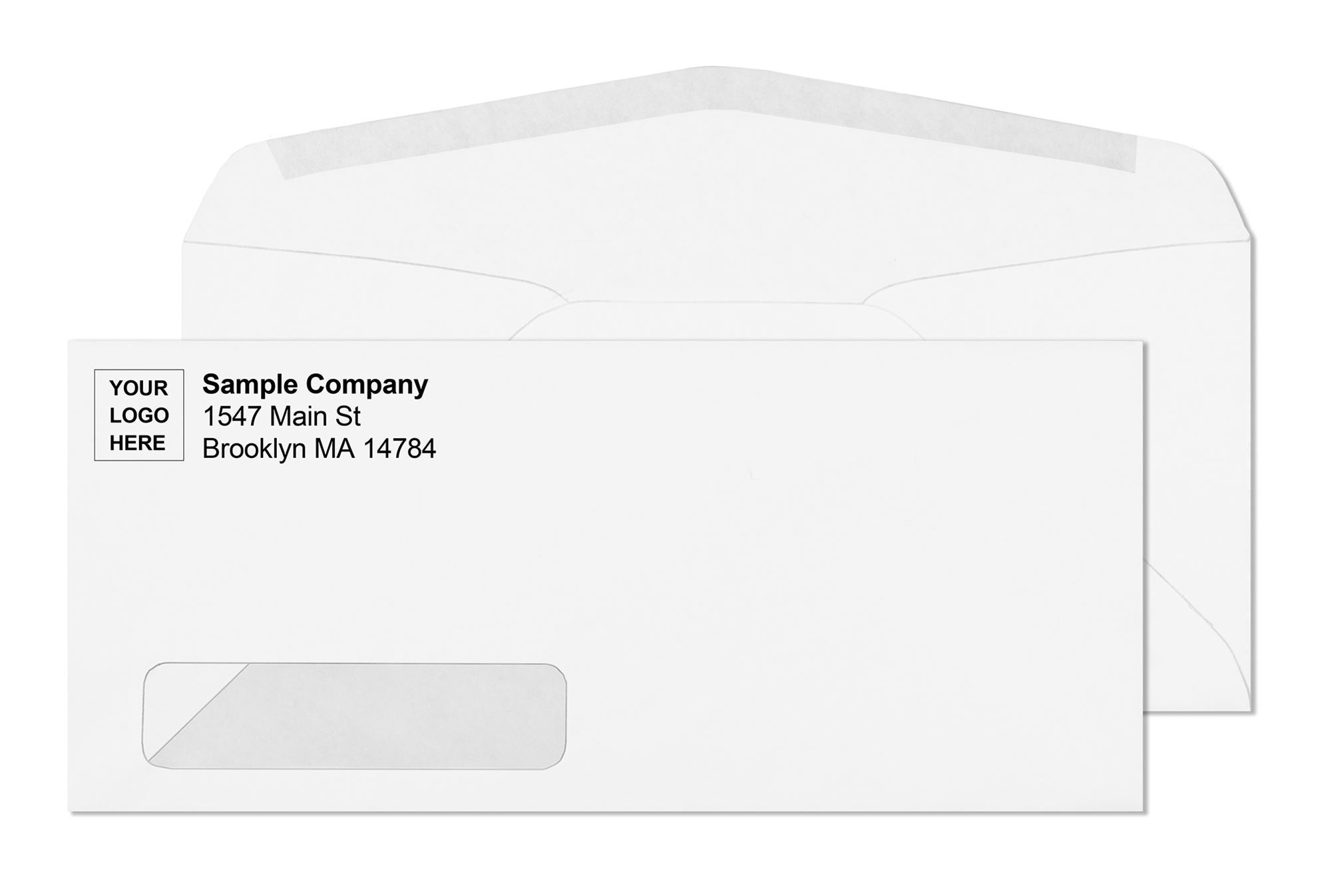
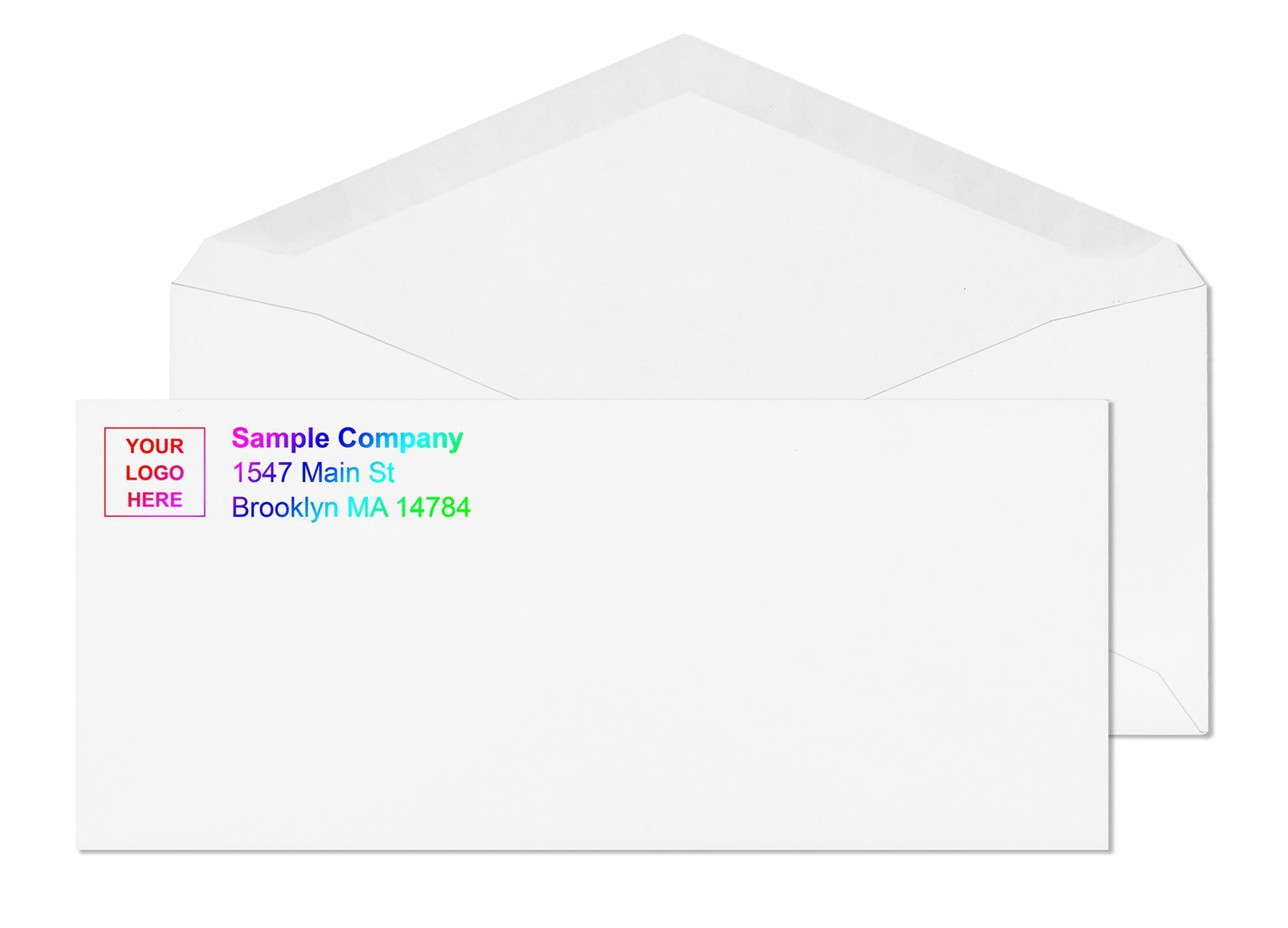
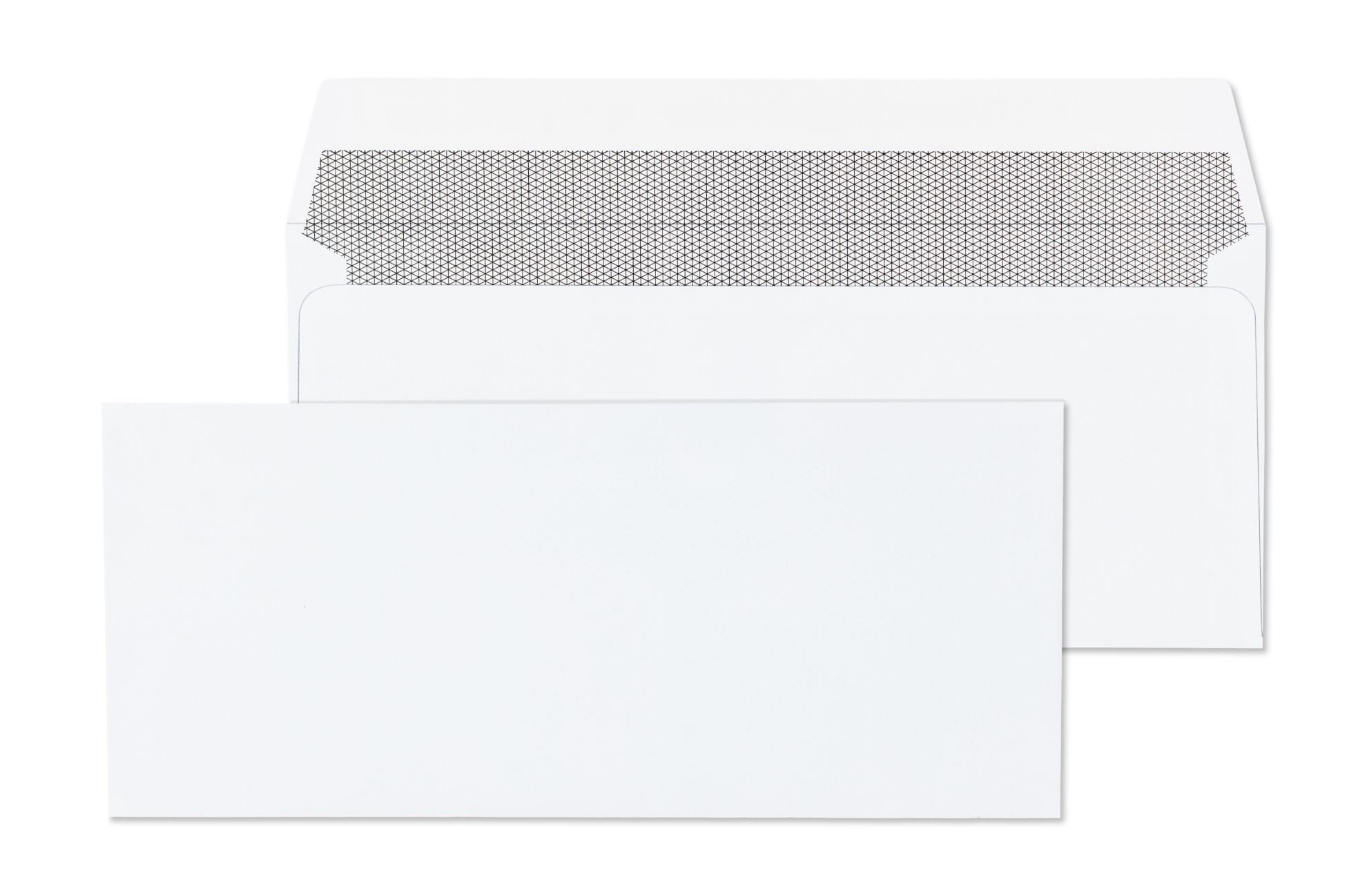
At Business Envelopes, #14 envelopes are available in plain white gum flap and white window gum flap formats, both on 24 lb bright white wove stock, blank or with custom logo and return address printing. For the full commercial size hierarchy from #6 3/4 through #14, see Regular Size Envelopes: Every Standard US Format Explained.
#14 Envelope Size: Dimensions and Specifications
Specification
Detail
Dimensions (US)
5 x 11 1/2 inches
Dimensions (metric)
Approximately 127 x 292 mm
Paper weight
24 lb bright white wove
Closure
Moistenable gum flap
Formats available
Plain white, white window
USPS classification
First-Class letter rate (contents under 3.5 oz)
Custom printing
Available , logo, return address, tagline
#14 Envelope vs Other Commercial Sizes
Understanding where the #14 sits relative to the rest of the commercial envelope hierarchy shows when it is the right choice versus using a smaller envelope or moving to a flat-document format.
Size
Dimensions
Fits Tri-Folded
USPS Class
#10
4-1/8 x 9-1/2"
8.5x11 letter sheet
Letter rate
#11
4-1/2 x 10-3/8"
8.5x11 with extra room
Letter rate
#12
4-3/4 x 11"
Thick #10-size packets
Letter rate
#14
5 x 11-1/2"
Legal-size 8.5x14 tri-folded
Letter rate
9x12 catalog
9 x 12"
8.5x11 flat (unfolded)
Flat rate ($1.63+)
The key distinction in this table: every commercial envelope from #10 through #14 qualifies for USPS First-Class letter rate on contents under 3.5 ounces. Moving to a 9x12 catalog envelope for flat-document mailing doubles the base postage rate. The #14 is the last stop in the letter-rate zone before postage class changes.
Does a Legal-Size Document Fit in a #14 Envelope?
Yes , and this is the primary reason the #14 exists as a format. Legal-size paper measures 8.5 x 14 inches. When folded into thirds, it produces a panel approximately 4.67 x 8.5 inches. That panel fits inside a #14 envelope (5 x 11.5 inches) with clearance on all sides.
The #10 and #12 cannot accommodate this fold:
A #10 at 4-1/8 x 9-1/2 inches provides barely enough width for a letter-size tri-fold (3.67 x 8.5 inches). A legal-size tri-fold at 4.67 inches wide does not fit.
A #12 at 4-3/4 x 11 inches is wide enough but only 11 inches long , the 8.5 inch folded panel approaches the envelope interior too closely, making clean insertion difficult on batches.
A #14 at 5 x 11.5 inches provides genuine clearance: the legal tri-fold panel is 0.33 inches narrower than the envelope and 3 inches shorter, allowing clean machine or hand insertion.
When to use a flat-document format instead of a #14 If a legal-size document cannot be folded , because it carries signatures, embossed seals, or graphic content that creasing would damage , use a 10x13 catalog envelope instead. A 10x13 holds an 8.5x14 sheet flat without folding but mails as a USPS flat at a higher postage rate. Use the #14 for documents that can be folded. Use the 10x13 for documents that cannot.
★★★★★
"I am very pleased with these envelopes and will order again! Great product and shipped very well! Better than I get from local office supply and a better value!"
Dave Pierce | Verified buyer, #10 White Business Envelopes Custom Printed Gum Flap Wove
Source: businessenvelopes.com product reviews
Who Uses #14 Envelopes
The #14 envelope is not a general-purpose office format. It serves specific operational contexts where the standard #10 is too small and moving to a flat-document mailer would increase postage costs unnecessarily.
Law firms and legal departments
Legal correspondence written on 8.5 x 14 letterhead requires the #14 for proper folded presentation. Court filings, client correspondence, demand letters, and contract transmittals on legal-size paper all mail correctly in a #14 at letter-rate postage. The alternative , forcing legal paper into a #10 with an additional fold , creates a cramped, unprofessional result inappropriate for client-facing correspondence.
Government agencies
Many federal, state, and municipal agencies use legal-size letterhead as standard for formal correspondence. The #14 handles outgoing agency mail on legal-size paper at the same letter-rate postage as standard office mail, avoiding the flat-rate surcharge of larger catalog formats.
Healthcare administrators
Explanation-of-benefits documents, HIPAA-related correspondence, and multi-attachment healthcare packages that exceed standard letter size use the #14 for organized, professional delivery at letter-rate postage.
Financial institutions
Multi-page account statements, legal-size disclosure documents, and thick financial correspondence packages that exceed #10 or #12 capacity mail in #14 envelopes when the total piece weight stays under 3.5 ounces and letter-rate postage applies.
#14 Envelope Formats: Plain vs Window
Plain white #14 gum flap
The standard format for legal correspondence and multi-page packages. Bright white 24 lb wove stock with a moistenable gum flap. Compatible with laser and inkjet printers for in-house address printing. Available blank or with custom logo and return address printing. For high-volume legal correspondence programs, custom printing eliminates the manual return address step on every piece. See printed envelopes for all custom printing options.
White window #14 gum flap
Same 24 lb white wove stock with a poly-film address window. The window displays the recipient address from the document inside, eliminating the addressing step entirely for billing and correspondence programs using legal-size letterhead. The #14 window format is the right choice for any high-volume mailing operation that currently uses a #10 window for standard letter size and needs a larger format for legal-size correspondence without changing to a flat-document mailer.
USPS Postage for #14 Envelopes
The #14 qualifies for USPS First-Class letter-rate postage because at 5 inches tall it stays within the USPS letter-rate height maximum of 6 1/8 inches. This is the most cost-efficient characteristic of the #14 format: it provides the capacity of a large commercial envelope without the flat-rate postage cost of a 9x12 or larger catalog format.
Weight
USPS Class
2026 Rate
Stamps
Up to 1 oz
First-Class letter
$0.82
1 Forever stamp
1 to 2 oz
First-Class letter
$1.11
1 Forever + 1 additional ounce stamp
2 to 3 oz
First-Class letter
$1.40
2 Forever stamps
3 to 3.5 oz
First-Class letter
$1.55
2 Forever stamps
Over 3.5 oz
First-Class flat
$1.63+
2+ Forever stamps
Source: USPS Notice 123, effective July 12, 2026. A #14 envelope that exceeds 3.5 oz total piece weight (envelope plus contents) is reclassified as a flat at $1.63 per ounce.
Printing on #14 Envelopes
Both plain and window #14 formats support in-house printing and custom pre-printed options.
In-house laser and inkjet printing
The 24 lb bright white wove stock on all #14 envelopes is laser and inkjet compatible. Load the envelope into your printer's manual feed tray for return address and delivery address printing. For correct printer setup, paper size settings, and feed orientation, see How to Print on Envelopes: The Complete Guide for Laser, Inkjet, and Bulk Office Printing.
Custom pre-printed #14 envelopes
For programs mailing more than occasional pieces, custom printing eliminates the in-house addressing step and ensures consistent professional presentation on every piece. Custom printing options for #14 envelopes include:
Company or firm name and full return address
Logo in single-color or full-color
Tagline or brand statement
Department-specific return address for multi-department programs
Every custom order includes a PDF proof before production. Artwork stays on file for reorders. Blank stock ships same or next business day. Custom-printed orders ship in 7 to 10 business days from proof approval. No minimum order on any format.
Common Mistakes When Using #14 Envelopes
Using a #10 for legal-size letterhead: A legal 8.5 x 14 sheet does not fold cleanly into a #10. The fold compresses the document into an overstuffed envelope and damages the paper at the fold points. Use a #14 for legal-size correspondence that requires a commercial letter envelope.
Assuming the #14 always mails as a flat: The #14 qualifies for USPS letter-rate postage on contents under 3.5 ounces. Many offices default to using flat-document mailers for anything larger than a #10, unnecessarily paying flat-rate postage when the #14 would handle the document at letter rate.
Overfilling and pushing past 3.5 ounces: The #14 is a letter-rate format up to 3.5 ounces. A thick multi-page packet can exceed this limit. Weigh the sealed piece before mailing on any batch with significant enclosure volume.
Using a plain #14 for billing programs: Any program that processes outgoing mail in volume benefits from the window format. The #14 window eliminates the addressing step on every piece, reducing processing time proportionally with volume.
Setting up incorrect paper size in the print driver: When printing addresses on a #14 in-house, set the custom paper size to 5 x 11.5 inches in your printer driver. Using the wrong size shifts the address block out of position on the envelope face.
★★★★★
"The best company to deal with!! Their printing is SUPER as well as the quality of the envelopes. It was a pleasure to deal with them. I would recommend everyone to give them a try."
Tom Beck | Verified buyer, #10 White Business Envelopes Custom Printed Gum Flap Wove
Source: businessenvelopes.com product reviews
Why Business Envelopes for #14 Envelopes
Business Envelopes has supplied US law firms, government agencies, healthcare billing operations, and financial institutions with commercial envelope stock since 1997. The #14 envelope is stocked in plain white gum flap and white window gum flap formats in 24 lb bright white wove, blank or custom printed. No minimum order applies to any format. Free ground shipping to the contiguous 48 states on every order.
No minimums on any order
Free ground shipping to the contiguous 48 states
Blank stock ships same or next business day
Custom-printed orders ship in 7 to 10 business days from proof approval
PDF proof included on every custom order
Shop the complete #14 range at #14 Envelopes. For all commercial envelope sizes from #6 3/4 through #14, see all sizes envelopes.
Frequently Asked Questions
What size is a #14 envelope?
A #14 envelope measures 5 x 11 1/2 inches (approximately 127 x 292 mm). It is the largest standard commercial letter envelope in the US numbering system, a quarter inch taller and half an inch wider than the #12 envelope.
Will a legal-size document fit in a #14 envelope?
Yes. An 8.5 x 14 inch legal sheet folded into thirds produces a panel approximately 4.67 x 8.5 inches. This fits inside a #14 (5 x 11.5 inches) with clearance on all sides. For the correct fold technique, see How to Fold a Letter for an Envelope.
Do #14 envelopes qualify for USPS letter-rate postage?
Yes. At 5 inches tall, a #14 falls within the USPS letter-rate height limit of 6 1/8 inches. Contents under 3.5 ounces mail at First-Class letter rate ($0.82 per ounce in 2026). Over 3.5 ounces, the piece is reclassified as a flat at $1.63 per ounce.
What is the difference between a #14 and a #12 envelope?
A #14 (5 x 11.5 inches) is a quarter inch taller and half an inch wider than a #12 (4 3/4 x 11 inches). The extra width allows a legal-size 8.5 x 14 sheet tri-folded to fit with clearance, which a #12 cannot accommodate cleanly.
What are #14 envelopes used for?
Thick multi-page correspondence, legal-size folded document submissions, multi-attachment mailings, and any outgoing piece that exceeds #10 or #12 capacity. Law firms, government agencies, healthcare administrators, and financial institutions use the #14 when corresponding on legal-size letterhead or sending complex document packages at letter-rate postage.
Is there a #14 window envelope?
Yes. A white #14 window gum flap envelope is available alongside the plain format. The poly-film window displays the recipient address from the document inside, eliminating the addressing step for billing and correspondence programs using legal-size letterhead. Both formats are available at #14 Envelopes.