

6x9 Envelope Postage: Letter Rate, Flat Rate, and How to Pay the Right Amount
How much postage for a 6x9 envelope depends on one thing USPS cares about more than the size printed on the box: whether the sealed piece is thin enough to qualify as a letter. Most people assume a 6x9 is automatically a large envelope requiring extra postage. It usually is not. A flat, flexible 6x9 envelope qualifies for First-Class letter rate at $0.82 with one Forever stamp. It only jumps to the $1.63 flat rate when contents make it too thick, too heavy, or too rigid for automated postal sorting.
Understanding 6x9 envelope postage before mailing saves real money on single pieces and significant money on volume mailings. This guide covers every factor that determines the right rate , the exact 2026 USPS rates for every weight, the hidden surcharge most buyers miss on clasp envelopes, and the practical rules for keeping a 6x9 mailing at letter rate.
All rates on this page reflect the USPS price increase effective July 12, 2026. Business Envelopes has supplied 6x9 envelopes to US businesses since 1997 and carries the complete range of booklet, open-end, kraft, Tyvek, and clasp formats.
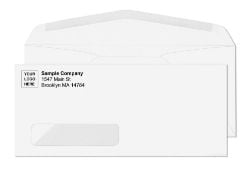
Why a 6x9 Envelope Can Mail as Either a Letter or a Flat
USPS classifies mail by physical characteristics of the sealed piece, not by what the envelope size is called on the box. The letter-rate size limits are: maximum 6-1/8 inches tall, 11-1/2 inches long, 1/4 inch thick, and 3.5 ounces in weight. A 6x9 envelope at exactly 6 inches tall fits comfortably within all four of those limits by dimension alone.
The problem comes from the contents. When a 6x9 envelope holds a thick brochure, multiple folded documents, a bound booklet, or anything rigid, the sealed piece exceeds the 1/4-inch thickness limit or becomes too stiff to bend through automated sorting equipment. At that point, USPS reclassifies it as a flat regardless of the envelope's printed dimensions. The envelope did not change. The contents pushed it into a different rate class.
This is why two identical 6x9 envelopes can cost completely different amounts to mail. One holds a single half-folded document and mails as a $0.82 letter. The other holds a multi-page brochure and mails as a $1.63 flat. The envelope is the same. The postage is not.
The Four Rules That Determine Your 6x9 Envelope Postage Rate
USPS applies four tests to determine whether a sealed 6x9 piece mails at letter rate or flat rate. All four must pass for letter rate to apply.
Rule 1: Thickness , the most common reason 6x9 envelopes pay flat rate
The sealed piece must be 1/4 inch thick or less for letter rate. This is the test that most 6x9 pieces fail. A single half-folded sheet of 20 lb paper is approximately 0.008 inches thick , well under the limit. Four such sheets are approximately 0.032 inches , still under. A folded brochure on 80 lb coated stock, a program booklet, or three sheets plus an enclosure card can push past 1/4 inch easily. If you are unsure whether your assembled piece qualifies, measure the thickest point with a ruler before buying postage.
Rule 2: Weight , maximum 3.5 ounces for letter rate
A 6x9 envelope holding one to four standard sheets of paper typically weighs under one ounce. Weight becomes a concern when the mailing includes multiple sheets on heavier paper, multiple enclosures, or folded inserts. Standard 8.5 x 11 copy paper weighs approximately 0.16 ounces per sheet. Four sheets plus a standard 6x9 envelope weigh approximately 0.7 ounces combined , one Forever stamp covers it. Beyond about 20 sheets, weight alone can exceed 3.5 ounces.
Rule 3: Flexibility , the piece must bend
Letter-rate mail must pass through automated postal sorting equipment that bends and flexes pieces as they move through the system. A sealed 6x9 envelope that is rigid and cannot flex is classified as non-machinable and either assessed a $0.49 non-machinable surcharge (if it still meets size limits) or reclassified as a flat. Contents that cause rigidity include thick cardstock, CD cases, photo prints on glossy backing, plastic cards, and any non-flexible enclosure.
Rule 4: Shape , must be rectangular with no protrusions
Square envelopes trigger the non-machinable surcharge automatically. The 6x9 envelope is rectangular and avoids this. However, anything that creates a protrusion, lump, or uneven thickness across the face of the sealed piece also triggers the surcharge. Coins, irregular objects, and thick clustered enclosures all cause this.
6x9 Envelope Postage by Weight: Complete 2026 USPS Rate Table
| Weight | Letter Rate (thin and flexible) | Flat Rate (thick or rigid) | Stamps at Letter Rate |
|---|---|---|---|
| 1 oz (up to 28g) | $0.82 | $1.63 | 1 Forever stamp |
| 2 oz (up to 57g) | $1.11 | $1.90 | 1 Forever + 1 additional ounce stamp |
| 3 oz (up to 85g) | $1.40 | $2.17 | 2 Forever stamps |
| 3.5 oz (up to 99g) | $1.55 | $2.31 | 2 Forever stamps |
| 4 oz (up to 113g) | Not eligible | $2.44 | Flat rate only , 3 Forever stamps or metered |
| 5 oz | Not eligible | $2.71 | Flat rate only |
Source: USPS Notice 123, effective July 12, 2026. Rates shown are retail (post office counter). Metered postage is $0.05 less per ounce at letter rate ($0.77 first ounce). Additional ounce rate at letter: $0.29. Additional ounce rate at flat: $0.27.
The Non-Machinable Surcharge on 6x9 Envelopes: What Most Buyers Miss
Beyond the letter-rate vs flat-rate question, one specific 6x9 envelope format triggers a separate $0.49 non-machinable surcharge: the clasp envelope with an exposed metal clasp.
Why clasp envelopes cost more to mail
A 6x9 clasp envelope uses a metal butterfly clasp on the flap to allow repeated opening and resealing. When the clasp is on the exterior of the sealed piece, USPS automated sorting equipment cannot process it safely. The metal clasp creates a protrusion that jams sorting mechanisms. USPS assesses the non-machinable surcharge of $0.49 per piece when the clasp is present on the exterior.
This surcharge applies even if the piece is thin, flexible, and otherwise qualifies for letter rate. A 6x9 clasp envelope with a single sheet inside would be $0.82 plus $0.49 equals $1.31 in postage. That is more expensive than a flat-rate letter at $1.63? No , but it is significantly more than the $0.82 you would pay for a peel-and-seal 6x9 with the same content.
The practical solution is to use a 6x9 peel-and-seal envelope for postal mailing programs. The clasp envelope format is best used for internal routing, document filing, and interoffice programs where it does not enter the postal mail stream. See all self-seal options at self seal envelopes.

Which 6x9 Envelope Format Costs the Least to Mail?
Not all 6x9 envelopes have the same postage implications. The format you choose directly affects your 6x9 envelope postage , whether you pay the base rate or trigger a surcharge.
| 6x9 Format | Best For | Postage (1 oz, light contents) | Surcharge Risk |
|---|---|---|---|
| 6x9 white booklet, peel-and-seal | General mailing, statements, photos | $0.82 | None |
| 6x9 open-end, peel-and-seal | Catalog-style loading, document mailing | $0.82 | None |
| 6x9 kraft booklet, peel-and-seal | Eco-friendly programs, premium mailing | $0.82 | None |
| 6x9 starburst colored | Marketing mail, event invitations | $0.82 | None if flexible |
| 6x9 Tyvek, peel-and-seal | Durable document mailing | $0.82 (Tyvek is lightweight) | None |
| 6x9 clasp envelope | Internal routing, interoffice, filing | $1.31 (base $0.82 + $0.49 surcharge) | Always non-machinable with exposed clasp |
For any mailing program, a peel-and-seal 6x9 is the lowest-postage option. It qualifies for letter rate with light contents and carries no non-machinable surcharge. Tyvek has an additional advantage for volume mailings. At approximately 14 lb per ream, it weighs roughly half what standard 24 lb paper stock weighs. This helps keep piece weight under the one-ounce threshold when mailing documents near the boundary. See all Tyvek options at Tyvek envelopes.
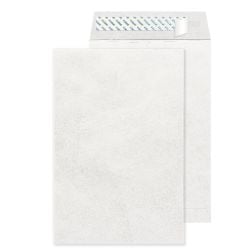
Letter Rate vs Flat Rate: The Postage Savings on Volume Mailings
On a single piece, the difference between letter rate and flat rate is $0.81 (from $0.82 to $1.63). That is meaningful but not dramatic. Over volume, it compounds quickly.
| Monthly Volume | Letter Rate Total ($0.82) | Flat Rate Total ($1.63) | Monthly Savings at Letter Rate | Annual Savings |
|---|---|---|---|---|
| 100 pieces | $82 | $163 | $81 | $972 |
| 250 pieces | $205 | $407.50 | $202.50 | $2,430 |
| 500 pieces | $410 | $815 | $405 | $4,860 |
| 1,000 pieces | $820 | $1,630 | $810 | $9,720 |
For organizations mailing 6x9 envelopes at monthly volume, the decision to keep contents thin enough for letter rate is an operational choice worth making deliberately. If your document needs to arrive flat and cannot be half-folded, a 6x9 is not the right envelope , use a 9x12 and budget for flat-rate postage. But if your document can be half-folded to 5.5 x 8.5 inches and is fewer than four pages, a 6x9 at letter rate is the most cost-efficient choice for a document mailing.
For the complete 6x9 envelope range including all formats and closure types, see 6x9 envelopes. For the full size reference across all formats, see all sizes envelopes.
Practical Tips for Reducing Your 6x9 Envelope Postage Cost
Test Your 6x9 Envelope Postage Before a Large Run
Assemble one complete piece exactly as it will go out: insert all documents, fold the flap, and seal. Then test two things. First, measure the thickness at the thickest point. If it exceeds 1/4 inch, you are paying flat rate. Second, try to bend the piece gently. If it is rigid, you are paying flat rate or the non-machinable surcharge. Bring a sealed sample to a Post Office counter and ask for a postage check before committing the full run.
Use lighter paper for enclosures
Switching from 24 lb copy paper to 20 lb copy paper for enclosures reduces both thickness and weight per sheet. For programs where the document can tolerate lighter stock, this keeps more sheets within letter-rate thresholds.
Print double-sided to reduce page count
A four-page letter printed double-sided on two sheets is half the thickness and half the weight of the same content on four single-sided sheets. For letter programs near the thickness limit, double-sided printing is the fastest way to reduce piece count without reducing content.
Choose peel-and-seal over clasp for mail programs
Reserve clasp envelopes for internal routing and document storage. For anything entering the postal system, a peel-and-seal closure eliminates the $0.49 non-machinable surcharge that clasp formats trigger. See the full guide to envelope types at booklet envelope guide.
Use metered postage for high-volume mailings
Metered postage costs $0.77 per ounce at letter rate in 2026, versus $0.82 for a retail stamp. For 500 pieces per month, metered postage saves $25 per month compared to buying Forever stamps at the counter. Approved platforms include USPS Click-N-Ship, Stamps.com, Pitney Bowes, and others. For a complete guide to postage options, see the postage stamps buying guide.
Know the difference between booklet and open-end for loading speed
A 6x9 booklet envelope opens on the long 9-inch edge, making it easy to load half-folded documents from the wide side. A 6x9 open-end envelope opens on the short 6-inch edge, similar to how a standard letter envelope loads. For hand-loading at volume, most offices find the booklet format faster. Neither format affects postage classification , both are treated identically by USPS. See the complete 6x9 product range at regular envelopes.
6x9 Envelope Postage Summary: What You Need to Know Before Mailing
The answer on 6x9 envelope postage is $0.82 at First-Class letter rate with one Forever stamp if the sealed piece is thin, flexible, and under 3.5 ounces. It jumps to $1.63 at flat rate if the piece is over 1/4 inch thick, rigid, or over 3.5 ounces. A 6x9 clasp envelope with an exposed metal clasp adds a $0.49 non-machinable surcharge on top of the base letter rate.
For most standard document mailings in a 6x9 peel-and-seal envelope, one Forever stamp at $0.82 is the correct postage. Test a sealed sample before committing any volume mailing to a postage rate. When in doubt, bring the assembled piece to a Post Office counter and ask for a classification check before buying postage in bulk.