
shipping icon business envelopes Free shipping

FREE Ground Shipping site-wide. No minimums. Excludes PR, HI, AK, AS, VI, WA.


* More info

Envelope Blogs

    How to Stop an Envelope From Coming Unsealed: Causes, Fixes, and Prevention

    Quick Answer

    Envelopes come unsealed for five main reasons: insufficient moisture on a gummed flap, insufficient pressure on a self-seal envelope, ambient humidity partially activating gummed adhesive in storage, aged or expired adhesive, and paper weight mismatch. The fix is specific to the closure type. For recurring seal failures in humid or high-volume environments, switching from gummed flap to peel-and-seal envelopes eliminates the moisture dependency and produces a permanent, consistent bond.


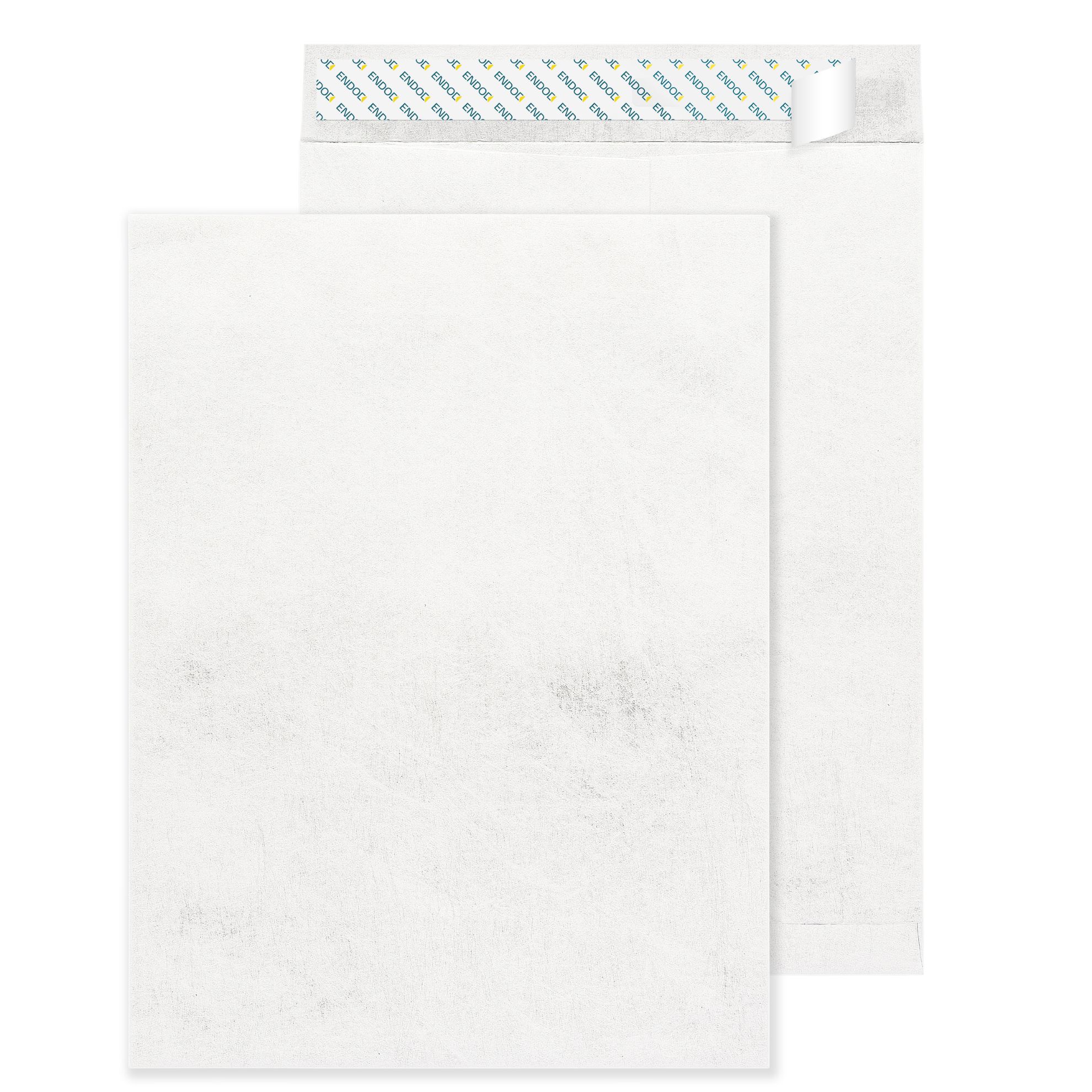
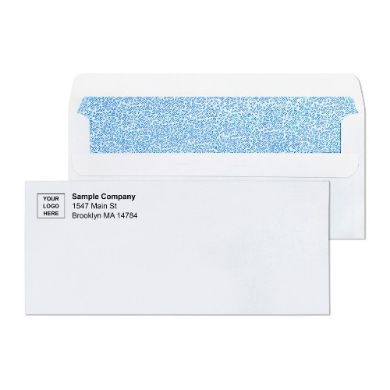
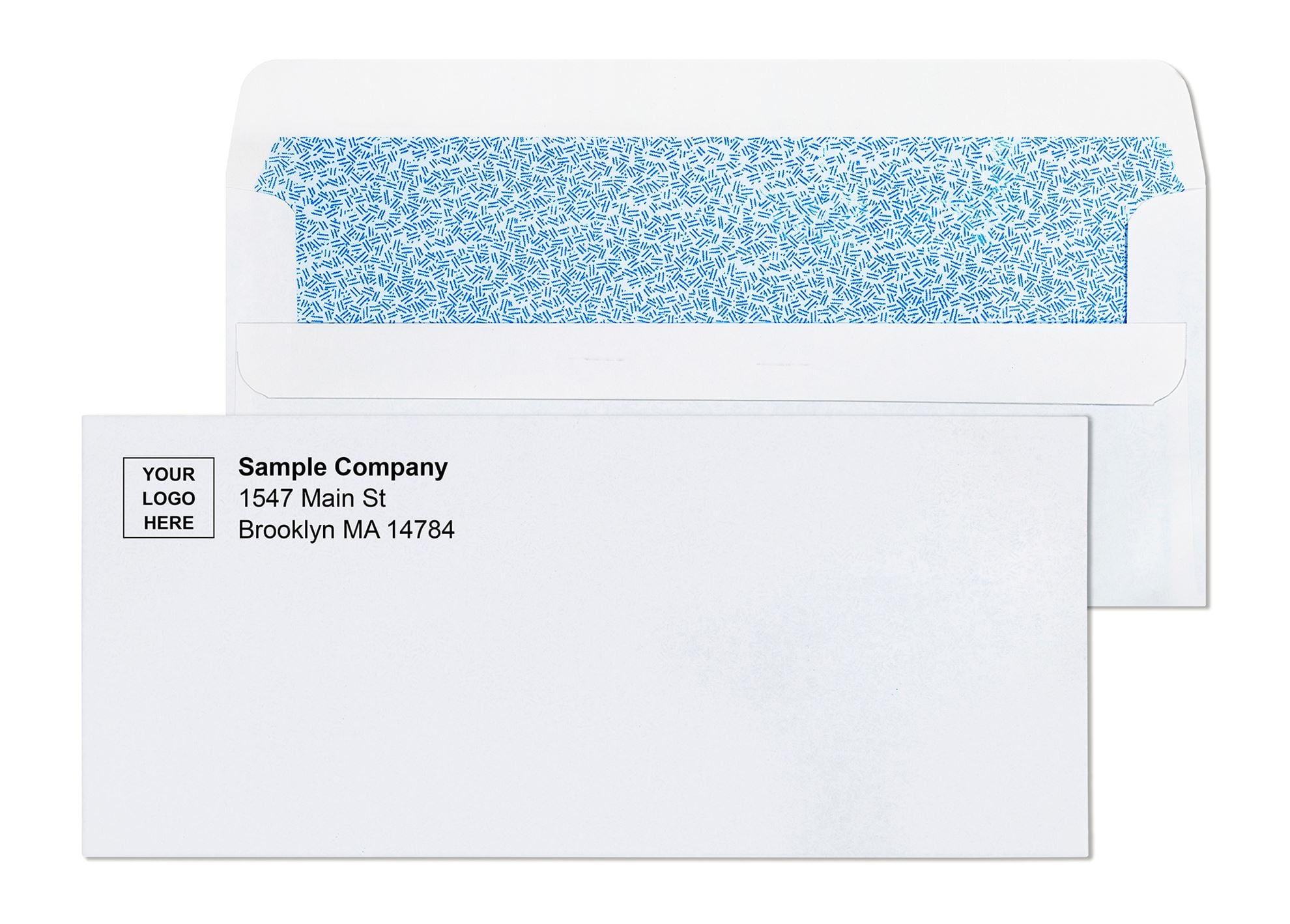
    peel and seal business envelope with reliable adhesive closure to stop envelope from coming unsealed

    A #10 security-tinted peel-and-seal business envelope. Pressure-sensitive adhesive is not moisture-dependent and forms a consistent permanent bond. Click to view product.


    Why Do Envelopes Keep Coming Open? The Root Causes

    An envelope seal fails when the adhesive bond between the flap and the envelope body is weaker than the forces pulling it apart. Those forces include the pressure of contents from inside, mechanical stress from postal sorting equipment, and, for gummed adhesive, the ongoing effect of humidity both in storage and during transit.

    Identifying the cause requires knowing which closure type you have. The root causes and fixes for gummed flap envelopes and self-seal envelopes are completely different. A fix that works for one may do nothing for the other.

    Gummed Flap Failure Causes

    Humidity Sensitive
    • Insufficient moisture on the gummed strip
    • Moisture applied only to the centre, not the full strip
    • Humidity pre-activating adhesive in storage
    • Expired or dried-out gummed adhesive
    • Paper weight too thin for the contents
    • Not holding the flap down long enough

    Self-Seal Failure Causes

    Not Humidity Sensitive
    • Insufficient pressure across the full adhesive strip
    • Release liner not fully removed before sealing
    • Adhesive contaminated by dust after liner removal
    • Extreme heat or cold degrading stored adhesive
    • Sliding motion during pressing instead of firm press
    • Paper weight too thin for the contents


    How to Stop a Gummed Envelope From Coming Open

    A gummed flap envelope uses a dextrin-based, gum arabic-based, or polyvinyl alcohol-based adhesive applied in dry form to the inner surface of the flap. It only activates when it contacts moisture. Once moistened and pressed, the glue bonds with the paper fibers of the envelope body and sets as it dries.

    When this seal fails, the cause is nearly always one of the following.


    Why Is the Gummed Strip Not Sealing Properly?

    The most frequent cause is uneven or insufficient moisture. People often dab or lick only the centre of the strip, leaving the edges and corners of the flap dry. Those unbonded areas lift first, especially at the pointed tip of a diamond flap or the corners of a straight flap.

    The fix: Moisten the full length of the gummed strip evenly from one end to the other using a damp sponge, foam roller moistener, or moistening bottle. Do not oversaturate. A heavy application of water warps the paper, which causes the flap to curl away from the envelope body as it dries, breaking the bond. A light, even pass that makes the adhesive feel tacky without being wet is the target.

    Why You Should Seal the Corners First

    This is a sealing technique tip that most general guides skip. The corners and edges of the flap are the first points to lift under any stress. Pressing only the flat centre of the flap and leaving the corners to seal themselves under general pressure produces a weaker result than pressing the corners deliberately first.

    The technique: After moistening, press the two corners of the flap against the envelope body first, holding each for two seconds. Then press the full length of the flap from corner to corner with firm, even pressure. Hold the entire flap for three to five seconds before releasing. This sequence produces the most complete and consistent bond from a gummed strip.

    What to Do When the Gummed Adhesive Has Dried Out

    Gummed adhesive has a shelf life. Envelopes stored for several years, particularly in conditions that are not climate-controlled, can develop adhesive that appears dull, powdery, or crumbly. When moistened, it does not feel tacky. It may appear wet but will not form a cohesive bond.

    The fix: There is no way to restore dried-out gummed adhesive. Replace the stock. Test a sample envelope from any batch that has been in storage for more than two years before committing to a mailing run. The how to store envelopes guide covers correct conditions and shelf life by adhesive type.


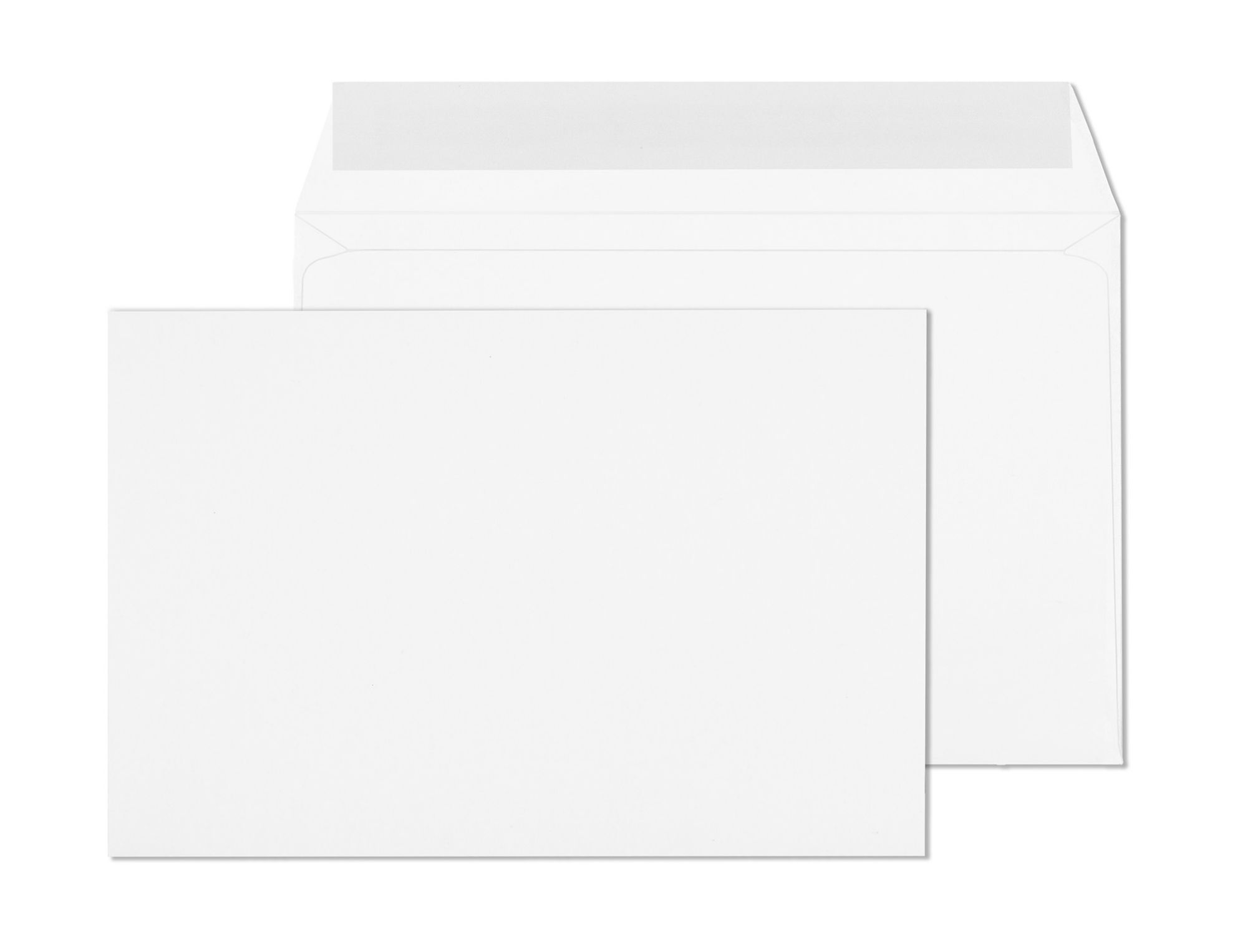
    gummed flap #10 white wove business envelope with moisture-activated adhesive strip


    A gummed flap #10 white wove business envelope. The water-activated adhesive requires even moisture and firm corner-first pressure for a complete seal. Click to view product.


    Why Is My Self-Seal Envelope Not Sticking?

    Self-seal envelopes use a pressure-sensitive adhesive rather than a moisture-activated one. This includes peel-and-seal envelopes, where you remove a release liner to expose the adhesive, and flip-and-stick envelopes, where a fold-down strip with adhesive on both faces is pressed together. Because these closures do not need moisture, they are far more resistant to humid environments than gummed flap envelopes.

    When a self-seal envelope fails to stick, the cause is almost always one of three things.


    Insufficient Pressure Across the Full Adhesive Strip

    Pressure-sensitive adhesive bonds through physical contact and compression. Pressing only the centre of the flap produces a full bond in the centre and little or no bond at the edges. Those edges lift first under handling and postal stress.

    The fix: After closing the flap, press firmly from one end of the adhesive strip to the other using even downward pressure. Hold for two to three seconds. Do not slide your finger along the flap, which can shift it before the bond sets. Press straight down across the whole width.


    Why Did My Peel-and-Seal Envelope Seal But Then Come Open?

    If a peel-and-seal envelope seals initially but then loses its hold, the adhesive may have been contaminated before sealing. Once the release liner is removed, the adhesive is exposed. Setting the envelope down face-up on a desk picks up dust, paper fibers, and debris that reduce bonding capacity across the strip. The seal feels complete when first pressed but fails under handling stress hours later.

    The fix: Remove the liner only immediately before sealing. Do not remove the liner and set the envelope aside. Seal each envelope as soon as the liner is removed. For peel-and-seal questions specific to reuse and tamper evidence, the guide on can you reuse a peel and seal envelope covers adhesive chemistry in depth.


    Can Temperature Affect Envelope Seal Quality?

    Yes. Pressure-sensitive adhesive is stable under the release liner through a wide temperature range in normal storage. However, sustained exposure to extreme heat, such as a storage room that reaches high temperatures in summer, can cause some adhesive formulations to soften and lose their bonding viscosity. Sustained exposure to freezing temperatures can make the adhesive brittle. Both extremes reduce seal performance when the envelope is finally used.

    The fix: Store peel-and-seal envelopes in a climate-controlled interior space. Avoid storage on loading docks, in outdoor storage units, or near heat sources such as boilers and HVAC equipment.


    How Humidity Causes Envelope Seals to Fail

    Humidity is one of the most common and least diagnosed causes of gummed flap seal failure in business mailing operations. Many offices and mail rooms do not connect their recurring seal problems to the ambient humidity in the space.


    Why Does My Envelope Seal Fail in Humid Weather?

    Gummed adhesive is made of a water-soluble polymer that activates when moisture reaches it. In a high-humidity environment, water molecules from the air reach the adhesive strip even through the closed box. The adhesive becomes slightly tacky, and the flap, which sits adjacent to the gummed strip when the envelope is in its unopened position, makes light contact with it during storage. This creates a partial, weak pre-seal.

    When you then attempt to seal the envelope by moistening and pressing the flap, the adhesive is no longer in its dry, ready state. The resulting bond is weak and inconsistent. It may hold under hand pressure but fail in the mail.

    This was precisely the scenario described by gardening community members who stored boxes of gummed envelopes in a humid home environment: almost every flap had pre-sealed itself by the time they opened the box, and attempts to open and re-seal them produced torn, unusable envelopes.

    The fix: Store gummed envelopes in a space with relative humidity consistently below 60 percent. If your building does not maintain this in summer, consider switching to peel-and-seal envelopes for any mail that must be processed reliably. Peel-and-seal adhesive does not respond to ambient humidity because it is pressure-activated, not moisture-activated.

    Closure Type Humidity Risk How Humidity Causes Failure Best Prevention
    Gummed Flap High Adhesive partially activates during storage, creating weak bond Store below 60% RH; climate-controlled mail room
    Peel-and-Seal Very Low Liner protects adhesive until deliberate removal; humidity has minimal effect Standard storage; remove liner only when ready to seal
    Flip-and-Stick Low Latex/acrylic adhesive is not moisture-activated; humidity has minimal effect on stored envelopes Standard storage conditions


    How Storage Conditions Degrade Adhesive Before You Even Mail

    Most envelope seal failures that seem like a sealing technique problem are actually a storage problem. The adhesive degrades before the envelope is ever sealed, and no amount of correct sealing technique can fully compensate.


    How Do I Stop Envelopes From Sticking Together in Storage?

    This is a specific problem reported by people who store gummed envelopes in boxes for extended periods in humid conditions. The flaps begin to adhere to the backs of adjacent envelopes in the stack. Opening the box reveals envelopes sealed to each other or partially sealed to themselves.

    The most practical solutions are:

    • Store in sealed boxes in a climate-controlled interior location. The box itself provides some moisture barrier, but only if the humidity in the room is within acceptable range.
    • Use older stock first. Rotate your envelope inventory and never leave gummed envelopes sitting unused for years.
    • Place wax paper sheets between stacks in marginally humid conditions. Wax paper acts as a physical moisture barrier between envelope flaps and adjacent paper, slowing the rate at which ambient humidity reaches the adhesive. This is a workaround, not a permanent fix, but it is useful for short-term storage in imperfect conditions.
    • Switch to peel-and-seal for any high-volume or time-sensitive program. The release liner is a complete barrier. Peel-and-seal envelopes stored correctly will not pre-seal regardless of ambient humidity within normal office ranges.


    How Long Does Envelope Glue Last?

    Gummed adhesive properly stored in a climate-controlled environment remains effective for two to three years in most cases. Beyond this, performance becomes variable and testing is required before any large mailing. Peel-and-seal adhesive under its liner is stable for longer, typically several years, under correct storage conditions.

    The practical rule: test a sealed sample from any envelope batch that has been in storage for more than 18 months before running it through a batch mailing. Press and let it dry for 10 minutes. Try to pull the flap open. If it separates cleanly with light force, the adhesive is no longer reliable.


    Does Paper Weight Affect Envelope Seal Quality?

    Yes, and this is a cause of seal failure that almost no guide addresses. Paper weight directly affects how well a seal holds under the stress of postal handling.

    A heavier paper weight means a thicker, stiffer flap. That stiffness has two benefits for seal quality. First, the flap holds more firmly against the envelope body under pressure, maximizing the contact area of the adhesive strip. Second, it resists bending under the pressure of contents pushing outward from inside the envelope. Contents that expand slightly during handling, such as multiple sheets, a booklet, or a folded document with some spring, will push against the flap from the inside. A thin, flexible flap bends under this pressure and the corners lift. A heavier paper weight resists this.

    For heavy contents, envelopes with 24 lb or 28 lb paper provide more reliable seals than 20 lb alternatives. The envelope paper weight guide explains what these weight numbers mean for your specific application.


    Why Did My Envelope Open During Postal Transit?

    A seal that holds when you hand-deliver an envelope to the post office may still fail during automated processing. Automated mail sorting equipment applies mechanical stress to every piece it processes: bending, compression, friction from rollers, and stacking under pressure in trays. A seal with partial adhesive contact, particularly at the corners and edges, will often hold under gentle hand pressure but separate under this repeated mechanical stress.

    There is also a specific postal sorting problem worth knowing. A partially open flap on one envelope can catch on the contents or flap of an adjacent envelope as both pieces move through sorting equipment. A real postal user described exactly this scenario: their sealed-with-tape birthday envelope delayed their friend's letter by a week because something in the processing caused their piece to interfere with another. A partially open flap is one of the most common causes of this kind of delay.

    For operations mailing bulk programs: Automated insertion machines, which open the envelope, insert the contents, and then seal the flap mechanically, require envelopes specifically designed for machine insertion. Issues like curled flaps, flaps that shingle (overlap) during stacking, or flaps that are too short or too long for the machine's sealing mechanism can all cause failures. Paper weights of 20 lb and 24 lb generally run better on most inserting machines than heavier weights. If you are using folder-inserters, confirm your envelope format is compatible with your equipment specification. The types of business envelopes guide covers envelope format considerations including seam style and flap geometry.

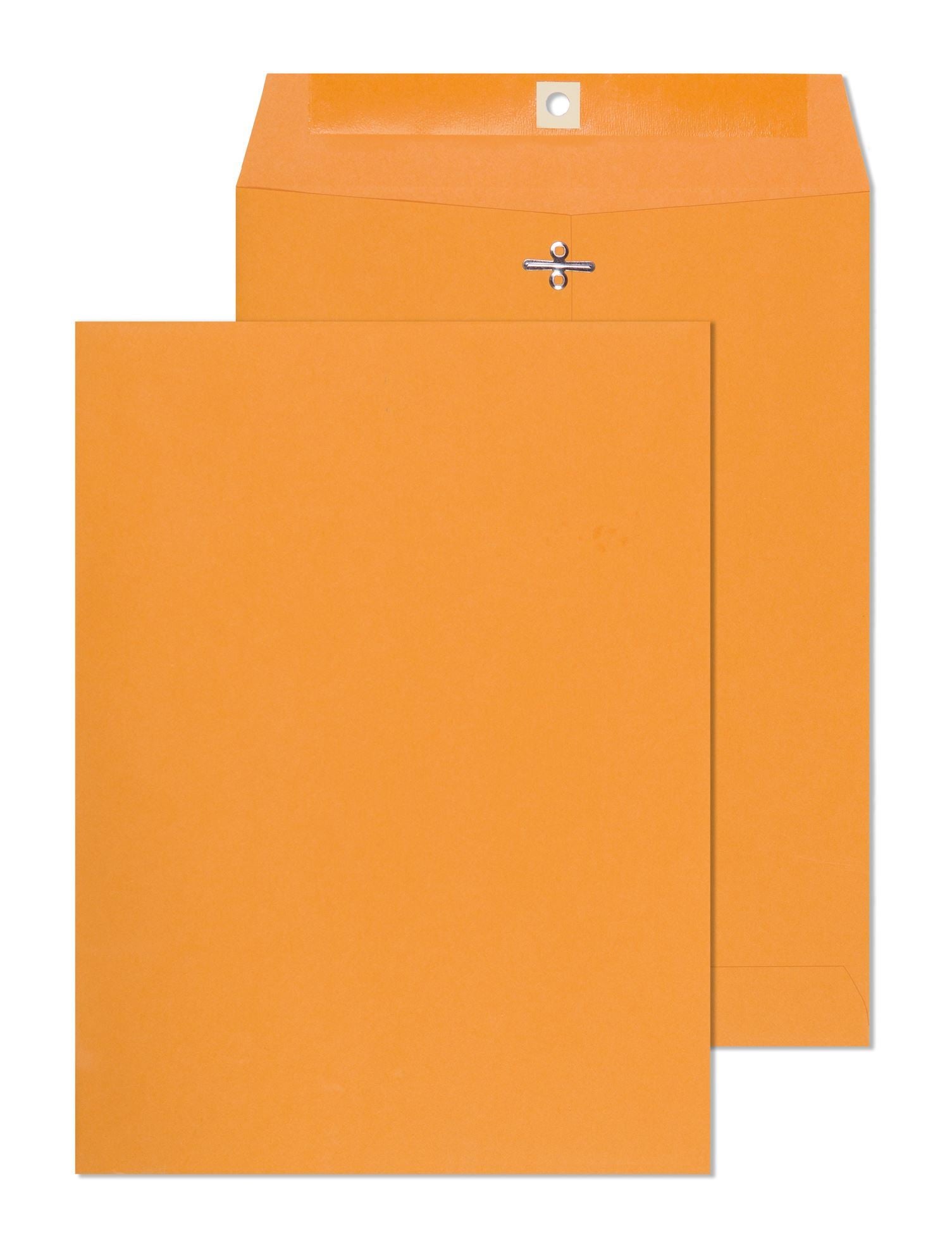
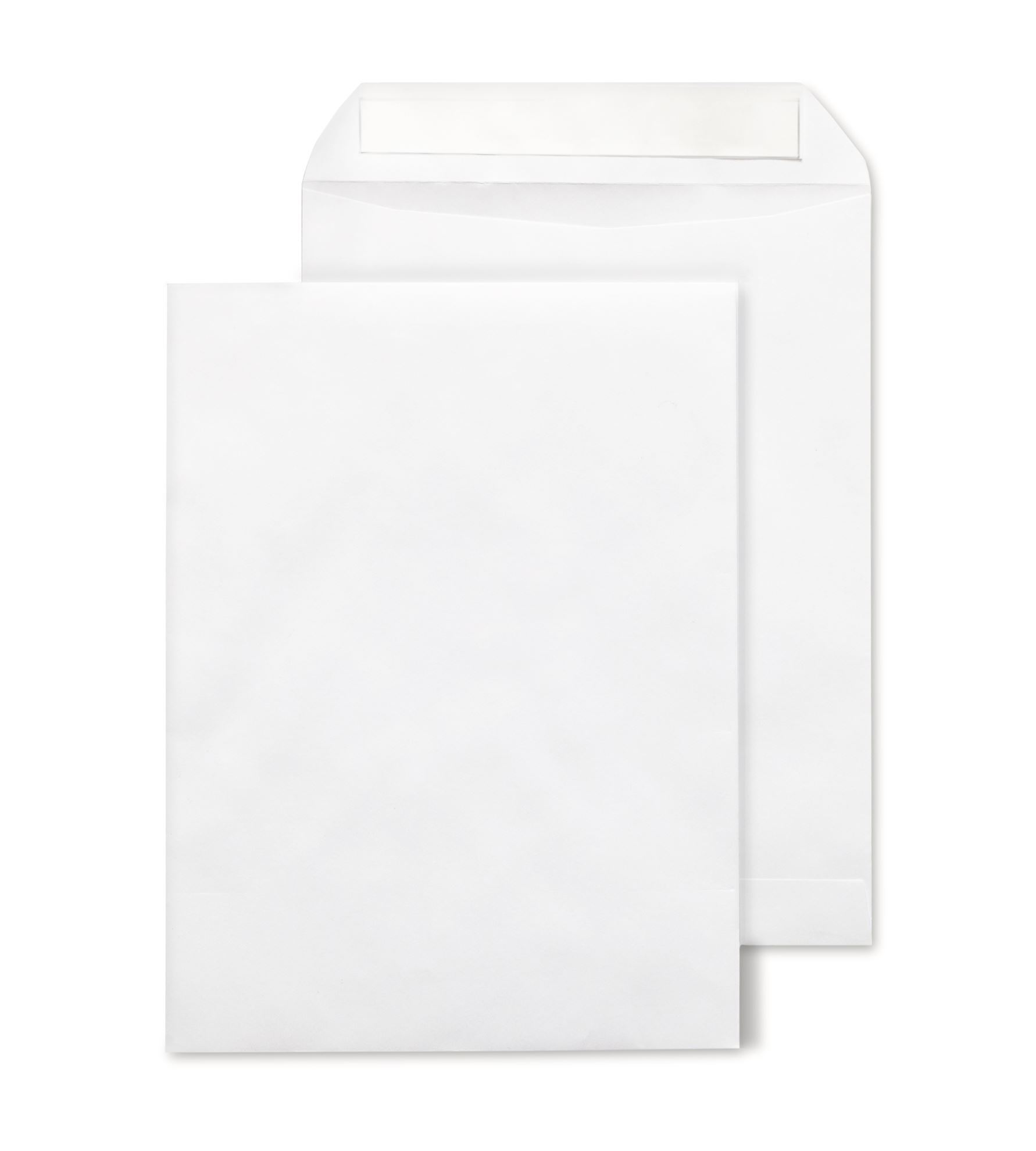
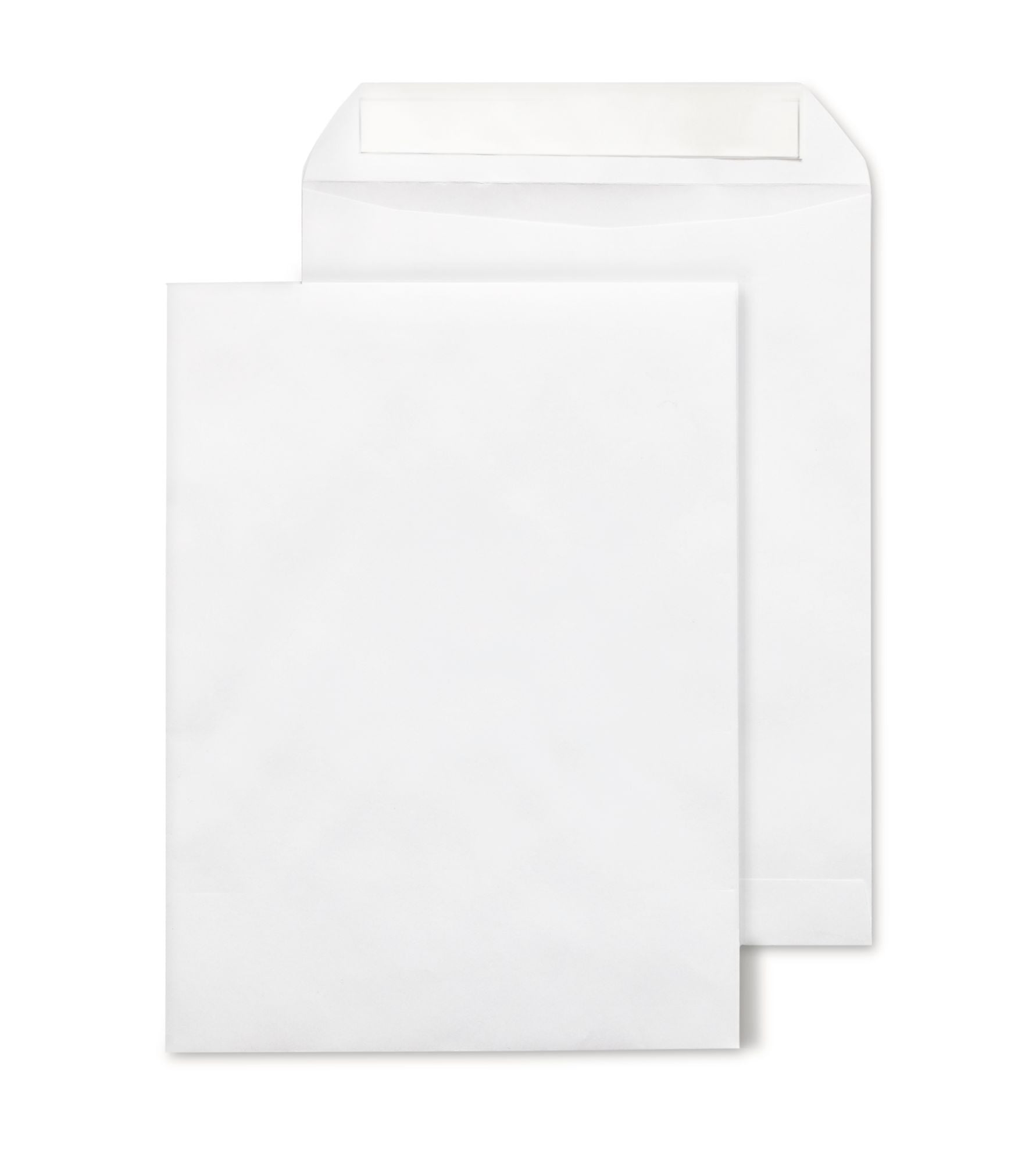
    9x12 peel and seal catalog envelopes for secure flat document mailing

    9x12 peel-and-seal open-end envelopes for flat document mailing. Reliable pressure-sensitive closure that holds through automated postal processing. Click to view product.


    What Is the Best Way to Seal Envelopes in Bulk?

    For any operation sealing more than a few dozen envelopes, sealing technique becomes an efficiency and reliability concern at the same time.


    How to Seal Gummed Envelopes in Bulk Correctly

    Licking gummed flaps in bulk is inconsistent, unhygienic in shared office environments, and produces variable moisture levels. The better tools for high-volume gummed sealing are:

    • Foam roller moisteners. A tank holds water and feeds it to a foam roller that the envelope flap passes over. Moisture is applied evenly at a consistent level across every envelope.
    • Sponge moistener cups. A small shallow cup with a wet sponge. Dragging the envelope flap across the surface applies even moisture. Simpler than a roller but effective for moderate volumes.
    • Envelope moistening bottles. A squeeze bottle with a moistening tip allows controlled moisture application along the full length of the gummed strip.

    Regardless of the moistening tool, the sealing technique remains the same: press the corners first, then seal the full flap with firm even pressure, and stand sealed envelopes upright or flat for at least 30 seconds before stacking. Always test one sealed envelope at the start of a run before processing the full batch.


    Why Peel-and-Seal Is Faster and More Consistent for High Volumes

    For billing departments, insurance companies, and any operation sealing hundreds of envelopes per week, the switch to peel-and-seal eliminates the moistening step entirely. Removing the liner and pressing each piece takes less time than moistening a gummed flap and waiting for it to set. There is no moisture tool to maintain, no water to refill, and no variability from inconsistent moistening. The self-seal envelopes guide covers format and volume considerations for self-seal switching decisions.


    Which Envelope Closure Is Least Likely to Come Open?

    Closure Type Adhesive Type Humidity Risk Seal Reliability Best Use
    Gummed Flap Dextrin / gum arabic (moisture-activated) High Good when used correctly in ideal conditions Dry environments, personal correspondence, machine insertion
    Peel-and-Seal Pressure-sensitive acrylic Very Low Highest. Permanent tamper-evident bond on contact Business mail, checks, invoices, any humid environment
    Flip-and-Stick Latex-on-latex contact Low High. No liner step required, slightly faster than peel-and-seal Business mail, high-volume hand sealing
    Clasp / String-and-Button Mechanical only (no adhesive) None Reusable, not tamper-evident, not suitable for secure postal mail Interoffice routing, internal document transit only

    For a detailed comparison of peel-and-seal against flip-and-stick, including which is faster, which is more widely available, and how they differ for machine insertion, see the peel-and-seal vs flip-and-stick guide.


    When to Stop Troubleshooting and Switch Closure Types

    Correct sealing technique, proper storage, and appropriate paper weight solve most seal failure problems with gummed flap envelopes. But some situations call for a permanent solution rather than ongoing maintenance of a marginal process.

    Switch to peel-and-seal envelopes when:

    • Your mail room is in a building without reliable climate control in summer
    • Gummed envelopes frequently come out of storage partially pre-sealed
    • Your operation seals more than 50 envelopes per day and moistening tools are adding complexity
    • Seal failures are causing returned mail or recipient complaints
    • Your mailing program involves checks, financial documents, or any content where a failed seal creates a security or compliance issue

    Peel-and-seal envelopes are available in every major business size and format. The self-seal envelopes category includes #10, 6x9, 9x12, and window formats. The security envelopes for business guide covers when to combine peel-and-seal closure with security-tinted interiors for sensitive business mail programs.


    How to Stop an Envelope From Coming Unsealed: Prevention Checklist

    1. Test a sealed sample before every large batch. Press one envelope, let it dry for 10 minutes, then try to pull the flap open with moderate force. If it separates easily, identify and fix the cause before running the batch.
    2. Seal corners first on gummed flaps. Press each corner against the envelope body before sealing the full flap. Corners are the first failure points under postal stress.
    3. Apply moisture evenly across the full gummed strip. Never moisten only the centre. Use a foam roller or sponge moistener for consistency in high-volume operations.
    4. Remove the release liner immediately before sealing peel-and-seal envelopes. Do not remove the liner and set the envelope aside. Exposed adhesive picks up dust in seconds.
    5. Press with firm even pressure, not a sliding motion. For peel-and-seal, press straight down across the full flap length. Sliding shifts the flap before the bond sets.
    6. Allow sealed gummed envelopes to stand for 30 seconds before stacking. This prevents the still-setting bond from shifting under the weight of stacked pieces.
    7. Store envelopes in climate-controlled conditions below 60 percent relative humidity. Move stock away from exterior walls, windows, and HVAC equipment.
    8. Check your stock age before any important mailing. Test any envelope batch that has been in storage for more than two years before committing it to a large run.
    9. Match paper weight to contents. Heavier or multi-sheet contents need 24 lb or 28 lb paper for a reliable seal. 20 lb paper is appropriate for single-sheet light correspondence only.
    10. Switch closure types if problems are recurring. If you are experiencing repeated gummed flap seal failures in your environment, peel-and-seal is the long-term solution, not more careful technique.


    Shop Reliable Peel-and-Seal Envelopes

    Family-owned since 1997. Over 53,526 customers. All standard business sizes in stock.

    All Self-Seal Envelopes Peel-and-Seal #10 9x12 Peel-and-Seal


    What Customers Say About Seal Reliability

    ★★★★★

    "Thank you for these amazing Envelopes they are excellent quality the adhesive works perfectly! Will reorder pretty soon."

    Rikki  |  Verified Buyer  |  #10 Peel-and-Seal Envelopes

    ★★★★★

    "They are made with good paper stock, have privacy print on the inside, and they self seal like a dream. Will definitely buy again if available."

    Rikki  |  Verified Buyer  |  #10 Peel-and-Seal Envelopes

    ★★★★★

    "Came packaged nicely and compactly in a box. Adhesive is great, and windowless for privacy."

    Rikki  |  Verified Buyer  |  #10 Peel-and-Seal Envelopes


    Related Guides at Business Envelopes


    About Business Envelopes

    Business Envelopes is a family-owned company founded in 1997, headquartered at 308 Museum Village Rd, Monroe, NY 10950. For over 20 years the company has served more than 53,526 customers, supplying business envelopes in every standard size, paper weight, closure type, and format. Content published on BusinessEnvelopes.com reflects direct product knowledge built over decades of experience in the business envelope industry.

    Source: https://www.businessenvelopes.com/about-us

    Can You Reuse a Peel and Seal Envelope? The Complete Answer

    You sealed the envelope, then realized you forgot the enclosure. Or you are ordering peel and seal envelopes for your operation and want to know upfront whether they can be opened and reused before committing to a bulk purchase. Either way, the question is the same: can you reuse a peel and seal envelope?

    The answer is no, and it is not a defect. The reason is tied directly to how pressure-sensitive adhesive works and why that one-time bond is actually the most important feature a peel and seal envelope has. This guide covers everything: the chemistry, the visual evidence of tamper attempts, what competitors' content leaves out, what the mailing community asks most often, and which envelope type to reach for when reusability is genuinely what you need.


    Quick Answer

    No. Peel and seal envelopes cannot be reliably reused. Once you remove the release liner and press the flap closed, the pressure-sensitive adhesive forms a permanent bond. Reopening damages the adhesive and the paper surface. The envelope cannot reseal securely without tape or glue, and a compromised seal may fail during postal processing. This is by design: the same bond that prevents reuse makes peel and seal envelopes tamper-evident, which is a critical security feature for checks, invoices, and confidential business mail.


    peel and seal business envelope security tinted #10 size for confidential business mailing

    A #10 security-tinted peel and seal business envelope. Click to view product.


    How Does Peel and Seal Adhesive Actually Work?

    To understand why reuse is not possible, you need to understand what actually happens during the sealing process, and this is something no competing page currently explains with accuracy.

    A peel and seal envelope has a strip of pressure-sensitive adhesive applied to the inside of the flap. That adhesive is protected by a release liner: a thin strip of silicone-coated paper that prevents the adhesive from bonding prematurely. When you peel off the liner, you expose the adhesive. When you press the flap down against the envelope body, the adhesive forms a bond through contact pressure alone. No moisture, no heat, no chemical activation is required.


    What Is Pressure-Sensitive Adhesive and Why Does It Not Reseal?

    Pressure-sensitive adhesives work through intermolecular van der Waals forces. The moment the exposed adhesive surface contacts the paper of the envelope body, it begins forming thousands of micro-level adhesion points across the entire bond area. The longer the surfaces are in contact and the more pressure applied, the stronger and more complete those adhesion points become.

    When you try to separate the flap after sealing, you are mechanically breaking those adhesion points. What happens next depends on which surface the adhesive prefers:

    • The adhesive may stay mostly on the flap, leaving the envelope body surface undamaged but the adhesive itself weakened and unable to form a new complete bond.
    • The adhesive may partially transfer to the envelope body, splitting the adhesive mass and reducing bonding capacity on both surfaces.
    • The adhesive may pull paper fibers from one or both surfaces, leaving torn or delaminated patches that further reduce the bonding area.

    In every scenario, the adhesive is no longer capable of forming the secure, complete bond it achieved the first time. The physics of the first seal cannot be undone.


    What Happens When You Try to Reuse a Peel and Seal Envelope?

    If you attempt to open a sealed peel and seal envelope and reseal it, here is what you will observe in practice:

    • The flap will not stay closed. The adhesive has lost most of its bonding capacity. It will feel slightly tacky but will not form a seal that holds without applied pressure.
    • The paper surface will show visible distortion. Opening a sealed peel and seal envelope typically causes small tears, lifted fibers, or surface delamination at the bond line. These are visible without a magnifying glass.
    • The release liner cannot be replaced. Once peeled, the liner is gone. The adhesive is permanently exposed and will attract dust, debris, and may bond inadvertently to other surfaces in a mailing stack.
    • The envelope is likely to fail in postal handling. USPS automated sorting equipment applies mechanical stress at multiple points. A compromised adhesive bond that is holding by pressure alone is unlikely to survive a mail processing run intact.
    • The recipient will see the evidence. Even if the envelope makes it through processing, the distorted flap line and damaged adhesive strip will signal to the recipient that the envelope was opened after sealing. For business mail, this is a serious credibility and security issue.


    Does It Matter How Soon After Sealing You Try to Open It?

    This is a question mailing teams often ask. The answer is yes, timing matters, but only within a very narrow window.

    In the first two to three seconds immediately after sealing, before the adhesive has achieved full contact across the entire bond area, very careful separation at one corner may be possible. But even within this window, the adhesive is already partially committed and the flap is compromised for any secure reuse. For any formal mailing, this is not a viable workaround. A fresh envelope is always the correct solution.


    Can You Reseal a Peel and Seal Envelope With Tape or Glue?

    Technically, yes. Practically, there are two significant problems with doing this for business mail.

    The first problem is structural. The original adhesive has already weakened the paper surface at the flap line. Tape or glue applied over a damaged surface has less to grip. The seal produced is uneven and physically weaker than a fresh peel and seal bond.

    The second problem is professional and legal. A visibly resealed envelope signals to the recipient that the contents were changed or re-inserted after initial sealing. For invoices, payroll, medical documents, or any business correspondence where authenticity matters, a resealed envelope undermines the integrity of the piece.

    For personal correspondence, tape may work. For business mail, the answer is a fresh envelope.


    Why the Answer Is "No" and Why That Is the Whole Point

    The fact that you cannot reuse a peel and seal envelope is often framed as a limitation. It is not. It is the most important feature of the format.


    How Do You Tell If a Peel and Seal Envelope Has Been Opened?

    This is one of the top community questions about this topic, and it is directly connected to the reuse question. Because the pressure-sensitive adhesive bond is permanent, any attempt to open a sealed peel and seal envelope leaves physical, visible evidence:

    • Surface delamination or lifted paper fibers along the flap edge
    • A broken, stretched, or lifted adhesive strip
    • An uneven or distorted flap closure line
    • Tape, glue, or residue applied over the original seal
    • Wrinkling or bubbling of the flap paper from steam or heat attempts

    This is what makes peel and seal envelopes tamper-evident. A recipient who checks the flap will know. And for business programs mailing checks, financial statements, payroll, medical correspondence, or legal documents, that visible evidence of tampering is not an inconvenience. It is a protection.


    Are Peel and Seal Envelopes Tamper-Proof?

    Tamper-evident and tamper-proof are different things, and this distinction matters for security programs. Peel and seal envelopes are tamper-evident: they show evidence of tampering but do not physically prevent it. A determined person can force open any paper-based mailing.

    What peel and seal provides is a visible record of interference. Combined with security tinting on the interior of the envelope, which prevents contents from being read by holding the envelope to a light, peel and seal envelopes form a practical security layer for standard business correspondence that does not require specialized courier services.

    The security envelopes for business guide covers when and how to combine peel and seal closure with security-tinted interiors for programs that require maximum protection.


    Can You Reuse a Gummed Flap Envelope? How Does It Compare to Peel and Seal?

    This is the right follow-up question, and most pages skip it entirely. The difference in reuse behavior comes directly from the difference in adhesive chemistry.

    Gummed flap envelopes use a dextrin-based or polyvinyl alcohol-based adhesive that is applied in a dry state and requires moisture to activate. When you moisten the flap and press it down, the glue activates and forms a bond. If you act immediately, within the first few seconds while the glue is still wet, you may be able to separate the flap without tearing.

    This does not mean gummed flap envelopes are reliably reusable. The bond weakens with each attempt, the paper becomes wet and may tear, and the gummed strip eventually loses adhesive integrity entirely. But the moisture-activated chemistry does allow a narrow window for separation that pressure-sensitive adhesive does not.

    Peel and seal adhesive activates instantly on contact, with no moisture step. There is no wet window. The bond begins forming the moment the surfaces touch. This is why peel and seal envelopes seal more securely and more consistently than gummed flaps, and why their tamper evidence is more reliable.


    Envelope Closure Types Compared: Which Can Be Reused?

    Peel and Seal

    Cannot Be Reused

    Pressure-sensitive adhesive activates on contact. One-time permanent bond. Tamper-evident. The release liner cannot be replaced.

    Flip-and-Stick

    Cannot Be Reused

    Same permanent pressure-sensitive adhesive mechanism as peel and seal, but without a liner to remove. Bond is equally permanent.

    Gummed Flap

    Very Limited

    Water-activated adhesive. Brief separation window immediately after sealing while glue is still wet. Bond weakens with every attempt.

    Clasp / String and Button

    Yes, Fully Reusable

    Mechanical closure. Can be opened and re-closed many times without any adhesive. The right choice for interoffice routing.

    If your program requires a closure that can be opened and re-closed reliably, clasp envelopes are the correct product. The clasp mechanism is entirely mechanical with no adhesive involved, and the envelope can be accessed and re-secured as many times as needed.

    For a full side-by-side technical comparison of peel and seal versus flip-and-stick closure mechanics, see the peel-and-seal vs flip-and-stick guide. For a broader overview of all envelope closure types and formats available for business use, the types of business envelopes guide provides a complete reference.

    9x12 white peel and seal open-end catalog envelopes for flat document mailing

    9x12 peel and seal open-end envelopes: the flat-document standard for business mailing. Click to view product.


    What to Do If You Accidentally Sealed the Wrong Envelope

    This is the most common real-world situation behind this search query. You sealed the envelope, then realized something is wrong: wrong document inside, missing enclosure, wrong recipient. Here is the practical approach, step by step.

    1. Stop and assess before touching the seal. The longer you wait, the stronger the bond becomes. If you notice the error immediately, proceed to step 2. If the envelope has been sealed for more than a minute, skip to step 4.
    2. If fresh, try very gentle separation at one corner. Using a bone folder or the flat edge of a letter opener, slide carefully under the very tip of one corner of the flap. This only works in the first few seconds and only if the flap was pressed lightly. Never force it.
    3. Do not use steam, heat, or a hairdryer on peel and seal envelopes. Unlike gummed flap envelopes, where steam can reactivate the water-based adhesive, heat has minimal effect on pressure-sensitive adhesive and will cause the paper to warp and wrinkle without releasing the bond.
    4. Use a letter opener to cut cleanly across the top edge. Position the letter opener at the top opening of the envelope and cut straight across. Do not try to peel the flap. Cutting across the top preserves the document inside and gives you the cleanest access.
    5. Remove the contents carefully and start with a fresh envelope. This is always the right answer. A fresh envelope takes less than ten seconds to seal and guarantees a professional, secure result. The damaged envelope should be discarded.


    Does Peel and Seal Adhesive Lose Effectiveness Before You Seal the Envelope?

    This is a separate but related question that comes up frequently in mailing operations and office settings. People who store envelopes for extended periods want to know whether the adhesive degrades over time while the liner is still in place.

    The answer is no, with the liner intact and storage conditions within normal parameters. The release liner keeps the pressure-sensitive adhesive completely isolated from air, humidity, and contact until you deliberately remove it. Peel and seal envelopes stored correctly retain full adhesive effectiveness for years.


    What Storage Conditions Can Degrade the Adhesive Before Sealing?

    While the liner protects the adhesive from activation, extreme environmental conditions can affect the adhesive's molecular structure over time:

    • High humidity above normal office conditions can cause the liner itself to soften or separate partially from the adhesive strip, reducing the liner's release properties.
    • Sustained high temperatures can cause some pressure-sensitive adhesive formulations to flow slightly, reducing viscosity and potentially affecting bond strength.
    • Physical pressure on stored boxes that is heavy enough to deform the envelope stack can cause the liner to shift or the adhesive to take on a set that affects release characteristics.
    • Extended storage near exterior walls, windows, or heating systems combines temperature fluctuation with humidity variation in ways that age adhesives faster than stable interior storage.

    The how to store envelopes guide covers all storage conditions and shelf life by seal type in full detail.


    How to Choose the Right Peel and Seal Envelope for Your Mailing Program

    If you have confirmed that peel and seal is the right closure for your operation, the next decision is size and format. Here is a practical overview of the main categories available.


    Which Size Peel and Seal Envelope Do I Need for Letters and Invoices?

    The #10 size (4-1/8 x 9-1/2 inches) is the standard for business letters, invoices, statements, and single-sheet correspondence. A tri-folded standard 8.5 x 11 sheet fits the #10 exactly. Available with and without windows, with and without security tinting. Browse the peel-and-seal #10 envelopes including security-tinted options for confidential mail.


    Which Peel and Seal Envelope Is Best for Documents That Should Not Be Folded?

    The 9x12 size is the flat-document standard. A full 8.5 x 11 sheet fits without any fold, making this the right choice for contracts, legal papers, certificates, and any material that must arrive flat and uncreased. Available in open-end and booklet formats. The 9x12 peel-and-seal envelopes are available in both opening styles.


    When Should I Use 6x9 Peel and Seal Envelopes?

    The 6x9 size is commonly used for booklets, brochures, and multi-page inserts that fit without additional folding. The booklet format opens on the long edge for easy inserting. Browse the 6x9 peel-and-seal envelopes for specifications and available quantities.


    Do Window Peel and Seal Envelopes Offer the Same Security?

    Yes. Window peel and seal envelopes use the same pressure-sensitive adhesive and offer the same tamper-evident bond. The window simply eliminates the need to print or address the envelope separately, because the recipient address on the enclosed document is visible through the window. These are used extensively in billing, payroll, and check mailing programs. The #10 window self-sealing envelopes combine a self-seal closure with security tinting.


    What Is the Difference Between 24 lb and 28 lb Peel and Seal Envelopes?

    Paper weight affects envelope feel, opacity, and tear resistance. A 24 lb envelope is the standard for routine business correspondence. A 28 lb envelope has a more substantial feel, greater opacity for sensitive documents, and more durability for heavier contents. The envelope paper weight guide explains what the numbers mean and how to choose the right weight for your application.

    6x9 white peel and seal booklet envelopes for business correspondence and multi-page inserts

    6x9 peel and seal booklet envelopes for business correspondence. Click to view product.


    Common Mistakes When Using Peel and Seal Envelopes

    Even with a simple closure type, a few consistent errors reduce seal quality in mailing operations. These come directly from what business buyers and mailing staff report most often.

    • Removing the liner before the insert is ready. Once the liner is off, the clock is running. The exposed adhesive picks up dust and may bond inadvertently if set down on another surface. Only remove the liner when you are ready to close immediately.
    • Insufficient pressure across the full flap. Peel and seal adhesive bonds through pressure. A single finger stroke down the center of the flap leaves the edges incompletely bonded. Press firmly across the entire length of the flap for a complete seal.
    • Sealing in very high humidity. Humidity does not block peel and seal adhesive from bonding, but paper absorbs moisture and expands, which can cause the flap to pucker or bow slightly after sealing. Process mail in climate-controlled conditions when possible.
    • Stacking freshly sealed envelopes under heavy weight immediately. Allow a few seconds for the seal to set before stacking. Heavy pressure immediately after sealing can shift the flap slightly before the bond fully establishes.
    • Confusing peel and seal with gummed flap when troubleshooting. Tips that apply to gummed flap issues (humidity, moisture, storage temperature) do not apply the same way to peel and seal. The adhesive chemistry is different. Troubleshoot based on the specific closure type you are using.
    • Using the same envelope after the liner has been reinstalled manually. Some staff members attempt to press the liner back onto the adhesive after accidentally removing it. This does not work. The release coating on the liner that prevents permanent bonding only works reliably in one direction, and the liner itself may have picked up debris. Discard the envelope and start fresh.


    Shop Peel and Seal Envelopes at Business Envelopes

    All sizes, formats, and order quantities. Family-owned since 1997. Serving over 53,526 customers.

    All Self-Seal Envelopes Peel-and-Seal #10 9x12 Peel-and-Seal


    What Customers Say About Peel and Seal Adhesive Quality

    ★★★★★

    "Thank you for these amazing Envelopes they are excellent quality the adhesive works perfectly! Will reorder pretty soon."

    Rikki  |  Verified Buyer

    ★★★★★

    "They are made with good paper stock, have privacy print on the inside, and they self seal like a dream. Will definitely buy again if available."

    Rikki  |  Verified Buyer

    ★★★★★

    "Came packaged nicely and compactly in a box. Adhesive is great, and windowless for privacy."

    Rikki  |  Verified Buyer


    Self-Seal Envelope Resources and Further Reading

    These guides cover related topics that buyers working with peel and seal envelopes commonly need:


    About Business Envelopes

    Business Envelopes is a family-owned company founded in 1997, headquartered at 308 Museum Village Rd, Monroe, NY 10950. For over 20 years, the company has supplied blank and custom-printed envelopes to more than 53,526 customers across every major envelope format, paper weight, and closure type. Content published on BusinessEnvelopes.com reflects direct product knowledge from decades of experience in the business envelope industry.

    Source: https://www.businessenvelopes.com/about-us

    default image icon business envelopes

    Can You Reuse a Peel and Seal Envelope? The Complete Answer


    You sealed the envelope, then realized you forgot the enclosure. Or you are ordering peel and seal envelopes for your operation and want to know upfront whether they can be opened and reused before committing to a bulk purchase. Either way, the question is the same: can you reuse a peel and seal envelope?

    The answer is no, and it is not a defect. The reason is tied directly to how pressure-sensitive adhesive works and why that one-time bond is actually the most important feature a peel and seal envelope has. This guide covers everything: the chemistry, the visual evidence of tamper attempts, what competitors' content leaves out, what the mailing community asks most often, and which envelope type to reach for when reusability is genuinely what you need.

    Quick Answer

    No. Peel and seal envelopes cannot be reliably reused. Once you remove the release liner and press the flap closed, the pressure-sensitive adhesive forms a permanent bond. Reopening damages the adhesive and the paper surface. The envelope cannot reseal securely without tape or glue, and a compromised seal may fail during postal processing. This is by design: the same bond that prevents reuse makes peel and seal envelopes tamper-evident, which is a critical security feature for checks, invoices, and confidential business mail.

    peel and seal business envelope with adhesive liner strip intact before sealing

    A #10 peel and seal security-tinted business envelope with the release liner still intact

    How Does Peel and Seal Adhesive Actually Work?

    To understand why reuse is not possible, you need to understand what actually happens during the sealing process, and this is something no competing page currently explains with accuracy.

    A peel and seal envelope has a strip of pressure-sensitive adhesive applied to the inside of the flap. That adhesive is protected by a release liner: a thin strip of silicone-coated paper that prevents the adhesive from bonding prematurely. When you peel off the liner, you expose the adhesive. When you press the flap down against the envelope body, the adhesive forms a bond through contact pressure alone. No moisture, no heat, no chemical activation is required.

    What Is Pressure-Sensitive Adhesive and Why Does It Not Reseal?

    Pressure-sensitive adhesives work through intermolecular van der Waals forces. The moment the exposed adhesive surface contacts the paper of the envelope body, it begins forming thousands of micro-level adhesion points across the entire bond area. The longer the surfaces are in contact and the more pressure applied, the stronger and more complete those adhesion points become.

    When you try to separate the flap after sealing, you are mechanically breaking those adhesion points. What happens next depends on which surface the adhesive prefers:

    • The adhesive may stay mostly on the flap, leaving the envelope body surface undamaged but the adhesive itself weakened and unable to form a new complete bond.
    • The adhesive may partially transfer to the envelope body, splitting the adhesive mass and reducing bonding capacity on both surfaces.
    • The adhesive may pull paper fibers from one or both surfaces, leaving torn or delaminated patches that further reduce the bonding area.

    In every scenario, the adhesive is no longer capable of forming the secure, complete bond it achieved the first time. The physics of the first seal cannot be undone.

    What Happens When You Try to Reuse a Peel and Seal Envelope?

    If you attempt to open a sealed peel and seal envelope and reseal it, here is what you will observe in practice:

    • The flap will not stay closed. The adhesive has lost most of its bonding capacity. It will feel slightly tacky but will not form a seal that holds without applied pressure.
    • The paper surface will show visible distortion. Opening a sealed peel and seal envelope typically causes small tears, lifted fibers, or surface delamination at the bond line. These are visible without a magnifying glass.
    • The release liner cannot be replaced. Once peeled, the liner is gone. The adhesive is permanently exposed and will attract dust, debris, and may bond inadvertently to other surfaces in a mailing stack.
    • The envelope is likely to fail in postal handling. USPS automated sorting equipment applies mechanical stress at multiple points. A compromised adhesive bond that is holding by pressure alone is unlikely to survive a mail processing run intact.
    • The recipient will see the evidence. Even if the envelope makes it through processing, the distorted flap line and damaged adhesive strip will signal to the recipient that the envelope was opened after sealing. For business mail, this is a serious credibility and security issue.

    Does It Matter How Soon After Sealing You Try to Open It?

    This is a question mailing teams often ask. The answer is yes, timing matters, but only within a very narrow window.

    In the first two to three seconds immediately after sealing, before the adhesive has achieved full contact across the entire bond area, very careful separation at one corner may be possible. But even within this window, the adhesive is already partially committed and the flap is compromised for any secure reuse. For any formal mailing, this is not a viable workaround. A fresh envelope is always the correct solution.

    Can You Reseal a Peel and Seal Envelope With Tape or Glue?

    Technically, yes. Practically, there are two significant problems with doing this for business mail.

    The first problem is structural. The original adhesive has already weakened the paper surface at the flap line. Tape or glue applied over a damaged surface has less to grip. The seal produced is uneven and physically weaker than a fresh peel and seal bond.

    The second problem is professional and legal. A visibly resealed envelope signals to the recipient that the contents were changed or re-inserted after initial sealing. For invoices, payroll, medical documents, or any business correspondence where authenticity matters, a resealed envelope undermines the integrity of the piece.

    For personal correspondence, tape may work. For business mail, the answer is a fresh envelope.

    Why the Answer Is "No" and Why That Is the Whole Point

    The fact that you cannot reuse a peel and seal envelope is often framed as a limitation. It is not. It is the most important feature of the format.

    How Do You Tell If a Peel and Seal Envelope Has Been Opened?

    This is one of the top community questions about this topic, and it is directly connected to the reuse question. Because the pressure-sensitive adhesive bond is permanent, any attempt to open a sealed peel and seal envelope leaves physical, visible evidence:

    • Surface delamination or lifted paper fibers along the flap edge
    • A broken, stretched, or lifted adhesive strip
    • An uneven or distorted flap closure line
    • Tape, glue, or residue applied over the original seal
    • Wrinkling or bubbling of the flap paper from steam or heat attempts

    This is what makes peel and seal envelopes tamper-evident. A recipient who checks the flap will know. And for business programs mailing checks, financial statements, payroll, medical correspondence, or legal documents, that visible evidence of tampering is not an inconvenience. It is a protection.

    Are Peel and Seal Envelopes Tamper-Proof?

    Tamper-evident and tamper-proof are different things, and this distinction matters for security programs. Peel and seal envelopes are tamper-evident: they show evidence of tampering but do not physically prevent it. A determined person can force open any paper-based mailing.

    What peel and seal provides is a visible record of interference. Combined with security tinting on the interior of the envelope, which prevents contents from being read by holding the envelope to a light, peel and seal envelopes form a practical security layer for standard business correspondence that does not require specialized courier services.

    The security envelopes for business guide covers when and how to combine peel and seal closure with security-tinted interiors for programs that require maximum protection.

    Can You Reuse a Gummed Flap Envelope? How Does It Compare to Peel and Seal?

    This is the right follow-up question, and most pages skip it entirely. The difference in reuse behavior comes directly from the difference in adhesive chemistry.

    Gummed flap envelopes use a dextrin-based or polyvinyl alcohol-based adhesive that is applied in a dry state and requires moisture to activate. When you moisten the flap and press it down, the glue activates and forms a bond. If you act immediately, within the first few seconds while the glue is still wet, you may be able to separate the flap without tearing.

    This does not mean gummed flap envelopes are reliably reusable. The bond weakens with each attempt, the paper becomes wet and may tear, and the gummed strip eventually loses adhesive integrity entirely. But the moisture-activated chemistry does allow a narrow window for separation that pressure-sensitive adhesive does not.

    Peel and seal adhesive activates instantly on contact, with no moisture step. There is no wet window. The bond begins forming the moment the surfaces touch. This is why peel and seal envelopes seal more securely and more consistently than gummed flaps, and why their tamper evidence is more reliable.

    Envelope Closure Types Compared: Which Can Be Reused?

    Peel and Seal

    Cannot Be Reused

    Pressure-sensitive adhesive activates on contact. One-time permanent bond. Tamper-evident. The release liner cannot be replaced.

    Flip-and-Stick

    Cannot Be Reused

    Same permanent pressure-sensitive adhesive mechanism as peel and seal, but without a liner to remove. Bond is equally permanent.

    Gummed Flap

    Very Limited

    Water-activated adhesive. Brief separation window immediately after sealing while glue is still wet. Bond weakens with every attempt.

    Clasp / String and Button

    Yes, Fully Reusable

    Mechanical closure. Can be opened and re-closed many times without any adhesive. The right choice for interoffice routing.

    If your program requires a closure that can be opened and re-closed reliably, clasp envelopes are the correct product. The clasp mechanism is entirely mechanical with no adhesive involved, and the envelope can be accessed and re-secured as many times as needed.

    For a full side-by-side technical comparison of peel and seal versus flip-and-stick closure mechanics, see the peel-and-seal vs flip-and-stick guide. For a broader overview of all envelope closure types and formats available for business use, the types of business envelopes guide provides a complete reference.

    9x12 white peel and seal catalog envelopes for flat document mailing

    9x12 peel and seal open-end envelopes: the flat-document standard for business mailing programs

    What to Do If You Accidentally Sealed the Wrong Envelope

    This is the most common real-world situation behind this search query. You sealed the envelope, then realized something is wrong: wrong document inside, missing enclosure, wrong recipient. Here is the practical approach, step by step.

    1. Stop and assess before touching the seal. The longer you wait, the stronger the bond becomes. If you notice the error immediately, proceed to step 2. If the envelope has been sealed for more than a minute, skip to step 4.
    2. If fresh, try very gentle separation at one corner. Using a bone folder or the flat edge of a letter opener, slide carefully under the very tip of one corner of the flap. This only works in the first few seconds and only if the flap was pressed lightly. Never force it.
    3. Do not use steam, heat, or a hairdryer on peel and seal envelopes. Unlike gummed flap envelopes, where steam can reactivate the water-based adhesive, heat has minimal effect on pressure-sensitive adhesive and will cause the paper to warp and wrinkle without releasing the bond.
    4. Use a letter opener to cut cleanly across the top edge. Position the letter opener at the top opening of the envelope and cut straight across. Do not try to peel the flap. Cutting across the top preserves the document inside and gives you the cleanest access.
    5. Remove the contents carefully and start with a fresh envelope. This is always the right answer. A fresh envelope takes less than ten seconds to seal and guarantees a professional, secure result. The damaged envelope should be discarded.

    Does Peel and Seal Adhesive Lose Effectiveness Before You Seal the Envelope?

    This is a separate but related question that comes up frequently in mailing operations and office settings. People who store envelopes for extended periods want to know whether the adhesive degrades over time while the liner is still in place.

    The answer is no, with the liner intact and storage conditions within normal parameters. The release liner keeps the pressure-sensitive adhesive completely isolated from air, humidity, and contact until you deliberately remove it. Peel and seal envelopes stored correctly retain full adhesive effectiveness for years.

    What Storage Conditions Can Degrade the Adhesive Before Sealing?

    While the liner protects the adhesive from activation, extreme environmental conditions can affect the adhesive's molecular structure over time:

    • High humidity above normal office conditions can cause the liner itself to soften or separate partially from the adhesive strip, reducing the liner's release properties.
    • Sustained high temperatures can cause some pressure-sensitive adhesive formulations to flow slightly, reducing viscosity and potentially affecting bond strength.
    • Physical pressure on stored boxes that is heavy enough to deform the envelope stack can cause the liner to shift or the adhesive to take on a set that affects release characteristics.
    • Extended storage near exterior walls, windows, or heating systems combines temperature fluctuation with humidity variation in ways that age adhesives faster than stable interior storage.

    The how to store envelopes guide covers all storage conditions and shelf life by seal type in full detail.

    How to Choose the Right Peel and Seal Envelope for Your Mailing Program

    If you have confirmed that peel and seal is the right closure for your operation, the next decision is size and format. Here is a practical overview of the main categories available.

    Which Size Peel and Seal Envelope Do I Need for Letters and Invoices?

    The #10 size (4-1/8 x 9-1/2 inches) is the standard for business letters, invoices, statements, and single-sheet correspondence. A tri-folded standard 8.5 x 11 sheet fits the #10 exactly. Available with and without windows, with and without security tinting. Browse the peel-and-seal #10 envelopes including security-tinted options for confidential mail.

    Which Peel and Seal Envelope Is Best for Documents That Should Not Be Folded?

    The 9x12 size is the flat-document standard. A full 8.5 x 11 sheet fits without any fold, making this the right choice for contracts, legal papers, certificates, and any material that must arrive flat and uncreased. Available in open-end and booklet formats. The 9x12 peel-and-seal envelopes are available in both opening styles.

    When Should I Use 6x9 Peel and Seal Envelopes?

    The 6x9 size is commonly used for booklets, brochures, and multi-page inserts that fit without additional folding. The booklet format opens on the long edge for easy inserting. Browse the 6x9 peel-and-seal envelopes for specifications and available quantities.

    Do Window Peel and Seal Envelopes Offer the Same Security?

    Yes. Window peel and seal envelopes use the same pressure-sensitive adhesive and offer the same tamper-evident bond. The window simply eliminates the need to print or address the envelope separately, because the recipient address on the enclosed document is visible through the window. These are used extensively in billing, payroll, and check mailing programs. The #10 window self-sealing envelopes combine a self-seal closure with security tinting.

    What Is the Difference Between 24 lb and 28 lb Peel and Seal Envelopes?

    Paper weight affects envelope feel, opacity, and tear resistance. A 24 lb envelope is the standard for routine business correspondence. A 28 lb envelope has a more substantial feel, greater opacity for sensitive documents, and more durability for heavier contents. The envelope paper weight guide explains what the numbers mean and how to choose the right weight for your application.

    6x9 white peel and seal booklet envelopes for business correspondence

    6x9 peel and seal booklet envelopes for business correspondence and multi-page document mailing

    Common Mistakes When Using Peel and Seal Envelopes

    Even with a simple closure type, a few consistent errors reduce seal quality in mailing operations. These come directly from what business buyers and mailing staff report most often.

    • Removing the liner before the insert is ready. Once the liner is off, the clock is running. The exposed adhesive picks up dust and may bond inadvertently if set down on another surface. Only remove the liner when you are ready to close immediately.
    • Insufficient pressure across the full flap. Peel and seal adhesive bonds through pressure. A single finger stroke down the center of the flap leaves the edges incompletely bonded. Press firmly across the entire length of the flap for a complete seal.
    • Sealing in very high humidity. Humidity does not block peel and seal adhesive from bonding, but paper absorbs moisture and expands, which can cause the flap to pucker or bow slightly after sealing. Process mail in climate-controlled conditions when possible.
    • Stacking freshly sealed envelopes under heavy weight immediately. Allow a few seconds for the seal to set before stacking. Heavy pressure immediately after sealing can shift the flap slightly before the bond fully establishes.
    • Confusing peel and seal with gummed flap when troubleshooting. Tips that apply to gummed flap issues (humidity, moisture, storage temperature) do not apply the same way to peel and seal. The adhesive chemistry is different. Troubleshoot based on the specific closure type you are using.
    • Using the same envelope after the liner has been reinstalled manually. Some staff members attempt to press the liner back onto the adhesive after accidentally removing it. This does not work. The release coating on the liner that prevents permanent bonding only works reliably in one direction, and the liner itself may have picked up debris. Discard the envelope and start fresh.

    Shop Peel and Seal Envelopes at Business Envelopes

    All sizes, formats, and order quantities. Family-owned since 1997. Serving over 53,526 customers.

    All Self-Seal Envelopes Peel-and-Seal #10 9x12 Peel-and-Seal

    What Customers Say About Peel and Seal Adhesive Quality

    ★★★★★

    "Thank you for these amazing Envelopes they are excellent quality the adhesive works perfectly! Will reorder pretty soon."

    Rikki  |  Verified Buyer

    ★★★★★

    "They are made with good paper stock, have privacy print on the inside, and they self seal like a dream. Will definitely buy again if available."

    Rikki  |  Verified Buyer

    ★★★★★

    "Came packaged nicely and compactly in a box. Adhesive is great, and windowless for privacy."

    Rikki  |  Verified Buyer

    Self-Seal Envelope Resources and Further Reading

    These guides cover related topics that buyers working with peel and seal envelopes commonly need:


    About Business Envelopes

    Business Envelopes is a family-owned company founded in 1997, headquartered at 308 Museum Village Rd, Monroe, NY 10950. For over 20 years, the company has supplied blank and custom-printed envelopes to more than 53,526 customers across every major envelope format, paper weight, and closure type. Content published on BusinessEnvelopes.com reflects direct product knowledge from decades of experience in the business envelope industry.

    Source: https://www.businessenvelopes.com/about-us

    Envelope for Invoices: Which Format to Use and When

    Picking the right envelope for invoices is more involved than it looks. Three formats handle most business invoice programs plain #10, single window, and double window and each one applies to a different mailing workflow. Choose the wrong one and addresses misalign, confidential figures show through the paper, or your inserting machine jams.

    This guide covers every decision a business needs to make before ordering invoice envelopes: format selection, window type, closure options, security tinting, software compatibility, and return envelope pairing. Each section maps directly to the real-world questions that buyers ask when setting up or changing a billing program.

    Quick Answer: The standard envelope for invoices in the US is the #10 size (4-1/8 x 9-1/2 inches). Most billing programs use a single window #10 so the recipient address shows through without separate addressing. High-volume accounts payable programs use a double window #10 so both addresses show. Plain #10 envelopes work when addresses are printed directly on the envelope. Explore the full range at window envelopes and double window envelopes.


    What Is an Envelope for Invoices?

    An envelope for invoices is a standard commercial envelope designed to hold a folded billing document for mailing. In the United States, nearly all invoice programs use the #10 envelope, which measures 4-1/8 x 9-1/2 inches and fits a standard 8.5 x 11 sheet folded into thirds.

    The #10 is the default commercial envelope size in the US for a practical reason: it holds the most common business document without excess bulk, qualifies for USPS First Class letter postage, and fits every standard mail inserting machine. Invoice envelopes come in three window configurations, three main closure types, and with or without security tinting depending on the sensitivity of the contents being mailed.

    To understand which invoice envelope format suits your program, it helps to work through the format decision first, then closure, then security options. The sections below cover each decision point in order.


    The Three Invoice Envelope Formats: Plain, Single Window, and Double Window

    Most invoice programs fall into one of three configurations. The choice comes down to how your document is produced and how you want to handle addressing.


    Plain #10 Envelope: When to Use It for Invoices

    A plain #10 envelope has no window. It works for invoice programs where addresses are printed or typed directly on the envelope face, or where a label is affixed. This format is the right choice for low-volume billing where each invoice is individually addressed, for programs where the invoice document does not include a visible address block in the right position, or for operations that prefer not to have any envelope content visible from the outside.

    Plain envelopes give the most flexibility in terms of envelope color and paper stock. They also provide the highest level of content privacy since nothing inside the envelope is visible through the paper. Browse the full range at #10 envelopes.


    Single Window #10 Envelope: The Standard for Most Invoice Programs

    A single window envelope has one transparent panel on the front. When the invoice is folded correctly and inserted, the recipient's delivery address on the document shows through the window, eliminating the need to address the envelope separately. This is the most widely used format for billing programs in the US.

    Single window envelopes work with virtually every accounting software that generates invoices, because the recipient address block on a standard invoice template lands in the correct position for the window when the document is tri-folded. The return address on a single window envelope is either pre-printed on the envelope or handled through custom envelope printing. Explore available options at window envelopes.


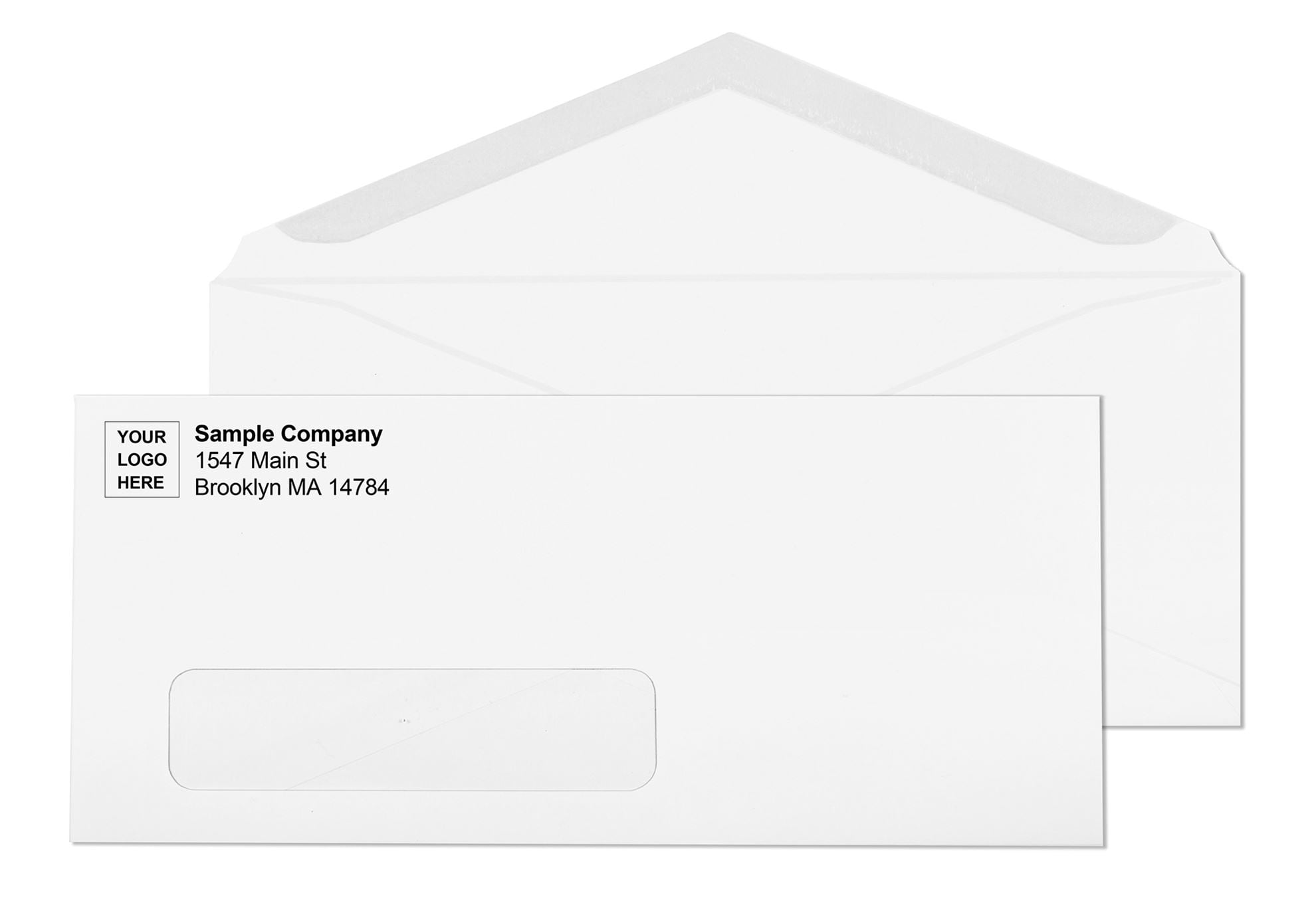
    #10 single window business envelope with gummed seal, standard invoice envelope from Business Envelopes


    Double Window #10 Envelope: For Accounts Payable and High-Volume Billing

    A double window envelope has two transparent panels. The larger window shows the recipient's delivery address. The smaller upper window shows your return address as it appears on the document itself. This eliminates both addressing steps entirely you print the invoice, fold it, and insert it, with no additional labeling or envelope printing required.

    Double window envelopes are the standard for accounts payable departments, recurring billing programs, insurance statements, and any operation mailing several hundred or more invoices per month. They save significant time at volume and eliminate handwriting or separate label application for the return address. The envelope format used must be specifically designed for invoice-format documents, not for check documents this distinction is covered in full below.


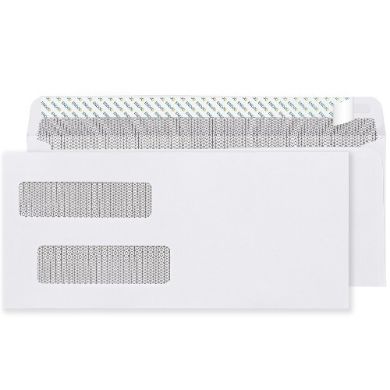
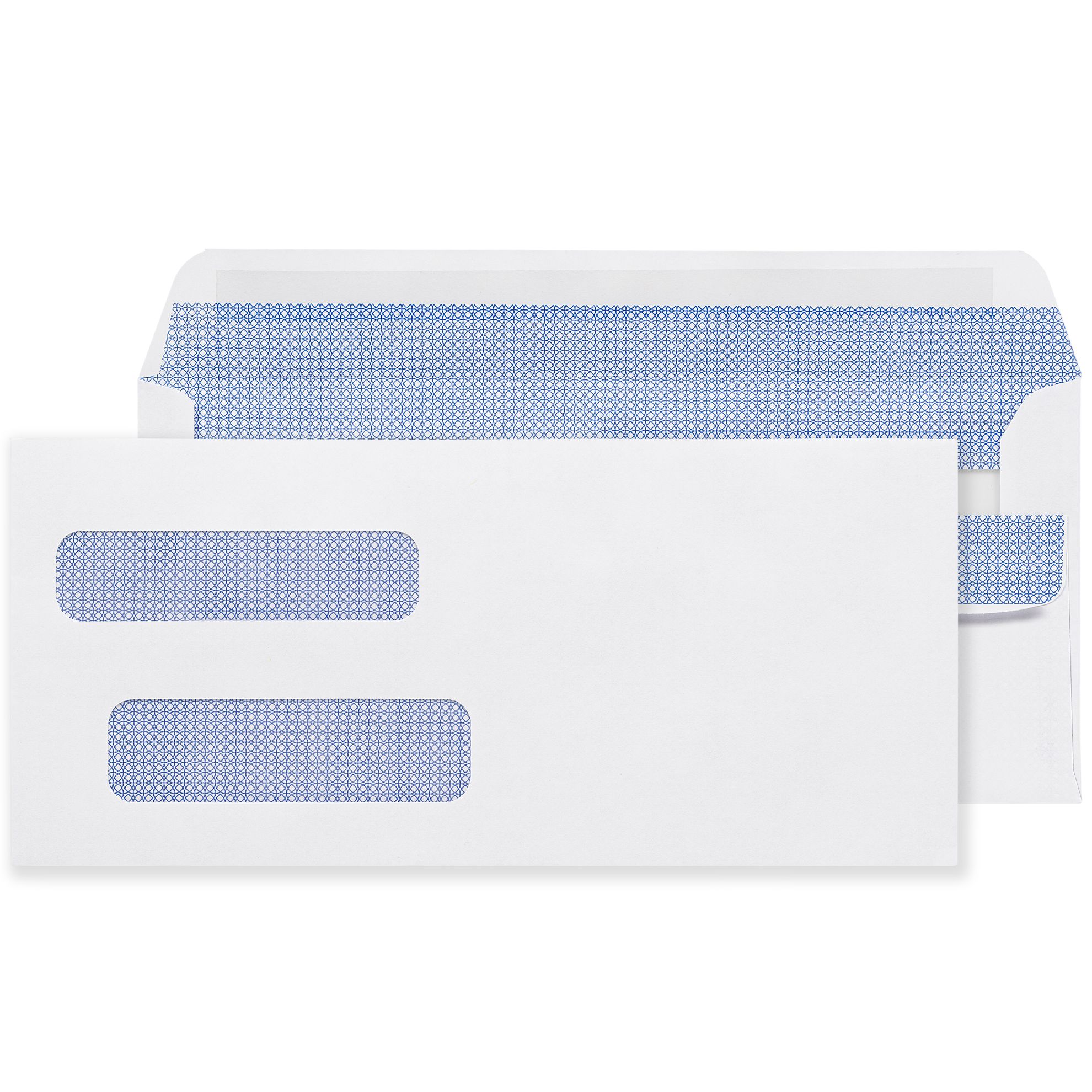
    #10 double window self-sealing envelope for invoices and statements from Business Envelopes


    Business Envelopes carries three closure variants for double window invoice envelopes:

    This is what a real Business Envelopes customer had to say about the flip-seal invoice envelopes:

    "These fit my QB invoices perfectly! Love it and definitely recommend it!"
    Gitty | 5 stars | Verified Customer, Business Envelopes
    "Best envelopes for my QuickBooks invoicing and I've tried several! Get these you can't go wrong!"
    Etty | 5 stars | Verified Customer, Business Envelopes


    Single Window vs Double Window for Invoices: Which One Do You Need?

    Both window formats eliminate the step of addressing the envelope's delivery field. The decision between them comes down to how you handle the return address.

    Format Windows Return Address Method Best For
    Plain #10 None Printed, typed, or labeled on envelope Low volume, custom addressing, maximum privacy
    Single window 1 (delivery address) Pre-printed on envelope or custom printed Standard billing programs, most accounting software
    Double window 2 (delivery + return) Shows through the upper window from the document High-volume AP programs, recurring billing, statements

    If your invoice template in accounting software already shows your company name and address at the top of the document, a double window envelope uses that information as the visible return address. If you want to use a custom printed envelope with a logo and return address pre-printed in color, a single window format gives you that option while still eliminating recipient addressing.

    For a full breakdown of window types and configurations, see the window envelopes guide.


    Does Your Accounting Software Affect Which Invoice Envelope You Need?

    Yes, and this is where many buyers run into trouble. Different accounting software platforms position the recipient address block and the sender address block at different locations on the printed invoice. Your envelope window positions must match exactly.


    How Accounting Software Invoices Align with Window Envelopes

    Standard #10 single and double window invoice envelopes are designed to align with address blocks positioned according to standard invoice document templates. When the invoice is tri-folded bottom third up, top third down over it the delivery address should sit directly behind the window without any edge cut off.

    If you find that your address is not aligning correctly after a software update, the most common fix is to check the window envelope setting in your software's form customization options. Many platforms have a specific checkbox for window envelope formatting that adjusts address positioning to fall within the standard window zone. Enable that option and run a single test print before processing a full batch.


    Why Invoice Envelopes and Check Envelopes Are Not Interchangeable

    This point is critical for any office running both accounts payable (checks) and accounts receivable (invoices) programs. Invoice-format double window envelopes use a standard #10 body (4-1/8 x 9-1/2 inches) with windows positioned to show the address blocks on a standard invoice layout.

    Check-format envelopes have different outer dimensions and their windows are calibrated specifically to match where software places the payer and payee addresses on a voucher check form. Using an invoice envelope for checks will cause the addresses to appear in the wrong windows. Using a check envelope for invoices produces the same misalignment in reverse.

    For check programs, see envelope for checks and envelopes for QuickBooks checks. For invoices, stick with the invoice-format double window products linked throughout this guide.

    See also: double window envelopes guide for a full explanation of the format difference between check and invoice configurations.


    Do Invoice Envelopes Need Security Tinting?

    Security tinting is not mandatory, but it is the professional standard for any invoice program where the enclosed document contains sensitive financial data.


    What Security Tinting Does

    A security tinted envelope has a printed interior pattern in blue, gray, or another dark color. When the sealed envelope is held up to a light source, the interior pattern blocks the printed text from showing through the paper body. This prevents anyone handling the envelope from reading account numbers, outstanding balances, payment amounts, or personal financial details before the recipient opens it.


    When to Choose a Security Tinted Invoice Envelope

    Use security tinted envelopes when your invoices include any of the following:

    • Account or customer numbers
    • Outstanding balance or payment amount figures
    • Patient or client identifiers in healthcare billing
    • Insurance policy or claim information
    • Legal or financial account details

    For standard commercial invoices containing only company name, service description, and a total amount, standard white wove envelopes are adequate. If your billing documents contain any personally identifiable financial information, security tinted envelopes are the appropriate choice.

    Read the full breakdown at security tinted envelopes. For window envelopes with built-in security tinting, see the laser-safe options at #10 tinted window envelopes.

    "Fantastic envelopes. The self sealing adhesive works fabulously. The tinted option makes it a safe envelope to be used."
    Rikki | 5 stars | Verified Customer, Business Envelopes


    Which Closure Type Works Best for Invoice Envelopes?

    The right closure depends on your mailing volume and whether you use an automated inserting machine. There are three main options for invoice envelopes.


    Gummed Flap: For Automated Invoice Programs

    Gummed flap envelopes have a moisture-activated adhesive strip on the flap. They are the standard for automated mail inserting machines, which apply water to the flap as part of the mechanical sealing process. If your invoice program runs through an inserter, gummed flap is the specification you need. Manual sealing of gummed envelopes requires a sponge, moistener bottle, or damp cloth licking large volumes is both impractical and unreliable for a consistent seal.

    See: double window invoice envelopes, gummed flap.


    Peel-and-Seal: For Manual Sealing Without Moisture

    Peel-and-seal envelopes have a pressure-sensitive adhesive strip covered by a peel-off liner. You remove the liner, fold the flap down, and press to seal. No moisture is needed. This is a practical choice for manual invoice sealing at low to medium volumes typically up to a few hundred pieces per mailing. The seal is consistent and secure.


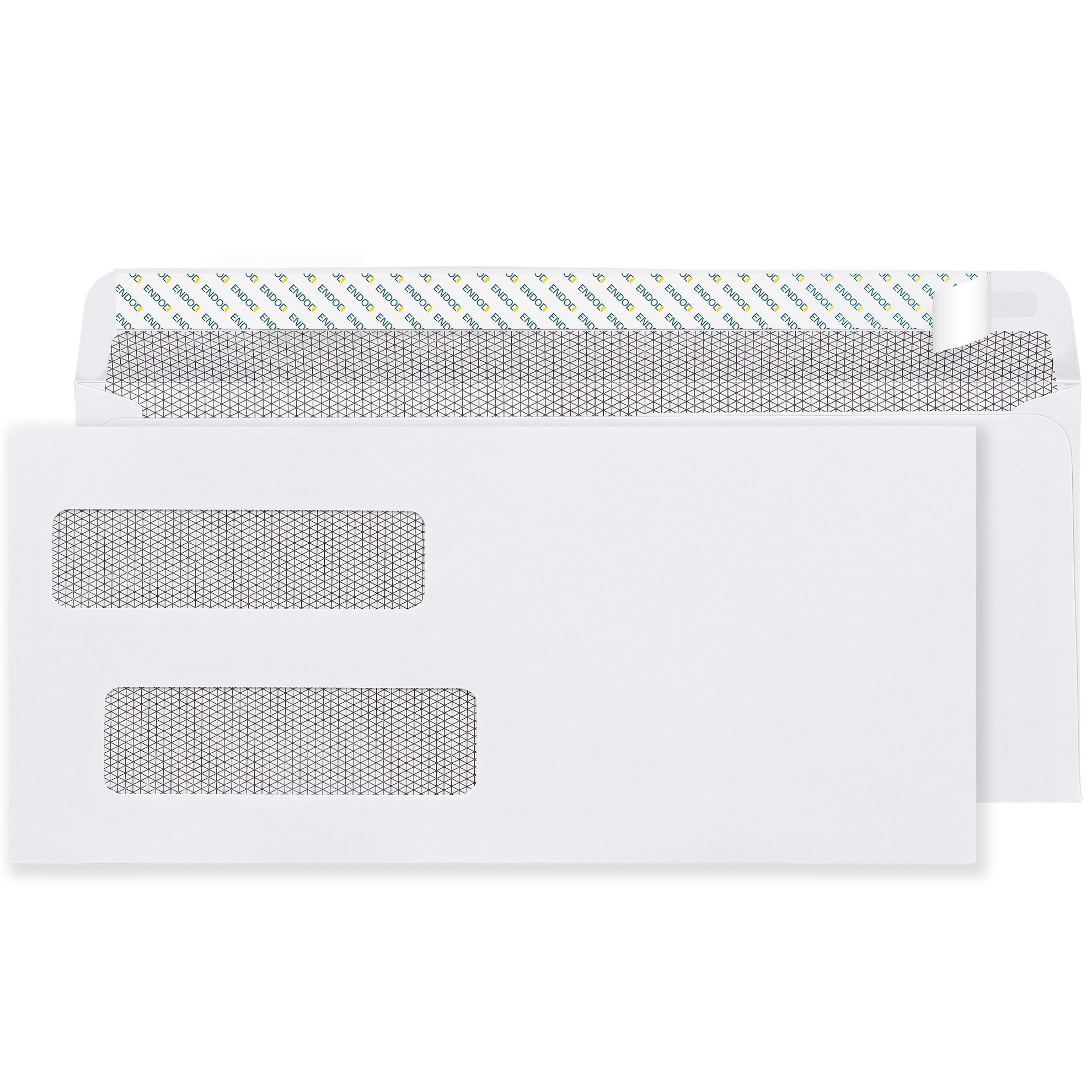
    #10 double window peel-and-seal envelope for invoices and statements from Business Envelopes


    See: double window invoice envelopes, peel-and-seal.


    Flip-and-Stick: For Fast Manual Sealing

    Flip-and-stick envelopes (also called flip-seal or fold-and-seal) work differently from peel-and-seal. Instead of removing a liner strip, you fold a pre-coated flap down onto the envelope face and press to activate the adhesive. There is no liner to peel and no debris generated. Many users find this the fastest manual sealing method for billing programs.

    For a detailed comparison of these two self-seal formats, see the peel-and-seal vs flip-and-stick guide and the self-seal envelopes guide.

    See: double window invoice envelopes, flip-and-stick.

    Also available: #10 self-sealing tinted window envelopes for single window programs that need peel-and-seal convenience.


    Should You Include a Return Envelope with Your Invoice?

    Whether to include a return envelope depends on how your customers pay. If you accept payment by check or money order, including a pre-addressed return envelope significantly reduces friction for the customer and typically improves the speed of payment return.


    What Size Return Envelope Fits Inside a #10 Invoice Envelope?

    The standard return envelope for a #10 invoice program is the #9 reply envelope, which measures 3-7/8 x 8-7/8 inches. A #9 fits neatly inside a standard #10 outer envelope alongside the invoice without creating excessive bulk. When the customer is ready to return payment, they place the check in the #9, seal it, add a stamp, and mail it back.

    Some organizations use pre-printed #9 reply envelopes with the company name and address already on the front. Others use business reply envelopes, which are authorized by USPS and charged only when the customer mails them back. See business reply envelope guide for how that program works.


    When Not to Include a Return Envelope

    If your customers pay exclusively online, by credit card, or through automated clearing, there is no need to include a return envelope. Adding one to a program where it will not be used increases postage costs and paper waste without benefiting the recipient. Invoice programs directing customers to an online payment portal typically include the payment URL prominently on the invoice itself instead.


    Invoice Envelope vs Check Envelope: The Difference That Matters

    This is one of the most common ordering mistakes in accounts payable and billing operations. Double window invoice envelopes and double window check envelopes look nearly identical from the outside. The difference is in the window positions, and it matters completely.


    Why Invoice Windows and Check Windows Are Positioned Differently

    On an invoice document, the sender (your company) appears at the top of the document and the recipient appears in the address block below. On a voucher check form, the payer address and payee address appear at specific positions determined by accounting software conventions. The double window on a check envelope is positioned to match where the software places addresses on a check form a position that does not match where addresses sit on a standard invoice layout.

    If you order check envelopes and use them for invoices, the recipient address will land in the wrong window or partially outside any window at all. The reverse causes the same problem. Always order based on the document type, not on the envelope appearance.

    For invoice mailing, use the invoice-format double window products on this page. For check programs, see check envelopes guide.


    Why Invoice Addresses Miss the Window and How to Fix It

    Address misalignment is the most frequently reported problem in invoice mailing programs. It happens more often than it should, and in most cases the cause is one of three things.


    Three Causes of Invoice Window Misalignment

    1. Software template update. Accounting software platforms push updates that sometimes reset custom form settings, including the envelope alignment toggle. After any software update, verify that your form layout still produces an address block in the correct position for the window.
    2. Wrong envelope format. If you are using a check-format double window envelope for invoices, or a non-standard envelope size, the windows will not match the document layout. Confirm you are using the invoice-format #10 envelope.
    3. Incorrect fold. For single window envelopes, the invoice must be folded so the address block is on the outside of the fold facing the window. If the document is folded in the wrong direction or the wrong portion is facing out, the address will not be visible through the window.

    The fix for misalignment is always to run a single test piece before sealing a batch. Insert one folded invoice into the envelope and hold it up to light to verify the address is fully within the window. Adjust the fold or the software template settings before processing the full mailing. See the window envelope alignment guide for a step-by-step process.


    Common Invoice Envelope Mistakes and How to Avoid Them

    • Ordering check envelopes instead of invoice envelopes. The window positions are calibrated for different document layouts. Ordering by document type prevents this.
    • Sealing a full batch without a test piece. Run one envelope through the full process print, fold, insert, seal and verify alignment and seal quality before committing the batch.
    • Using gummed envelopes with a manual sealing workflow. Gummed flap envelopes require consistent moisture for a reliable seal. For manual programs, peel-and-seal or flip-and-stick closures produce more consistent results.
    • Skipping security tinting for sensitive billing. If your invoice contains account numbers, balances, or personal financial details, a plain white envelope allows that information to be visible through the paper under light. Security tinted envelopes prevent this.
    • Not including a return envelope when accepting check payment. Customers who need to find their own envelope to return payment are less likely to pay promptly. A #9 return envelope adds very little to the mailing cost and removes a friction point from the payment process.
    • Reordering from memory without checking format specifications. Invoice programs sometimes change accounting software, document templates, or inserting equipment. When any of those change, reverify that the envelope format still matches before placing the next order.


    Expert Tips for Cleaner Invoice Mailing Programs

    • Always order a sample before a large first order if you are switching formats. Run the sample through your full workflow print, fold, insert, seal before committing to a case quantity.
    • If you use an inserting machine, confirm with your equipment documentation that the envelope specification is compatible. Envelope thickness, flap type, and flap angle all affect whether the machine feeds and seals consistently.
    • For high-volume programs where inserting speed matters, flip-and-stick closures are generally faster for manual sealing because there is no liner strip to remove and discard.
    • If your program is growing, double window envelopes pay back the small per-unit premium quickly through eliminated labor on addressing. For organizations mailing 500 or more invoices per month, the time savings become significant.
    • Keep a small stock of plain #10 envelopes as backup for individual invoices or corrections that fall outside your standard batch program.

    Browse the complete selection at types of business envelopes.


    Related Products and Categories at Business Envelopes


    About Business Envelopes 

    Business Envelopes is a family-owned business founded in 1997, headquartered at 308 Museum Village Rd, Monroe, NY 10950. With more than 20 years of experience supplying blank and custom printed envelopes, the company has served over 53,526 customers across the United States. All content on this site is produced based on direct product knowledge and hands-on experience with business mailing programs. Learn more about Business Envelopes.


    Related Guides

    default image icon business envelopes

    Gift Card Envelopes: What Size to Use, How to Mail One, and Which Products to Order

    You have a gift card ready to go. Maybe it is for a birthday, a holiday, a work milestone, or a client you want to thank. The card itself is sorted. Now you need the right envelope to present it, protect it, and if necessary, mail it without it getting lost, bent, or held up at the post office.

    This guide answers the question most buyers have before they place an order: which envelope actually fits a standard gift card? From there, it covers mailing rules, seal types, color choices, and the specific products available at Business Envelopes that work best for both personal gifting and business programs at volume.


    Quick Answer: A standard gift card measures 3.375 x 2.125 inches. The #7 coin envelope (3.5 x 6.5 inches) fits a gift card comfortably with room for a short note and meets USPS minimum size requirements for mailing. The 4-5/8 x 6-3/4 envelope provides more presentation space. Both are available in white, kraft brown, and custom printed options.


    Why Envelope Choice Matters for Gift Cards

    A gift card handed over in the wrong envelope, or no envelope at all, does not make the impression you are going for. Too small and the card does not fit. Too large and the card rattles around, slides out, or looks sloppy. Mail it in a non-standard size and it may come back or arrive damaged.

    The right envelope does three things at once. It protects the card physically during handling and transit. It provides a clean, finished presentation for the recipient. And if mailing, it meets postal requirements so the card actually gets delivered.

    For businesses running employee recognition, client gifting, or retail loyalty programs, the envelope also carries your brand. A custom printed envelope with your logo and return address turns a gift card into a complete branded package rather than just a card in a sleeve.


    Standard Gift Card Dimensions: What You Are Working With

    Most gift cards, loyalty cards, and prepaid cards follow the ISO 7810 ID-1 standard. This is the same format as a standard credit card or bank card. The dimensions are consistent across virtually every retailer, brand, and program:

    • Width: 3.375 inches (3-3/8 inches)
    • Height: 2.125 inches (2-1/8 inches)
    • Thickness: approximately 0.03 inches (standard plastic card stock)

    This is a small, compact item. It fits in a wallet. It does not require a large envelope. What it does require is an envelope that gives it a snug fit without being so tight that inserting the card or adding a note becomes difficult.

    Refer to the Envelope Sizes Chart for a complete reference on dimensions across every envelope format.


    Which Envelope Sizes Fit a Gift Card

    Based on the standard gift card dimensions above, here are the envelope sizes that work, along with how each one performs in practice.

    Envelope Size Dimensions Fits Gift Card? Room for a Note? USPS Mailable?
    #1 Coin 2-1/4 x 3-1/2 inches No (too small) No No (below minimum)
    #3 Coin 2-1/2 x 4-1/4 inches Tight fit, card may not insert cleanly No No (below minimum)
    #5-1/2 Coin 3-1/8 x 5-1/2 inches Card fits widthwise but not lengthwise Limited No (below 5 inch minimum)
    #7 Coin 3-1/2 x 6-1/2 inches Yes, comfortable fit Yes, short folded note Yes
    4-5/8 x 6-3/4 4-5/8 x 6-3/4 inches Yes, with more room Yes, generous space Yes

    The two recommended sizes are highlighted above. If you are ordering gift card envelopes for the first time, the #7 coin envelope is the industry standard choice for this exact purpose. It has been used in retail, banking, loyalty programs, and personal gifting for decades precisely because the fit works.


    The #7 Coin Envelope for Gift Cards

    The #7 coin envelope measures 3-1/2 x 6-1/2 inches. A standard gift card (3.375 x 2.125 inches) fits cleanly when inserted lengthwise. There is room alongside the card for a short folded note, a compliment slip, or a business card. The envelope is small enough to feel personal and intentional, not oversized or padded out with packing material.

    At 3.5 inches tall and 6.5 inches long, the #7 coin envelope also meets USPS minimum dimensions for First Class Mail letters. This means it can be mailed without incurring a non-machinable surcharge, provided it does not exceed the maximum thickness or weight for standard letters.


    White #7 peel-and-seal coin envelopes for gift cards from Business Envelopes


    White #7 Coin Envelopes (Peel-and-Seal)

    These white coin envelopes are the go-to choice for gift card presentation. The peel-and-seal closure seals securely without moisture. Available in quantity for personal use or business programs. Shop #7 Coin Envelopes


    The 4-5/8 x 6-3/4 Envelope for Gift Cards

    The 4-5/8 x 6-3/4 envelope is a step up in size. It gives the gift card and a folded note more breathing room. This size is a good choice when you are including a longer message, a folded card insert, or multiple gift cards in one envelope. It is also a more common size if you want to print a return address or brand elements on the front without it feeling cramped.


    White coin envelopes with gummed flap for gift card mailing from Business Envelopes


    White Coin Envelopes (Gummed Flap, Custom Printed)

    Available with custom printing for businesses that want logo and return address on their gift card envelopes. Gummed flap closure works with automated inserting machines for high-volume programs. Shop Coin Envelopes


    How to Mail a Gift Card Safely

    Mailing a gift card is straightforward when you follow a few practical steps. Gift cards are small, rigid, and valuable enough to be worth getting the mailing right the first time.


    Step 1: Choose an Envelope That Meets USPS Minimums

    USPS requires standard letter mail to be at least 3.5 inches tall, 5 inches long, and at least 0.007 inches thick. Envelopes smaller than these dimensions cannot be processed by letter-sorting machines and may be returned or assessed additional postage. The #7 coin envelope meets these minimums. Smaller coin envelope sizes do not.

    See the Non-Machinable Envelope Guide for a full explanation of what makes an envelope machinable and how to avoid unexpected surcharges.


    Step 2: Add a Stiff Insert if Needed

    A gift card is a rigid plastic card and holds up well to standard mail handling. That said, adding a small piece of cardboard or heavy card stock behind the card is a good practice, especially for higher-value cards. It gives the envelope a more solid feel and reduces the chance of bending in sorting equipment. Cut the stiffener to fit inside the envelope before inserting the gift card on top of it.


    Step 3: Seal the Envelope Securely

    For mailed gift card envelopes, choose a self-seal or peel-and-seal closure for a clean, secure result without licking. A gummed flap works fine too, especially if you are processing multiple envelopes. Avoid using tape over the seal on the outside of the envelope, as this can cause issues with automated sorting.

    Learn more about seal types and how each closure works in the How to Seal an Envelope Guide and the Self-Seal Envelopes Guide.


    Step 4: Write or Print the Address Clearly

    Small envelopes have limited address space. Use a clear font if printing or block letters if writing by hand. Make sure the delivery address is centered on the envelope face, the return address is in the upper left corner, and the postage stamp or meter indicia is in the upper right corner. See How to Mail a Letter for addressing format guidance.


    Step 5: Verify Postage Before Sending

    Weigh the sealed envelope before applying postage. A gift card plus a short note in a standard coin envelope typically weighs well under one ounce. If the weight is over one ounce, additional postage is required. The How Many Stamps Do I Need Guide explains how envelope size and weight affect postage requirements.


    Seal Type Options for Gift Card Envelopes

    Business Envelopes offers coin envelopes in two primary closure types. Each has a different use case, and the right choice depends on your volume and how the envelope will be sealed.


    Gummed Flap

    Gummed flap envelopes use a traditional moisture-activated adhesive on the flap. You moisten the flap with water, a damp sponge, or an envelope moistener, then press and fold to seal. Gummed flap closures are the standard choice for automated envelope inserting machines, which apply water to the flap as part of the sealing process. If you are running a high-volume gift card program through an inserter, gummed flap is the right specification.


    Peel-and-Seal (Self-Seal)

    Peel-and-seal envelopes have a strip of adhesive under a protective liner on the flap. You peel off the liner, fold the flap down, and press to seal. No moisture is needed. This is the easier and more practical option for occasional or manual sealing, individual gift mailings, and any situation where speed and convenience matter more than machine compatibility.

    Browse the full range at Self-Seal Envelopes to compare available options.


    Color and Presentation for Gift Card Envelopes

    The envelope color sets the tone before the recipient even opens it. Business Envelopes offers coin envelopes in white and kraft brown, with colored envelope options available across other small formats. Here is how to match the envelope color to the occasion.


    White Envelopes

    White is the most versatile choice. It works for any occasion, looks clean and professional, and pairs well with custom printed logos, return addresses, and messaging. White coin envelopes are the standard for business gifting, employee recognition, and any program that wants a polished, consistent look across many envelopes. They are also the easiest to write on clearly.


    Kraft Brown Envelopes

    Kraft brown envelopes have a natural, warm look that suits a more casual or artisan presentation. They work well for small gifts with a handmade or rustic feel, and for businesses that use natural branding. Kraft coin envelopes are available at Business Envelopes and pair well with a handwritten note inside.


    Colored Envelopes

    For personal gifting, birthdays, holidays, graduations, and seasonal occasions, a colored envelope adds a visual layer that makes the gift feel more intentional. Business Envelopes offers a wide range of colored envelopes across multiple formats. Explore the full range at Colored Envelopes and refer to the Envelope Color Guide for help matching color to occasion.


    Business and Bulk Gift Card Envelope Programs

    Gift card envelopes are not just for personal use. Businesses order them in volume for specific programs, and the needs for bulk orders are different from a one-off purchase.


    Employee Recognition and Rewards

    Companies that give gift cards as part of employee recognition programs, performance rewards, or holiday gifting often need envelopes in quantities of several hundred or more. Consistency matters here. Every envelope in the program should look the same, which means ordering from a single run with matching print specifications if custom printing is involved.


    Client Gifting

    A gift card sent to a client in a blank white envelope is a missed opportunity. A custom printed envelope with your logo and return address turns the same gift into a branded touchpoint. Business Envelopes can print your logo, company name, and return address on coin envelopes, making every client gift a reminder of your brand.

    See Custom Coin Envelopes Guide for details on what printing options are available and how to set up a custom order.


    Retail and Loyalty Programs

    Retailers that package gift cards at point of sale or mail loyalty cards to registered customers often need envelopes designed for inserting machines or folded with a specific format. The gummed flap coin envelope is the format most commonly used in these programs because it works reliably with automated equipment at high speed.


    Nonprofit and Fundraising

    Nonprofits that include gift cards in donor thank-you packages, fundraising auction fulfillment, or event gift bags also use small envelopes for presentation. A clean white or kraft envelope with a handwritten note inside adds warmth to a gift card that might otherwise feel transactional.


    Common Mistakes When Choosing a Gift Card Envelope

    A few mistakes come up repeatedly when people order gift card envelopes for the first time. Knowing them in advance saves a wasted order.

    • Ordering a size that is too small for mailing. The most common mistake is ordering #1, #3, or #5-1/2 coin envelopes without checking USPS minimums. These sizes are fine for in-person gifting but cannot be mailed as standard letters without additional handling and potential surcharges.
    • Choosing the wrong closure for the sealing method. If you are planning to use an inserting machine, you need gummed flap envelopes. Peel-and-seal envelopes are not compatible with most automated inserters.
    • Not accounting for note or insert thickness. A gift card plus a folded note plus a cardboard stiffener adds up. Make sure the total contents fit inside the chosen envelope before ordering in bulk. Ordering a sample or a small quantity first is always a good approach for a new program.
    • Forgetting to write "Do Not Bend." Postal workers process thousands of pieces per shift. A simple note on the envelope front significantly reduces the chance of machine folding or bending.
    • Assuming any small envelope works for mailing. Not all small envelopes meet postal minimums. Always confirm the dimensions against USPS requirements before committing to a format for a mailing program.


    Expert Tips for Gift Card Envelope Presentation

    Small details in presentation make a notable difference in how a gift card is received, particularly in business settings.


    Align the Card on Insertion

    Insert the gift card so its face is visible and right-side up when the recipient opens the flap. This sounds simple, but it matters. A gift card inserted upside-down or face-down is a small friction that diminishes the moment of opening.


    Write the Note Before You Insert the Card

    If you are including a handwritten note on a folded card or slip of paper, write it before inserting anything. Writing on a note that is already in the envelope with a gift card in it is awkward and can result in a messy or damaged note.


    Use Matching Paper Stock

    If you are including a printed compliment slip or a typed message, use card stock or heavy paper that is proportional to the size of the coin envelope. A note printed on standard copy paper inside a small envelope will fold multiple times and feel cheap compared to a well-matched card stock insert.


    Seal Cleanly and Completely

    A partially sealed envelope looks careless. Make sure the flap is pressed down along its full length. For gummed envelopes, apply even moisture across the entire adhesive strip. For peel-and-seal, peel the entire liner off before folding.


    Store Envelopes Flat Until Use

    Coin envelopes can curl if stored standing upright, especially in humid conditions. Store them flat in their original box until you are ready to use them. See the How to Store Envelopes Guide for proper storage advice that keeps envelopes flat and adhesive-ready.


    What About Greeting Card Envelopes for Gift Cards?

    Some people prefer to present a gift card inside a traditional greeting card envelope rather than a coin envelope. This works well when the gift card is going inside a birthday card, a thank-you card, or a holiday card, because the card itself takes center stage and the gift card sits inside as a bonus.

    A standard A2 greeting card envelope (4-3/8 x 5-3/4 inches) fits a standard gift card comfortably. A standard A6 or A7 envelope provides even more room. If you are pairing a gift card with a standard greeting card, the greeting card envelope is the natural container for both pieces.

    See the Greeting Card Envelope Sizes Guide for a full breakdown of A-style envelope dimensions and which card sizes they accommodate.

    The distinction from a coin envelope is primarily about presentation style. A coin envelope says the gift card is the main event. A greeting card envelope says the card and the gift card belong together.


    Related Products and Categories at Business Envelopes

    Here are the pages most directly relevant to ordering envelopes for gift cards. All of these are verified live pages on BusinessEnvelopes.com.


    What Customers Say

    These reviews are verified customer responses collected from product pages on BusinessEnvelopes.com.

    Jacob | 5 stars
    Verified Customer | Business Envelopes

    "Business envelopes did a super job with the printing and the quality of the envelope was also great! I would definitely be ordering again from them!"

    Rikki | 5 stars
    Verified Customer | Business Envelopes

    "These are great -- no complaints at all. They print great and the seal is very secure. They work great."

    Claire | 5 stars
    Verified Customer | Business Envelopes

    "As always, our order was delivered quickly and printed perfectly! Thank you for the wonderful customer service!"

    Yehudis G. | 5 stars
    Verified Customer | Business Envelopes

    "Great envelopes and high quality printing. I was very happy with my purchase."


    About the Author: Business Envelopes

    Business Envelopes is a family-owned business founded in 1997, headquartered at 308 Museum Village Rd, Monroe, NY 10950. With over 20 years of experience supplying blank and custom printed envelopes, the company has served more than 53,526 customers across the United States. All editorial content on this site is produced by the Business Envelopes team based on hands-on product knowledge and direct customer experience. Learn more about Business Envelopes.


    Related Guides

    10x15 Envelope Postage: Stamps and Cost Guide 2026

    Home › Blog › 10x15 Envelope Postage Guide 2026

    Quick Answer: A 10x15 envelope always mails at the USPS First-Class flat rate, never at letter rate. The flat rate is calculated by weight, with additional ounce charges stacking up from the first ounce through the 13-ounce First-Class maximum. You will need multiple stamps, but stacking whole Forever stamps typically results in overpayment since flat-mail rates do not align to stamp denominations. The metal clasp, if left engaged, triggers a non-machinable surcharge. Envelope material (Tyvek vs. kraft) does not change the postage classification. For current postage rates, check the USPS Price Calculator at usps.com.

    Why a 10x15 Envelope Always Mails at Flat Rate

    USPS divides domestic First-Class Mail into three shape categories: postcards, letters, and large envelopes (also called flats). Each shape has its own rate table. The category your envelope falls into is determined entirely by its physical dimensions, not by what is inside it.

    For an envelope to qualify as a letter, all three of these conditions must be true:

    • Height (shortest side): no more than 6-1/8 inches
    • Length (longest side): no more than 11-1/2 inches
    • Thickness: no more than 1/4 inch

    A 10x15 envelope measures 15 inches on its longest side. That single dimension exceeds the 11.5-inch letter-rate length limit by 3.5 inches, which automatically places it in the large envelope (flat) category. There is no workaround: the 10x15 always mails at flat rate regardless of how light it is, what is inside it, or which seal type it uses.

    This distinction matters because the flat rate is significantly higher than the letter rate. Understanding the classification before ordering or mailing saves money on large programs, especially when you can consider format alternatives for content that could be folded to fit a smaller envelope.

    For a full breakdown of how USPS classifies all large envelope sizes, see the large envelope sizes guide.

    10x15 Envelope Weight Guide and Postage Tiers

    USPS First-Class flat-mail postage is calculated by weight. The rate starts at a base amount for the first ounce and increases with each additional ounce, up to the 13-ounce maximum for First-Class Mail. The table below shows how each weight tier maps to the number of Forever stamps needed and the expected mailing classification.

    Weight USPS Classification Forever Stamps Needed (min.) Postage Accuracy Note
    1 oz First-Class Flat Multiple stamps required Exact postage from meter avoids overpayment
    2 oz First-Class Flat Multiple stamps required Exact postage from meter avoids overpayment
    3 oz First-Class Flat Multiple stamps required Exact postage from meter avoids overpayment
    4 oz First-Class Flat More stamps than lighter tiers Weigh sealed envelope before applying postage
    5 oz First-Class Flat More stamps than lighter tiers Weigh sealed envelope before applying postage
    6 oz First-Class Flat More stamps than lighter tiers Weigh sealed envelope before applying postage
    7 oz First-Class Flat More stamps than lighter tiers Weigh sealed envelope before applying postage
    8 oz First-Class Flat More stamps than lighter tiers Weigh sealed envelope before applying postage
    9 oz First-Class Flat More stamps than lighter tiers Weigh sealed envelope before applying postage
    10 oz First-Class Flat More stamps than lighter tiers Weigh sealed envelope before applying postage
    11 oz First-Class Flat More stamps than lighter tiers Weigh sealed envelope before applying postage
    12 oz First-Class Flat More stamps than lighter tiers Weigh sealed envelope before applying postage
    13 oz First-Class Flat (maximum) Most stamps of any FC flat tier Above 13 oz requires Priority Mail or another class

    For exact postage amounts at each weight, use the USPS Price Calculator at usps.com. Always weigh sealed pieces on a calibrated postal scale before applying postage.

    How Many Stamps for a 10x15 Envelope?

    You will always need multiple stamps for a 10x15 envelope. A single Forever stamp does not cover the flat-mail rate at any weight. The exact number depends on the total weight of the sealed piece and the current postage rate for that weight tier.

    Light mailings (1 to 3 oz)

    A 10x15 envelope containing a single folded architectural drawing, a thin proposal, or a small catalog will typically fall in the 1 to 3 ounce range. Several Forever stamps will cover the flat rate for these weights, though some overpayment is likely when using whole stamps. A postage meter paying the exact rate is more efficient for any meaningful volume.

    Medium mailings (4 to 6 oz)

    Multi-page contracts, product brochures with thick inserts, and small catalogs often land in this range. More stamps are needed than for lighter pieces. Weigh the sealed envelope before applying postage rather than estimating.

    Heavy mailings (7 to 13 oz)

    Large document sets, oversized booklets, or thick catalog mailings can push a 10x15 envelope toward the upper ounce tiers. The stamp count increases with each additional ounce. Weigh each sealed envelope on a postal scale before applying postage to avoid under- or overpaying. First-Class Mail caps at 13 ounces for large envelopes; anything heavier requires Priority Mail or another service class.

    For a complete size-by-size stamp count reference across all envelope sizes, see how many stamps do I need by envelope size.

    Tyvek vs. Kraft: Does Envelope Material Change 10x15 Postage?


    10x15 Tyvek open-end envelope with Kwik-Tak peel-seal closure
     
    10x15 Tyvek open-end envelope with Kwik-Tak peel-seal closure

    USPS determines postage based on weight and dimensions. The material the envelope is made from does not appear on any USPS rate table and has no effect on the First-Class flat rate.

    That said, material does affect the total mailing weight, which in turn affects postage when contents bring the piece close to an ounce tier boundary.

    Tyvek 10x15 envelopes

    Tyvek is a spun-bonded olefin material manufactured by DuPont. It is significantly lighter than kraft paper of comparable thickness. A 10x15 Tyvek envelope with a 14 lb. material rating weighs roughly half of what a comparable kraft envelope weighs when empty. For mailings where the content weight is close to an ounce tier boundary, the lighter Tyvek envelope can keep the total piece weight in a lower tier, reducing postage.

    Tyvek also resists moisture, tears, and punctures during transit, making it the right choice for architectural drawings, original signed documents, or anything that cannot arrive damaged. For a detailed comparison of Tyvek and kraft materials, see the Tyvek vs kraft envelope guide.

    Kraft clasp 10x15 envelopes

    Brown kraft 10x15 clasp envelopes weigh more than Tyvek options of the same size. The 28 lb. kraft stock adds slightly more to the total mailing weight. For light contents, this rarely pushes the piece into a higher ounce tier. For heavier contents already near a weight boundary, it can.

    The clasp mechanism itself introduces a separate postage rule covered in the next section.

    For a full guide on Tyvek envelope features, properties, and uses, see the Tyvek envelopes guide.

    The Clasp Rule: How the Metal Closure Affects 10x15 Postage


    10x15 brown kraft clasp envelope with metal clasp and gummed seal for document mailing
     
    10x15 brown kraft clasp envelope with metal clasp and gummed seal flap

    The metal clasp on a 10x15 clasp envelope is designed for repeated office filing and retrieval. For mailing, the clasp creates a specific USPS postage situation that catches many businesses off guard.

    What the non-machinable surcharge means

    USPS automated sorting equipment processes large envelopes by running them through machines that read barcodes and sort pieces by ZIP code. An envelope with a raised metal clasp fastened on the outside surface cannot pass through this equipment without risk of damage or jamming. USPS classifies such pieces as non-machinable and charges a surcharge on top of standard flat-rate postage. The non-machinable surcharge adds a meaningful amount to each piece, and on high-volume mailings the total additional cost becomes significant.

    How to avoid the surcharge

    Fold the metal clasp flat against the back of the envelope before sealing. Then close the gum-seal flap over the clasp using moisture or a sponge. The envelope mails at the standard flat rate with no surcharge. The clasp remains intact and reusable when the recipient opens the envelope.

    For complete step-by-step instructions on mailing a clasp envelope correctly, see how to mail a clasp envelope. For a full overview of clasp envelope types and uses, see the clasp envelopes guide.

    The Flexibility Rule: When a 10x15 Envelope Reclassifies as a Package

    USPS flat-mail rates apply only to large envelopes that are flexible and uniformly thick. This rule exists because flat-mail automation equipment cannot process pieces that are stiff, lumpy, or vary significantly in thickness across the envelope's surface.

    A 10x15 envelope can be reclassified as a parcel by postal workers if:

    • The contents make it rigid and it does not bend when gentle pressure is applied
    • Contents create significantly uneven thickness (a rolled tube inside, a box, or stacked items of different sizes)
    • The envelope is thicker than 3/4 inch when sealed

    Parcel rates are substantially higher than flat rates and vary by zone, weight, and service level. To keep a 10x15 envelope in the flat-mail category, ensure the contents remain flexible when sealed. For rigid documents that cannot bend, consider a rigid mailer or Priority Mail packaging instead.

    For additional background on the non-machinable and flexibility rules, see the non-machinable envelope guide.

    Metered Mail vs. Stamps for 10x15 Envelopes

    For occasional mailings, Forever stamps are a practical option. For any business mailing 10x15 envelopes regularly, the economics of postage meters are worth understanding.

    The retail stamp issue

    Because flat-mail rates do not divide evenly into Forever stamp denominations, using stamps always results in some degree of overpayment per piece. The amount varies by weight tier. On programs mailing a significant number of 10x15 envelopes each week, the cumulative overpayment across all pieces can become a meaningful line item in the postage budget.

    Metered mail savings

    A postage meter prints the exact postage for each piece, eliminating all overpayment. Metered mail also qualifies for a small discount per piece compared to the retail stamp rate. For programs mailing at volume, the combination of exact postage plus the metered discount can produce meaningful annual savings. For a detailed analysis of when metered mail makes financial sense, see metered mail vs stamps.

    USPS online postage

    USPS Click-N-Ship and similar services allow you to print exact postage at home or at the office, paying the precise rate for each piece. This is a practical option for lower volumes where a full postage meter is not warranted.

    Real-World Weight Guide for 10x15 Envelope Mailings

    Knowing the ounce tiers is useful. Knowing what typical contents actually weigh in a 10x15 envelope makes it actionable. Use this as a starting reference, then always weigh your sealed pieces on a postal scale before applying postage.

    Contents (typical) Approximate Weight Tyvek or Kraft Envelope Weight Likely Total Tier
    Single large-format drawing (rolled or folded) 0.5 to 1 oz Tyvek: lighter / Kraft: heavier 1 to 2 oz
    10 sheets of standard 24 lb. paper About 1 oz Tyvek: lighter / Kraft: heavier 2 oz
    20 sheets of standard 24 lb. paper About 2 oz Tyvek: lighter / Kraft: heavier 3 oz
    30-page proposal with cover 3 to 4 oz Tyvek: lighter / Kraft: heavier 4 to 5 oz
    Small catalog (40 to 60 pages, coated) 5 to 7 oz Tyvek: lighter / Kraft: heavier 6 to 8 oz
    Legal binder or thick packet 8 to 11 oz Tyvek: lighter / Kraft: heavier 9 to 12 oz

    Weights are approximations. Always weigh sealed pieces on a calibrated postal scale before applying postage. Tyvek envelopes weigh less when empty than kraft envelopes of the same size, which can make a difference when content weight is close to a tier boundary.

    Priority Mail vs. First-Class for Heavy 10x15 Mailings


    10x15 envelope catalog and Tyvek options for business mailing
     
    10x15 envelope options at Business Envelopes

    First-Class Mail handles 10x15 envelopes up to 13 ounces. Above that threshold, you need Priority Mail or another service. Even within the 13-ounce limit, there are situations where Priority Mail is worth comparing.

    When First-Class is the right choice

    For most 10x15 mailings under 6 ounces, First-Class Mail is less expensive than Priority Mail and still delivers within 1 to 5 business days domestically. It does not include tracking by default, though you can add Certified Mail or other tracking options.

    When Priority Mail deserves consideration

    Priority Mail flat-rate envelopes price by envelope type rather than weight. If a 10x15 piece is close to or above 8 ounces, the Priority Mail flat-rate comparison is worth running. Priority Mail also includes tracking and arrives in 1 to 3 business days, which can matter for time-sensitive legal or financial documents. Any piece above the 13-ounce First-Class maximum must use Priority Mail or another service class.

    For a complete breakdown of Priority Mail envelope options, see the Priority Mail envelope guide for 2026.

    How to Calculate 10x15 Envelope Postage Before Mailing

    Follow these four steps to get the right postage on every 10x15 piece:

    1. Assemble and seal the envelope with all contents you plan to mail. Do not estimate weight from the empty envelope.
    2. Weigh the sealed piece on a postal scale or kitchen scale accurate to 0.1 oz. Round up to the next full ounce.
    3. Look up the current rate using the USPS Price Calculator at usps.com. Select large envelope (flat) and enter the weight to get the exact postage amount.
    4. Apply exact postage using a postage meter, USPS Click-N-Ship, or exact denomination stamps. If using Forever stamps, use the minimum number that meets or exceeds the postage amount, but be aware some overpayment is unavoidable with whole stamps.

    If you are mailing a batch of identical pieces, weigh one sealed sample envelope, calculate the postage for that weight, and apply the same postage to all pieces in the batch. For postage guidance across all common envelope sizes, see the complete postage stamps buying guide.

    10x15 Envelopes Available at Business Envelopes

    Business Envelopes stocks the 10x15 format in two materials suited to different mailing needs. Both are blank stock available for immediate shipment. Custom printing is available on either type.

    10x15 brown kraft clasp envelope open showing metal clasp and gummed flap construction
     
    10x15 brown kraft clasp envelope with metal clasp and gummed seal

    10x15 Tyvek Peel-Seal Envelope

    The 10x15 Tyvek open-end envelope is built from 14 lb. DuPont Tyvek material with a Kwik-Tak peel-and-seal closure. It is the lighter option, which keeps mailing weight down, and resists moisture, punctures, and tears that would damage paper envelopes. Recommended for original documents, architectural prints, and anything that cannot arrive damaged.

    10x15 Brown Kraft Clasp Envelope

    The 10x15 brown kraft clasp envelope is built from 28 lb. kraft stock with a metal double-prong clasp and a gummed seal flap. The clasp allows the envelope to be opened and resealed multiple times, making it practical for in-office document routing before mailing. Remember to fold the clasp flat before sealing for mailing to avoid the non-machinable surcharge.

    Browse the complete 10x15 envelope category for all available options.

    Why Order 10x15 Envelopes From Business Envelopes

    Business Envelopes has supplied blank and custom-printed envelopes to US businesses since 1997. Every 10x15 envelope ships same or next business day on blank stock. Both Tyvek and kraft options are stocked in volume quantities for businesses that need consistent supply without reorder delays.

    • Blank stock ready to ship same or next business day
    • Custom printing available on 10x15 envelopes for branded mailing programs
    • Both Tyvek and kraft formats in stock
    • Volume ordering available for high-quantity programs
    • All envelopes meet USPS mailing specifications

    For custom-printed 10x15 envelopes with your company name or return address, explore the custom printed envelopes options. For guidance on ordering in quantity, see the wholesale envelopes guide.

    Related Postage Guides

    If you mail other envelope sizes, these guides cover postage rules for each size in the same format as this one:


    Summary

    The 10x15 envelope is the largest standard mailing format for US business use. It always mails at USPS First-Class flat rate, with postage calculated by weight from the first ounce up through the 13-ounce maximum. Envelope material does not change the rate, but lighter Tyvek can help keep total mailing weight in a lower tier. The metal clasp, if left engaged, adds a non-machinable surcharge that is easily avoided by folding the clasp flat before sealing. Overstuffed or rigid contents can reclassify the piece as a parcel.

    For current postage rates at each weight tier, use the USPS Price Calculator at usps.com. For programs mailing 10x15 envelopes at volume, a postage meter eliminates stamp overpayment and qualifies for the metered mail discount.

    Business Envelopes stocks 10x15 envelopes in both Tyvek peel-seal and brown kraft clasp formats, with same or next-business-day shipping on blank stock and custom printing available for branded mailing programs.

    About the Author

    This guide was produced by the team at Business Envelopes, a family-owned business founded in 1997 and headquartered in Monroe, NY. For over 20 years, Business Envelopes has supplied blank and custom-printed envelopes to more than 53,000 businesses across the United States, covering standard commercial sizes, security envelopes, Tyvek mailers, clasp envelopes, coin envelopes, window envelopes, and custom-printed formats for corporate mailing programs.

    Source: businessenvelopes.com/about-us

    #6 3/4 Envelope Postage: Stamps, Rates, and Cost Guide for 2026

    Quick Answer:

    • One Forever stamp ($0.82) covers a standard #6 3/4 envelope at the USPS First-Class letter rate.
    • The #6 3/4 always qualifies for letter rate because all its dimensions fall within USPS letter-size limits.
    • Metered postage costs $0.78 per piece, saving $0.04 per envelope versus a stamp.
    • A non-machinable surcharge of $0.49 applies if the envelope contains coins or rigid contents.
    • Business Reply Mail (BRM) envelopes return postage-free to the recipient; your organization pays only on pieces actually returned.
    • All rates on this page are effective July 12, 2026, per USPS Notice 123.
     

    The #6 3/4 envelope is the most widely used reply and remittance envelope in the United States. Billing programs, nonprofit donation campaigns, healthcare payment return mail, church collections, and school fundraisers all run on this size. Yet postage for the #6 3/4 confuses buyers more than any other small commercial size because it sits between the familiar #10 and the even smaller coin formats, and because most postage guides only cover the outgoing #10, not the reply piece.

    This guide answers the postage question for the #6 3/4 completely, including the full 2026 USPS rate table, how weight affects the stamp count, when the non-machinable surcharge applies, how Business Reply Mail postage works, how metered postage compares, and how the #6 3/4 outgoing cost compares when it is nested inside a #10 outgoing package. For the complete guide to this size across formats and uses, see the #6 3/4 Envelope Size and Format Guide.
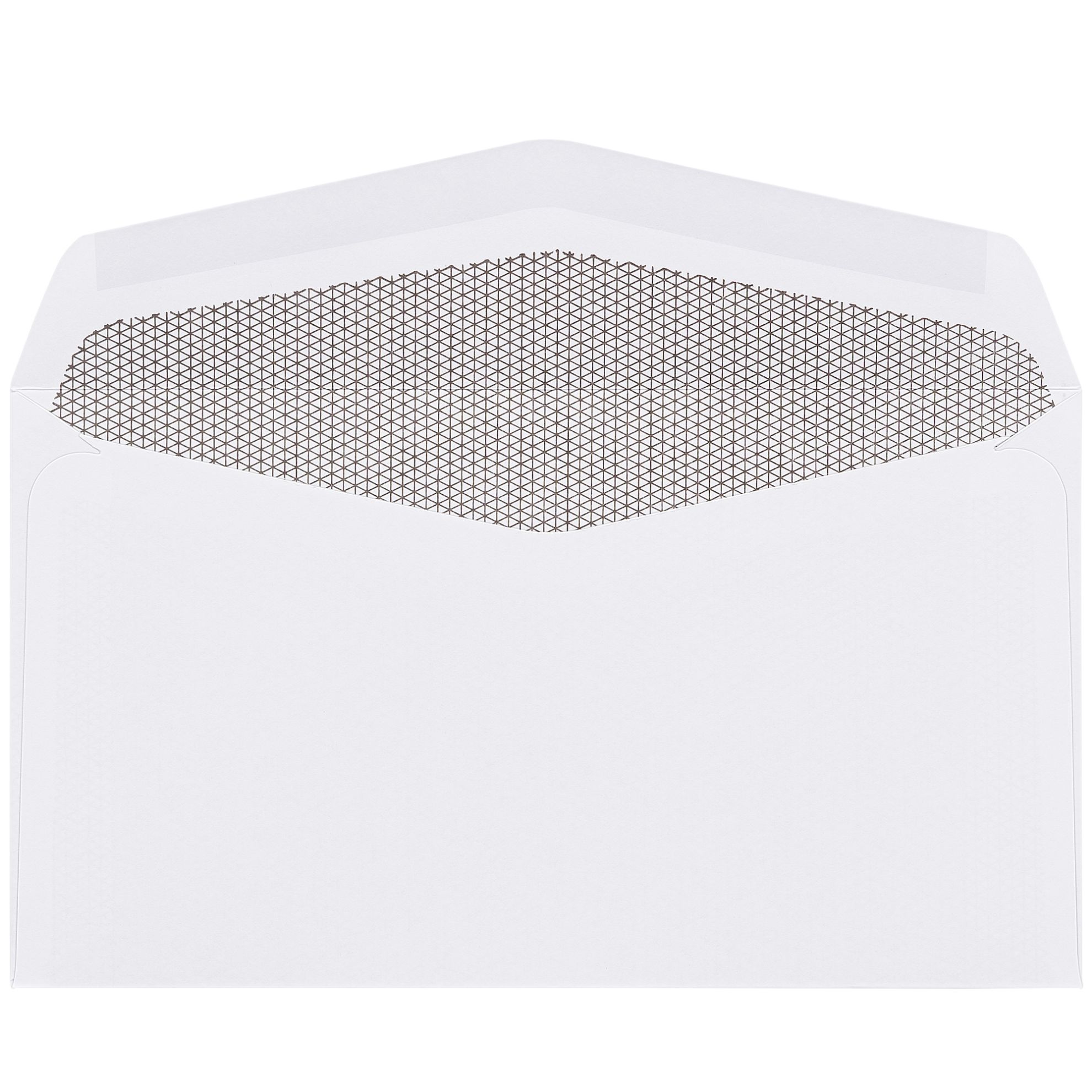
     

    #6 3/4 security tinted business envelopes with gummed flap for confidential reply and return mail

    What Is the #6 3/4 Envelope Postage Rate in 2026?

    The #6 3/4 envelope mails at the USPS First-Class Mail letter rate. As of July 12, 2026 (per USPS Notice 123), the rate is:

    • $0.82 per ounce using a Forever stamp
    • $0.78 per ounce using metered postage
    • $0.29 for each additional ounce beyond the first (up to 3.5 ounces total)

    One Forever stamp covers the vast majority of #6 3/4 mailings. The envelope itself weighs 3 to 4 grams, and paper contents kept to a single folded form or check stay well within the 28-gram (one-ounce) first-class threshold. Most reply and remittance programs using the #6 3/4 mail at single-stamp cost for every piece.

    For a side-by-side view of how the #6 3/4 postage compares with every other common business envelope size, see How Many Stamps Do I Need? The Complete Guide by Envelope Size.

    #6 3/4 Envelope Postage Rates: 2026 Complete Table

    All rates below are USPS First-Class letter rates effective July 12, 2026, per USPS Notice 123. The #6 3/4 qualifies for letter rate because its sealed dimensions (3-5/8 inches tall by 6-1/2 inches long) fall within all USPS letter-rate size limits.

    Sealed Weight USPS Mail Class Stamp Rate Metered Rate Forever Stamps Needed
    Up to 1 oz (28 g) First-Class letter $0.82 $0.78 1 Forever stamp
    1 to 2 oz First-Class letter $1.11 $1.07 1 Forever + 1 additional oz stamp
    2 to 3 oz First-Class letter $1.40 $1.36 2 Forever stamps
    3 to 3.5 oz First-Class letter $1.69 $1.65 3 Forever stamps
    Over 3.5 oz Reclassified as flat $1.69+ $1.69+ Requires re-rating as flat

    In practice, a #6 3/4 envelope almost never exceeds 3.5 ounces. To reach that weight with standard 20 lb paper, you would need to enclose more than 14 full sheets, which is unusual for a reply or remittance piece. The non-machinable surcharge, covered below, is a more common cost issue than weight reclassification for this size.

    How Many Stamps Does a #6 3/4 Envelope Need?

    One Forever stamp covers a standard #6 3/4 envelope for the vast majority of uses. The answer depends on what is inside. The table below gives real-world estimates for the most common #6 3/4 contents.

    Contents Approximate Weight Ounce Tier Stamps Needed
    Envelope alone (no contents) ~3.5 to 4 g Under 1 oz 1 Forever stamp
    1 check or money order ~6 to 7 g Under 1 oz 1 Forever stamp
    1 remittance reply form (half-page) ~5 to 6 g Under 1 oz 1 Forever stamp
    1 check + 1 reply slip ~9 to 11 g Under 1 oz 1 Forever stamp
    2 full sheets of 20 lb paper ~13 to 14 g Under 1 oz 1 Forever stamp
    3 full sheets of 20 lb paper ~18 to 19 g Under 1 oz 1 Forever stamp
    4 full sheets of 20 lb paper ~22 to 24 g Under 1 oz 1 Forever stamp
    5 or more sheets of 20 lb paper ~26 to 30 g Near or over 1 oz Weigh before mailing
    Coins (any amount) Varies; always rigid Non-machinable 1 Forever + $0.49 surcharge

    When in doubt, weigh the sealed piece on a postal scale or at a USPS self-service kiosk before mailing. Most post office counters will weigh a single envelope at no cost. For recurring programs that mail identical pieces every cycle, weigh one fully assembled, sealed sample and record the result so every future mailing uses the correct stamp count without guessing.

    For guidance on buying Forever stamps in bulk before rate increases and how stamp denominations work across mail classes, see Postage Stamps Buying Guide.

    Weight Guide: What Fits Inside a #6 3/4 Envelope

    The #6 3/4 envelope interior workspace is approximately 3-3/8 x 6-1/4 inches. Documents inserted flat must be smaller than this. Most programs insert one or two of the following:

    • A personal check (standard bank check, approximately 3 x 6 inches, fits without folding)
    • A money order
    • A half-sheet donation slip or pledge card (4.25 x 5.5 inches folded once)
    • A payment authorization form folded to half-sheet size
    • A folded 8.5 x 11 letter sheet (requires folding to approximately 3-3/8 x 4.25 inches, fitting with modest clearance)

    Standard paper stock at 20 lb bond weighs approximately 5 grams per full 8.5 x 11 sheet. A half-sheet (5.5 x 8.5 inches) weighs approximately 2.5 grams. Added to the envelope weight of 3.5 to 4 grams, virtually every standard reply-envelope use case stays under the 28-gram (one ounce) first-class letter threshold.

    Why a #6 3/4 Envelope Always Mails at Letter Rate

    USPS classifies mail by the physical characteristics of the sealed piece, not by the envelope size name printed on the box. A piece qualifies for First-Class letter rate when all four of the following are true:

    • Height: at least 3-1/2 inches, no more than 6-1/8 inches
    • Length: at least 5 inches, no more than 11-1/2 inches
    • Thickness: no more than 1/4 inch (6 mm)
    • Weight: no more than 3.5 ounces

    The #6 3/4 measures 3-5/8 x 6-1/2 inches, placing it comfortably within the letter-rate height and length limits. A sealed #6 3/4 with paper contents stays well under 1/4 inch thick and well under 3.5 ounces. All four letter-rate conditions are met on every standard mailing, which is why the #6 3/4 always mails at the $0.82 letter rate and never reclassifies as a flat.

    For context, the 6x9 envelope is the size where letter-rate classification can become uncertain depending on contents and rigidity. The #6 3/4 has no such ambiguity. Its dimensions guarantee letter-rate eligibility on every mailing. For a full breakdown of which envelope sizes mail at letter rate versus flat rate, see Non-Machinable Envelope Guide.

    The Non-Machinable Surcharge: When It Applies to a #6 3/4

    The USPS non-machinable surcharge of $0.49 applies to letter-rate envelopes that cannot pass through automated sorting equipment, even when the piece meets all size and weight requirements. For #6 3/4 envelopes specifically, the surcharge is triggered by:

    • Coins inside the sealed envelope. Any coin, regardless of denomination, makes the piece rigid and uneven in thickness. School and church collection programs are the most common context for this issue.
    • Rigid inserts. A plastic card, key fob, or rigid token enclosed with the reply makes the sealed piece non-machinable even when it stays under the thickness limit.
    • Uneven thickness. Any contents that create a lumpy or uneven sealed envelope surface, rather than a uniformly flat piece, will trigger the surcharge at USPS processing.

    Paper contents, checks, money orders, and standard folded forms do not trigger the non-machinable surcharge. A check is flexible and produces a uniformly flat sealed envelope. The same is true for a folded letter or a donation slip.

    When your program expects respondents to include coins, note on the return envelope flap or on your appeal letter that coins inside a sealed envelope may require the sender to add $0.49 additional postage. The more practical instruction is to request checks or money orders in place of cash, which eliminates the surcharge entirely. For the full USPS non-machinable rules and which physical characteristics trigger the surcharge on each envelope size, see Non-Machinable Envelope Guide.
     

    #6 3/4 white wove business envelopes with gummed flap for reply return mail programs

    Metered Mail vs Stamps for #6 3/4 Programs

    Metered postage costs $0.78 per ounce for a #6 3/4 First-Class letter in 2026. A Forever stamp costs $0.82. The $0.04 difference per piece may sound small, but it scales quickly on programs that mail in volume.

    Monthly Volume Stamp Cost Metered Cost Monthly Savings Annual Savings
    500 pieces $410.00 $390.00 $20.00 $240
    1,000 pieces $820.00 $780.00 $40.00 $480
    5,000 pieces $4,100.00 $3,900.00 $200.00 $2,400
    10,000 pieces $8,200.00 $7,800.00 $400.00 $4,800

    The metered discount applies whether the organization meters a standalone #6 3/4 as a reply piece or meters the outgoing #10 that carries the reply envelope. For any program mailing more than 500 outgoing pieces per month, metered postage is the more cost-efficient choice when combined with self-sealing envelopes that eliminate hand-moistening entirely.

    Pairing a metered outgoing program with self-seal envelopes on the outgoing side removes both the postage markup and the sealing step from the mailroom workflow. For a detailed comparison of metered mail versus stamps across different mail volumes and envelope types, see Metered Mail vs Stamps Guide.

    Business Reply Mail: What Postage Costs You on a #6 3/4

    A Business Reply Mail envelope allows the recipient to return it postage-free. Your organization pays the postage only on pieces that come back. The per-piece cost on returned BRM envelopes is higher than a standard Forever stamp, which is the trade-off for removing the postage barrier from the respondent.

    BRM postage on a returned #6 3/4 First-Class BRM envelope in 2026 consists of:

    • The standard First-Class letter rate ($0.82 for the first ounce)
    • A per-piece BRM surcharge set by USPS (typically bringing the total to $0.75 to $1.20 per returned piece depending on your permit type and whether pieces are presorted)
    • An annual USPS BRM permit fee (typically $225 to $300 per year depending on permit class)

    The BRM surcharge changes periodically with USPS rate cycles. Verify the current per-piece rate with your local post office or the USPS Business Mail Acceptance unit before setting BRM program budgets.

    Courtesy Reply Mail (CRM) eliminates the per-piece surcharge entirely. The respondent affixes their own stamp. Your organization pays nothing on envelopes that go unused. For programs where respondents are already motivated to reply (utility bill payments, subscription renewals, active membership programs), CRM is the more cost-efficient choice. For programs where removing postage friction increases response rates meaningfully, such as first-time donor acquisition or lapsed-donor reactivation in nonprofits, BRM earns its cost through better returns.

    For the full comparison of BRM and CRM for #6 3/4 programs including permit requirements, FIM mark placement, and Intelligent Mail barcode rules, see Business Reply Envelope Guide and Remittance Envelope Guide.

    Postage When the #6 3/4 Ships Inside a #10 Outgoing Envelope

    In virtually every program that uses a #6 3/4, the reply envelope is enclosed unsealed inside a #10 outgoing envelope. The postage is paid on the #10 outgoing, not on the enclosed #6 3/4. The #6 3/4 is included as part of the outgoing package.

    The assembled outgoing weight for a typical single-sheet billing program looks like this:

    Component Approximate Weight
    #10 outgoing envelope 6 to 7 g
    One letter sheet (8.5 x 11, 20 lb) 4.5 to 5 g
    #6 3/4 reply envelope (enclosed, unsealed) 3.5 to 4 g
    Total 14 to 16 g (under 1 oz / 28 g)

    A standard single-sheet billing package with a #6 3/4 reply envelope enclosed costs exactly one Forever stamp on the outgoing side, the same as mailing the letter alone. The #6 3/4 adds approximately 3.5 to 4 grams, which is well within the first-ounce threshold even when combined with the letter sheet and the #10 outer.

    Adding a second insert (a remittance slip, a donation form, or a second letter page) adds another 2.5 to 5 grams to the total. Most two-insert packages still stay under 1 ounce when the inserts are standard paper weight. A package approaching 25 grams should be weighed on a postal scale before sealing the batch.

    The #6 3/4 fits inside a #10 with approximately 1/4-inch clearance in height and 2-3/4-inch clearance in length. This is more working clearance than the #9 provides in the same #10 outer, which is one reason programs with multiple inserts often prefer the #6 3/4. For full outgoing postage rates by weight on the #10, see #10 Envelope Postage Guide.

    Which #6 3/4 Format Should You Use?

    Business Envelopes carries the #6 3/4 in four formats. Each serves a different program type, and the postage rate is the same across all four.

    Plain White Wove Gummed Flap
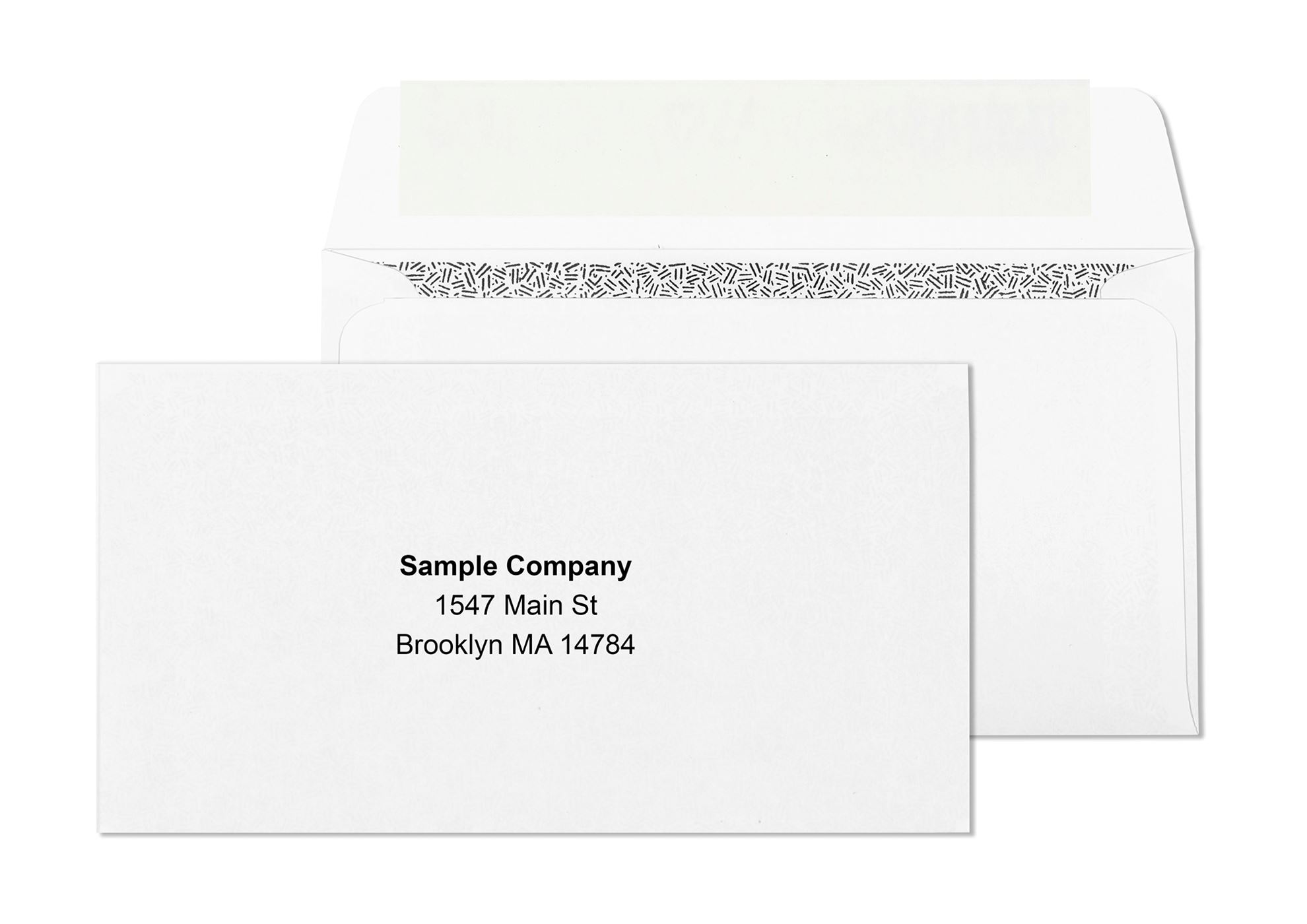
     

    #6 3/4 security tinted peel-and-seal envelopes for moisture-free reply and return mail

    #6 3/4 Security Tinted Peel-and-Seal Envelopes

    Security tinted interior with a peel-and-seal closure for moisture-free sealing. Peel the liner and press the flap closed. No licking or moistener needed. Preferred for programs serving older respondents or offices without envelope moisteners. The same interior tinting blocks read-through on sensitive returned documents.

    Security Tinted Gummed Flap
     

    #6 3/4 colored wove business envelopes with gummed flap for reply and return mail programs

    #6 3/4 Colored Wove Gummed Flap Envelopes

    Available in assorted colors with a gummed flap. Used by direct mail programs and billing reply programs that color-code outgoing and return envelopes by account type, department, or campaign. Same 24 lb wove stock as the plain white format. Available with custom printing on the face.

    Security Tinted Peel-and-Seal

    The security tinted format is also available with a peel-and-seal closure for programs where recipients prefer moisture-free sealing. The peel-and-seal strip is covered by a protective liner. To seal, peel the liner and press the flap closed. No moisture required. This format is preferred for programs serving older respondents or in environments where envelope moisteners are not available. See #6 3/4 Security Tinted Peel-and-Seal Envelopes for full details on this format. For a complete comparison of gummed and peel-and-seal closures across all sizes, see Peel-and-Seal vs Flip-and-Stick Self-Seal Envelope Guide.

    Remittance Format with Extended Flap
     

    #6 3/4 remittance envelopes with large gummed flap for nonprofit donation and payment programs

    #6 3/4 Remittance Envelopes Gummed Flap

    The extended flap is oversized and serves as the printed response form itself. Gift amount checkboxes, donor name fields, payment options, and gift purpose lines are printed directly on the flap. When the donor fills in the form and seals the envelope, the flap folds down to become the outward face of the piece. Replaces a separate reply card in donation programs. Available with custom-printed flap artwork. See the full design guide at the 6 3/4 Remittance Envelope Template Guide.

    All four formats mail at the same USPS First-Class letter rate. The format choice affects the program type and the security level of the returned contents, not the postage cost. Browse the complete selection at 6 3/4 Envelopes.

    Postage Comparison: #6 3/4 vs #9 Reply Envelope

    Both the #6 3/4 and the #9 reply envelope mail at the same USPS First-Class letter rate. The postage rate itself is identical. The practical difference appears in outgoing package weight, which can affect whether a single stamp covers the outgoing #10 or whether a second stamp is required.

    Factor #6 3/4 Envelope #9 Reply Envelope
    Dimensions 3-5/8 x 6-1/2 inches 3-7/8 x 8-7/8 inches
    Postage rate (outgoing as CRM) $0.82 letter rate (1 oz) $0.82 letter rate (1 oz)
    Postage rate (return, stamped) $0.82 letter rate (1 oz) $0.82 letter rate (1 oz)
    Envelope weight (enclosed, unsealed) ~3.5 to 4 g ~5 to 6 g
    Outgoing #10 package weight (1 letter + reply envelope) ~14 to 16 g (under 1 oz) ~16 to 18 g (near 1 oz)
    Risk of 2-stamp outgoing cost with multiple inserts Lower Higher
    Clearance inside #10 2-3/4 inch length clearance 3/8 inch length clearance
    Standard BRM size Less common Yes, standard for BRM
    Remittance large-flap format Yes, standard Available

    For programs that use Business Reply Mail at volume, the #9 is more widely specified in USPS BRM design standards and is easier to set up with a BRM permit. For nonprofit and donation programs that include multiple inserts in the outgoing #10 and need meaningful clearance, the #6 3/4 is the more practical choice and more reliably keeps the outgoing package within the single-stamp weight bracket.

    For the full #9 reply envelope guide including BRM design requirements, nesting math, and format variants, see #9 Reply Envelope: Complete Guide to Size, Uses, BRM and Formats.

    What Customers Say

    ★★★★★

    Shaindy

    Verified Purchase: #6 3/4 White Business Envelopes Gummed Flap Wove Custom Printed Reply Return

    "I am so happy with my envelopes. Great price and free shipping! AND they arrived fast. Thank you so much! I will be back in the future for more...."

    ★★★★★

    Martha from MI

    Verified Purchase: #6 3/4 White Business Envelopes Gummed Flap Wove Custom Printed Reply Return

    "As always, our order was delivered quickly and printed perfectly! Thank you for the wonderful customer service!"

    ★★★★★

    Jacob

    Verified Purchase: #6 3/4 Security Tinted Business Envelopes Gummed Flap Reply Return Custom Printed

    "Envelopes arrived perfect! I love the security tint!! Its a great security feature."

    Related Postage Guides by Envelope Size

    Business Envelopes publishes postage guides for every major envelope size we carry. If you are managing a mailing program that uses multiple sizes, the links below cover each size with the same level of detail as this guide.

    Related Guides for #6 3/4 Programs

    The links below cover the operational details of running programs that use #6 3/4 reply and remittance envelopes, from designing the flap to selecting security tinting to setting up automated sealing.


    Why Order #6 3/4 Envelopes from Business Envelopes

    Business Envelopes has supplied #6 3/4 reply and remittance envelopes to nonprofits, healthcare billing programs, financial services organizations, schools, and churches across the United States since 1997. Every format in the #6 3/4 range ships from stock with no minimums and free ground shipping on every order to the contiguous 48 states.

    • Blank stock ships same or next business day
    • Custom-printed orders ship within 7 to 10 business days from proof approval
    • PDF proof before every production run
    • Artwork stays on file for reorders
    • No minimums on any order
    • Free ground shipping site-wide

    For the complete range of business mail sizes including outgoing envelopes, window formats, and security stock, browse regular envelopes, window envelopes, printed envelopes, and #10 envelopes. For organizations running high-volume automated programs, see the Automated Mailing Envelope Guide for guidance on inserter-compatible formats and stock specifications.
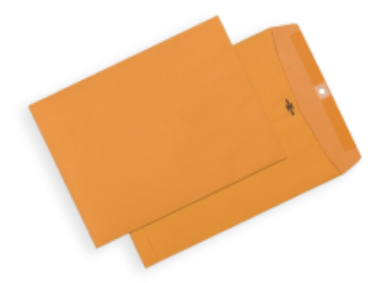
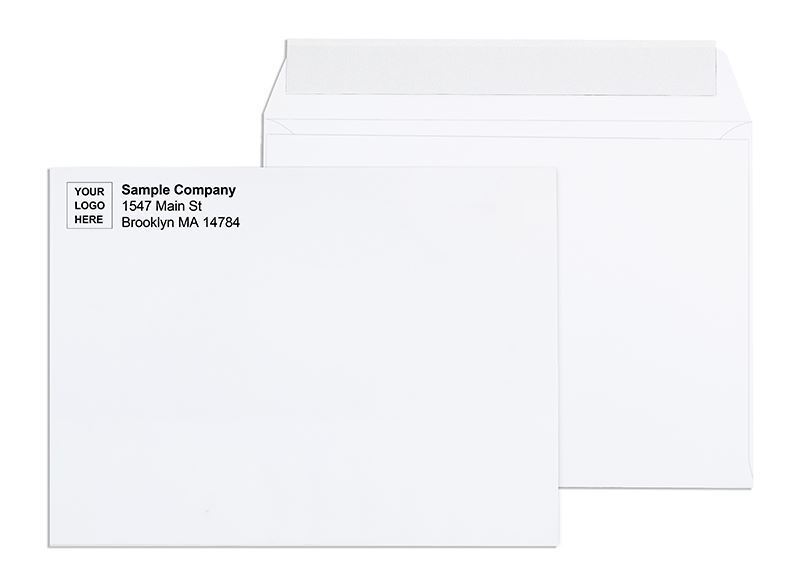
    Envelopes for Legal Documents: Size, Format, and Mailing Guide

    Home› Envelope Guides› Envelopes for Legal Documents

    Mailing a legal document is not the same as mailing an office letter. A contract that arrives creased, a deed that gets wet and tears, a closing packet where the flap lifted open in transit: each of these creates a real problem before the recipient reads a word. The envelope you choose determines whether the contents arrive in professional condition or become a problem to fix.

    This guide covers every decision a law firm, title company, paralegal, notary, or business professional needs to make: size, fold versus flat, seal type, security tinting, what to write on the outside, certified versus registered mail, and USPS postage rules for 2026. Every product linked here is available with no minimum order and free ground shipping from Business Envelopes, a commercial envelope supplier serving US businesses and legal offices since 1997.

    Can I Mail Legal Documents in a Regular Envelope?

    You can, but the answer depends entirely on what the document is. A single-page client letter folded in thirds and sent in a standard #10 envelope is perfectly acceptable for routine correspondence. An original signed contract folded into a #10 is a professional presentation problem that creates permanent crease marks across the face of the document.

    The practical rule most law offices follow: if the document is routine and informational, a #10 is fine. If the document is a contract, deed, discovery response, court filing, signed original, or anything that will be filed, scanned, recorded, or presented to another party, mail it flat. A flat envelope always reads as more intentional and professional, and it eliminates any risk of document damage from the folding process.


    What Size Envelope Do I Need for Legal Documents?

    Document Type Paper Size Right Envelope Why
    Single contract / letter (flat) 8.5 x 11 9x12 Holds letter-size paper flat, no folding
    Thick packet, multiple pages (flat) 8.5 x 11, multi-page 10x13 Extra room for stacked pages, exhibits, and attachments
    Legal-size document (flat) 8.5 x 14 10x13 or 10x15 Legal paper fits flat; no length trimming needed
    Closing package / deed packet Mixed sizes 10x13 or 10x15 Room for tabbed packets, inserts, and thick stacks
    Routine single-page letter (folded) 8.5 x 11 #10 commercial Standard business letter; folding acceptable for single page routine notices
    Irreplaceable signed original Any Tyvek 10x13 or 10x15 Tear-proof, moisture-resistant; arrives intact
    Internal office routing Any Clasp 10x13 or 10x15 Reusable; routes without sealing the gum flap

    A Note on the #14 Envelope for Folded Legal-Size Paper

    If your practice regularly mails on 8.5x14 legal-size letterhead and folds it for mailing rather than sending it flat, the #14 commercial envelope (5 x 11.5 inches) is the correct folded-format choice. The #14 fits legal paper folded in half lengthwise and qualifies for First-Class letter postage at $0.82 per ounce in 2026, making it more economical than flat-rate postage when document volume is low. However, if the legal packet is thick, multi-page, or must arrive unfolded for scanning or filing, the 10x13 flat envelope is still the better choice. For the #14 with a window for address efficiency, see the Legal Size Window Envelope: #14 Guide and Uses.

    Should I Fold Legal Documents or Mail Them Flat?

    This is the question notaries, paralegals, and small business owners search for most often. The answer is simple in practice: when in doubt, mail flat. Flat mailing is always more professional. It arrives crisper, signals the significance of the contents, and eliminates any scanning, filing, or presentation issues caused by fold marks.

    The only situation where folding is clearly acceptable is a single-page routine notice, billing letter, or informational correspondence that will be read and discarded. Anything that will be filed, recorded, countersigned, or retained belongs in a flat envelope.

    How to Decide: Fold or Flat in Five Steps

    1. Identify the document type. Is this a contract, deed, signed original, court filing, or discovery packet? If yes, skip to step 3. If this is a routine client letter or single-page notice, continue to step 2.
    2. For routine letters: fold in thirds and use a #10. A single-page letter on 8.5x11 paper can be folded in thirds and mailed in a standard #10 envelope. This is appropriate for notices, billing letters, and single-page correspondence. Skip to step 5.
    3. For important documents: choose flat mailing. Contracts, deeds, signed originals, multi-page filings, discovery packets, and anything that must arrive uncreased should go into a 9x12 or 10x13 flat envelope. Flat mailing is always the more professional presentation for legal correspondence.
    4. Choose the right flat envelope size. Use a 9x12 for standard 8.5x11 documents up to a quarter inch thick. Use a 10x13 for thicker packets, legal-size 8.5x14 documents, or closing packages. Use a 10x15 for oversized or very thick document stacks.
    5. Mark and seal the envelope. Write or stamp CONFIDENTIAL if the contents are sensitive. Stamp DO NOT BEND if the contents are rigid or particularly sensitive to creasing. Seal with peel-and-seal for a tamper-evident closure that shows the recipient if the piece was opened in transit.
     

    9x12 Envelopes: The Standard Flat Format for Legal Correspondence


    Envelopes for legal documents 9x12 white booklet peel and seal envelope for mailing contracts certificates closing letters and legal correspondence flat without folding


    The 9x12 envelope is the standard flat-mailing format for most law offices, title companies, and legal professionals. It holds a standard 8.5x11 sheet or a thin packet of letter-size papers with a quarter-inch clearance on each dimension. That clearance is enough to load documents cleanly without forcing or overstuffing the envelope.

    The 9x12 white booklet peel-and-seal envelope opens on the long side, which is the correct orientation for loading a flat letter-size document. At 28 lb bond paper, the wall is heavier and more opaque than a standard envelope, providing both a professional presentation and better protection for the contents during handling. The peel-and-seal closure produces a tamper-evident bond with no moisture required.

    When to Use a 9x12 for Legal Documents

    • Contracts and agreements that must arrive flat and uncreased
    • Certificates of insurance, notarized documents, and signed forms
    • Client correspondence from law firms, title companies, and real estate offices
    • Court filings mailed to opposing counsel or co-parties (not filed with the clerk, which has specific requirements)
    • Tax return packets and IRS correspondence
    • Multi-page discovery packets up to about a quarter inch thick
    • Any mailing where the professional presentation of the document matters

    Explore the full 9x12 range at 9 x 12 Envelopes. For a full breakdown of formats, see the 9x12 Envelope: Size, Uses, Formats, and When to Use It.

    10x13 Envelopes: For Thicker Packets and Legal-Size Paper


    10 x 13 brown booklet envelopes from business envelopes

    Use the 10x13 when the 9x12 is too tight. Thick multi-page documents, tabbed closing packets, legal-size 8.5x14 sheets mailed flat, or any packet with inserts and attachments goes into a 10x13. The extra inch on each dimension makes loading faster and ensures the flap closes cleanly without straining at the seal.

    The 10x13 white open-end peel-and-seal envelope opens at the short end, which is the standard catalog orientation for flat document mailings. It handles both single packets and stacked multi-document packages. The 28 lb paper weight provides enough wall opacity that contents do not show through when held to light. Explore the full 10x13 range at 10 x 13 Envelopes.

    When to Use a 10x13 for Legal Documents

    • Closing packages from real estate attorneys and title companies with deeds, settlement statements, and recorded documents
    • Multi-page contracts with exhibits, appendices, or numbered attachments
    • Legal-size documents (8.5 x 14 inches) that must arrive flat
    • Court-related mailings where the document stack exceeds what a 9x12 can close cleanly
    • Mixed packets with both letter-size and legal-size pages
    • Corporate governance documents, board resolutions, and shareholder agreements

    For a complete breakdown of large flat document formats and size comparisons, see Large Envelope Sizes: 9x12, 10x13, and More Explained.

    Tyvek Envelopes: For Irreplaceable Legal Originals


    10 x 13 tyvek envelopes front and back view business envelopes


    Most legal documents can be reprinted if the original is lost or damaged. Some cannot. An original signed contract with wet ink signatures. An original will. A recorded deed. A certified copy of a court order. If any of these are damaged in transit, the legal, financial, and operational cost to remedy the situation is significant.

    Tyvek is made from high-density polyethylene fibers, not paper. It does not tear under postal handling stress. It does not soften or delaminate when wet. When a delivery vehicle sits in rain or a package is left on a step in weather, the document inside a Tyvek envelope stays dry and intact.

    The 10x13 Tyvek envelope with Kwik-Tak peel-and-seal closure bonds without moisture and holds through postal sorting. For oversized packages, the 10x15 Tyvek envelope provides the additional room for thick stacked originals. For the complete Tyvek guide, see Tyvek Envelopes: Tear-Proof and Waterproof Mailing Guide.

    When to Use Tyvek for Legal Documents

    • Signed originals with wet ink signatures where all parties cannot easily reassemble to re-execute
    • Original wills, trusts, and estate planning documents
    • Recorded deeds and title documents returned to clients after county or municipal recording
    • Certified copies of court orders and judgments
    • Documents with raised or embossed government seals
    • Any mailing where document damage in transit would trigger a legal or operational problem
    • Documents traveling long distances, through uncertain delivery conditions, or at times of year with wet weather risk

    Browse the full Tyvek range at Tyvek Envelopes.

    Clasp Envelopes: For Internal Routing of Legal Files


    10x13 envelopes with secure metal clasp closure business envelopes

    Before a legal document goes out by mail, it often moves through multiple hands inside the office. A draft goes to the reviewing attorney. A signed document goes to the paralegal for packaging. A recorded deed comes back from the county office and goes to the file before delivery to the client. Using a gum flap envelope for that internal circulation either wastes the envelope by sealing it prematurely or leaves the document unprotected.

    A clasp envelope solves both problems. The metal clasp opens and closes repeatedly without activating the gum adhesive. The document routes from desk to desk, the clasp holds it shut, and the gum flap stays intact for the eventual outgoing mailing. The 10x13 brown kraft clasp envelope is the standard for internal legal document routing. The brown kraft exterior is deliberately nondescript, keeping attention off the contents during internal handling. For oversized routing, the 10x15 brown kraft clasp envelope handles thicker document stacks.

    Browse the full clasp range at Heavyweight Brown Clasp Envelopes.

    What Seal Type Should I Use for Legal Document Envelopes?

    Seal type determines two things for legal mail: operational reliability and tamper evidence. An envelope that arrives with the flap visibly lifted creates an immediate concern for the recipient, regardless of whether the contents were actually disturbed.

    Situation Seal Type Why
    Hand-sealed outgoing legal mail Peel-and-seal Tamper-evident, moisture-free, reliable bond every time
    High-volume inserter machine program Gum flap Required for automated sealing units; peel-and-seal cannot be machine-sealed
    Internal office routing Metal clasp only Reusable; gum flap preserved for outgoing mailing
    Irreplaceable originals in Tyvek Kwik-Tak peel-and-seal Pressure-sensitive bond, moisture-free, tamper-visible if opened
    Inserter machine warning If your law office uses a mailing machine inserter with a built-in sealing unit, you must order gum flap envelopes for that program. Inserters apply water to activate gum adhesive. Peel-and-seal cannot be machine-sealed by standard inserters. Running peel-and-seal through an inserter sealing unit leaves envelopes unsealed or causes jams. For more detail, see How to Seal an Envelope: The Right Way for Every Type and Situation.

    Should I Use a Security Tinted Envelope for Legal Documents?

    Yes, when the contents include anything a client or counterparty would consider private. Legal correspondence routinely contains client names, case numbers, financial details, settlement amounts, personal identifying information, and proprietary business terms. A plain white envelope, held to light under certain conditions, can allow portions of that information to show through the paper wall.

    Security tinted envelopes have a patterned interior print that blocks the view of contents when held to light. The pattern runs across the entire interior surface. For billing correspondence, client engagement letters, financial disclosure documents, and any piece that falls under the attorney's ethical obligation to protect client confidentiality, security tinting is the correct specification.

    For the complete guide to security tinted formats and their applications in legal and professional settings, see Security Envelopes for Business: The Complete Guide and Security Tinted Envelopes: What They Are and When to Use.

    What Should I Write on the Outside of a Legal Document Envelope?

    This question comes up repeatedly in paralegal and notary forums. Here is what actually matters and what is optional.

    CONFIDENTIAL marking

    Writing CONFIDENTIAL or ATTORNEY-CLIENT PRIVILEGED on the outer envelope is not legally required, but it is standard practice for sensitive legal correspondence at most law firms. It signals to postal handlers, mail room staff, and the recipient's office that the piece should be routed directly to the named party. For any correspondence you would consider privileged or sensitive, the marking takes two seconds and provides a meaningful signal. Some attorneys make it standard on every outgoing piece containing client information.

    DO NOT BEND marking

    Stamping or writing DO NOT BEND on a flat document envelope is not a USPS requirement, but it provides a practical signal when the contents should not be flexed. USPS automated sorting equipment handles flat envelopes with some mechanical pressure. For documents that are particularly sensitive to any bending, such as original certificates with embossed seals or documents being sent to be recorded, stamp DO NOT BEND on both the front and back of the envelope. For maximum protection against bending and tearing, pair the marking with a Tyvek envelope rather than a standard paper one.

    Return address and recipient address

    Printing the return address and recipient address is always preferable to handwriting for professional legal correspondence. Printed addresses reduce delivery errors, process more reliably through postal scanning equipment, and present more professionally to the recipient. If you are sending high volume, custom-printed envelopes with your return address pre-printed eliminate the labeling step and keep every outgoing piece consistent.

    Certified Mail vs Registered Mail: What Is the Difference for Legal Documents?

    Both certified mail and registered mail provide proof of delivery and are appropriate for legal correspondence, but they serve different purposes and carry different levels of security.

    Feature Certified Mail Registered Mail
    Proof of mailing Yes. PS Form 3800 receipt provided at time of mailing Yes. Receipt provided at time of mailing
    Delivery confirmation Electronic or physical green card (PS Form 3811) with recipient signature Electronic or physical green card with recipient signature
    Chain of custody Not documented at each transfer point Full chain-of-custody documentation at every USPS facility and transfer
    Security handling Standard postal handling Secured, sealed containers at every stage; signed receipts at every transfer
    Best use Demand letters, legal notices, most court-related correspondence, service of process where allowed Irreplaceable originals, high-value negotiable instruments, documents requiring legally significant chain of custody
    Envelope format Same 9x12 or 10x13 flat envelope; PS Form 3800 attached to outside Same 9x12 or 10x13 flat envelope; Registered Mail labels applied at post office

    For most legal correspondence including service of process, demand letters, and routine notices, certified mail is sufficient. Registered mail is reserved for situations where the chain of custody documentation at every point of transit is legally significant, or where the document has a high intrinsic or replacement value. The envelope format does not change for either service. For USPS mailing requirements by document type, see Mailing and Sending Letters: The Complete US Business Guide.

    USPS Postage for Legal Document Envelopes in 2026

    Most flat document envelopes mail as First-Class flats because their dimensions exceed the USPS letter-size threshold of 6.125 x 11.5 inches. A 9x12, 10x13, or 10x15 is always a flat regardless of weight. Only the smaller #10, #11, #12, and #14 commercial formats can qualify for letter rate.

    Envelope USPS Class 2026 Rate (1 oz) Additional oz Notes
    #10 (folded single page) First-Class Letter $0.82 +$0.27 Routine letters folded in thirds; not for flat document mailings
    #14 (folded legal paper) First-Class Letter $0.82 +$0.27 Fits 8.5x14 paper folded; letter rate when under 0.25 in. thick and flexible
    9x12 (flat) First-Class Flat $1.63 +$0.27 Thin single sheets may qualify for letter rate; confirm flexibility and thickness first
    10x13 (flat) First-Class Flat $1.63 +$0.27 Standard for multi-page legal packets; always flat rate
    10x15 (flat) First-Class Flat $1.63 +$0.27 Thick closing packets exceeding 10x13 capacity
    Non-machinable surcharge warning A flat envelope with a rigid insert such as a binder clip, a tabbed divider card, or a CD adds a $0.49 non-machinable surcharge on top of the base postage rate. Remove rigid inserts from legal mailings whenever possible, or account for the surcharge when budgeting postage. For complete USPS surcharge rules, see the Non-Machinable Envelope Guide: Surcharge Rules Explained.

    Who Uses Envelopes for Legal Documents

    Law Firms and Solo Practitioners

    Law firms mail contracts, demand letters, settlement agreements, engagement letters, and client updates. Standard outgoing legal mail uses a 9x12 or 10x13 peel-and-seal with security tinting for client-facing correspondence. Internal document routing between attorneys and paralegals uses clasp envelopes. For signed originals, Tyvek provides protection that a paper envelope cannot match. Custom printed envelopes with the firm's name, address, and logo on every outgoing piece signal professionalism consistently across every case.

    Title Companies and Real Estate Attorneys

    Title companies and real estate attorneys mail closing packages, recorded deeds, title commitments, and survey documents to buyers, sellers, and lenders after every transaction closes. A closing package often includes 10 to 30 pages across multiple document types. The 10x13 is the standard outgoing format. For recorded originals going back to clients after county recording, Tyvek provides the protection that recorded documents require. For the full guide to real estate mailing formats, see Envelopes for Real Estate Agents: The Complete Guide.

    Corporate Legal and Compliance Teams

    Corporate legal departments mail shareholder agreements, board resolutions, compliance notices, and regulatory correspondence. These typically go out in 9x12 or 10x13 peel-and-seal envelopes with security tinting. For high-volume outgoing legal mail from a compliance or general counsel team, standardizing on a printed envelope with logo and return address maintains brand consistency and chain of custody documentation for every outgoing piece.

    Notaries Public

    Notaries mail notarized documents to clients and counterparties, often working with mixed-size packets. The 10x13 handles most signing packages flat. For certified or original notarizations that must arrive intact, Tyvek is the protective choice. For loan signings where the packet includes both letter and legal-size pages, a 10x13 accommodates the full packet in a single envelope.

    Court Clerks and Government Offices

    Court clerks mail certified copies of filings, judgments, and orders. The 9x12 or 10x13 flat envelope is standard for these programs. Government offices mailing on legal-size letterhead use the #14 for routine correspondence or a 10x13 for unfolded certified copies.

    Common Mistakes When Mailing Legal Documents

    • Using a #10 for documents that must arrive flat. A contract folded in thirds arrives with permanent crease marks. For anything that will be filed, scanned, countersigned, or presented, use a 9x12 or 10x13 flat envelope.
    • Using a paper envelope for irreplaceable originals. Paper softens when wet and tears under mechanical stress. For signed originals, recorded documents, and documents that cannot be recreated, use Tyvek.
    • Sealing a clasp envelope during internal routing. Once the gum flap is sealed, the envelope cannot be reused without tearing. For internal circulation, use only the metal clasp. Keep the gum flap intact for the outgoing mailing.
    • Skipping security tinting for sensitive correspondence. A plain white envelope held to light can expose content. For any legal mail with client-identifiable or financial information, use a security tinted format.
    • Assuming a 9x12 always mails at letter rate. A 9x12 is a flat by USPS classification. Letter rate applies only when the piece is thin, flexible, and under 0.25 inches thick. Multi-page packets should be budgeted at the $1.63 flat rate.
    • Using peel-and-seal in an inserter machine program. Inserter sealing units require gum flap envelopes. Peel-and-seal cannot be machine-sealed. Confirm which closure your inserter requires before ordering.
    • Ordering a size that does not fit legal-size paper. For 8.5x14 legal paper mailed flat, the minimum is a 10x13. A 9x12 is 3 inches shorter than the paper and will not work as a flat mailer for legal-size documents.
    • Not retaining a copy of the mailing receipt. For certified or registered mail, keep a copy of the PS Form 3800 receipt and the tracking number in the case file. This is the proof of mailing if the delivery is ever disputed.

    What Customers Say

    ★★★★★ Baila  Verified Buyer | 9x12 White Booklet Peel-and-Seal Envelopes


    "These are so useful! I personally use them to pack my tax return docs. Perfect for mailing a variety of big documents."

    ★★★★★ Shaindy  Verified Buyer | 10x13 Tyvek Envelopes Peel and Seal


    "I love these for mailing brochure packages out to our clients. They get to their destination looking good and staying intact. I used to use regular envelopes and they would arrive with a tear or worse."

    ★★★★★ Malky  Verified Buyer | 10x13 Brown Kraft Clasp Envelopes


    "I run a small business and these are perfect! The envelopes are bigger than standard paper and can hold quite a bit. I use these with my employees who weekly scan all receipts."


    default image icon business envelopes

    Photo Mailer Envelopes: Which Size, Format, and Material Protects Your Photos

    Home › Mailing Guides › Photo Mailer Envelopes

    Photos arrive damaged for one consistent reason: the envelope is too large. When a print has room to shift inside the mailer, automated postal sorting flexes it across its unsupported edges and creases arrive. Get the size right and a standard paper envelope delivers a photo just as flat as a rigid chipboard mailer, at a fraction of the cost per piece.

    This guide covers envelope size selection for each print size, Tyvek vs paper for moisture risk, the non-machinable surcharge and how to avoid it, postage costs by format, and how to address photo envelopes correctly.

    Why Standard Paper Envelopes Work for Mailing Photos

    The assumption that photos require rigid chipboard mailers to survive the mail is wrong in most circumstances. Chipboard mailers solve a real problem, but the problem they solve is not about the mailer material , it is about interior space. When a photo has room to slide, it bends. When a photo fits snugly inside an envelope that matches its dimensions, it cannot pivot across an unsupported edge and arrives flat.

    Automated postal sorting equipment runs mail through roller-style mechanisms at high speed. A letter-size piece that is properly sized, sealed, and within thickness limits passes through cleanly. A piece where the contents shift inside the envelope flexes with each roller contact. The mailer's rigidity matters less than the interior fit.

    The practical rule: match the envelope size to the print size with a quarter-inch to half-inch clearance on each edge. The photo rests flat, the envelope seals flush, and the piece handles like standard flat mail.

    Photo Mailer Envelope Size Guide: Which Envelope for Which Print

    Print Size Best Envelope Interior Clearance USPS Class Postage (2026, 1 oz)
    4x6 inches 6x9 open-end 1 in each short side, 1.5 in each long side First-Class Letter $0.82
    5x7 inches 6x9 open-end 0.5 in each short side, 1 in each long side First-Class Letter $0.82
    8x10 inches 9x12 open-end 0.375 in each side First-Class Flat $1.63
    8.5x11 inches 9x12 open-end 0.125 in each side , tight; use 10x13 for mounted prints First-Class Flat $1.63
    11x14 inches 10x13 + folded, or tube roll Does not fit flat in standard catalog envelopes Package Package rate

    6x9 envelope for 4x6 and 5x7 photos

    A 6x9 catalog envelope (open-end, flap on the short edge) holds a 4x6 print flat with approximately one inch of clearance on the short sides and one and a half inches on the long sides. A 5x7 print fits with a half-inch margin on the short sides and one inch on the long sides. Both fits are clean enough that the print cannot slide and flex during transit.

    The postage advantage of the 6x9 is significant: at exactly 6 inches tall, the 6x9 clears the USPS letter-rate height maximum of 6-1/8 inches and mails at First-Class letter rate ($0.82 per ounce in 2026). The same print in a 9x12 envelope would mail at flat rate ($1.63 per ounce). On a batch of 100 photo mailings, choosing 6x9 over 9x12 where the print fits saves $81 in postage. For postage details, see 6x9 Envelopes: Letter-Rate Postage, Sizes and Uses Guide.

    9x12 envelope for 8x10 photos

    A 9x12 catalog or booklet envelope holds an 8x10 print flat with a quarter-inch margin on each side. No folding. No center crease. The 8x10 slides into the 9x12 cleanly and arrives exactly as it left. A 9x12 always mails at USPS First-Class flat rate regardless of weight or contents. In 2026 that is $1.63 per ounce.

    For prints that are mounted, matted, or have a backing board added for extra rigidity, the 9x12 may be tight. In that case, use a 10x13 envelope, which gives an 8x10 print over a full inch of clearance on each side even with added material. Browse the full 9x12 range at 9x12 envelopes and the complete format guide at 9x12 Envelope: Size, Uses, Formats, and When to Use It.

    The postage math on volume photo mailings A 6x9 at letter rate costs $0.82 per piece. A 9x12 at flat rate costs $1.63 per piece. The difference is $0.81. On a photography studio mailing 200 proofs monthly, choosing 6x9 for 4x6 and 5x7 prints instead of 9x12 saves $162 per month, or $1,944 per year. The envelope size decision is also a postage decision.

    Tyvek Photo Mailer Envelopes: When to Upgrade


    Photo mailer envelopes Tyvek version showing 9x12 Tyvek envelope peel-and-seal tear-resistant waterproof open-end for mailing irreplaceable photos and prints through weather-risk routes where moisture humidity or rough postal handling could damage a standard paper envelope


    A standard paper envelope in the correct size delivers photos flat in typical conditions. Tyvek is the right choice when the mailing faces specific risks that paper cannot handle.

    What Tyvek does for photo mailing

    Tyvek is a spunbonded high-density polyethylene material that repels water, resists tearing, and does not soften or disintegrate in wet conditions. A paper envelope caught in heavy rain during delivery can arrive with contents damaged by moisture or by the softened envelope collapsing around the print. A Tyvek envelope in the same conditions arrives intact.

    For prints that are irreplaceable (original darkroom prints, signed photographer proofs, artwork prints), Tyvek eliminates the weather-damage risk that standard paper carries. The peel-and-seal closure on Tyvek envelopes creates a tamper-evident bond that also resists moisture penetration at the seal line.

    When to use Tyvek vs standard paper for photos

    Situation Standard Paper 9x12 Tyvek 9x12
    Standard prints, indoor delivery Correct choice Overkill , paper is adequate
    Weather-risk route or outdoor delivery box Risk of moisture damage Use Tyvek
    Irreplaceable originals (signed prints, darkroom) Risk , cannot replace if damaged Use Tyvek
    High-volume batch mailing of proofs Cost-effective choice Significantly more expensive per piece
    International photo mailing Higher transit risk Use Tyvek , longer routes, more handling

    For the complete guide to Tyvek construction and when to use it for important document and photo mailing, see Tyvek Envelopes: Tear-Proof and Waterproof Mailing Guide. Browse the 9x12 Tyvek format at Premium 9 x 12 Tyvek Envelopes with Kwik-Tak Closure and the 10x13 format at 10 x 13 Tyvek Envelopes Peel and Seal.

    Clasp Envelopes for Reusable Photo Mailing Programs


    Photo mailer envelopes clasp version showing 9x12 brown kraft open-end catalog envelope with metal clasp closure for photography studios and professional photo fulfillment programs where the same envelope is opened and resealed multiple times during routing before final delivery


    Photography studios and professional photo labs that route prints through multiple quality-check stages before sealing and mailing often use clasp envelopes. The ribbed metal clasp opens and reseals cleanly across multiple cycles without losing structural integrity, making it the right format when the same envelope handles the print through internal review before outgoing mail.

    The 28 lb brown kraft construction at 104 GSM is denser than standard white wove, which resists the corner bending that can happen during internal handling. The gummed flap seals permanently for outgoing mail once the clasp is in its final position. Browse the 9x12 clasp format at 9x12 Brown Kraft Clasp Catalog Envelopes and see the full clasp guide at Clasp Envelopes: Complete Guide to Sizes, Uses, Mailing Rules.

    The Non-Machinable Surcharge: What Rigid Inserts Do to Postage

    If you add a rigid backing board, chipboard card, or any stiff insert to a letter-size envelope, the piece may trigger the USPS non-machinable surcharge of $0.49 per piece (2026 rate). This applies to letters that are too thick, too rigid, or too stiff to pass through automated sorting equipment.

    A plain photo in a correctly sized 6x9 envelope does not trigger this surcharge , a photo print is paper and passes through sorting machinery normally. The surcharge becomes relevant when buyers add a backing board to a letter-size envelope. If the sealed 6x9 exceeds 1/4 inch in thickness or becomes rigid enough to fail the postal flexibility test, it becomes non-machinable and costs $0.49 more per piece.

    For flat-rate 9x12 envelopes, the non-machinable surcharge does not apply because 9x12 envelopes are already classified as flats and processed on flat-sorting equipment rather than letter-sorting machinery. Adding a backing board to a 9x12 is safe from a surcharge perspective. For the full surcharge rules, see Non-Machinable Envelope Guide: Surcharge Rules Explained.

    USPS Postage for Photo Mailer Envelopes: 2026 Rate Table

    Envelope Class 1 oz (2026) 2 oz (2026) Best For
    6x9 First-Class Letter $0.82 $1.09 4x6, 5x7 prints
    9x12 First-Class Flat $1.63 $1.90 8x10 prints, matted photos
    10x13 First-Class Flat $1.63 $1.90 8x10 with backing board, 8.5x11
    Non-machinable surcharge +$0.49 per piece Applies to letter-size envelopes with rigid inserts over 1/4 inch thick , Avoid by using 9x12 flat for stiff contents

    For the complete 2026 postage guide by envelope size, see How Much Does It Cost to Mail a Letter in 2026? and How Many Stamps Do I Need? The Complete Guide by Envelope Size.

    How to Address a Photo Mailer Envelope

    Addressing a photo mailer envelope follows the same rules as any USPS First-Class mailing. For 9x12 flat envelopes, write or print the delivery address in the lower right quadrant of the face, keeping it clear of the edges. Return address goes in the upper left corner. USPS optical character recognition reads the delivery address and routes the piece automatically, so clear printing and correct positioning matter.

    Adding "Do Not Bend" or "Photos Enclosed" to the envelope face is optional and has limited practical effect on automated sorting, which processes mechanically rather than checking handwritten notes. The functional protection against bending is the correct envelope size, not the notation. If you do add a notation, write it below the return address or along the left margin where it will not interfere with the delivery address block.

    For the complete addressing guide, see Mailing and Sending Letters: The Complete US Business Guide.

    Common Mistakes When Mailing Photos

    • Using an oversized envelope. A 4x6 print in a 9x12 envelope slides 3-4 inches in every direction. Each movement across an unsupported edge creates a crease. Match the envelope size to the print with a quarter to half-inch margin on each side.
    • Skipping the correct size in favor of a larger "safe" envelope. Bigger is not safer. A correctly sized 6x9 delivers a 4x6 photo more reliably than a loose 9x12 with the same print floating inside.
    • Adding a rigid backing board in a letter-size envelope. A stiff insert in a 6x9 can trigger the $0.49 non-machinable surcharge. If you need rigid backing, use a 9x12 flat envelope where the surcharge does not apply.
    • Sealing multiple loose prints together without a sleeve. Multiple prints stacked loose in an envelope slide against each other, scratching glossy surfaces and creasing at the contact points. Interleave prints with tissue paper or enclose in a protective sleeve before loading the envelope.
    • Forgetting that 9x12 envelopes always mail at flat rate. No matter what the contents weigh or how thin the material, a 9x12 never qualifies for letter rate. Budget flat rate ($1.63/oz in 2026) for every 9x12 mailing.

    What Customers Say About Business Envelopes

    ★★★★★ Baila, Verified Buyer | 9x12 White Booklet Peel-Seal Envelopes


    "These are so useful! Perfect for Mailing a Variety of Big Documents including: Photography, cards, invoices, catalogs, oversized wedding invitations, forms... and what not?!"

    ★★★★★ Jacob, Verified Buyer | 9x12 White Open-End Printed Envelopes


    "Very happy with these envelopes. They arrived in pristine condition and are just great for mailing letter sized documents."

    ★★★★★ Jacob, Verified Buyer | 9x12 Starburst Booklet Printed Envelopes


    "I am a photographer and use the Pink Starburst colors for my printed pics. Everyone is thrilled when they receive a Hot Pink envelope in the mail... we all know some photos are in there."


    How Much Does It Cost to Mail a Letter in 2026?

    Home › Mailing Guides › How Much Does It Cost to Mail a Letter 2026

    The cost to mail a letter changed on July 12, 2026, when USPS implemented its latest rate adjustment. A standard one-ounce First-Class letter now costs $0.82 , up from $0.78 before the July increase. For individuals mailing occasional letters, the difference is minor. For businesses mailing hundreds or thousands of pieces monthly, understanding every rate tier, surcharge, and format choice determines real budget impact.

    This guide covers the complete 2026 cost to mail a letter, from the basic stamp price through weight tiers, large envelope rates, the non-machinable surcharge, metered mail savings, and how envelope format affects what you pay at the post office.

    The 2026 USPS Rate Change: What Changed on July 12

    USPS implemented a rate increase on July 12, 2026. This is the rate table for every standard First-Class mail piece:

    Mail Type Rate Before July 12 Rate From July 12 Change
    First-Class letter, 1 oz (stamped) $0.78 $0.82 +$0.04
    First-Class letter, 1 oz (metered) $0.74 $0.78 +$0.04
    Additional ounce (each) $0.25 $0.27 +$0.02
    Non-machinable surcharge $0.47 $0.49 +$0.02
    Postcard (domestic) $0.59 $0.62 +$0.03
    First-Class flat, 1 oz $1.50 $1.63 +$0.13
    Forever stamps remain valid Forever stamps purchased at any price before July 12 continue to cover a one-ounce First-Class letter at the new $0.82 rate. You do not need to add supplemental postage to pre-July stamps already in your supply. They are valid indefinitely for one-ounce domestic letters.

    How Much Does It Cost to Mail a Letter by Weight: 2026 Rate Table

    The standard letter rate applies to mail pieces that qualify as a USPS letter: no wider than 6-1/8 inches, no longer than 11-1/2 inches, and no thicker than 1/4 inch. A #10 envelope with paper contents falls well within these limits. Here is the complete 2026 cost table by weight:

    Weight Stamped (Forever stamp) Metered Stamps Needed Typical Contents
    Up to 1 oz $0.82 $0.78 1 Forever stamp 1-page letter, invoice, check, greeting card
    1 to 2 oz $1.11 $1.07 1 Forever + 1 Additional Ounce 2-page letter, folded brochure, multi-insert
    2 to 3 oz $1.40 $1.36 1 Forever + 2 Additional Ounce 3-4 page document with inserts
    3 to 3.5 oz $1.63 $1.59 1 Forever + 3 Additional Ounce Multi-page packet at letter-size maximum

    The maximum weight for a standard letter is 3.5 ounces. Anything heavier than 3.5 ounces is classified as a flat (large envelope) or package regardless of physical dimensions, and the flat rate structure applies. For the complete stamp count guide by envelope size and weight, see How Many Stamps Do I Need? The Complete Guide by Envelope Size.

    How Envelope Format Affects the Cost to Mail a Letter in 2026


    #10 white window envelopes with printed logo business envelopes


    The single most important factor in how much it costs to mail a letter in 2026 is often overlooked: the envelope format determines which postage rate applies, and the difference between formats is $0.81 per piece.

    Envelope Format Size USPS Class Cost at 1 oz (2026) Best For
    #10 envelope 4-1/8 x 9-1/2 in First-Class Letter $0.82 Checks, invoices, statements, business letters
    6x9 envelope 6 x 9 in First-Class Letter $0.82 Brochures, photos, half-folded documents
    9x12 envelope 9 x 12 in First-Class Flat $1.63 Flat documents, contracts, reports
    10x13 envelope 10 x 13 in First-Class Flat $1.63 Legal size documents, thick packets

    The 6x9 envelope is the format most buyers underestimate. At exactly 6 inches tall, a 6x9 falls within USPS letter size limits when contents keep it under 1/4 inch thick. A half-folded 8.5 x 11 sheet fits cleanly inside a 6x9, and the piece mails at letter rate. The same document in a 9x12 , even at identical weight , automatically mails at flat rate, costing $0.81 more per piece.

    Over 500 monthly pieces, choosing 6x9 over 9x12 where the content allows saves $405 per month in postage alone. For the complete postage analysis, see 6x9 Envelope Postage: Letter Rate vs Flat Rate Guide.

    The Non-Machinable Surcharge: When a Letter Costs More Than $0.82

    The non-machinable surcharge adds $0.49 to the base postage cost in 2026, making a one-ounce letter cost $1.31 instead of $0.82. It applies when an envelope cannot be processed by USPS automated sorting equipment. The triggers:

    • Square envelope: Any envelope where the length divided by height falls outside 1.3 to 2.5
    • Rigid or hard contents: A coin, button, key, or card that creates a lump inside the envelope
    • Clasps, strings, or buttons: Any closure other than adhesive or moisture-activated gum
    • Over 1/4 inch thick: Too much content stuffed into a letter-size envelope
    • Polycoated or glossy exterior: Some materials jam sorting machines

    A standard sealed #10 envelope containing paper pages avoids every trigger. The surcharge is most commonly incurred by greeting cards in square envelopes and by direct mail pieces with hard promotional inserts. For the full rules, see Non-Machinable Envelope Guide: Surcharge Rules Explained.

    How Much Does It Cost to Mail a Large Envelope in 2026


    Large envelope mailing cost 2026 showing 9x12 white open-end catalog envelope gummed flap wove that mails at USPS First Class flat rate of 1.63 dollars for one ounce in 2026 significantly more than the 0.82 dollar letter rate for standard number ten envelopes


    Large envelopes , what USPS calls "flats" , always mail at flat rate. The 9x12 is the most common format in this category. Here is the complete 2026 flat rate cost table:

    Weight First-Class Flat Rate (Stamped) Metered Rate
    Up to 1 oz $1.63 $1.59
    1 to 2 oz $1.90 $1.86
    2 to 3 oz $2.17 $2.13
    Each additional oz +$0.27 +$0.27

    Flat-rate postage can be reduced on volume programs by weighing sealed envelopes before mailing. Multi-page contract packets and thick document sets often land in the 2-3 oz range, making postage costs meaningfully higher than the minimum $1.63. Tyvek envelopes reduce the envelope material weight, which helps on borderline weight pieces. For the full 10x13 postage breakdown, see 10x13 Envelope Postage: Stamps and Cost Guide 2026.

    Stamps vs Metered Mail: The Cost Difference in 2026

    The metered mail discount in 2026 is $0.04 per one-ounce First-Class letter , $0.82 stamped vs $0.78 metered. At low volume, this difference is negligible. At business volume, it accumulates:

    Monthly Volume Stamped Cost ($0.82) Metered Cost ($0.78) Monthly Savings Annual Savings
    100 pieces $82 $78 $4 $48
    500 pieces $410 $390 $20 $240
    1,000 pieces $820 $780 $40 $480
    5,000 pieces $4,100 $3,900 $200 $2,400

    Metered mail requires a postage meter or an online postage service subscription. For the complete analysis of when metered mail makes financial sense vs stamps, including the break-even calculation, see Metered Mail vs Stamps: Which Makes More Sense for Your Business Envelope Program.

    Other Mailing Costs: Certified Mail, International, and Postcards

    The $0.82 letter rate covers standard domestic First-Class mail only. Other common mailing services have additional or separate costs in 2026:

    • Certified Mail: $3.85 added to standard postage. Provides a tracking number and mailing date record. Required to dispute late-filing claims on tax returns and legal documents. Total for a one-ounce certified letter: $4.67.
    • Return Receipt (green card): $3.55 additional. Provides a signed confirmation of delivery. Added on top of Certified Mail.
    • Postcard (domestic): $0.62 in 2026, provided the card meets USPS postcard dimensions (3.5 x 5 inches minimum, 4.25 x 6 inches maximum).
    • International letter (1 oz): $1.70 in 2026 for a First-Class international letter to any country. A Forever stamp does not cover international postage.
    • Registered Mail: Starts at $19.70 in 2026. For high-value or sensitive items requiring maximum security and a chain-of-custody record. Not standard for routine business mail.

    For the full guide to stamp types including Forever stamps, Additional Ounce stamps, Global stamps, and postcard stamps, see Postage Stamps and Buying Options: The Complete US Guide for 2026.

    How Envelope Type Affects Your Actual Mailing Cost


    Envelope cost 2026 showing 6x9 brown kraft catalog envelope with metal clasp that qualifies for First Class letter rate of 0.82 dollars at one ounce because the 6x9 format falls within USPS letter size limits saving 0.81 dollars per piece compared to a 9x12 flat rate envelope


    Beyond size, the envelope's construction and closure type can also affect the final postage cost. Specific situations to be aware of:

    Self-seal envelopes and postage

    Self-seal envelopes (peel-and-seal, flip-and-stick) have the same postage cost as gum-flap envelopes in the same size. The closure method does not change the USPS rate. What matters is the overall envelope dimensions, weight of contents, and whether the sealed piece triggers the non-machinable surcharge. For self-seal envelope options, see self seal envelopes.

    Window envelopes and postage

    A #10 window envelope mails at the same $0.82 First-Class letter rate as a plain #10 envelope. The poly-film or glassine window does not trigger the non-machinable surcharge or change the postage classification. Window envelopes at 9x12 still mail at flat rate. For window envelope formats, see window envelopes.

    Security-tinted envelopes and postage

    Security-tinted envelopes , which have an interior crosshatch pattern that blocks contents from being read through the envelope , have identical postage to plain envelopes of the same size. The interior tinting does not affect USPS classification or rate. For #10 envelope postage rates in full detail, see #10 Envelope Postage: Stamps and Cost Guide for 2026.

    How Businesses Reduce the Cost to Mail Letters in 2026

    For operations mailing regularly, four practical approaches reduce the total cost to mail a letter in 2026:

    1. Use the smallest envelope that fits the content. A #10 or 6x9 at letter rate costs $0.82. A 9x12 at flat rate costs $1.63. The envelope format is the most impactful single variable in postage cost.
    2. Switch from stamps to metered or online postage. Metered mail saves $0.04 per piece, which adds to $480 per year on 1,000 monthly pieces. Online postage platforms offer the same metered rate without a physical meter lease.
    3. Avoid the non-machinable surcharge. Keep contents under 1/4 inch thick in sealed letter envelopes. Use adhesive closures, not clasps. Use rectangular envelopes with appropriate aspect ratios.
    4. Buy Forever stamps before rate increases. A Forever stamp purchased today at $0.82 covers a one-ounce letter at whatever the rate is when it is used. Buying in quantity before a rate increase locks in savings on future mailings.

    For the complete letter mailing guide covering USPS mail classes, addressing rules, return address requirements, and drop-off options, see Mailing and Sending Letters: The Complete US Business Guide.

    Check the current rate before a large mailing run USPS adjusts rates periodically. The rates in this guide reflect the July 12, 2026 rate schedule. Before any large batch mailing, confirm the current rate at USPS.com or weigh a sample piece at a post office to get the exact postage required. Underpaid postage returns the piece to sender or delivers it postage-due to the recipient.

    What Customers Say About Business Envelopes

    ★★★★★ Gitty, Verified Buyer | #10 White Business Envelopes


    "Great quality basic envelopes at great price! Thank you!"

    ★★★★★ Jacob, Verified Buyer | #10 White Business Envelopes


    "Great product and shipped very well! Better than I get from local office supply and a better value!"

    ★★★★★ Shaindy, Verified Buyer | #10 Window Envelopes


    "Super quality! Great product."