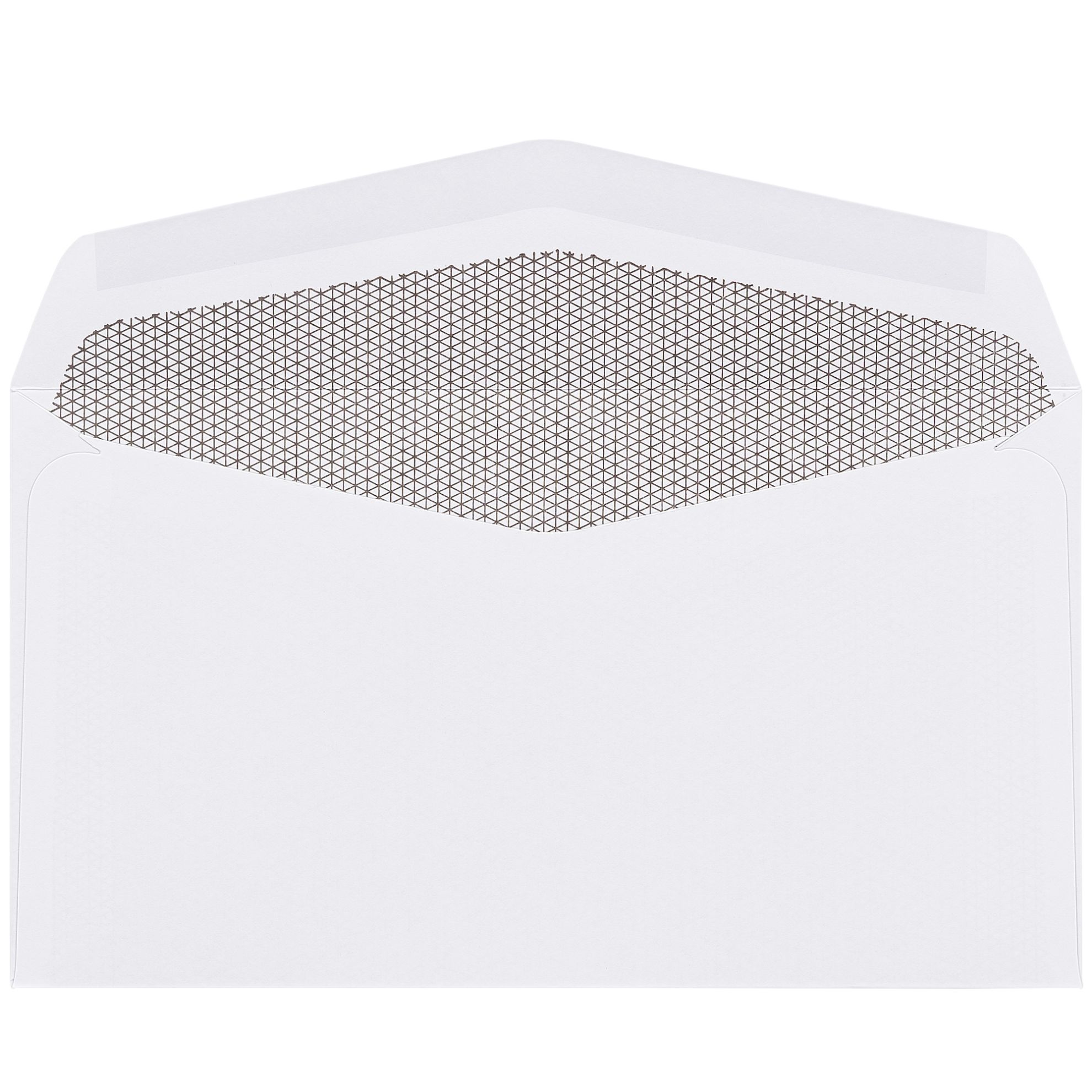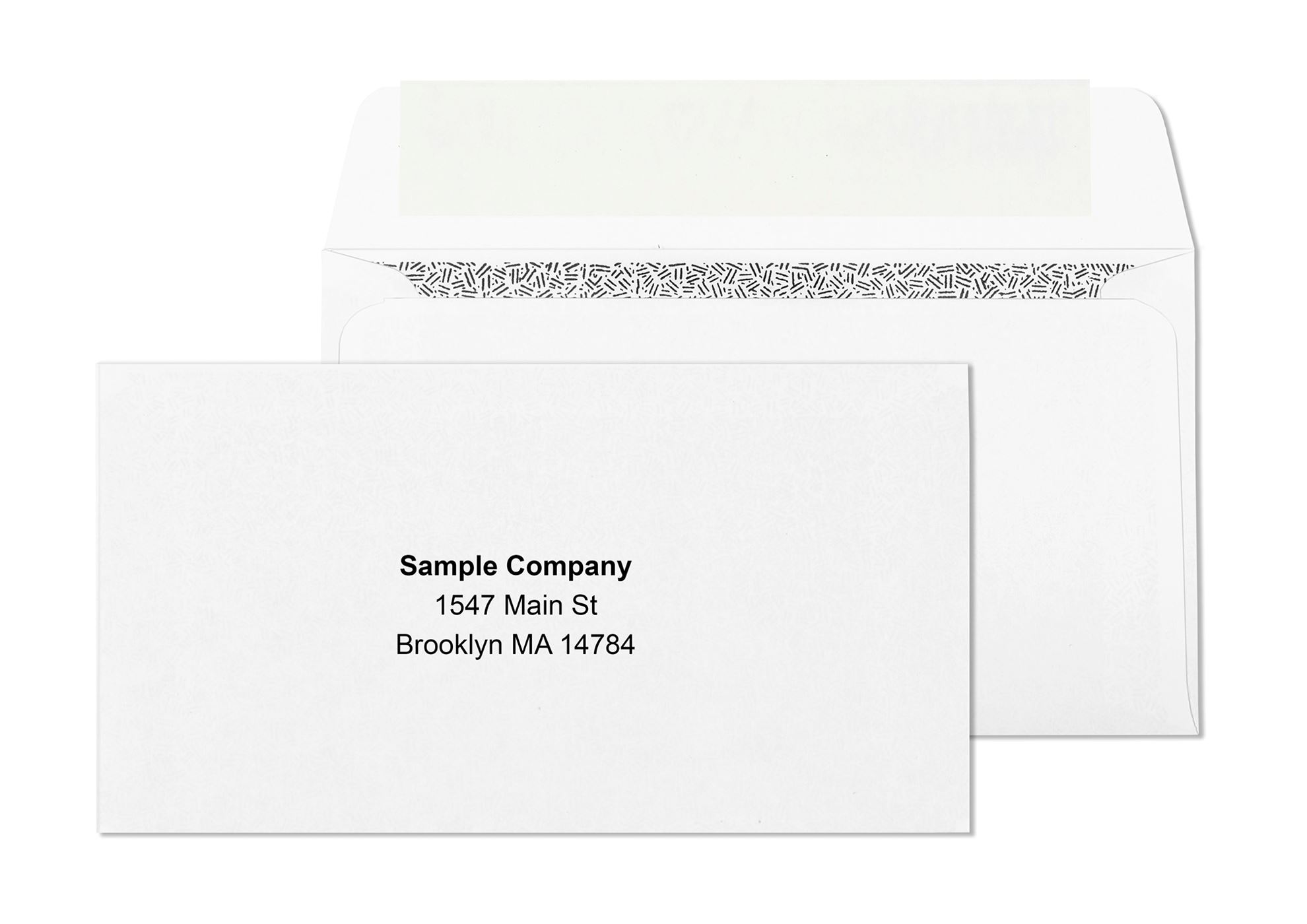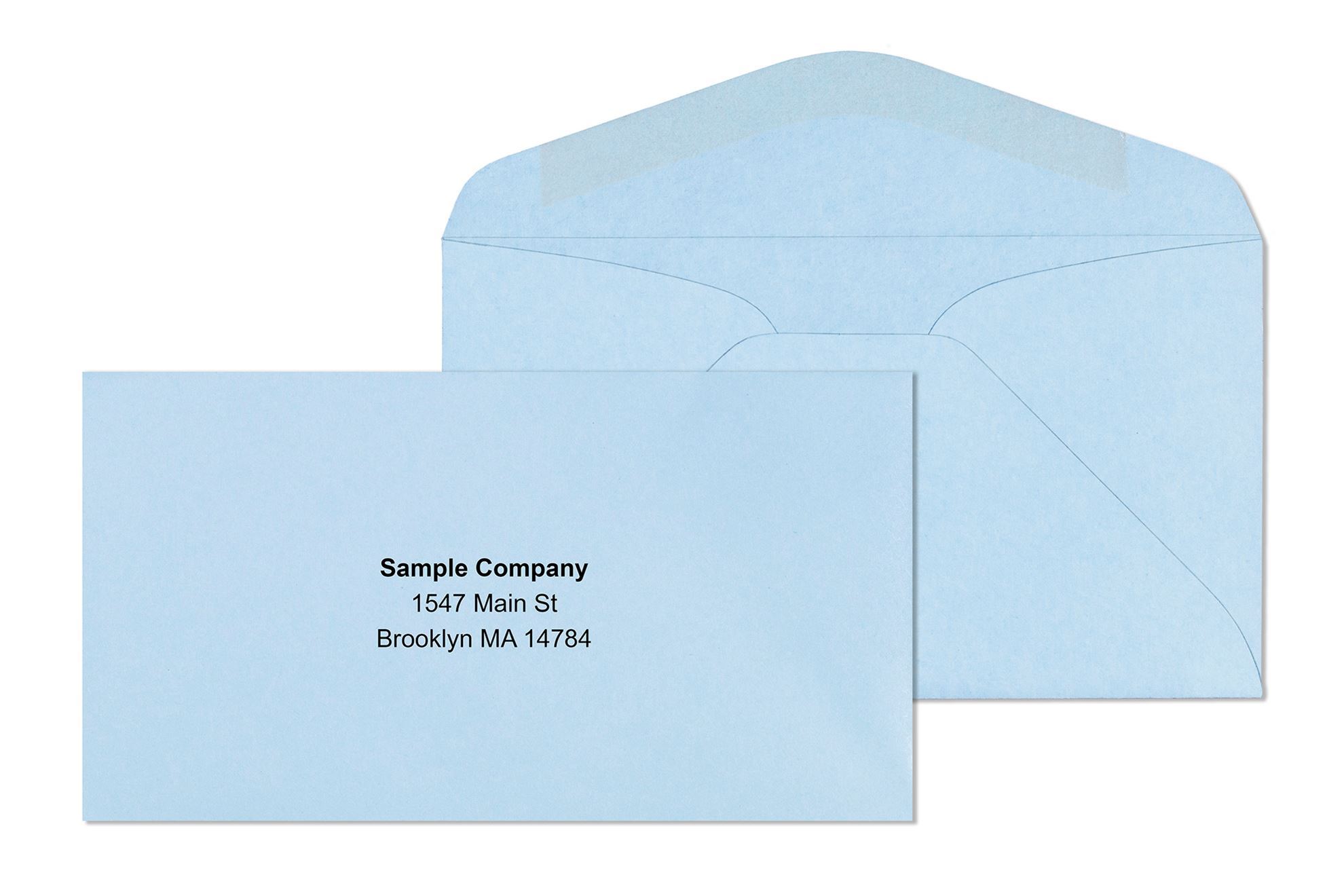
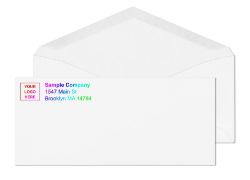
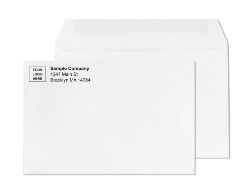
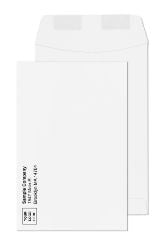
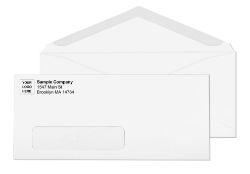
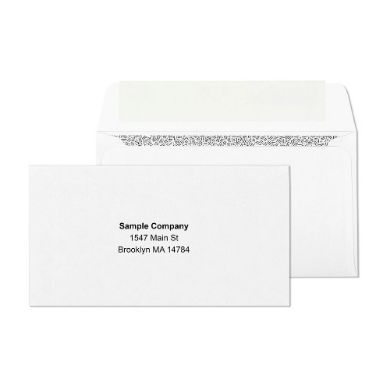
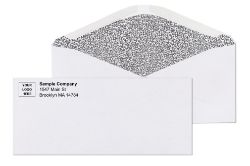
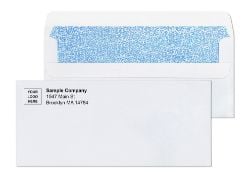
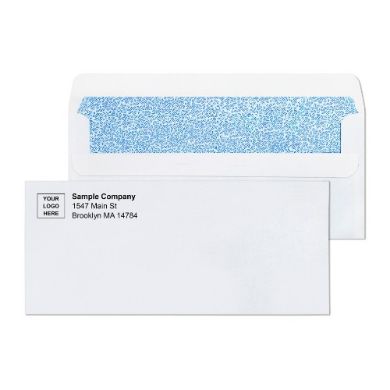
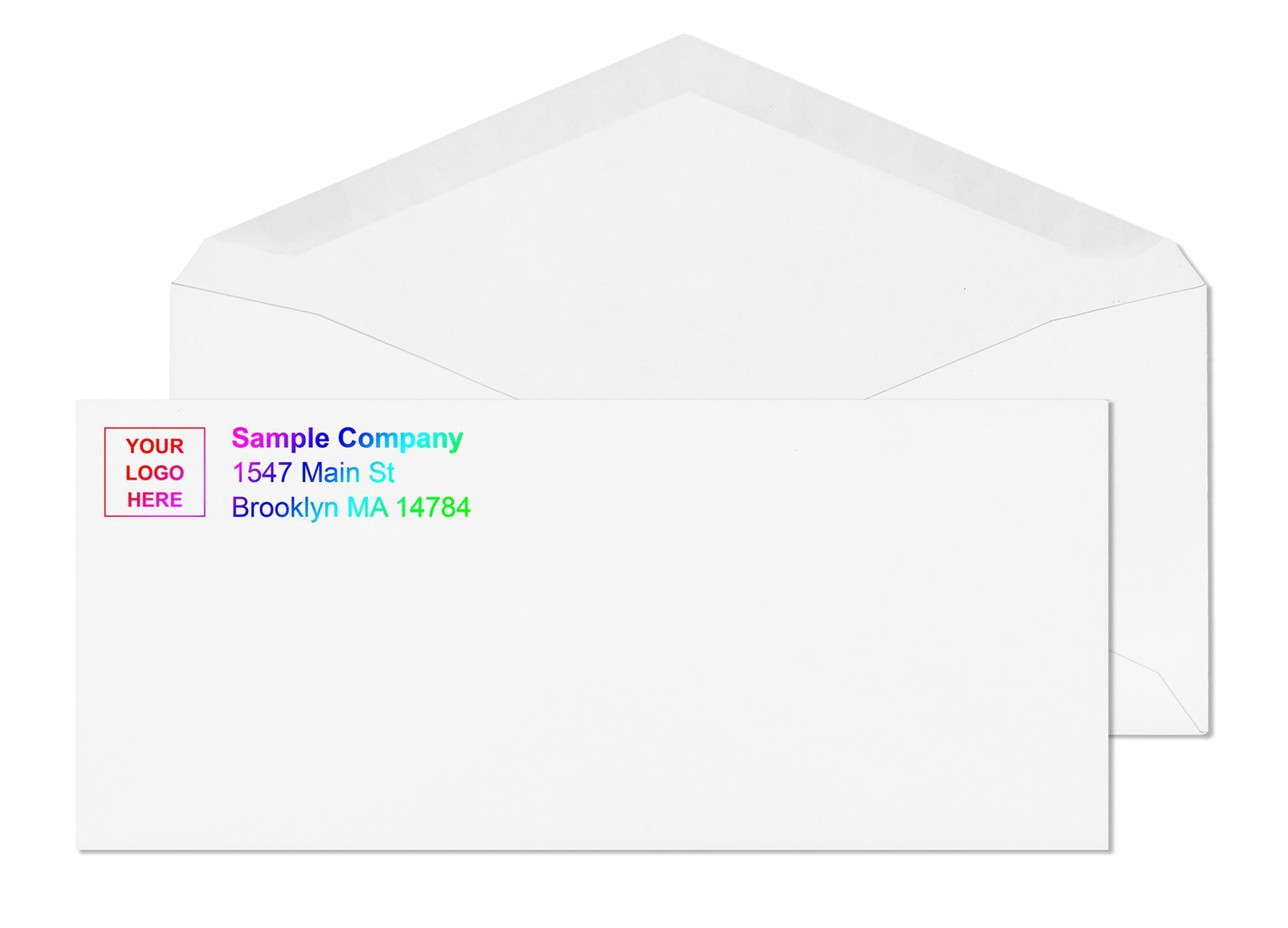
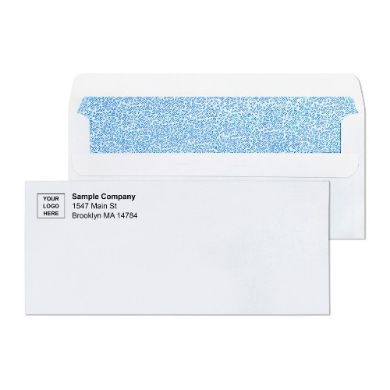

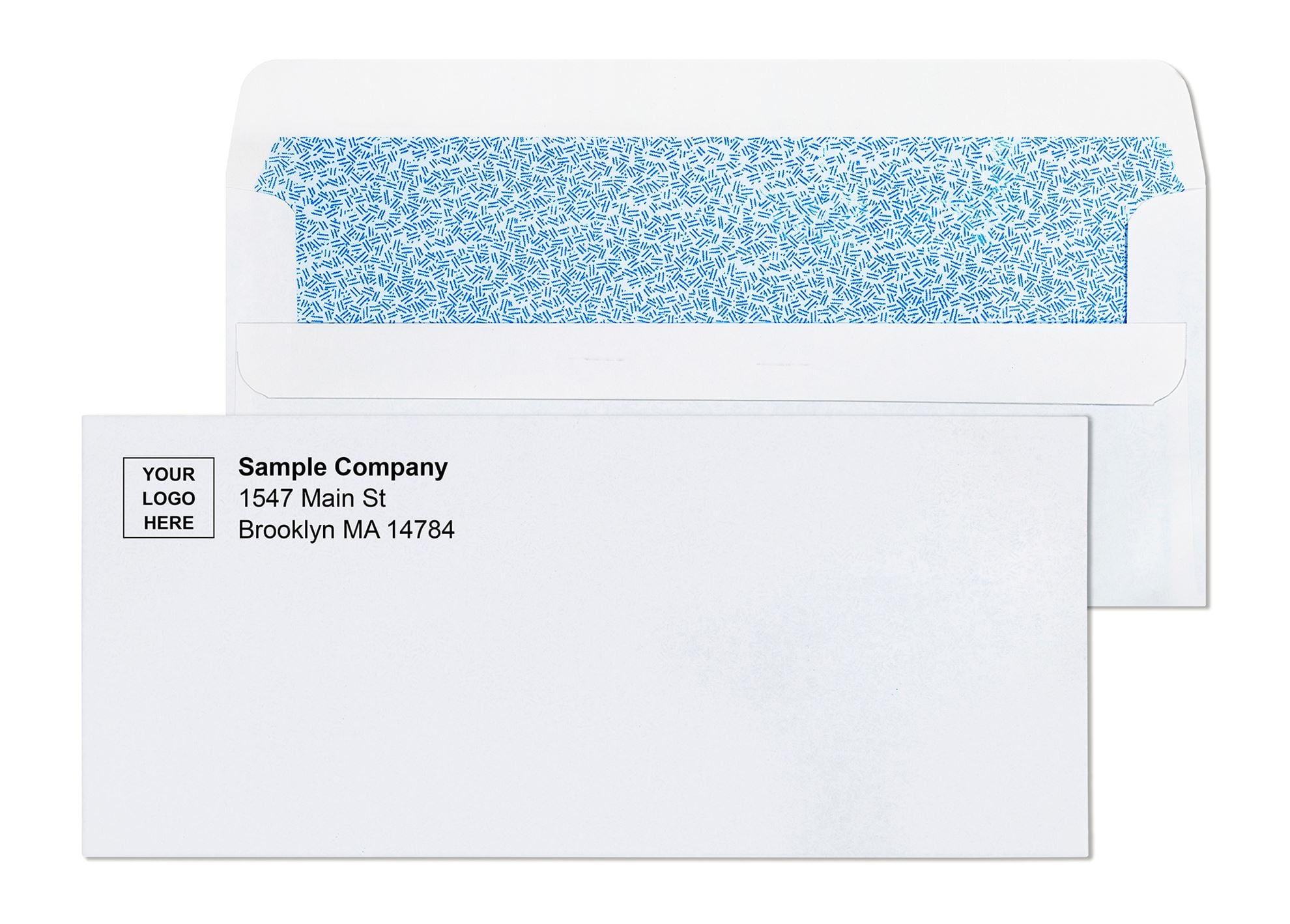
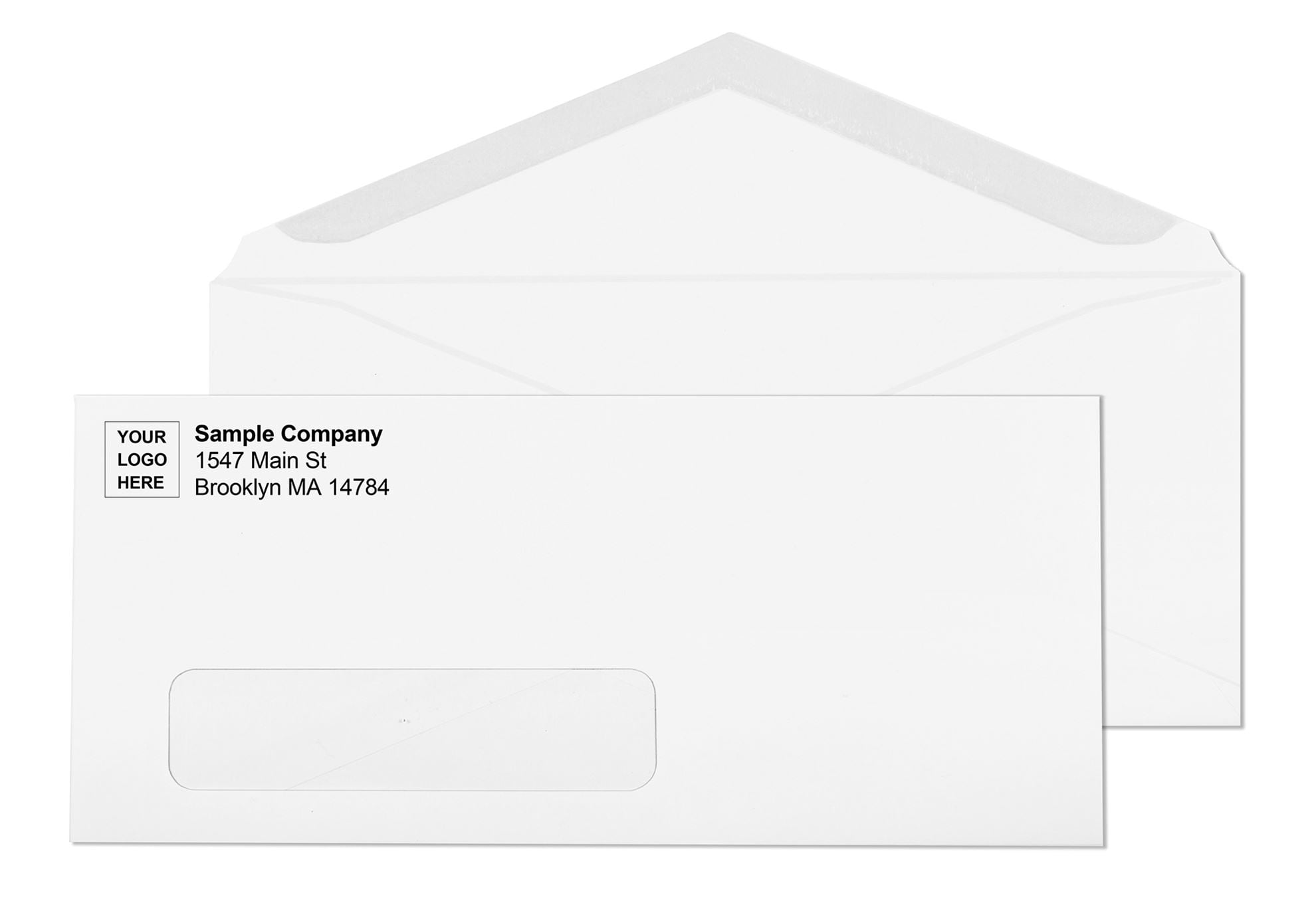
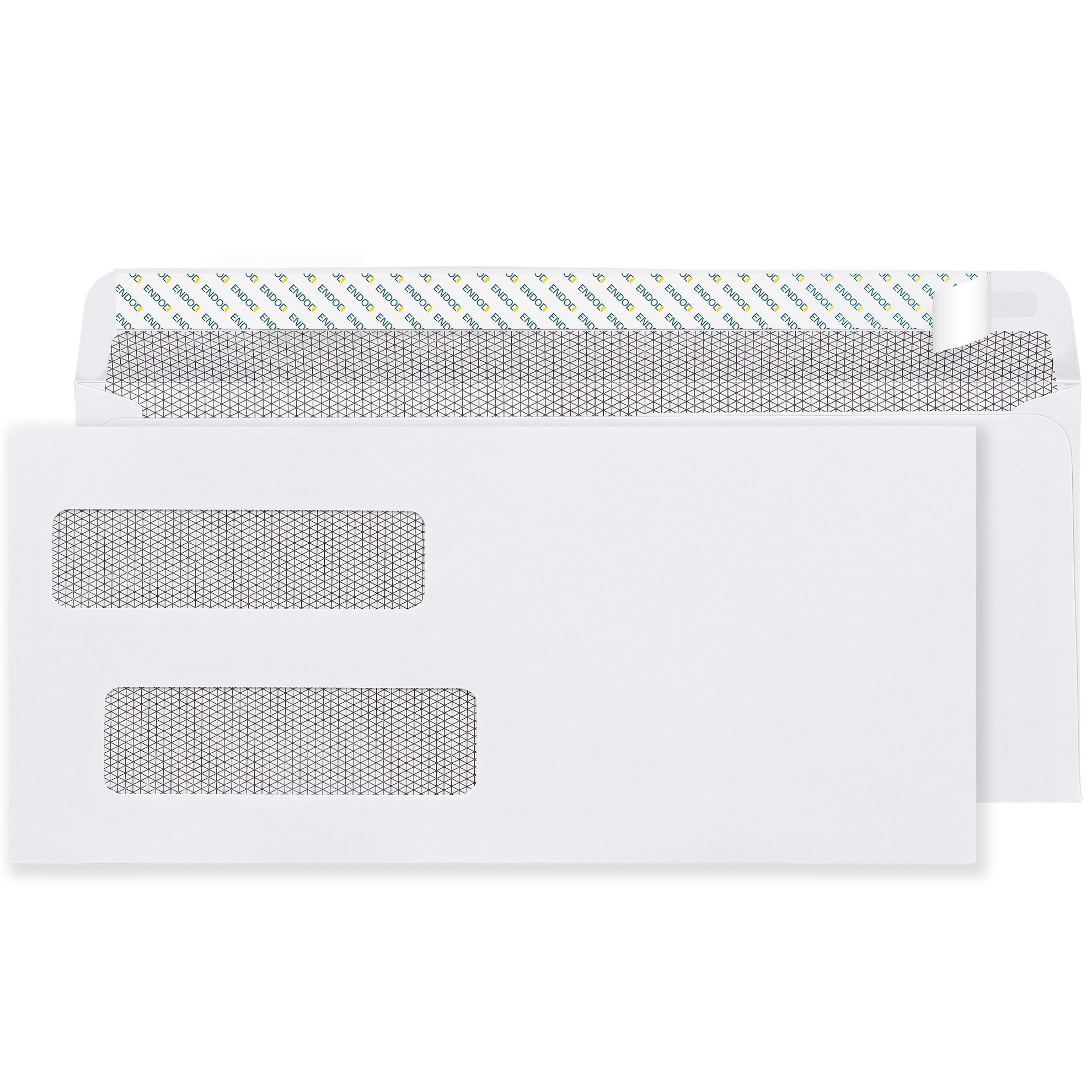
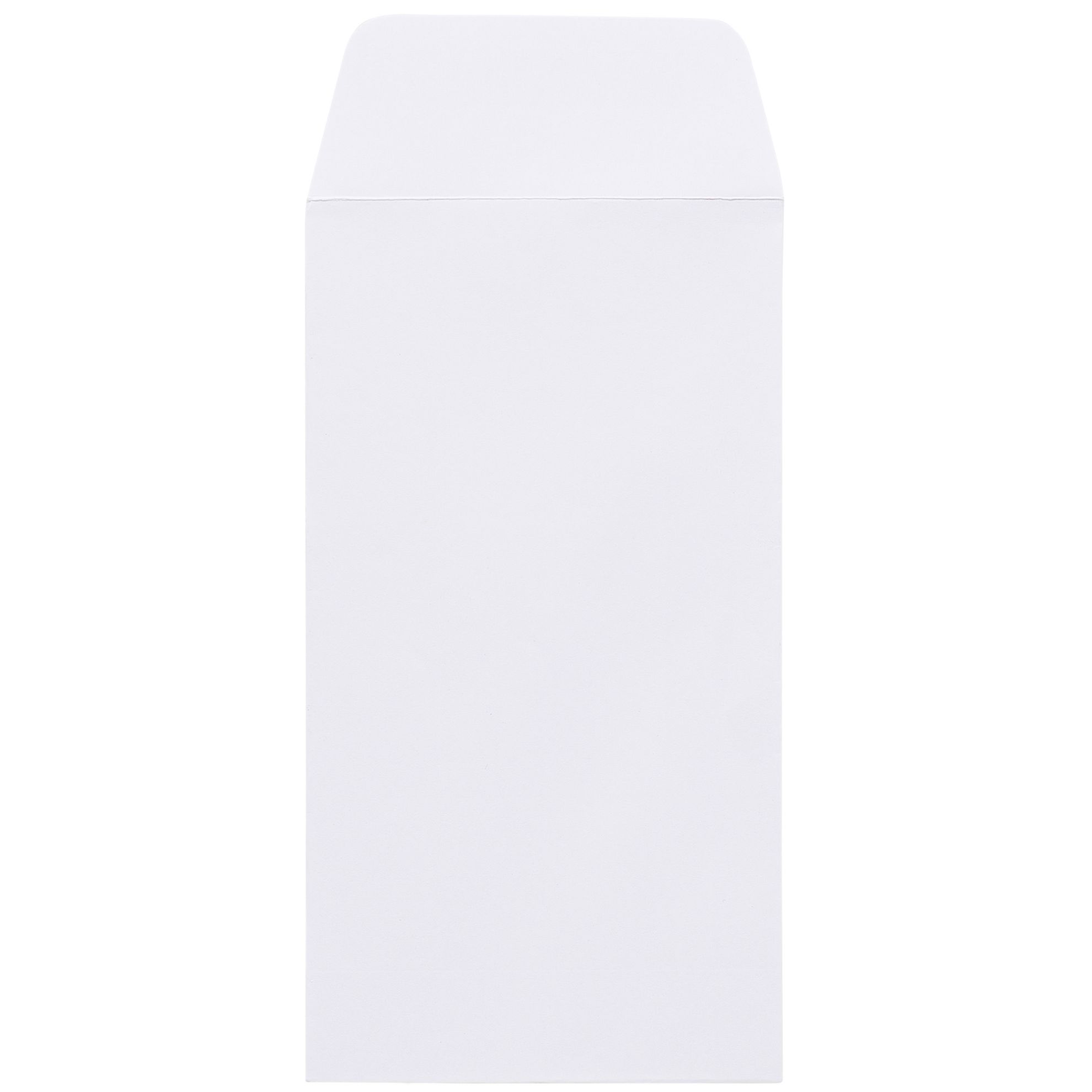
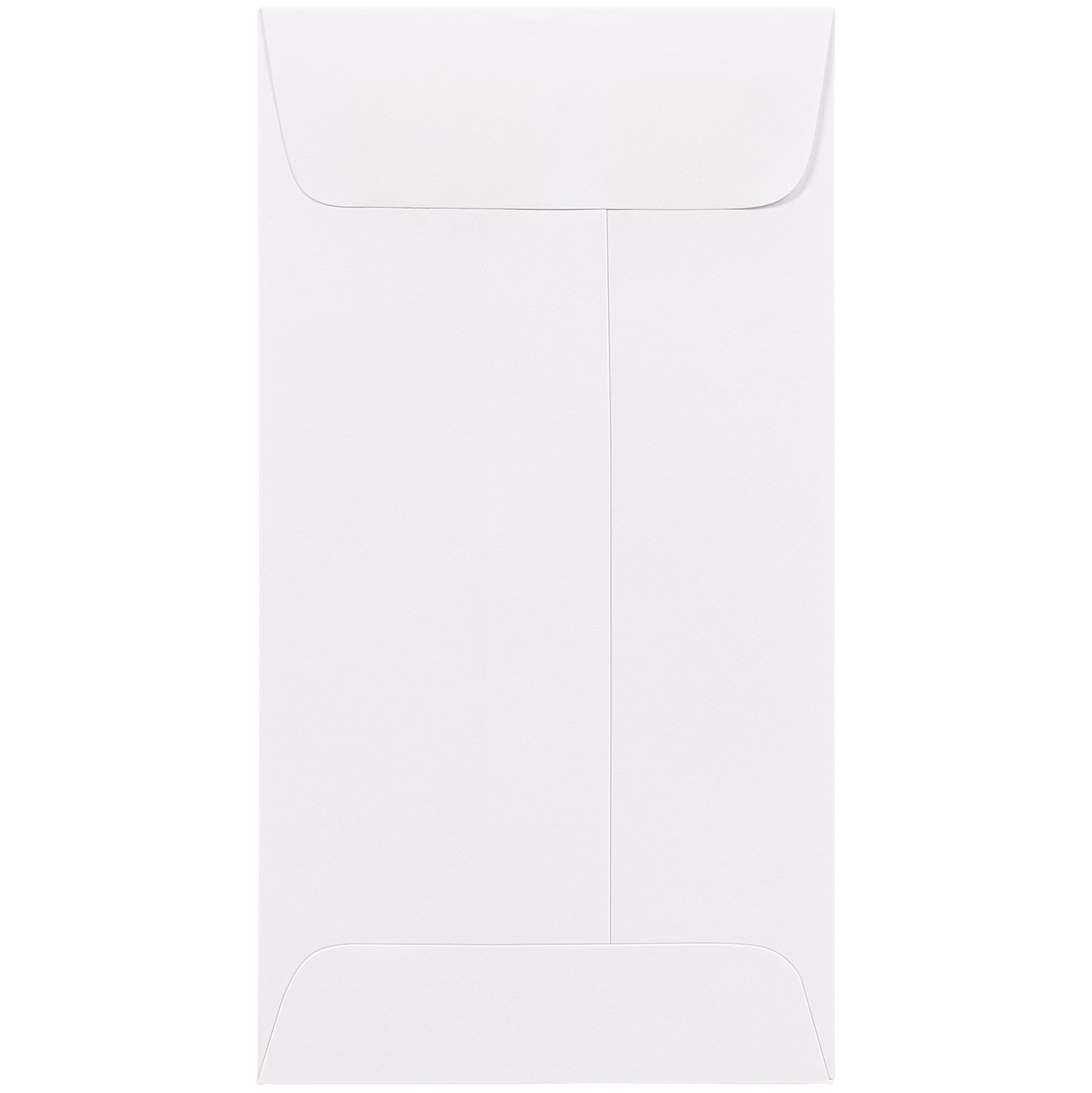
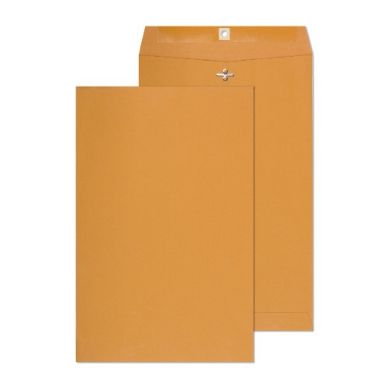
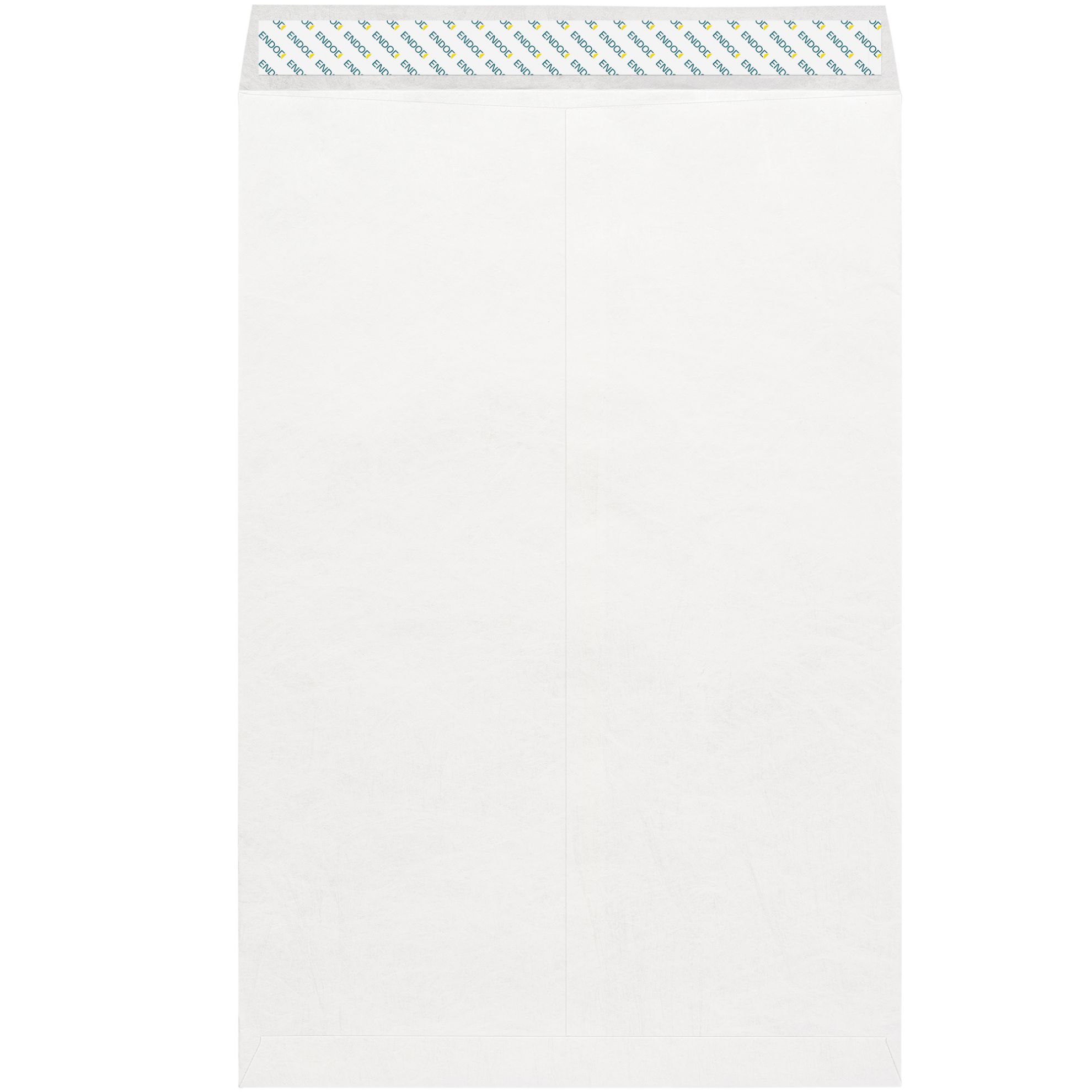
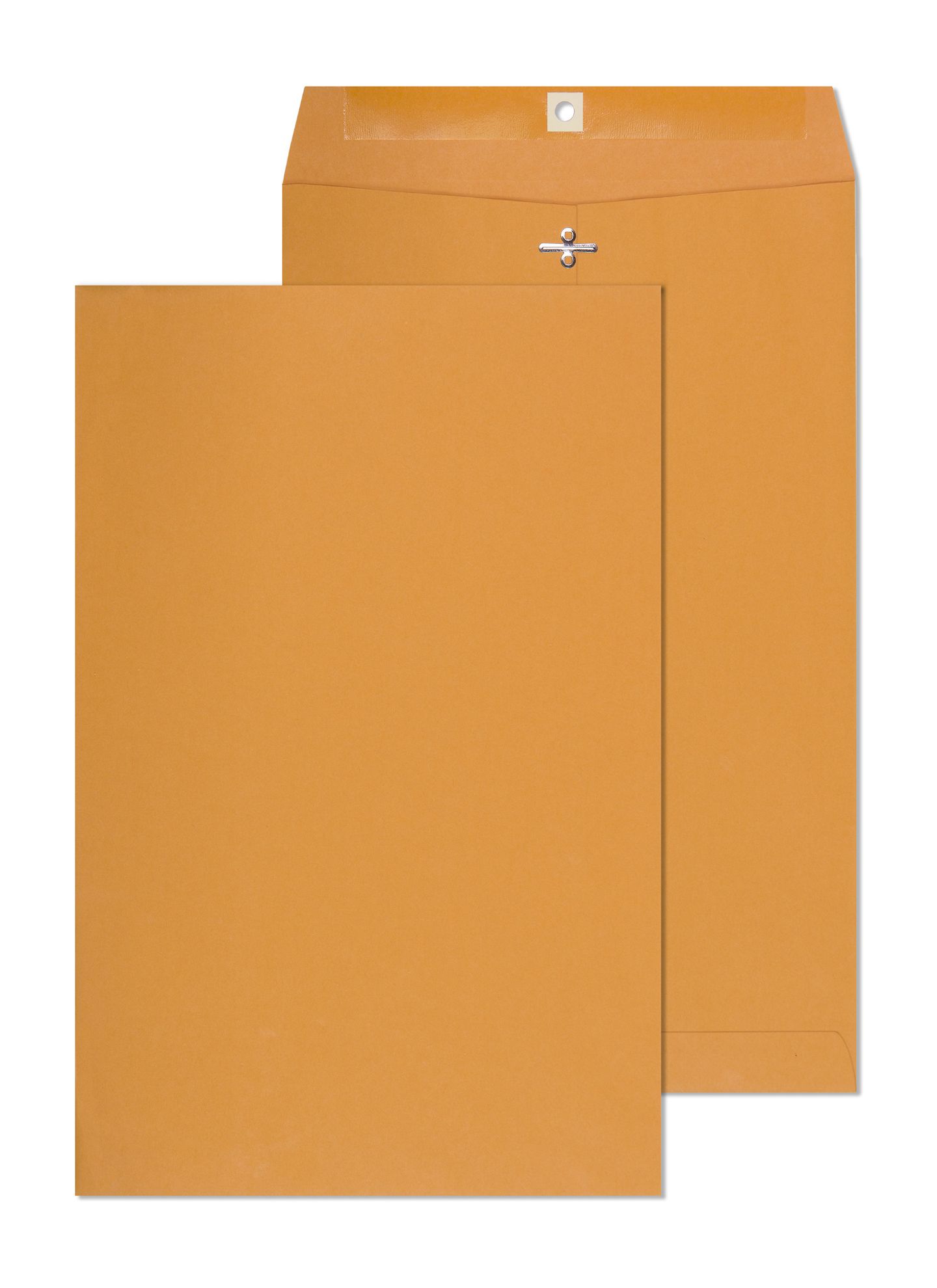
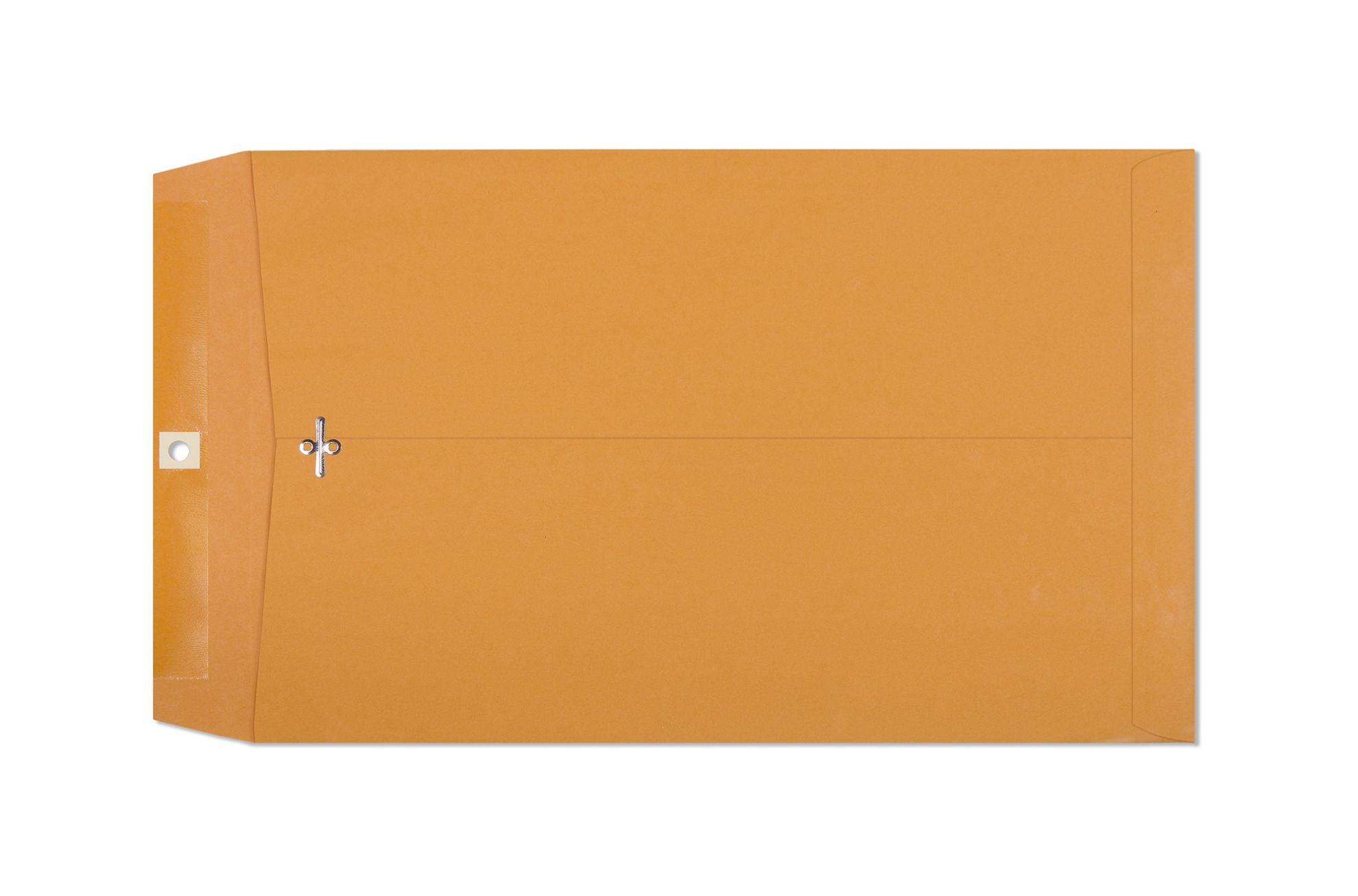
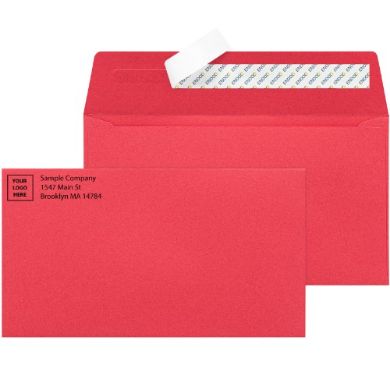
Custom window envelopes eliminate two manual steps from your mailing workflow in one format. The transparent poly-film window displays the recipient's delivery address from the document inside, so no addressing step is needed on the envelope face. The custom print adds your company logo, name, and return address to the upper-left area of the face, so no label or separate return addressing step is needed either. Every piece that goes out is fully branded and fully addressed without anyone writing, printing, or sticking anything on the envelope.
For billing departments, law offices, healthcare billing operations, and any organization mailing invoices or statements at recurring volume, custom window envelopes are the format that makes the mailing workflow systematic rather than manual. This guide covers how the print and window work together, every format available, what to specify before ordering, and how to test alignment so the first batch goes out correctly.
The most common question buyers have before ordering custom window envelopes is whether the logo print and the window interfere with each other. They don't. The two elements occupy separate zones on the face.
The standard window patch on a commercial envelope measures 1-1/8 inches by 4-1/2 inches, positioned 7/8 inch from the left and 1/2 inch from the bottom. That window sits in the lower-left area of the face.
Custom printing on window envelopes occupies the upper-left: company name, logo, and return address. The print zone is above and to the left of where the window sits. The window is below and to the right of where the print sits. On the same face, in separate zones, without overlapping. That zone separation is why custom window envelopes work -branding at the top, automatic address display at the bottom, nothing interfering with either.
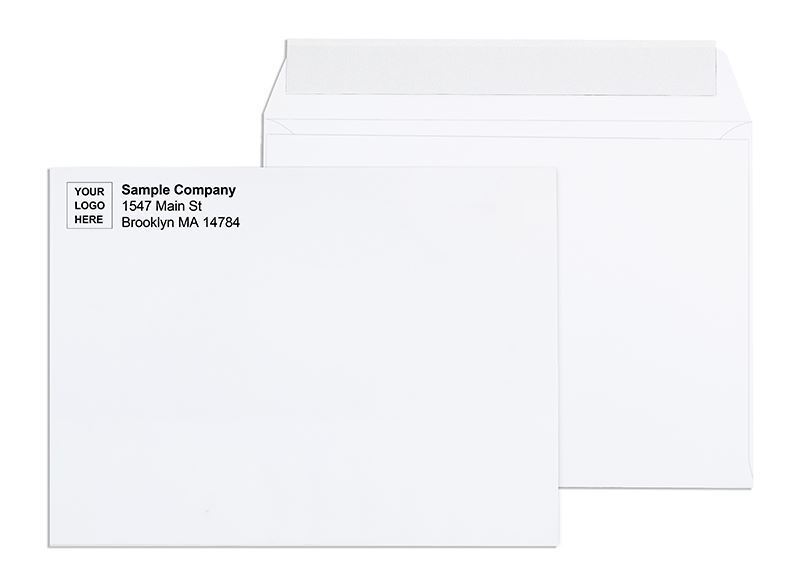
Custom printing for window envelopes includes logos, return address, and other business information, all printed in the upper-left zone that does not overlap with the address window below.
The difference between a custom printed window envelope and a plain window envelope with a label matters for both presentation and operational efficiency.
A plain window envelope with a stick-on return address label handles the same functions mechanically. But adhesive labels shift, peel in warm conditions, and visually communicate that the organization uses workarounds rather than established mailing infrastructure. For any recipient who handles significant incoming mail volume, labels on business envelopes are immediately noticeable.
Custom window envelopes with pre-printed logos and return addresses eliminate the need for labels while keeping every mailing clean and professional. Pre-printed envelopes look more professional, save time on every mailing cycle, and create a consistent branded impression across every outgoing piece.
Custom window envelopes with direct printing produce a permanent, clean result that doesn't shift, peel, or vary between mailing cycles.
The standard format. 4-1/8 x 9-1/2 inches, single window in the lower-left, available in plain white wove and security tinted stock. Holds a standard 8.5 x 11 letter sheet tri-folded with the address landing behind the window automatically. Custom printing occupies the upper-left with logo and return address.
The custom printed #10 window envelope is what billing departments, healthcare offices, law firms, and financial services organizations use as their standard outgoing format. QuickBooks, Xero, FreshBooks, and most US billing software format address blocks to align with this window position automatically.
Custom window envelopes in the #10 size are available in gum flap for automatic insertion equipment and peel-and-seal or flip-and-stick for manual batch sealing.
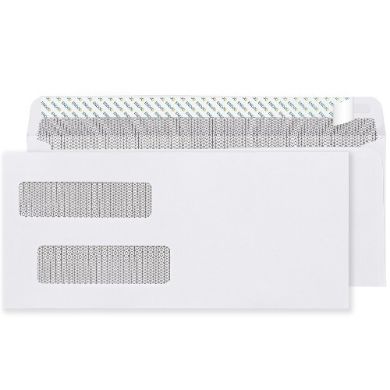
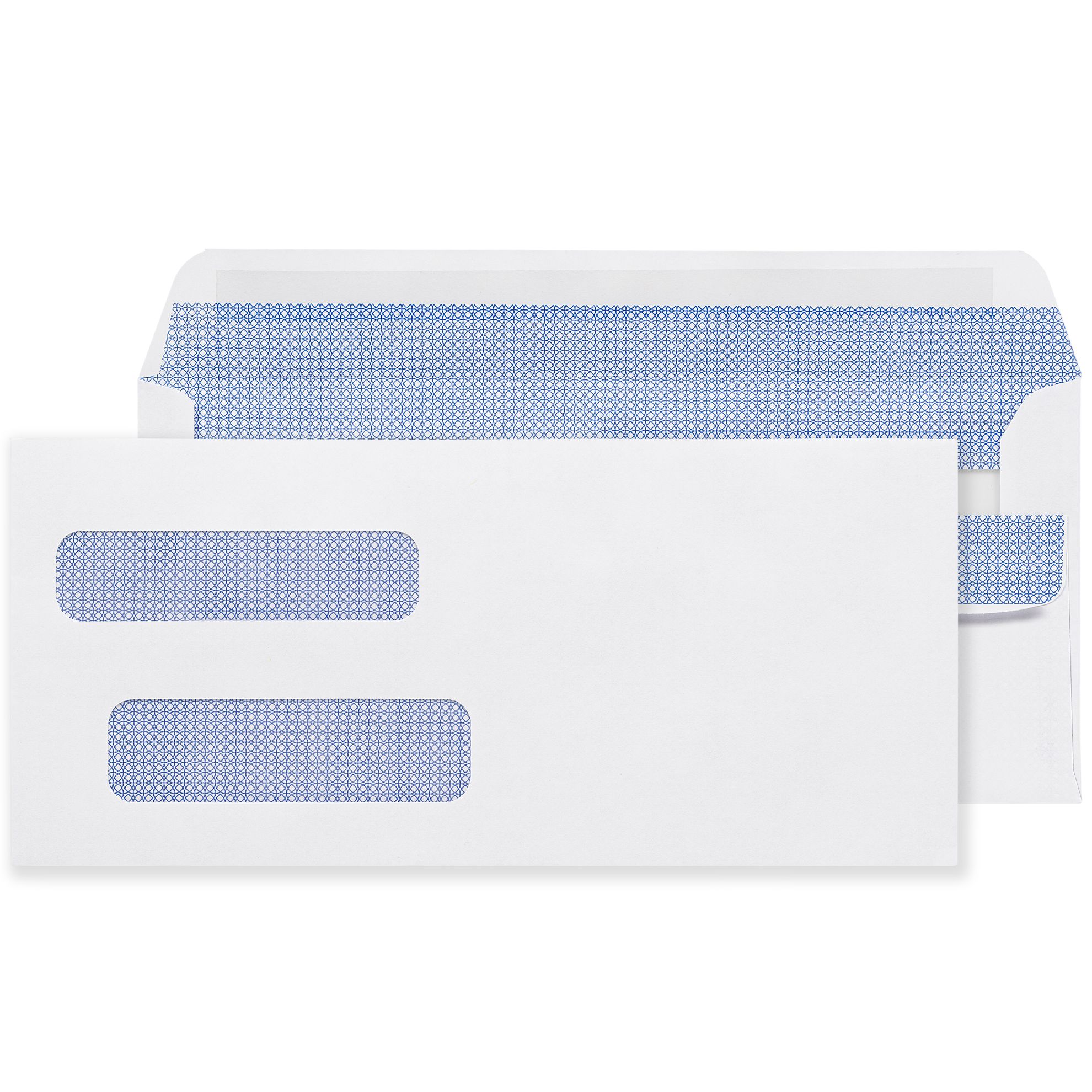
Two windows instead of one. The upper-right window displays the sender return address from the document inside. The lower-left window displays the recipient delivery address. No labels, no addressing on the envelope face -both address fields pull from the printed check, statement, or invoice inside.
Custom printed double window envelopes include logo and company name printed above both windows on the face. For accounts payable programs running QuickBooks, Sage, and Quicken check printing, custom window envelopes in the double window format are the operational standard -both addresses display automatically, and the branded logo appears on every outgoing check mailer.
Security tinted custom window envelopes carry a reflex blue or dark geometric pattern printed on the interior. When the sealed envelope is held to a light source, that pattern blocks the document contents from showing through the paper. Only the address block behind the clear poly-film window remains readable from outside.
The security tint is an interior pattern that blocks document contents from showing through the paper wall when held to light. Custom printing sits on the exterior face. The tint is on the interior. Both work independently on the same envelope. Amazon
Security tinted custom window envelopes are the correct specification for any mailing carrying account numbers, check amounts, payroll data, patient identifiers, or any sensitive financial or medical information that shouldn't be visible through the envelope in transit.
Slightly smaller than the #10 at 3-7/8 x 8-7/8 inches. Fits inside a standard #10 outgoing mailer as the return reply piece. Custom printing on a #9 custom window envelope pre-addresses the return side of the mailing program. The recipient doesn't address the return envelope -they insert their response and mail it back.
Same window position and custom print zone layout as the #10, in larger commercial letter sizes. The #11 (4-1/2 x 10-3/8 inches) and #12 (4-3/4 x 11 inches) handle thicker multi-sheet enclosures that consistently overstuff a #10. Custom window envelopes in these sizes suit programs with larger document packets that still require automatic address display.
Browse all sizes at the window envelope hub.
Getting four things right before the order prevents reproof cycles and production delays.
Format: Single or double window, size, plain or security tinted stock. For most billing and invoice programs, #10 single window security tinted is the correct starting point.
Artwork: Logo in vector EPS or high-resolution PDF format. Return address in your brand font. The custom print occupies the upper-left zone of the envelope face -build the artwork file specifically for that area, not for the full face.
Ink: Black and white for most business correspondence programs. Full color for programs where logo brand colors are a priority on every outgoing piece.
Closure: Gum flap for automatic insertion equipment. Peel-and-seal or flip-and-stick for manual batch sealing. The complete self-seal envelope range covers both closure options with custom printing across all custom window envelope sizes.
The custom print on a window envelope is fixed during production. What can shift is the address block position on your document template relative to the window position on the envelope. One alignment test before the batch run prevents the entire run from going out wrong.
Print one invoice or statement from your template. Fold it using the Z-fold method (fold the bottom third up, then fold the top third back in the opposite direction -this positions the address panel facing outward). Insert the folded document into the custom window envelope face-up with the address panel facing the window side. Hold the sealed envelope to a light source.
Confirm the full delivery address appears inside the window with clear margins on all four sides. Confirm no financial data, account numbers, or document content is readable through the envelope body outside the window area. If the address position is off, adjust the address block in your document template and retest before running the full batch.
For custom window envelopes programs mailing through accounting software, the standard #10 window position aligns with default invoice templates from QuickBooks, Xero, and FreshBooks. Non-default templates may require a print position adjustment.
Custom window envelopes at Business Envelopes require no minimum order. You order the quantity your mailing program needs. Once artwork is approved and on file, every reorder of any custom window envelope format reproduces without re-submitting files or running a new proof cycle.
Custom orders ship within 7 to 10 business days from proof sign-off. Blank window stock ships same or next business day. Free shipping on every order.
For organizations running custom window envelopes alongside custom printed plain envelopes or return envelopes, one approved design file covers all formats. Request a quote for the full program across every format your mailing operation uses.
Custom window envelopes solve the two most repetitive steps in any recurring business mailing: addressing the delivery address and applying the return address. The window handles the delivery address automatically from the document inside. The custom print handles the return address and logo permanently on the face. Both functions work on the same envelope without interfering because they occupy separate zones -upper-left for the print, lower-left for the window. Every custom window envelope that goes out is fully branded, fully addressed, and ready to seal without any manual steps. Business Envelopes has carried custom window envelopes across every commercial size since 1997, with no minimum order and free shipping on every format.
Window envelopes with your company logo and return address printed directly on the face during production. The transparent window displays the recipient's address from the enclosed document automatically. No labels or manual addressing required on either the delivery or return address.
The print zone and the window zone are in separate areas. The standard window sits in the lower-left at 1-1/8 x 4-1/2 inches, 7/8 inch from the left and 1/2 inch from the bottom. Custom printing occupies the upper-left above that zone. They don't overlap.
#9, #10, #11, and #12 commercial letter sizes, available in single window and double window configurations, in plain and security tinted stock, at Business Envelopes.
A custom window envelope with a reflex blue interior pattern that blocks document contents from showing through the paper when held to light. The window still displays the address. The tint protects everything else. Custom print adds the logo on the face.
Yes. The standard #10 window position aligns with QuickBooks, Xero, and FreshBooks invoice templates automatically. For custom or modified templates, test one printed piece before a full batch run to confirm address alignment.
A custom window envelope with two windows -one for the recipient's delivery address and one for the sender's return address. Both addresses pull from the document inside. Standard for check mailing and accounts payable programs where both addresses are pre-printed on the check or statement.
No. Business Envelopes has no minimum order requirement on custom window envelopes. Artwork stays on file for all future reorders without re-submitting files.
Custom orders ship within 7 to 10 business days from proof approval. Blank window envelope stock ships same or next business day.
Folding a letter for a #10 envelope takes about ten seconds when you know the layout. What takes longer to figure out is the distinction between the two tri-fold methods - the C-fold and the Z-fold - and why only one of them works correctly with a window envelope. Get the fold wrong on a window envelope program and the address block ends up hidden instead of visible through the film. This guide covers every standard fold type, which envelope each one pairs with, and the specific Z-fold technique required for window envelope address alignment.
The tri-fold divides an 8.5 x 11 sheet into three equal horizontal panels. When folded, each panel measures approximately 3.67 x 8.5 inches - clean clearance inside the #10 envelope (4-1/8 x 9-1/2 inches) on all sides.
This is the standard fold for US business correspondence: invoices, billing statements, payroll letters, legal notices, cover letters, and everyday outgoing mail.
Two tri-fold variations exist and the choice matters for window envelopes:
C-fold (letter fold): Fold the bottom third up first, then fold the top third down over it. All three panels stack flat in the same direction. Used for standard plain envelopes where address direction doesn't matter.
Z-fold: Fold the bottom third up first, then fold the top third down in the opposite direction - when viewed from the side, the letter makes a Z shape. Required for window envelope programs. The Z-fold positions the address panel facing outward in mailing orientation so it shows through the transparent film.
Fold the 8.5 x 11 sheet in half across its 11-inch dimension. The result is a 5.5 x 8.5 inch folded piece. This does not fit in a #10 envelope - the folded width of 5.5 inches exceeds the #10's 4-inch interior. It fits cleanly in a 6x9 booklet envelope with clearance on all sides.
For documents that cannot arrive creased - contracts with signatures, certificates, proposals, photography - the full 8.5 x 11 sheet inserts flat into a 9x12 envelope with clearance on all sides. No folding, no crease lines on arrival.
|
Fold Type |
Folded Dimensions |
Correct Envelope |
USPS Class |
|
Tri-fold (C or Z) |
~3.67 x 8.5 in |
#10 (4-1/8 x 9-1/2 in) |
Letter rate |
|
Tri-fold legal paper |
~4.67 x 8.5 in |
#14 (5 x 11-1/2 in) |
Letter rate |
|
Half-fold |
5.5 x 8.5 in |
6x9 booklet |
Letter or flat (by thickness) |
|
No fold |
8.5 x 11 in |
9x12 or 10x13 |
Flat rate |
A window envelope relies on the address block being in exactly the right position after folding and insertion. The standard window on a #10 envelope measures 1-1/8 x 4-1/2 inches, positioned 7/8 inch from the left and 1/2 inch from the bottom. The Z-fold positions the address on the outward-facing center panel so it sits directly behind that window.
For this to work reliably, the address block must be in the correct position on the document template before the fold. For standard #10 window envelopes, the address block typically sits 2 to 2.5 inches from the top of the page, left-aligned starting about 1 inch from the left edge. Most US billing software, QuickBooks, Xero, and FreshBooks already format invoices to this position.
Test alignment before any batch run:
If alignment is off, adjust the address block position in the document template and retest before the full batch.
For programs where both return address and delivery address appear in windows, a double window envelope displays both from the document inside without any envelope addressing step.
For a C-folded letter into a plain #10: insert the closed-fold edge first with the text facing outward. The folded panels protect the text during insertion.
For a Z-folded letter into a window envelope: the closed-fold edge enters first, with the address panel facing toward the window side of the envelope. The address faces the window as the letter slides in.
Legal-size paper at 8.5 x 14 inches needs a longer envelope when folded. The #14 envelope at 5 x 11.5 inches holds a legal sheet tri-folded into thirds and qualifies for USPS First-Class letter postage. An 8.5 x 14 sheet tri-folded produces a panel of approximately 4.67 x 8.5 inches - fits the #14's interior with clearance on all sides.
For organizations mailing legal-size correspondence at letter rate rather than flat rate, the tri-fold into a #14 is the correct setup. Mailing an unfolded 8.5 x 14 sheet in a 10x13 envelope always mails at flat rate. The #14 tri-fold saves the postage difference on every piece across every mailing cycle.
Fold type determines which envelope you use, and envelope size determines postage class.
Tri-fold into a #10: USPS First-Class letter rate. The most cost-efficient postage class for business mail.
Tri-fold into a #14 (legal paper): Also First-Class letter rate. The #14's dimensions fall within letter-rate maximums.
Half-fold into a 6x9: The 6x9's outer dimensions technically fall within letter-rate size limits, but contents pushing the sealed piece over 1/4 inch thick push it into flat-rate territory. A single half-folded sheet usually stays under the threshold. A brochure or multi-page insert often doesn't. Test one fully assembled piece before assuming letter rate.
No fold into 9x12 or larger: Always flat rate. No exceptions.
For any program that standardizes on a specific fold and envelope combination, pre-printed custom stock through the self-seal envelope range means the team works with consistent envelopes and closures across the full program. Request a quote to price a multi-format program together.
Folding a letter for an envelope comes down to matching the fold to the envelope and getting the fold direction right for window programs. Tri-fold for a #10, half-fold for a 6x9, no fold for a 9x12. C-fold for plain envelopes, Z-fold for window envelopes where the address must face the film. Test one piece before every window envelope batch run - alignment errors at scale are expensive to correct. Business Envelopes carries every envelope size matched to every fold type in this guide, blank or custom printed, with free shipping and no minimum order.
Place the letter face-up in portrait orientation. Fold the bottom third up to cover the center third and crease. Then fold the top third down over both panels (C-fold) for a plain envelope, or fold it back in the opposite direction (Z-fold) for a window envelope.
Both are tri-folds. A C-fold folds all panels in the same direction, used for plain envelopes. A Z-fold reverses the second fold direction, creating a Z shape - required for window envelopes where the address block must face outward through the film.
A 6x9 booklet envelope. A half-folded sheet produces a 5.5 x 8.5 inch piece that fits the 6x9 interior cleanly. A half-folded sheet is too wide for a #10 envelope.
Z-fold. The bottom third folds up first, then the top third folds back in the opposite direction. This positions the address block on the outward-facing center panel so it shows through the transparent window film.
Yes. Tri-fold into a #10 or #14 qualifies for letter rate. Half-fold into a 6x9 may qualify for letter rate if contents are thin. No fold into 9x12 or larger always mails at flat rate.
Tri-fold the 8.5 x 14 sheet into thirds and insert it into a #14 envelope (5 x 11.5 inches). The #14 qualifies for USPS First-Class letter rate, making it the cost-efficient alternative to mailing an unfolded legal sheet at flat rate.
The 10x13 envelope is one inch larger than a 9x12 envelope on each dimension. That extra inch solves specific problems the 9x12 can't handle cleanly: thick multi-tab document packets, legal-size 8.5 x 14 sheets mailed flat, presentation folders with multiple loose inserts, and content stacks where the 9x12 capacity is consistently at its limit. Knowing when the 10x13 is the right upgrade -rather than just a larger version of the same thing - is what makes the format decision useful instead of arbitrary.
The 10x13 envelope measures 10 inches wide by 13 inches tall, with interior clearance of approximately 9-3/4 x 12-3/4 inches. Like the 9x12, the 10x13 exceeds USPS letter-rate size limits on both dimensions. Both are classified by USPS as flats (large envelopes), which means flat-mail postage applies regardless of content weight. This is important for anyone switching from a #10 letter-rate program: the 10x13 always costs more per piece to mail than a #10, and so does the 9x12. When comparing the two flat formats, postage class is the same - the decision is purely about what fits.
The 9x12 handles the majority of flat-document programs because it holds an 8.5 x 11 sheet flat with adequate clearance. The 10x13 earns its place in four situations:
Legal-size 8.5 x 14 sheets mailed flat: An 8.5 x 14 document cannot lie flat in a 9x12. The 10x13 holds it with nearly an inch of clearance on each side. For law firms, government agencies, and insurance processors mailing legal-size documents that cannot be folded, the 10x13 is the minimum format that works.
Thick multi-tab document packets : A tabbed document set with dividers, multiple attachment sections, and a cover letter can push the 9x12 gum flap to its seating limit. The 10x13's extra clearance handles that stack without straining the flap.
Presentation folders : A standard letter-size presentation folder measures 9 x 12 inches-exactly the outer dimensions of a 9x12 envelope, giving zero clearance. Loading a presentation folder into a 9x12 requires forcing it, which damages the corners. The 10x13 lets the folder slide in cleanly.
Programs where 9x12 content is consistently overstuffed : If the team is regularly forcing envelopes to seal on thick content, the 10x13 is the correct next step up.
24 lb white wove, opens on the short 10-inch edge, center seam construction, moistenable gum flap. The 10x13 white open-end gum flap is the workhorse for document workflow insertion and any operation using automatic insertion equipment. Inserter machines moisten and seal gum flap stock mechanically — gum flap is the required closure if a mailing machine processes the envelope. Center seam provides extra structural strength for heavier content stacks. Top-loading orientation suits document-workflow insertion.
Same 24 lb white wove with side seam construction, opens on the long 13-inch edge. The 10x13 white booklet gum flap suits side-load programs and operations that prefer the wide-opening format for faster hand-loading. Side seam construction provides an uninterrupted face for branded direct mail where full-face printing is part of the program.
Open-end center seam with a pressure-sensitive adhesive closure. Silicone release liner protects the adhesive until you peel it away and press the flap down. The 10x13 peel-and-seal open-end uses 28 lb stock rather than 24 lb, adding structural rigidity for heavier content packets. Right for manual batch programs where envelopes are stuffed before the mailing date -the liner keeps the adhesive inactive in storage, so pre-stuffed envelopes staged for later dispatch seal as cleanly as envelopes processed immediately.
Booklet side-seam construction with peel-and-seal closure. The 10x13 peel-and-seal booklet combines the wide-opening booklet format with a no-moisture self-seal closure. Right for branded direct mail programs that are stuffed and staged before dispatch, where the print face needs to be clean for full-face graphics or logo treatment.
|
Situation |
9x12 |
10x13 |
|
8.5 x 11 sheet flat |
✅ Fits with clearance |
✅ Fits with extra clearance |
|
Legal-size 8.5 x 14 flat |
❌ Too small |
✅ Fits cleanly |
|
Standard presentation folder |
❌ No clearance |
✅ Fits cleanly |
|
Multi-tab document packet |
Tight at high count |
✅ More comfortable |
|
USPS postage class |
Flat rate |
Flat rate (same) |
|
Custom printing |
✅ Available |
✅ Available |
The 9x12 envelope remains the right format for standard flat-document programs. The 10x13 is the correct upgrade when contents consistently test the 9x12's limits, or when legal-size sheets or presentation folders are part of the standard mailing.
Law firms and legal services: The standard for legal-size document mailings, executed agreements, and thick contract packets that must arrive flat.
Government agencies: Regulatory notices, permit applications, and multi-page compliance documents on legal-size letterhead when they cannot be folded.
Healthcare and insurance: Claims documentation, prior authorization packets, and explanation-of-benefits correspondence that exceeds 9x12 capacity regularly.
Corporate communications and HR: Annual report distributions, benefit election packets with multiple loose inserts, and thick employee communication pieces.
Marketing and design agencies: Campaign kits with a presentation folder, a brochure, a letter, and reply materials- the 10x13 handles the folder cleanly where the 9x12 can't.
Logo and return address printing is available on every 10x13 configuration with no minimum order. Artwork prints directly on the envelope face. Once approved and on file, every reorder reproduces without re-submitting files. Custom orders ship within 7 to 10 business days from proof approval. Blank stock ships same or next business day. Free shipping on every order.
The full self-seal envelope range covers peel-and-seal configurations for the 10x13 and all related sizes. Request a quote for volume programs across the 10x13 and 9x12 formats together.
The 10x13 envelope is the upgrade for programs where the 9x12's clearance is consistently insufficient. Legal-size sheets, flat, thick tabbed document packets, presentation folders, and multi-insert content stacks that routinely strain a 9x12 all belong in the 10x13. The postage class is the same - both are USPS flats. The format decision comes down to what's going inside and whether the 9x12's clearance handles it cleanly every time. Business Envelopes has carried both formats since 1997, blank or custom printed, with free shipping and no minimum order on every configuration.
Any document up to approximately 9-3/4 x 12-3/4 inches flat - including 8.5 x 11 sheets with generous clearance, legal-size 8.5 x 14 sheets flat, standard presentation folders, and thick multi-tab document packets.
One inch larger on each dimension. Both hold 8.5 x 11 sheets flat. The 10x13 also fits legal-size 8.5 x 14, presentation folders, and thicker content stacks that are tight in a standard 9x12. Both mail at USPS flat rate.
No. It exceeds USPS letter-rate size limits on both dimensions and always mails as a flat, regardless of content weight.
Booklet opens on the long 13-inch edge with side seams -faster for hand-loading and compatible with automated insertion. Open-end opens on the short 10-inch edge with center seams - stronger for heavier content stacks.
When contents are legal-size (8.5 x 14), when mailing a standard presentation folder (9 x 12 inches), when multi-tab packets are consistently tight in a 9x12, or when the team is regularly forcing 9x12 flaps to seat on overstuffed content.
Yes. Logo and return address printing is available on every 10x13 variant with no minimum. Artwork stays on file for all future reorders without re-submitting files.
Kraft envelopes are the brown-toned, sturdy flat-document mailers that have been standard in US offices and mailrooms for over a century. The material - long-fiber recycled brown kraft paper - is what separates them from standard white wove. Heavier, tougher, more resistant to tearing in postal handling, and built for documents that need reliable protection without premium packaging. The clasp format makes them re-sealable, which is why they're the default for interoffice routing and archival workflows where the same envelope opens and closes multiple times.
Most buyers have used brown kraft envelopes without thinking much about the choice. This guide covers when kraft is the right call, when white wove is better, every size and variant in the catalog, and the USPS postage detail that affects any kraft clasp mailing program.
Brown kraft envelopes are made from a strong, long-fiber paper stock using the kraft pulping process - a chemical treatment that preserves the natural lignin bonds in wood fiber and produces a tougher sheet than standard white paper. The envelopes are made with SFI-certified 28 lb recycled tan/brown kraft, a strong, long-fiber stock with a vellum finish that resists tearing better than standard white wove at the same paper weight.
The natural brown color comes from unbleached pulp. White paper goes through a bleaching process that, while producing a cleaner surface, removes some of the long-fiber strength that makes kraft durable. That strength difference is what matters when envelopes go through multiple automated handling points, through interoffice routing between departments, or into archival storage accessed repeatedly over time.
Brown kraft envelopes come in three structural configurations. The choice follows the same operational logic as white wove flat-document formats.
Booklet style opens on the long edge with side seam construction. Fast to load from the wide side. Compatible with automated insertion equipment. The better format for mailing programs using inserter machines or prioritizing loading speed on manual runs.
Open-end (catalog) style opens on the short edge with center seam construction. Loads from the top. Stronger structural integrity for thicker content stacks - center seam handles packet weight more reliably than side seam at high sheet counts.
Clasp style adds a metal brad closure through a reinforced hole in the flap. The brad folds down after each use and can be re-opened and re-closed repeatedly. Gummed flap and clasp work together - the gummed flap seals for transit, the clasp adds structural security. Reusable format, standard for interoffice routing and document archiving.
6x9 Brown Kraft: Holds a 5.5 x 8.5 booklet flat, or an 8.5 x 11 sheet folded in half. The compact routing and mailing format for smaller document sets. Available in booklet and clasp configurations.
9x12 Brown Kraft: The workhorse of the brown kraft catalog. Holds a standard 8.5 x 11 sheet flat. Available in three confirmed configurations:
9-1/2 x 12-1/2 Brown Kraft Clasp: A quarter-inch larger than the standard 9x12 on each dimension. Extra clearance for thicker document stacks that are consistently tight in a standard 9x12. The standard re-sealable routing format for thick multi-page packets that pass through several handlers.
10x13 Brown Kraft: Available in clasp and gum flap formats. Holds legal-size 8.5 x 14 sheets flat, thick presentation folders, and multi-tab document packets that need more clearance than a 9x12 provides. The format for law firms, government agencies, and compliance departments with thick outgoing legal document programs.
10x15 Brown Kraft Clasp: The largest standard brown kraft format. Handles oversized documents, wide-format prints, and extra-large content stacks where the 10x13 doesn't provide enough clearance.
Browse the complete 9x12 envelope range to compare brown kraft and white wove configurations side by side.
This is the operational detail that catches organizations off guard when they start mailing clasp envelopes through USPS. Metal clasp closures make an envelope non-machinable under USPS automated sorting standards. The piece requires manual handling, and USPS applies a non-machinable surcharge per piece on top of standard flat-mail postage.
For interoffice routing where clasp envelopes never go through USPS, this doesn't matter at all. For outgoing mail programs where clasp envelopes are posted through USPS, the surcharge adds cost on every piece.
The practical solution: use a gum flap or peel-and-seal booklet or open-end format for outgoing external mail, and reserve the clasp format for internal routing and archival use. The self-seal envelope range covers peel-and-seal configurations across all standard flat-document sizes for programs that need a no-moisture closure on outgoing mail.
The choice is operational, not just aesthetic.
Brown kraft is the right choice when:
White wove is the right choice when:
For programs that need both - internal routing in kraft and external mailing in white wove - the 9x12 envelope range covers both materials in one catalog. For documents where arrival condition is non-negotiable and neither white wove nor brown kraft provides sufficient protection, Tyvek envelopes are tear-proof, puncture-resistant, and moisture-resistant across the same flat-document sizes.
Request a quote for volume pricing across the full brown kraft and white wove lineup together.
Brown kraft envelopes earn their place in document routing and mailing programs because of what the material does: resists tearing, handles rough postal sorting, survives repeated open-and-close cycles in clasp format, and stores cleanly in archival conditions. The size choice, from 6x9 compact through 10x15 oversized, follows the same logic as white wove flat-document formats. Match the envelope to what's going inside and how many times it needs to be opened. The one operational detail to plan around is the USPS non-machinable surcharge on clasp closures for outgoing mail - easy to handle once it's on the radar. Business Envelopes has carried every brown kraft format since 1997, blank or custom printed where applicable, with free shipping and no minimum order.
FAQs
An envelope made from 28 lb brown kraft paper, a strong long-fiber stock manufactured using the kraft pulping process. More tear-resistant than standard white wove and the standard format for flat-document mailing, interoffice routing, and archival document storage.
Standard sizes are 6x9, 9x12, 9-1/2 x 12-1/2, 10x13, and 10x15 inches, available in booklet, open-end, and clasp configurations at BusinessEnvelopes.com.
A clasp envelope has a metal brad closure through a reinforced hole in the flap. The brand folds down to hold the flap closed without adhesive and can be opened and re-closed many times. Used for interoffice routing, records management, and archival filing.
Yes. Metal clasp closures are classified as non-machinable by USPS, which adds a surcharge per piece on top of standard flat-mail postage. For outgoing external mail, a gum flap or peel-and-seal format avoids the surcharge.
Brown kraft suits interoffice routing, document storage, re-sealable transit of thick content stacks, and programs where durability outweighs presentation on arrival. White wove suits external client-facing correspondence, custom-printed branded mailings, and programs with window addressing.
Yes, on booklet and open-end formats. For programs requiring sharp full-color printing, white wove provides a cleaner print surface. Kraft vellum finish accepts printing but with slightly less color precision than white wove.
The 6x9 envelope is the compact flat-document format in the US mailing system. It holds a 5.5 x 8.5 booklet or brochure flat, a half-folded 8.5 x 11 sheet, or a small document set without forcing a tri-fold. That makes it the right format when contents are too thick or too large for a standard #10 but don't need the full 9x12 treatment.
What most buyers find out after ordering is that the 6x9 has a specific USPS postage quirk that its larger flat-document siblings don't share. Understanding it before you order can save real postage costs over a recurring mailing program. This guide covers the full 6x9 format, every variant, and the postage decision you need to make before committing to it at volume.
The 6x9 envelope measures 6 inches tall by 9 inches wide, with the interior accommodating contents up to approximately 5.75 x 8.75 inches. The 6x9 booklet envelope opens on the long 9-inch edge with side seam construction, making it compatible with automated mail insertion equipment and ideal for brochures, booklets, and small flat-document programs. Business Envelopes
What fits cleanly inside:
What doesn't fit well: full unfolded 8.5 x 11 sheets. Those belong in a 9x12 envelope where the clearance works correctly. Trying to insert an unfolded 8.5 x 11 into a 6x9 means forcing a fold or creasing the corners, which defeats the purpose of mailing flat.
This is the fact that most buyers learn after the mailing runs, not before it. The 6x9 envelope sits directly at the boundary between USPS First-Class letter rate and First-Class flat rate.
USPS letter-rate requirements are: envelope no more than 6-1/8 inches high, 11-1/2 inches long, and 1/4 inch thick, with contents under 3.5 ounces. The 6x9 at 6 inches tall clears the 6-1/8 inch maximum height requirement. It's within bounds. Amazon
The problem is the 1/4 inch thickness limit. Flat document mailers in the 6x9 format carry a thickness constraint: any contents pushing the sealed envelope over 1/4 inch thick push the piece out of letter-rate classification and into flat-rate territory. Business Envelopes
A single half-folded sheet typically stays well under 1/4 inch. A 20-page saddle-stitched booklet, a tri-panel brochure with a glossy cover, or a small document set with multiple inserts often doesn't. For any 6x9 program where the contents include more than two or three sheets, test one fully assembled sealed piece with a postal scale and a thickness gauge before committing to letter-rate postage calculations. Running a high-volume mailing at letter rate that should be classified as flat creates a postage underpayment that USPS collects at delivery.
For the majority of 6x9 mailing programs, planning around flat-rate postage is the safer approach. The 6x9 can earn letter rate - but it takes deliberate content management to stay under the threshold consistently.
Every 6x9 envelope comes in one of two opening configurations, and the choice affects how quickly your team processes a mailing.
Booklet style opens on the long 9-inch edge. The flap runs along the wider dimension. You load documents by sliding them in from the side, which is the natural motion for inserting flat pieces and the loading configuration that automated insertion equipment is designed around. Booklet envelopes use side seam construction throughout, which provides a clean, flat face ideal for printing full-face designs and logos directly on the envelope body. Business Envelopes
Open-end style opens on the short 6-inch edge. The flap is at the top. Documents load straight down from the top edge, which suits top-load insertion of thicker content stacks. Open-end construction uses a center seam running down the face, which provides extra structural strength for heavier content packets but means the center seam interrupts full-face print designs. Business Envelopes
For most 6x9 programs: booklet for fast hand-loading or automated insertion, open-end for thicker content packets where structural strength matters more than insertion speed.
24 lb bright white wove, 9-inch opening, moistenable gum adhesive on the flap. The baseline format for 6x9 mailing programs and the correct specification for automatic insertion equipment. Pitney Bowes, Neopost, and similar inserter machines moisten and seal gum flap stock mechanically. If any part of your operation runs a mailing machine, gum flap is the required closure.
The 6x9 white booklet gum flap handles everyday brochure and document mailings where manual sealing or inserter processing is the workflow.
Same 24 lb white wove, 9-inch opening, with a pressure-sensitive adhesive strip on the flap protected by a silicone release liner. Peel the liner away and press the flap down. Bonds on contact, no moisture required.
The 6x9 peel-and-seal booklet uses 28 lb stock rather than 24 lb, which provides extra rigidity for heavier inserts. This is the format for programs where envelopes are stuffed before the mailing date and sealed later. The liner keeps the adhesive inactive in storage - a box of stuffed envelopes sitting for two days seals just as cleanly as one sealed immediately.
White wove, 6-inch opening, gum flap. Loads from the top rather than the side. Stronger center-seam construction handles thicker document sets without the envelope body stretching or compromising. For 6x9 programs where the content stack is consistently at the thick end of the format's capacity, open-end center seam is more reliable than booklet side seam.
The 6x9 white open-end gum flap suits catalog-style document programs with heavier inserts.
Same open-end construction with a peel-and-seal closure instead of gum. The 6x9 open-end peel-and-seal suits thick-content programs that are staged before mailing and sealed manually without an inserter.
DuPont Tyvek material instead of paper stock. Tear-proof, puncture-resistant, moisture-resistant. The Tyvek 6x9 uses a Kwik-Tak contact closure that bonds the same way as standard peel-and-seal - no moisture, press to seal - but on material that survives rough postal handling, wet weather, and sharp objects that would compromise a paper envelope entirely.
Browse the full Tyvek envelope range for all Tyvek formats including 6x9. For documents where arrival condition is non-negotiable, this is the format.
Direct mail marketers use the 6x9 for campaigns where the mailing piece is a custom-designed brochure or self-mailer at 5.5 x 8.5. The envelope carries full-face custom printing and the booklet inside creates the marketing impression before the recipient reads a word.
Nonprofits and associations use the 6x9 for membership materials, event programs, and small publications that don't warrant the full 9x12 flat-mail format but are too bulky for a #10.
Photo and portrait studios use the 6x9 for delivering 5 x 7 prints to clients. The format protects the print during postal handling without requiring the full 9x12 format.
Small businesses and professional services use the 6x9 for presentation packets: a cover letter, a brochure, and a business card or reply card in a clean format that feels more substantial than a #10 without the formality of a 9x12.
Healthcare and wellness providers use the 6x9 for patient education materials in the 5.5 x 8.5 booklet format - a format that's common for folded care instructions, pamphlets, and event invitations.
Logo, return address, and full-face custom printing is available on every 6x9 configuration with no minimum order. Booklet side-seam construction provides a clean flat face without a center seam breaking up the print area - a real advantage for branded direct mail pieces that carry graphics or full-color designs on the envelope body itself.
Once your design is approved and on file, every reorder reproduces without re-submitting files or running a new proof cycle. Custom orders ship within 7 to 10 business days from proof sign-off. Blank stock ships same or next business day. Free shipping on every order.
The full self-seal envelope range covers every peel-and-seal configuration across all standard flat-document sizes in one place. For programs running 6x9 and other sizes together, request a quote to price the full program.
The 6x9 envelope handles the mailing programs that sit between a #10 and a 9x12: compact flat pieces, half-folded documents, small booklets, and photo prints that need a clean professional presentation without the bulk and postage of a larger flat mailer. The postage classification sits at the letter/flat boundary, which means content thickness is the variable to watch before committing to letter-rate assumptions on any 6x9 program. Booklet for side-load insertion, open-end for heavier top-load content, gum flap for inserter machines, peel-and-seal for manual batch programs. Business Envelopes has carried every 6x9 configuration since 1997, blank or custom printed, with free shipping and no minimum order.
A 5.5 x 8.5 booklet or brochure flat, a half-folded 8.5 x 11 sheet, 5 x 7 photo prints, or small multi-insert document sets. The interior clearance is approximately 5.75 x 8.75 inches.
The outer dimensions technically fall within letter-rate limits. Whether it qualifies depends on content thickness. Contents pushing the sealed piece over 1/4 inch thick push it into flat-rate territory. Test a fully assembled piece before assuming letter rate on a program with thick inserts.
Booklet envelopes open on the long 9-inch edge with side seam construction, compatible with automated insertion equipment. Open-end envelopes open on the short 6-inch edge with center seam construction, providing extra structural strength for heavier content stacks.
Documents where arrival condition is non-negotiable. Tyvek is tear-proof, puncture-resistant, and moisture-resistant. The Kwik-Tak closure bonds on contact without moisture. Used for documents that can't arrive torn, wet, or compromised by rough postal handling.
Yes. Full-face logo and return address printing is available on every 6x9 configuration with no minimum. Artwork stays on file for all future reorders without re-submitting files.
When contents are 5.5 x 8.5 or smaller in their mailed format, or when an 8.5 x 11 sheet can be folded in half without compromising the contents. The 9x12 is the correct format when an 8.5 x 11 sheet must arrive completely flat and unfolded.
Business envelopes with logo do something a plain white envelope with a peel-off label never can: they arrive with the brand already established before the recipient opens anything. The logo is part of the envelope. The return address is printed, not stuck. The organization's name is on the face because it was printed there during production, not because someone applied a sticker that might peel in transit. For any business that mails regularly - invoices, statements, proposals, payroll, client communications - the envelope is the first physical impression of the brand. Getting it right is not complicated. This guide covers every format available with custom printing, what to specify before you order, and how the process works at Business Envelopes.
Most organizations treat envelopes as a commodity. Order whatever's in stock, print a label, seal and mail. That approach works mechanically. It doesn't work for brand consistency.
Every piece of outgoing mail carrying a plain envelope with a printed label is telling the recipient - before they read a word - that the sender treats correspondence as a chore. A custom printed envelope communicates the opposite. The organization has a logo. The return address has been typeset. The envelope color, if intentional, ties back to the brand's visual identity. The piece arrives with authority.
Customizing envelopes with your company's name, logo, and other branding elements reinforces brand identity. In a crowded marketplace, having envelopes that stand out can help a business differentiate from competitors who use plain envelopes and increase open rates.
For organizations that mail at any kind of recurring volume - monthly billing, weekly payroll, quarterly client updates, fundraising appeals, direct mail campaigns - the per-piece investment in custom printing is recovered in the brand consistency it creates on every piece across every cycle.
Custom printing is available on every envelope format in the BusinessEnvelopes.com catalog. That covers the full commercial letter range plus flat-document mailers. Here's the breakdown by format type:
The #10 envelope at 4-1/8 x 9-1/2 inches is the most ordered custom printed format in the US. It's the standard outgoing format for business correspondence, billing statements, invoices, payroll notices, and direct mail. The logo and return address print in the upper-left area of the face. Available in plain white wove, security tinted, single window, and double window configurations - all printable with custom artwork.
Security tinted custom printed #10 envelopes are what billing departments, HR teams, and financial services organizations use as their standard outgoing format. The reflex blue interior pattern blocks contents from showing through the paper; the custom printed face tells the recipient exactly who sent it before they open it.
Custom printed window envelopes combine automatic address display from the enclosed document with your logo and return address printed on the face. For billing and invoice programs, this combination eliminates two manual steps: the addressing step (handled by the window) and the return address label step (handled by the printing). The branded envelope arrives at scale without a single manual addressing action.
Window envelopes in the custom printed format are what law firms, healthcare billing operations, and financial institutions use when the entire outgoing mail process needs to be systematic. The logo is on the face. The return address is on the face. The delivery address shows through the window from the document inside. Nothing is written or labeled by hand.
Browse the full window envelope range for all single and double window configurations available with custom printing.
A pre-printed return envelope inside a custom printed #10 outgoing mailer creates a completely branded two-piece mailing program. The #9 and #6 3/4 return envelopes carry the organization's return address printed directly on the face - the recipient inserts their response and mails it back without addressing anything.
For nonprofit donation programs, subscription renewals, billing reply programs, and membership organizations, the pre-printed return envelope is what separates a professionally managed mailing program from an ad hoc one. Every piece in the program, outgoing and return, carries the brand.
Logo and return address printing extends to the full flat-document format range: 6x9 booklet, 9x12 booklet and open-end, and 10x13 catalog formats. For marketing agencies sending branded direct mail kits, law firms mailing client correspondence in flat mailers, and organizations mailing annual reports or proposals, the custom printed 9x12 turns a functional document carrier into a brand statement before the recipient opens it.
Custom printing on business envelopes involves five variables. Getting each one right before placing the order produces the right result on the first run.
Every custom order goes to a PDF proof before production. Nothing prints without your sign-off on the proof. The proof shows exact print placement, font rendering, logo position, and return address layout on the correct envelope template.
For organizations ordering custom printed envelopes for the first time, the proof stage is where minor adjustments happen: logo positioning, font size tweaks, address line breaks. Getting this right before production means the first box of envelopes arrives exactly as specified. For reorders, the approved proof file is on file and the same result reproduces automatically.
Custom orders ship within 7 to 10 business days from proof approval. Blank stock without custom printing ships same or next business day. Free shipping on every order, no minimums.
A complete branded mailing program at a law firm, for example, might include:
One approved logo file. One approved return address layout. Applied across every size and format in the program. Every piece of outgoing mail from the firm carries consistent branding - the logo on the face, the address typeset correctly, the envelope format matched to the document type.
That's what "business envelopes with logo" means in practice. Not a single SKU. A complete outgoing mail identity.
Custom printed business envelopes are not a specialty purchase for large companies with print budgets. They're available at Business Envelopes with no minimum order on every format in the catalog. The organization's logo and return address print directly on the envelope face - no labels, no manual addressing, no inconsistency between one mailing cycle and the next. For any business that mails regularly, the branded envelope is the lowest-effort branding upgrade available, because it applies to every piece that goes out regardless of who in the organization is processing the mail. Free shipping, no minimums, artwork on file for every reorder. Request a quote to price a custom printed program across every format your operation uses.
FAQs
Standard commercial mailing envelopes with your company logo, return address, and brand information printed directly on the envelope face during manufacturing. The print is part of the envelope - not a label applied separately.
Every format in the BusinessEnvelopes.com catalog: #10 plain and security tinted, window envelopes (single and double window), #9 and #6 3/4 return envelopes, 9x12 and 10x13 flat mailers, and all standard commercial letter sizes. Custom printing is available on all of them.
No. Business Envelopes has no minimum order requirement on custom printed stock. You order the quantity your program needs.
Custom orders ship within 7 to 10 business days from proof approval. Blank stock without printing ships same or next business day.
Yes. Once your design is approved, the artwork file stays on file. Every reorder reproduces the same result without re-submitting files or running a new proof cycle.
A vector EPS or high-resolution PDF is preferred for the sharpest print reproduction. High-resolution PNG files (300 dpi or above) also work. Avoid low-resolution JPEGs from websites.
Yes. Window envelopes in single and double window configurations are available with custom logo and return address printing. The window handles the delivery address automatically from the enclosed document; the print handles the return address and branding on the face.
Standard envelopes are blank stock. Personalized or custom printed envelopes have your logo and return address printed directly on the face. The print eliminates the need for return address labels and ensures every piece of mail carries consistent brand identification.
How to address an envelope sounds like something you'd figure out in five minutes. And mostly you would, except for a few things most people get wrong that silently slow their mail down or get it returned. USPS processes about 167 million pieces of mail every single day through high-speed optical character recognition equipment. That equipment is reading your envelope in a fraction of a second. It's looking for specific information in specific locations, and if what it needs isn't where it expects to find it, the piece either gets flagged for slower manual sorting or comes back to you.
This guide covers exactly where everything goes, why the placement rules exist, and what most general addressing guides skip entirely.
Think of the front of a standard envelope as having three jobs to perform simultaneously: identify where the mail should go, identify where it should come back if it can't be delivered, and confirm that postage has been paid.
USPS automated sorting equipment is calibrated to find each of those in a specific location. It doesn't improvise.
Upper-left corner: your return address. This is where you go on the envelope. Your name, your address, your city-state-ZIP. The machine treats this zone as the sender identification area. A return address isn't legally required for domestic mail, but any envelope without one that can't be delivered goes straight to the USPS Mail Recovery Center. That's a building in Atlanta where pieces end up when there's nowhere to return them. Most of them don't come back. For business mail, treating the return address as optional is a mistake that comes back to bite organizations during high-volume billing runs.
Center face: the delivery address. This is the zone that OCR machines are reading. The delivery address block has to sit between 5/8 inch and 2-3/4 inches from the bottom of the envelope, centered horizontally, with at least one inch of clear space on each side. Per USPS DMM 202, those aren't suggestions. Addresses placed outside that window may fail OCR scanning and get routed to manual processing, which adds handling time and can trigger nonmachinable surcharges on bulk programs.
Upper-right corner: postage. Reserved entirely for stamps, metered postage, or permit imprints. Nothing else should appear there.
Barcode clear zone: the bottom 5/8 inch. This one surprises people. USPS automated sorting equipment prints an Intelligent Mail barcode on each piece after scanning, right along the bottom edge of the envelope face. The area is 4-1/2 inches wide by 5/8 inch tall in the lower-right area. If you have any text, design elements, borders, or printed graphics inside that zone, the barcode system can't place it correctly. The piece goes to manual sorting. For custom-printed business envelopes with full-face design work, this zone requires active planning during artwork production.
Your name or company name goes first, followed by the street address on the next line, then city, state abbreviation, and ZIP on the last line. Keep it stacked vertically, flush left, in the upper-left area of the envelope.
JANE SMITH
456 OAK AVENUE
SPRINGFIELD IL 62704
USPS prefers all-caps and minimal punctuation on address blocks. For personal mail it's not a strict requirement, but it increases machine readability and is worth the habit. The other thing that gets people into trouble here: putting the return address on the back flap of the envelope. It feels natural, and a lot of people do it. But USPS scanning equipment reads the address side of the piece, and a back-flap return address doesn't reliably get picked up. Keep it on the front, upper left.
The recipient's name goes on the first line, company name on the second if applicable, street address with unit number on the third, then city-state-ZIP on the fourth. Center the whole block horizontally on the face.
JOHN DOE
ACME CORPORATION
789 MAIN STREET SUITE 200
CHICAGO IL 60601-1234
That last part after the hyphen- the ZIP+4 code- is optional but worth including when you have it. It routes mail to a specific block face or building rather than just a general ZIP area. For businesses running volume billing programs, ZIP+4 codes on address lists can also help qualify for presort automation discounts on bulk mailings.
USPS OCR equipment reads characters by width pattern. That's why font choice matters more than people expect. Use a non-proportional font like Courier or Courier New. Avoid bold, italic, condensed, script, or artistic fonts- especially script. A cursive or hand-lettered address style might look elegant, but the OCR machine sees it as noise. It's one of the most common reasons custom-designed business envelopes fail automated sorting.
Stick to 10 or 12-point type. Keep a uniform left margin on every line of the address block. Make sure lines don't touch or run together.
Stamp, metered postage mark, or permit imprint goes in the upper-right corner of the front of the envelope, at least 1/4 inch from the top and right edges. One Forever stamp covers a standard single-ounce first-class letter piece. Add postage if the contents are heavier. A postage meter imprint replaces the stamp in the same location.
When you're sending mail to a specific person at a business address, put the ATTN line first, above the company name. Not after it, not on the same line: above it.
ATTN JANE DOE
ACME CORPORATION
789 MAIN STREET
CHICAGO IL 60601
The reason the ATTN line goes first is that USPS OCR equipment works top-down through the address block. The delivery location (the company's street address) needs to be read clearly, and stacking ATTN above the company name doesn't interfere with that. Putting it below or after the company name can confuse the machine's attempt to parse the address.
The apartment number shares the same line as the street address, abbreviated APT, after the street name.
JOHN DOE
456 OAK AVENUE APT 3B
SPRINGFIELD IL 62704
Don't put the apartment number on its own line between the street and the city-state. The whole point is that USPS wants the complete delivery line on one line for OCR reliability. A separate apartment-number line breaks up the address in a way the machine doesn't handle as cleanly.
"Care of" formatting puts the intermediary name on its own line, between the recipient's name and the delivery address.
JANE SMITH
C/O JOHNSON FAMILY
789 MAIN STREET
CHICAGO IL 60601
Replace the street address entirely with the PO Box designation. Don't include both a street address and a PO Box on the same piece. USPS delivers to one or the other; having both creates a delivery conflict.
ACME CORPORATION
PO BOX 1234
SPRINGFIELD IL 62705
Here's something most addressing guides don't mention, because most addressing guides aren't written by an envelope company. For any mailing program where the recipient's address is already printed on the document going inside the envelope, a window envelope removes the addressing step entirely.
A transparent poly-film window in the lower-left area of the envelope displays the address from the enclosed document. You fold the letter so the address faces the window, insert it, and the address is visible through the film. The document handles both functions: it's the letter and the address label.
Standard window envelope position is 1-1/8 x 4-1/2 inches, placed 7/8 inch from the left edge and 1/2 inch from the bottom. That position is pre-aligned with standard invoice and billing software address block layouts from QuickBooks, Xero, FreshBooks, and most US accounting templates. Billing departments that have switched to window envelopes don't address individual pieces anymore. The software and the envelope handle it.
When both the return address and the delivery address are on the document inside, a double window envelope handles both. Two separate windows display both address fields from the document inside. No printing or labeling on the envelope face at all. This is the standard format for check mailing programs and accounts payable runs using QuickBooks, Sage, and similar accounting platforms.
An undeliverable piece with a return address comes back to you with a postal endorsement explaining the problem: "Attempted Not Known," "Insufficient Address," "No Such Number," "Undeliverable as Addressed." These endorsements are genuinely useful. They tell you exactly what went wrong and let you correct the record.
An undeliverable piece without a return address goes to the Mail Recovery Center. USPS holds such items and tries to identify the sender for a set period. Items that can't be identified are auctioned or disposed of. They don't come back.
For business programs where deliverability rate matters at volume, the right preventive step is address validation before printing. USPS CASS-certified address validation software checks address lists against the USPS database, standardizes formatting, appends ZIP+4 codes, and identifies bad addresses before a single envelope gets printed. For organizations running monthly billing cycles or quarterly solicitation programs, that validation step is what keeps return rates from quietly eroding delivery performance over time.
The standard #10 business envelope at 4-1/8 x 9-1/2 inches gives the most room to work with of any standard commercial letter format. The delivery address block sits comfortably in the USPS-required placement zone with clear space above and below it. It's the format where addressing errors show up most visibly, which is exactly why getting the zone placement right on a #10 matters.
For #9 envelopes used as return pieces inside an outgoing #10 mailer, the addressing almost always happens at the production stage. The organization's return address is printed on the #9 face before the envelopes ship. The recipient gets a pre-addressed return piece and just needs to insert their response and seal it. That's how billing programs, nonprofit donation campaigns, and membership renewal mailers handle the return piece- not by having someone address each one manually.
Custom logo and return address printing is available on every envelope format at Business Envelopes, with no minimum order. Pre-printed envelopes mean your team isn't addressing individual pieces by hand on outgoing mail. For recurring programs, the return on that is immediate. Request a quote to price a custom print program across your full envelope lineup.
Addressing an envelope correctly takes about thirty seconds once you know the layout. Return address upper left, delivery address centered in the USPS placement zone, postage upper right, barcode zone at the bottom clear. The rules behind each of those positions exist because 167 million pieces move through automated equipment every day and the machine finds what it needs by looking in the same spot every time. For personal mail, learning the layout once is all it takes. For business programs running consistent document formats at volume, a window envelope that handles addressing automatically is almost always the better answer. Business Envelopes has supplied both formats since 1997, blank or custom printed, with free shipping and no minimum order on every size.
Upper-left corner of the front of the envelope. Your name or company name, then street address, then city-state-ZIP, stacked vertically. Don't put it on the back flap- USPS equipment reads the front only.
Centered horizontally on the envelope face, within the USPS placement zone: top of the address block no more than 2-3/4 inches from the bottom edge, bottom of the address no less than 5/8 inch from the bottom edge, with at least one inch of clear space on each side.
Upper-right corner of the front, at least 1/4 inch from the top and right edges. That space is reserved for postage only.
The bottom 5/8 inch of the envelope face, full width, must be left completely empty. USPS automated sorting equipment prints an Intelligent Mail delivery barcode in that area during processing. Any text or design inside that zone interferes with barcode placement and pushes the piece to manual sorting.
On the same line as the street address, abbreviated APT: "456 OAK AVENUE APT 3B." Don't put the apartment number on its own line. USPS OCR equipment reads the complete delivery address on one line and a separate apartment-number line breaks up that read.
ATTN identifies a specific person at a business address. It goes on the first line of the address block, above the company name: ATTN JANE DOE on line one, then the company name, then the street address, then city-state-ZIP.
Not legally required for domestic mail, but strongly recommended. Pieces that can't be delivered without a return address go to the USPS Mail Recovery Center and may be disposed of if the sender can't be identified.
A window envelope has a transparent film panel on the face that displays the recipient's address from the document inside. No addressing on the envelope is needed- fold the document so the address faces the window, insert it, and the address shows through.
Size 10 envelope dimensions are fixed at 4-1/8 x 9-1/2 inches. What isn't fixed is the configuration. Security tinted or plain, gum flap or self-seal, windowless or windowed, single window or double window: the wrong combination for your workflow creates problems on every mailing cycle. The #10 accounts for over 80 percent of US business mail, and that volume means a misconfigured stock order affects operations at scale. This guide covers the exact specifications, every variant, and the decision criteria that determine which one belongs in your program.
The #10 envelope measures 4-1/8 x 9-1/2 inches (4.125 x 9.5 inches, or 104.8 x 241.3 millimeters). Interior enclosure space: approximately 4 x 9-1/4 inches. Construction: diagonal seam, V-shaped gum flap, 24 lb bright white wove stock standard across all configurations.
A standard 8.5 x 11 letter sheet folded into three equal horizontal panels produces a folded piece of approximately 3.67 x 8.5 inches - clean clearance inside the #10 on all sides. A single 20 lb copy sheet weighs approximately 0.16 ounces. The empty envelope weighs approximately 0.2 ounces. Three sheets plus envelope runs under one ounce.
USPS classification: the #10 sits at 4.125 inches high, 9.5 inches long, and under 1/4 inch thick - within letter-rate size maximums on all three dimensions. Its aspect ratio (9.5 divided by 4.125) is approximately 2.3, inside the USPS automation requirement of 1.3 to 2.5. The #10 qualifies for USPS machinable letter rates and automation postage discounts on bulk programs.
|
Size |
Dimensions |
Primary Use |
|
#6 3/4 |
3-5/8 x 6-1/2 in |
Remittance, return reply, donation response |
|
#9 |
3-7/8 x 8-7/8 in |
Nested return envelope inside a #10 |
|
#10 |
4-1/8 x 9-1/2 in |
Standard outgoing business mail |
|
#11 |
4-1/2 x 10-3/8 in |
Thicker multi-sheet enclosure packets |
|
#12 |
4-3/4 x 11 in |
Heavy multi-enclosure correspondence |
|
#14 |
5 x 11-1/2 in |
Legal-size letterhead, tri-folded |
Every size in this table qualifies for USPS First-Class letter-rate postage. The #10 is the default because it matches the tri-folded 8.5 x 11 standard at the lowest per-unit cost of all formats that handle it cleanly.
24 lb white wove, diagonal seam construction, V-shaped flap, moistenable gum adhesive. The baseline format for general business correspondence where contents are not sensitive. The required closure type for automatic mail insertion equipment: Pitney Bowes, Neopost, and similar inserters are engineered to moisten and seal gum flap stock at the sealing stage of the insertion cycle. If your operation runs an inserter machine, gum flap is non-negotiable.
Identical construction with a reflex blue or geometric pattern printed on the interior. When the sealed envelope is held to a light source, the pattern blocks document contents from showing through the paper. Check amounts, account numbers, routing numbers, salary figures, patient identifiers, and Social Security numbers all stay concealed in transit.
The #10 security tinted envelope is the professional standard for billing programs, payroll correspondence, healthcare mail, and any financial services communication carrying sensitive data. Security tinting is not a premium upgrade. It is the baseline specification for any mailing where the contents should not be readable from outside.
Security tint interior with a pressure-sensitive adhesive closure. The silicone release liner protects the adhesive until you peel it away and press the flap down. Bonds on contact, no moisture required. Most peel-and-seal formats include tamper-evident perforations along the flap that tear visibly if someone opens a sealed piece before delivery.
The #10 self-seal security tinted envelope suits programs where envelopes are stuffed before the mailing date. The liner keeps the adhesive inactive in storage, so pre-stuffed envelopes staged for later dispatch seal as cleanly as envelopes processed immediately.
No liner, no moisture. Two pressure-sensitive latex tabs on the flap interior fold over to contact the envelope body and bond on pressure. One motion, sealed. Faster per piece than peel and seal because there's no liner removal step. For billing and payroll operations processing large continuous batches manually, flip and stick is the fastest sealing method available without an inserter machine.
A clear poly-film window in the lower-left area of the envelope face. Standard position: 1-1/8 x 4-1/2 inches, positioned 7/8 inch from the left edge and 1/2 inch from the bottom. This position aligns with standard invoice and billing address block layouts from QuickBooks, Xero, FreshBooks, and all standard US billing software templates. The recipient's address printed on the document shows through the window, eliminating the addressing step from the mailing workflow entirely.
Browse all window envelope configurations.
Two poly-film windows on the envelope face. Top window: 1 x 3-1/2 inches, positioned 1/2 inch from the left and 2-1/2 inches from the bottom. Bottom window: 1-1/8 x 4 inches, positioned 1/2 inch from the left and 3/4 inch from the bottom. Both windows pull from the printed document inside, displaying the return address through the top window and the recipient delivery address through the bottom window.
This is the format for check mailing and accounts payable programs. When a check prints from QuickBooks, Sage, Quicken, or any standard accounting software, both address fields land in exactly these window positions. No addressing, no labels, no manual entry. Browse double window envelopes for all configurations.
Use security tinted when the mailing contains a check, check amount, account number, or routing number; salary, payroll, or HR data; patient identifiers, Social Security numbers, or protected health information; or any sensitive content passing through a shared mailroom before reaching the final recipient.
Plain white wove is appropriate for general correspondence, marketing mail, and any outgoing piece where the contents carry no sensitive data. For everything else, security tinting is the correct specification.
A single 20 lb copy sheet weighs 0.16 ounces. An empty #10 weighs approximately 0.2 ounces. Three sheets plus envelope: under one ounce. Three sheets plus a reply card and a nested #9 return envelope: approximately 0.9 ounces, still within letter-rate weight limits.
The 1/4 inch thickness limit typically matters before weight for multi-enclosure programs. Three tri-folded sheets, a reply card, and a nested #9 fit cleanly. A thick booklet insert hits the thickness ceiling first.
Logo and return address printing is available on every #10 configuration with no minimum order. Artwork prints directly on the envelope face. Once approved, artwork stays on file for reorders without re-submitting files. Custom orders ship within 7 to 10 business days from proof sign-off. Blank stock ships same or next business day. Free shipping on every order.
For organizations running #10 outgoing alongside #9 return envelopes, one approved design file covers both sizes. The full self-seal envelope range covers every peel-and-seal and flip-and-stick variant. Request a quote for volume programs across multiple formats.
Size 10 envelope dimensions are 4-1/8 x 9-1/2 inches. That's the fixed part. The variant, plain or security tinted, gum flap or self-seal, windowless or single or double windowed, determines whether your billing program, payroll run, or check mailing operates without friction. Every configuration is in stock at Business Envelopes, blank or custom printed, with free shipping and no minimum order since 1997.
4-1/8 x 9-1/2 inches (104.8 x 241.3 mm). Interior enclosure space is approximately 4 x 9-1/4 inches. Construction is 24 lb white wove with diagonal seam and V-shaped flap.
A standard 8.5 x 11 sheet folded into thirds. Up to three sheets of standard 20 lb paper, plus a reply card and a nested #9 return envelope, all stay within letter-rate weight limits combined.
Yes. Its dimensions fall within USPS letter-rate maximums and its aspect ratio of 2.3 qualifies it for automated sorting and automation postage discounts. Contents under 3.5 ounces and under 1/4 inch thick mail at First-Class letter rate.
The window measures 1-1/8 x 4-1/2 inches, positioned 7/8 inch from the left edge and 1/2 inch from the bottom. This position aligns with QuickBooks, Xero, FreshBooks, and all standard billing software address block layouts.
Top window: 1 x 3-1/2 inches, 1/2 inch from left, 2-1/2 inches from bottom. Bottom window: 1-1/8 x 4 inches, 1/2 inch from left, 3/4 inch from bottom. Both align with standard accounting software check formats.
Peel and seal has a liner you remove before pressing the flap. Flip and stick has no liner - two latex tabs bond on contact when pressed. Flip and stick is faster per piece for continuous manual runs. Peel and seal is better for pre-stuffed batches stored before dispatch.
Yes. Custom logo and return address printing is available on every #10 variant with no minimum. Artwork stays on file for future reorders without re-submitting files.
A booklet envelope is a flat-document mailer that opens on its long edge. That one structural detail determines whether it works with automated insertion equipment, how its side seams handle flat-document loading, and how the print face looks when it arrives in a mailbox. The format was originally built for mailing saddle-stitched booklets, but today it covers direct mail kits, annual reports, photo fulfillment, contract packages, and any program where contents need to arrive flat without fold lines.
Both formats come in the same standard outer dimensions: 6x9, 9x12, and 10x13. Both mail as USPS flats when outer dimensions exceed letter-rate limits. The difference is which edge opens and what that means for construction.
Booklet envelopes open on the long edge, flap along the longer side. Construction uses side seams running vertically along both sides of the face. Catalog envelopes open on the short edge, flap at the top. Construction uses a center seam running down the middle of the face for extra structural strength.
That construction difference creates two operational consequences. First, automated insertion machines feed documents from the wide-side opening of a booklet envelope. The side-opening load motion is what inserters are designed around. Catalog envelopes load from the top, which most inserters cannot replicate. For any program running mailing equipment, booklet is the correct specification. For heavier, thicker content stacks where structural strength matters more than insertion compatibility, catalog center-seam construction handles the load better.
Second, booklet side seams leave an uninterrupted flat print surface across the full envelope face. No center seam breaks up the print area. Direct mail programs printing full-face graphics on the envelope body consistently specify booklet construction for this reason.
6 inches by 9 inches, flap on the 9-inch edge. Holds a 5.5 x 8.5 booklet or brochure flat, or an 8.5 x 11 sheet folded in half. The compact flat-document format for smaller mailings.
The 6x9's USPS postage classification requires attention. The dimensions technically fall within letter-rate size limits - 6 inches is just under the 6-1/8 inch maximum height. But most 6x9 mailings classify as flats because the contents exceed the 1/4 inch thickness limit letter rate requires. Multi-page booklets, thick brochures, and document sets with multiple inserts routinely cross that threshold. Plan for flat-rate postage by default unless the mailing uses demonstrably thin single-sheet contents. Test one fully assembled piece before assuming letter rate.
Common uses for the 6x9 booklet envelope:
The 6x9 white booklet gum flap and 6x9 peel-and-seal booklet are in stock, blank or custom printed.
9 inches by 12 inches, flap on the 12-inch edge. Holds a standard 8.5 x 11 sheet flat with approximately 1/4 to 1/2 inch clearance on all sides. The 9x12 exceeds USPS letter-rate size limits on both dimensions and always mails as a flat.
This is the format for documents that cannot arrive creased. Original contracts, certificates, multi-page proposals, annual reports, photography, and any 8.5 x 11 material where fold lines compromise professional presentation all belong in a 9x12 booklet. Side seam construction handles postal handling without the envelope body compromising on thick document packets.
Verified Business Envelopes buyers confirm the use cases directly: "perfect for mailing certificates to clients," "I use these to deliver photo prints to my customers," "we use these for sending out our annual report."
Available in white booklet gum flap, white booklet peel-and-seal, brown kraft booklet, and full-view window booklet.
One inch larger on each dimension than the 9x12. Holds 8.5 x 11 sheets flat with additional clearance, accommodates legal-size 8.5 x 14 sheets flat, and handles thicker multi-tab document packets that are tight in a standard 9x12. When the 9x12 is consistently at its capacity limit, the 10x13 is the correct next step. It mails as a USPS flat at the same rate classification as the 9x12.
The 9x12 full-view window booklet envelope adds a large clear poly-film panel covering most of the face, displaying up to 7 x 9-3/4 inches of the enclosed document before the envelope is opened. Visual impact starts in the mailbox before the recipient decides to open the piece.
Real Business Envelopes buyers confirm two consistent use cases: direct mail campaigns where the enclosed printed piece is the visual hook before opening, and photo fulfillment where recipients see the image through the envelope on delivery. "I used these to mail out photos of a lakefront property we're promoting. The clear window is the perfect size." "I use these to deliver photo prints to my customers."
The 9x12 full-view window booklet envelope is the format to specify when the enclosed piece needs to be visible before the envelope is opened.
Gum flap is required for automatic insertion equipment. Pitney Bowes, Neopost, and similar inserter machines moisten and seal gum flap stock mechanically at the end of the insertion cycle. Any program running through an inserter must specify gum flap regardless of other preferences.
Peel-and-seal suits manual batch programs. The silicone release liner keeps the adhesive inactive until you intentionally remove it. Pre-stuffed booklet envelopes staged for later dispatch seal as cleanly as envelopes processed on the same day. For marketing teams, legal offices, and professional services firms handling flat-document mailings by hand, peel-and-seal is faster and more consistent than gum flap at manual scale.
The full self-seal envelope range covers peel-and-seal configurations across 6x9, 9x12, and 10x13 booklet formats in one place.
The 6x9 sits at the letter/flat boundary. Thin single-sheet contents may qualify for letter rate. Booklet contents - multi-page documents, thick brochures, multiple inserts - routinely exceed the 1/4 inch thickness limit and mail as flats. Test before assuming.
The 9x12 and 10x13 always mail as USPS flats. Both exceed letter-rate size maximums. Flat-rate postage applies regardless of content weight or thickness. For high-volume 9x12 and 10x13 programs, presort and automation discounts on flat mailings reduce per-piece postage meaningfully at scale.
Logo, return address, and full-face printing is available on every booklet envelope size with no minimum order. Booklet side seam construction provides a clean flat face without a center seam breaking up the print area - the preferred construction for branded direct mail carrying graphics, photography, or color-blocked design.
Artwork stays on file once approved. Every reorder reproduces without re-submitting files. Custom orders ship within 7 to 10 business days from proof sign-off. Blank stock ships same or next business day. Free shipping on every order. For multi-size programs, request a quote for full program pricing.
A booklet envelope's defining feature is the long-edge opening and side seam construction that makes it compatible with automated insertion equipment and provides a clean, uninterrupted print surface for branded direct mail. The 6x9 handles compact booklets and brochures. The 9x12 handles full-size flat documents. The 10x13 handles thicker packets. Gum flap for inserter machines, peel-and-seal for manual batch programs. Getting both the size and the closure right is what keeps a flat-document mailing program running without friction on every cycle. Business Envelopes has carried every booklet envelope format since 1997, blank or custom printed, with free shipping and no minimum order.
A flat-document mailing envelope that opens on the long edge, with side seam construction throughout. Common sizes are 6x9, 9x12, and 10x13. Used for brochures, booklets, flat documents, direct mail kits, and photo fulfillment.
Booklet envelopes open on the long edge with side seams and are compatible with automated insertion equipment. Catalog envelopes open on the short edge with center seams, providing extra structural strength for heavier contents but typically requiring manual insertion.
The outer dimensions technically fall within letter-rate size limits, but most 6x9 mailings classify as flats because contents exceed the 1/4 inch thickness limit. Plan for flat-rate postage by default unless the mailing uses demonstrably thin single-sheet contents.
A standard 8.5 x 11 sheet flat with 1/4 to 1/2 inch clearance on all sides. Also holds multi-page document packets, certificates, contracts, annual reports, and photography prints where fold lines would be unacceptable on arrival.
Gum flap only. Inserter machines moisten and seal gum flap envelopes mechanically. Peel-and-seal formats require manual liner removal and are not compatible with automated insertion machines.
Direct mail campaigns where the enclosed printed piece creates visual impact before the envelope is opened, and photo fulfillment programs where recipients view the image through the large clear window panel on delivery.
Yes. Logo, return address, and full-face printing is available on every booklet envelope size with no minimum. Artwork stays on file for all reorders without re-submitting files each time.
A booklet envelope is a flat-document mailer that opens on its long edge. That single structural detail determines everything else about how it performs: which insertion equipment it works with, how it handles flat documents, and where it differs from the catalog envelope that looks identical from the outside. The name comes from its original use for mailing saddle-stitched booklets, but current applications extend to direct mail kits, annual reports, photo mailings, contract packages, and any mailing where contents need to arrive flat and unfolded.
Both formats come in the same standard dimensions: 6x9, 9x12, and 10x13 are the most common. Both mail as USPS flats when outer dimensions exceed letter-rate limits. The difference is which edge opens and what that means for construction and workflow.
Booklet envelopes open on the long edge and have side seams, making them compatible with automated insertion equipment, ideal for letters, brochures, and forms. Catalog envelopes open on the short edge and feature center seams, providing extra strength for bulkier or heavier contents, though they typically require manual insertion.
Operationally: booklet envelopes load documents from the wide side, which is how automated insertion machines feed flat-document materials. Catalog envelopes load from the top, which requires a different motion that most inserters can't replicate. For high-volume programs using mailing equipment, booklet is the correct specification. For thicker, heavier content stacks where structural rigidity matters more than insertion speed, catalog center seam construction handles the load better.
The one additional distinction worth knowing: booklet side seams provide a clean flat surface for printing, with no center seam running across the face. Direct mail programs that print full-face artwork on the envelope body prefer booklet construction for exactly this reason.
Measures 6 inches tall by 9 inches wide, flap on the 9-inch long edge. A 6x9 booklet is ideal for 5.5 x 8.5 programs or small brochures, while 9x12 and 10x13 comfortably carry full sheets and light booklets without folding.
The USPS letter/flat boundary is relevant here. The 6x9's dimensions technically fall within letter-rate size limits (6 inches is just under the 6-1/8 inch maximum height). However, most 6x9 mailings are classified as flats because the contents - multi-page booklets, thick brochures, and bound documents - exceed the 1/4 inch thickness limit that letter rate requires. Plan for flat-rate postage by default unless contents are demonstrably thin. Amazon
Use cases for the 6x9 booklet envelope:
The 6x9 white booklet gum flap and 6x9 peel-and-seal booklet are in stock, blank or custom printed.
Measures 9 inches tall by 12 inches wide, flap on the 12-inch long edge. Holds a standard 8.5 x 11 sheet flat with approximately 1/4 to 1/2 inch clearance on all sides. Booklet 9x12 envelopes open on the long 12-inch side and accept flat insertion of unfolded documents.
This is the format for documents that cannot arrive creased. Contracts with original signatures, certificates, multi-page proposals, annual reports, marketing pieces where the full print area matters, and any 8.5 x 11 content where fold lines would compromise the document's professional presentation all belong in a 9x12 booklet. The 9x12 exceeds USPS letter-rate size limits and always mails as a flat.
Verified Business Envelopes buyers confirm the range directly: "perfect for mailing certificates to clients," "we use these for sending out our annual report," "I use these to deliver photo prints to customers." Side seam construction handles postal handling without the envelope body compromising on thick document packets.
Available in white booklet gum flap, white booklet peel-and-seal, brown kraft booklet, and full-view window booklet.
One inch larger on each dimension over the 9x12. Holds 8.5 x 11 sheets flat with additional clearance, accommodates legal-size 8.5 x 14 sheets flat, and handles thicker multi-tab document packets that are tight in a 9x12. When the 9x12 is consistently at its capacity limit, the 10x13 is the next step up. It mails as a USPS flat in the same rate category as the 9x12.
The 9x12 full-view window booklet envelope adds a large clear poly-film panel covering most of the envelope face, displaying up to 7 x 9-3/4 inches of the enclosed document before the envelope is opened. Visual impact happens in the mailbox before the recipient decides whether to open the piece.
Real Business Envelopes buyers confirm the two consistent use cases: direct mail campaigns where the printed insert is the visual hook before opening, and photo fulfillment where recipients view the image through the envelope on delivery. This format can fit letter-size sheets folded in half and inserted into this envelope, making it very versatile and convenient for presentations where content needs to be displayed before opening. Amazon
Browse the 9x12 full-view window booklet envelope for all specifications.
Gum flap is the format for automatic mail insertion equipment. Pitney Bowes, Neopost, and similar inserters moisten and seal gum flap stock mechanically at the sealing stage. For any mailing program running through an inserter machine, gum flap is the required specification.
Peel-and-seal suits manual batch programs where envelopes are stuffed before the mailing date. The silicone release liner keeps the adhesive inactive until intentional removal, so pre-stuffed booklet envelopes staging before dispatch seal as cleanly as envelopes sealed immediately. For marketing teams, legal offices, and professional services firms handling flat-document mailings manually, peel-and-seal is faster and more consistent than gum flap.
The full self-seal envelope range covers peel-and-seal configurations across 6x9, 9x12, and 10x13 booklet formats.
Logo, return address, and full-face printing is available on every booklet envelope size with no minimum order. Booklet side seam construction provides a clean flat face for print, making it the preferred format for branded direct mail where the envelope body carries marketing graphics or photography.
Artwork stays on file once approved, so reorders reproduce without re-submitting files. Custom orders ship within 7 to 10 business days from proof approval. Blank stock ships same or next business day. Free shipping on every order. For programs spanning multiple sizes, request a quote for the full package.
A booklet envelope's defining characteristic is the long-edge opening and side seam construction that makes it compatible with automated insertion equipment and fast to load manually. The 6x9 handles compact booklets and brochures. The 9x12 handles full-size flat documents. The 10x13 handles thicker packets. The full-view window variant adds pre-open visual impact for direct mail and photo programs. Gum flap for inserter machines, peel-and-seal for manual batch programs. Getting both the size and the closure type right is what makes a flat-document mailing program run without friction cycle after cycle. Business Envelopes has carried every booklet envelope format since 1997, blank or custom printed, with free shipping and no minimum order.
A flat-document mailing envelope that opens on the long edge, with the flap running along the longer side and side seam construction throughout. Used for mailing brochures, booklets, flat documents, and direct mail kits in sizes of 6x9, 9x12, and 10x13.
Booklet envelopes open on the long edge with side seams and are compatible with automated insertion equipment. Catalog envelopes open on the short edge with center seams, providing extra structural strength for heavier contents but typically requiring manual insertion.
The outer dimensions technically fall within letter-rate size limits, but most 6x9 mailings classify as flats because the contents exceed the 1/4 inch thickness limit. Plan for flat-rate postage by default unless the mailing consists of demonstrably thin single-sheet contents.
A standard 8.5 x 11 sheet flat with clearance on all sides, plus multi-page document packets, certificates, contracts, annual reports, and any material where fold lines would compromise quality on arrival.
Gum flap only. Inserter machines moisten and seal gum flap envelopes mechanically. Peel-and-seal formats require manual liner removal and are not compatible with automated insertion machines.
Direct mail campaigns where the enclosed printed piece creates visual impact before the envelope is opened, and photo fulfillment programs where recipients see the image through the large clear window panel on delivery.
Yes. Logo, return address, and full-face custom printing is available on every booklet envelope size with no minimum. Artwork stays on file for reorders without re-submitting files.