Last updated: October 2026
Law firms depend on professional correspondence every day, from client letters and billing statements to court filings and certified mail. Choosing the wrong envelope size, style, or security feature can delay a filing, undermine a firm's professional image, or leave confidential documents visible to anyone who holds the envelope up to a light. This guide covers every envelope type a law firm needs, matched to each use case, so your office keeps the right stock on hand at all times.
Quick Summary
Law firms use three core envelope types for most of their mail: the #10 for standard client letters, the #14 for tri-folded legal documents, and window envelopes for billing statements. Security-tinted envelopes protect confidential materials, and catalog envelopes handle documents that should not be folded.
- #10 envelopes (4‑1/8 x 9‑1/2 in) handle most standard client letters, short memos, and routine attorney correspondence
- #14 envelopes (5 x 11‑1/2 in) are the legal-size standard for tri-folded documents drafted on 8.5 x 14 paper
- Window envelopes eliminate hand-addressing billing statements by showing the printed recipient address through the window
- Security-tinted envelopes block document contents from showing through when held to light, protecting sensitive client information
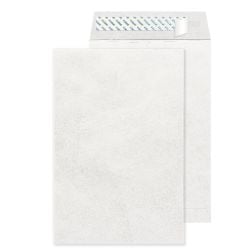
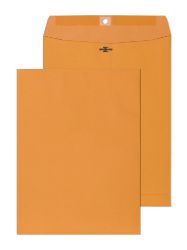
- 9x12 and 10x13 catalog envelopes send multi-page documents or briefs unfolded, protecting them from fold marks
- Custom printed envelopes with the firm's name and return address reinforce a professional brand across all correspondence
| Use Case | Recommended Envelope | Size | USPS Category |
|---|---|---|---|
| Standard client letters | #10 | 4‑1/8 x 9‑1/2 in | Letter rate |
| Legal documents (tri-folded) | #14 | 5 x 11‑1/2 in | Letter rate |
| Billing statements | Window #10 or #14 | Varies by paper size | Letter rate |
| Confidential materials | Security-tinted #10 or #14 | Varies | Letter rate |
| Unfolded document packets | 9x12 or 10x13 catalog | 9 x 12 / 10 x 13 in | Flat rate |
| Certified mail | #10 or #14 | Varies | Letter rate + certified fee |
| Firm branding | Custom printed #10 or #14 | Varies | Letter rate |
Table of Contents
- What types of envelopes do law firms use?
- What is the standard envelope for law office correspondence?
- What is a legal-size envelope and when does a law firm need one?
- Which window envelope should a law firm use for billing?
- Do law firms need security envelopes for confidential documents?
- What envelopes are used for court filings and certified mail?
- How do law firms use custom printed envelopes for branding?
- What size envelope fits legal documents sent unfolded?
- How should a law office address an envelope for client or court mail?
- How many envelopes does a law office typically order?
What Types of Envelopes Do Law Firms Use?
Law offices send different types of mail throughout a typical week, and no single envelope works for all of them. A routine client update carries different requirements than a court filing, a billing statement, or a stack of contracts headed to a signing. Using the right envelope for each piece of mail protects the document, meets professional standards, and reduces avoidable delays.
Here are the main envelope categories that most law firms keep in stock:
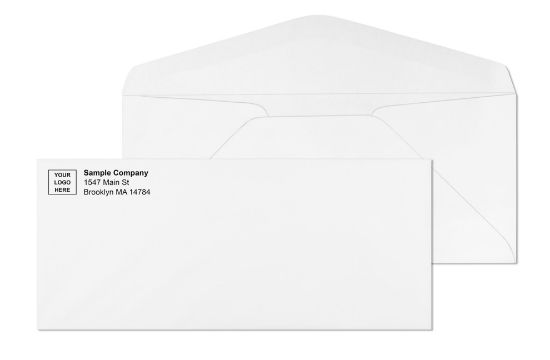
- Standard business envelopes (#10): The everyday workhorse for client letters, legal notices, retainer agreements, and general attorney correspondence. Holds 8.5 x 11 letter-size paper folded in thirds.
- Legal-size envelopes (#14): For documents drafted on 8.5 x 14 legal paper, tri-folded into a wider envelope. The standard choice for contracts, affidavits, and formal legal documents on full legal paper.
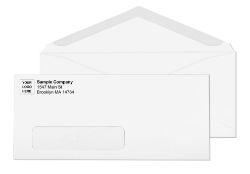
- Window envelopes: For billing statements, invoices, and documents where the recipient address shows through a pre-cut window, eliminating manual addressing.
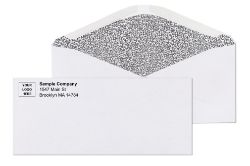
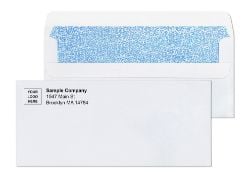
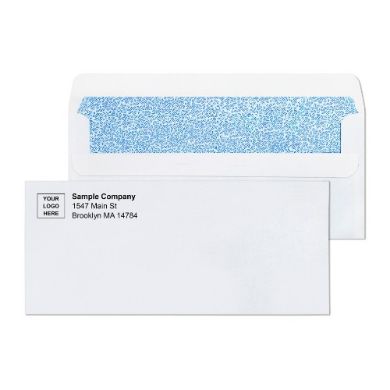
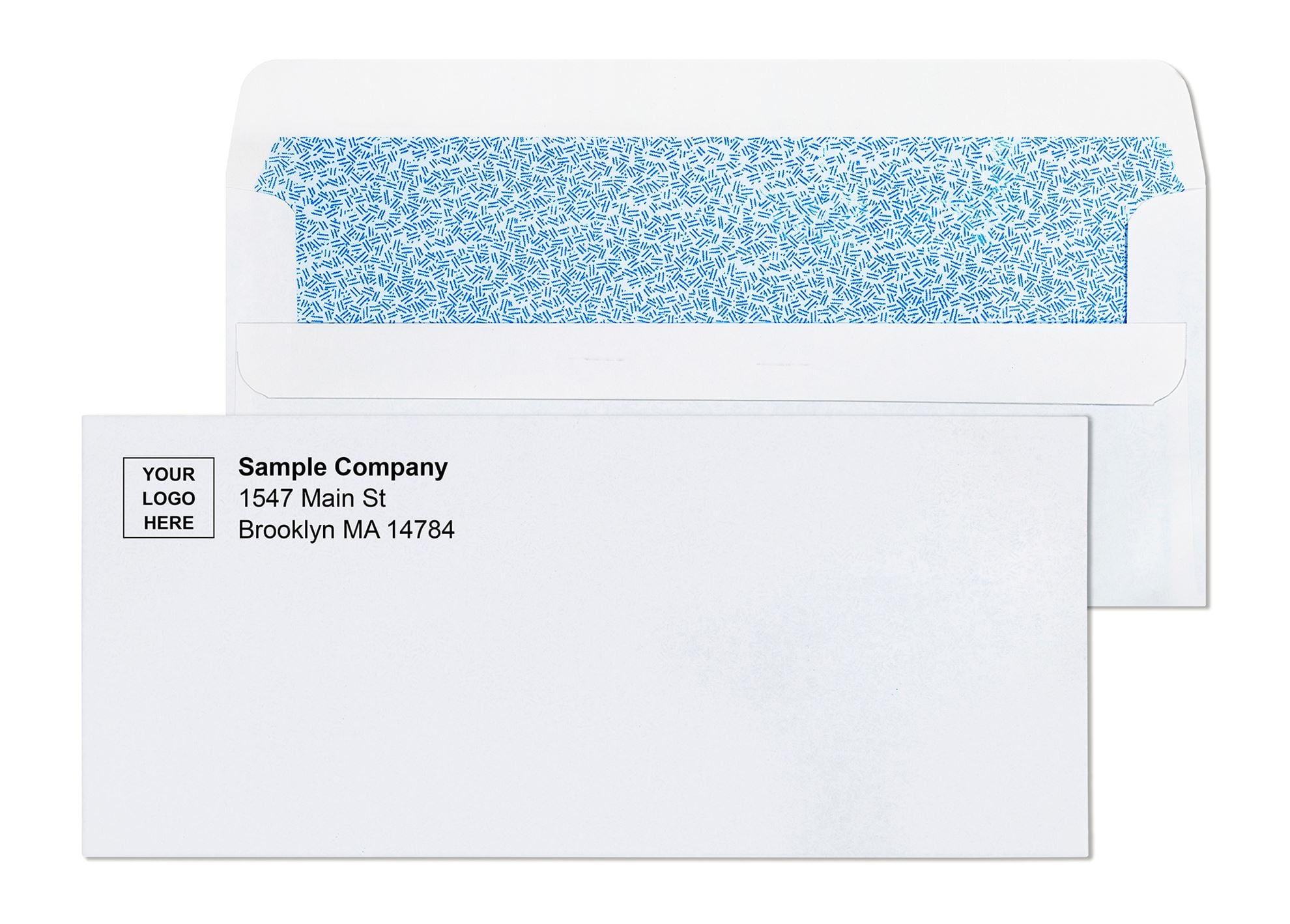
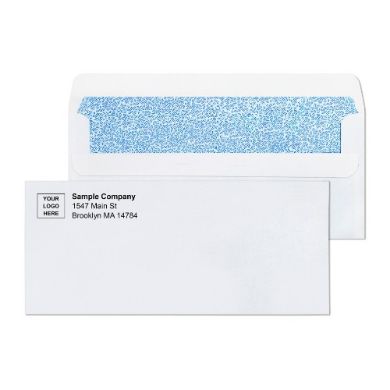
- Security-tinted envelopes: For client documents where privacy matters. An interior cross-hatch or diamond pattern blocks the contents from view when held to light.
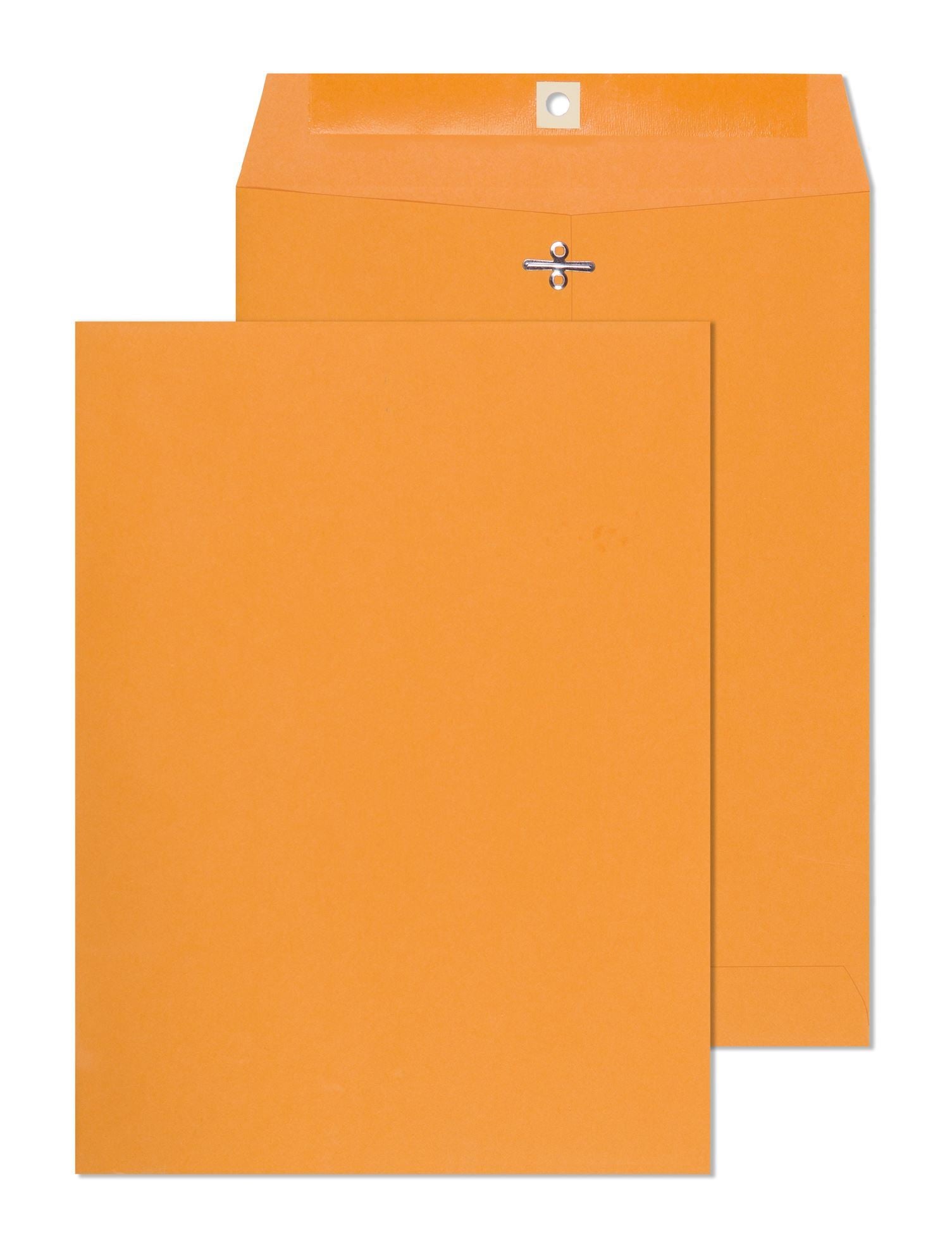
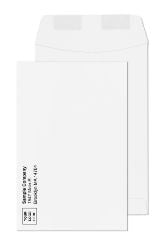
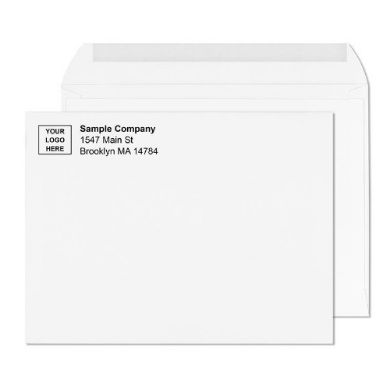
- Catalog envelopes (9x12, 10x13): Flat envelopes for multi-page documents, legal briefs, or signed agreements that should not be folded.
- Self-seal envelopes: Peel-and-seal strip instead of a gum flap, preferred in high-volume mailing environments where efficiency matters.
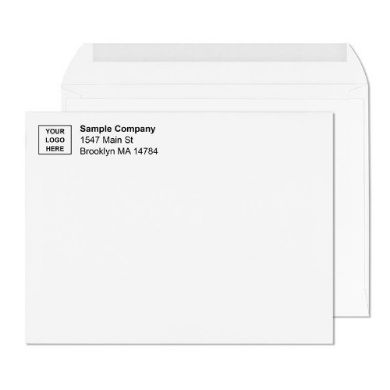
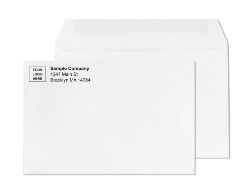
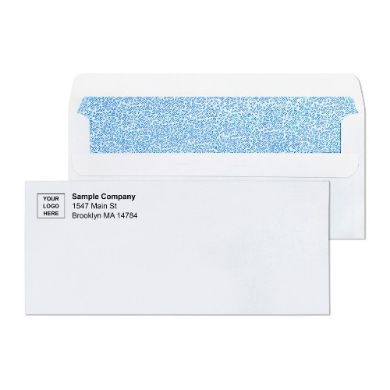
- Custom printed envelopes: Firm name, return address, and logo printed on the envelope face. The standard for client-facing law firm correspondence.
A well-stocked law office typically maintains at least three or four of these envelope types to handle the range of correspondence that moves through the office daily.
What Is the Standard Envelope Size for Law Office Correspondence?
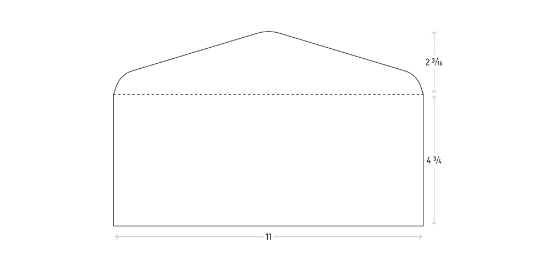
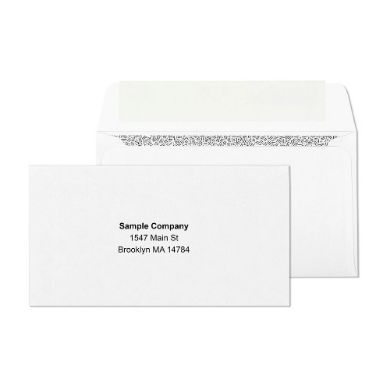
The #10 envelope is the standard for law office client letters and general correspondence. It measures 4‑1/8 x 9‑1/2 inches and holds a standard 8.5 x 11-inch letter, folded into thirds. It fits within the USPS letter-rate size category, which makes it the most economical option for first-class mail.
Most legal correspondence sent by attorneys falls into the #10 category: cover letters for contracts, demand letters, engagement letters, legal notices, status updates to clients, and brief communications between counsel.
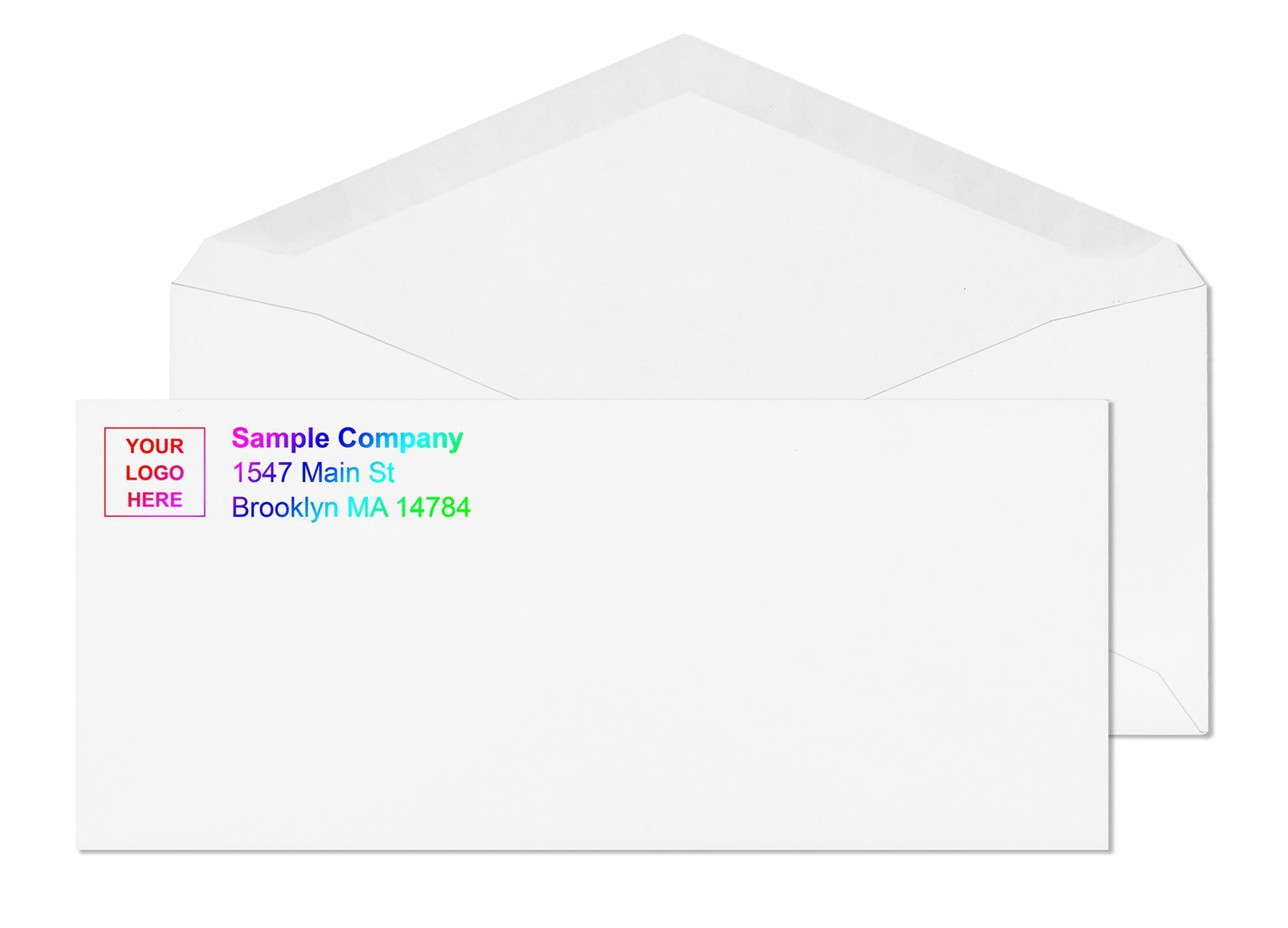
The #10 envelope comes in several flap styles, and the choice matters in a busy legal office:
- Gum flap: Moistened to seal, the traditional professional choice for formal client-facing correspondence.
- Self-seal: Peel-and-strip adhesive, preferred in high-volume environments where sealing hundreds of envelopes by hand is impractical.
- Security tinted: Same size and flap options, with an interior print that blocks contents from showing through. Covered in more detail in the security envelope section below.
For most law offices, a gum-flap or self-seal #10 in white wove stock is the right default for standard client-facing correspondence.
Browse #10 business envelopes at BusinessEnvelopes.com
What Is a Legal-Size Envelope and When Does a Law Firm Need One?
The #14 envelope measures 5 x 11‑1/2 inches and is specifically designed to hold documents on 8.5 x 14 legal paper, folded into thirds. This is what professionals refer to as a "legal-size envelope," and it is a staple in any practice that regularly drafts documents on full legal paper.
Law firms that prepare contracts, affidavits, deeds, retainer agreements, and court pleadings on legal-size paper use the #14 when sending those documents through standard mail. The extra length compared to a #10 envelope gives the tri-folded legal document room to fit without crimping the top or bottom panel of the page.
The #14 envelope also stays within the USPS maximum letter size of 6‑1/8 x 11‑1/2 inches, so it qualifies for the same postage rate as a standard #10, provided the total weight stays within the letter-rate weight limit.
Even for firms that work primarily with standard 8.5 x 11 letter-size paper, a #14 can accommodate thicker packets, such as multi-page agreements or packets with attachments, that would create a tight fit in a #10.
Browse #14 legal-size envelopes | Read the legal-size window envelope guide
What Is the Difference Between a #10 and a #14 Envelope?
The key difference is size and the paper format each one is designed to hold. A #10 fits standard letter-size (8.5 x 11) paper folded in thirds. A #14 fits legal-size (8.5 x 14) paper folded in thirds, with a wider, longer interior that prevents the document from bunching at the fold.
| Feature | #10 Envelope | #14 Envelope |
|---|---|---|
| Dimensions | 4‑1/8 x 9‑1/2 in | 5 x 11‑1/2 in |
| Designed for | 8.5 x 11 letter-size paper | 8.5 x 14 legal-size paper |
| USPS letter rate eligible | Yes | Yes (within weight limit) |
| Common law firm use | Client letters, short notices, demand letters | Contracts, affidavits, deeds, legal documents |
| Approximate capacity | 6 to 8 sheets of 20 lb paper | 8 to 12 sheets of 20 lb paper |
| Window version available | Yes | Yes |
A firm that drafts everything on standard letter-size paper can typically work with #10 envelopes for everyday mail. A firm that regularly prepares legal-size documents will want #14 envelopes in stock alongside the #10.
For a broader size reference, see the complete envelope sizes chart.
Which Window Envelope Should a Law Firm Use for Billing Statements?
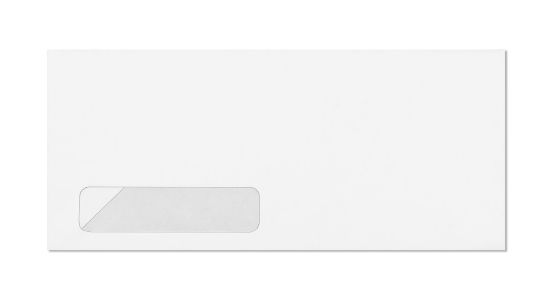
Window envelopes are the most practical choice for law firm billing departments. Rather than addressing each envelope by hand or printing address labels, the billing statement itself is folded so the client's name and address show through a pre-cut window in the envelope face. This eliminates transcription errors, reduces labor, and keeps billing runs efficient even in a busy practice.
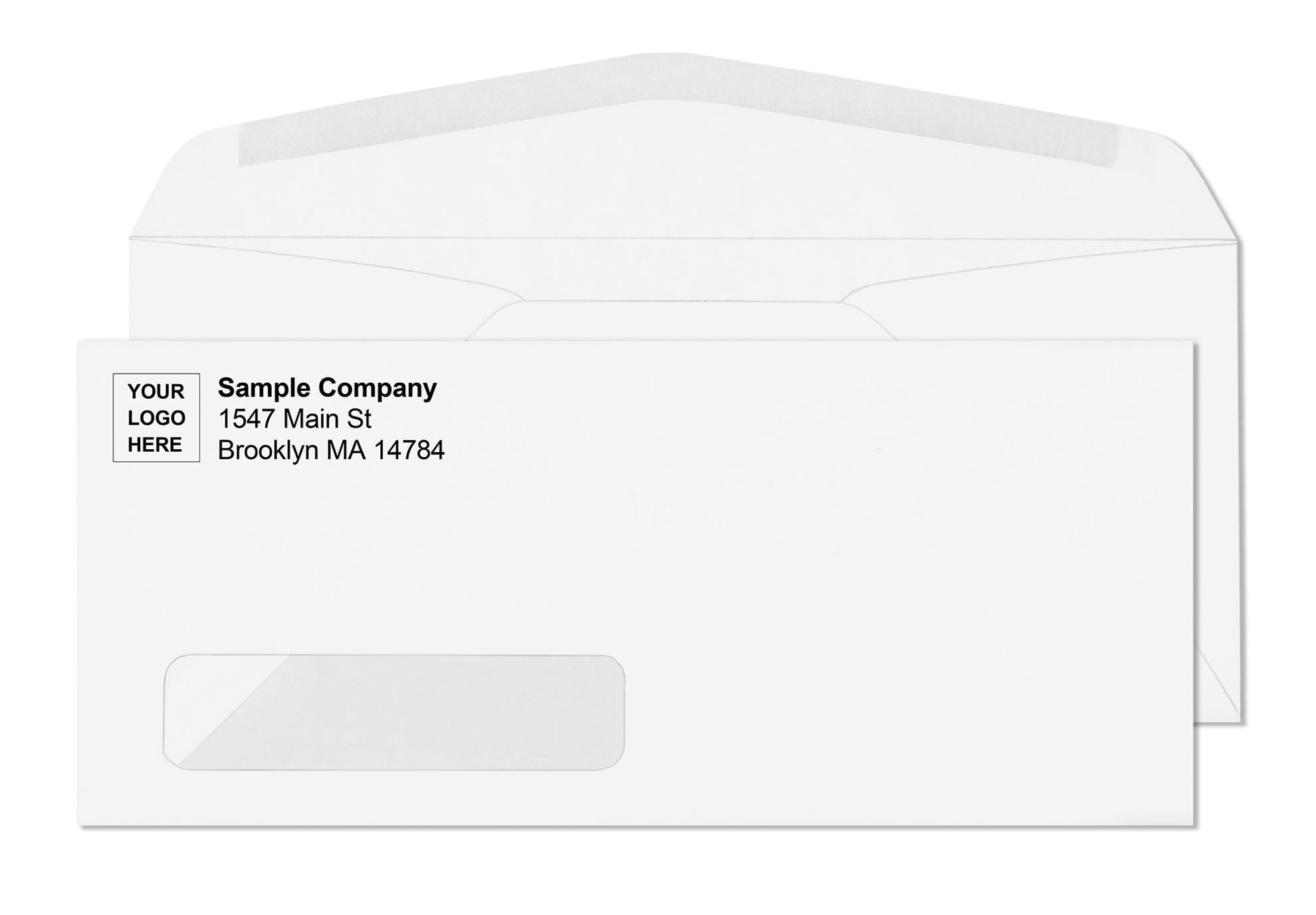
Window envelopes for law firms typically come in two primary sizes:
- #10 window envelope: The standard for firms that print billing statements on letter-size paper. The statement is folded so the address block appears in the lower-left panel, aligning with the window position.
- #14 window envelope: For firms that generate billing statements or invoices on legal-size paper, or for sending legal documents where the client's address is printed on the document itself.
The window is typically positioned in the lower-left quadrant of the envelope face, matching the address block placement in standard billing statement software. If a firm uses a legal practice management system that prints statements, confirming the address block placement before ordering window envelopes avoids a mismatch.
Shop window envelopes | #14 window envelopes for legal billing
Should Law Firms Use a Single-Window or Double-Window Envelope?
A single-window envelope has one window showing the recipient's address. The return address must come from a pre-printed envelope or a label applied separately.
A double-window envelope has two windows: one for the recipient address and one for the return address. Both addresses pull from the printed document inside, so no pre-printed envelope or label is needed at all.
For most law firms that already use custom printed envelopes with the firm's return address on the face, a single-window envelope is the right choice. The return address is already there from the printing; only the recipient window needs to align.
For firms mailing from multiple office addresses, or for document management systems that print both the recipient and return addresses on the billing statement, a double-window eliminates an extra production step and reduces per-envelope handling time.
Browse double-window envelopes
Do Law Firms Need Security Envelopes for Confidential Documents?
Yes, for certain types of correspondence. Law firms regularly handle documents that contain sensitive personal information: financial records in family law or estate matters, medical information in personal injury cases, privileged attorney-client communications, and documents showing social security numbers or tax identification numbers. A standard white envelope held up to a bright light can reveal enough text to create a real privacy concern.
Security-tinted envelopes solve this problem with an interior pattern, usually a cross-hatch or diamond print in blue or gray ink, that makes the contents unreadable from outside even when the envelope is held directly to a light source.
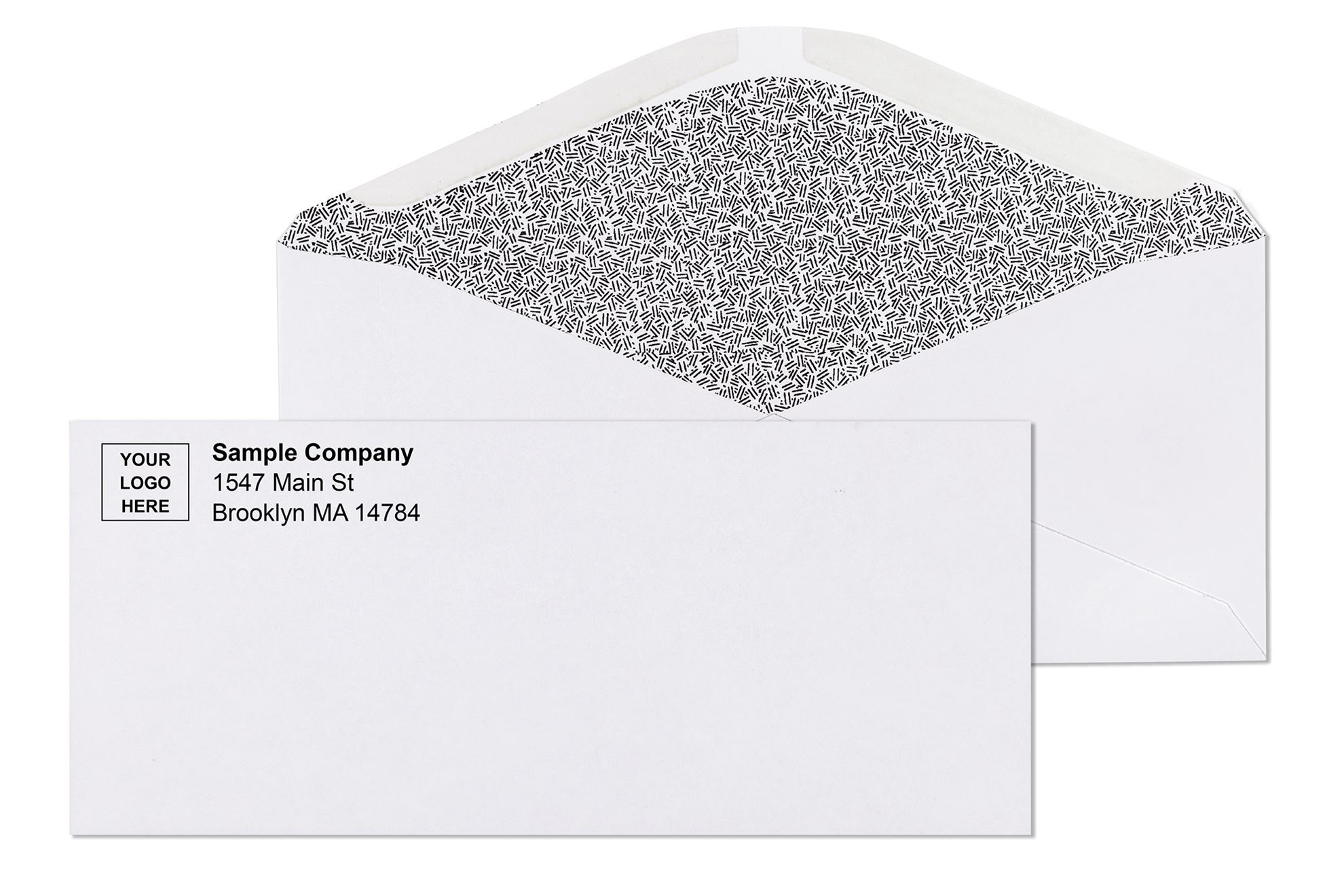
Key uses for security-tinted envelopes in a law office include:
- Personal injury case documents containing medical records or bills
- Family law correspondence with financial disclosure statements
- Estate planning documents showing account numbers or asset valuations
- Letters containing social security numbers or tax identification numbers
- Privileged communications where the attorney-client relationship should remain private
- Settlement agreements with confidential financial terms
Security-tinted envelopes are available in #10 and #14 sizes, in both gum-flap and self-seal styles, so switching to a security-tinted version for sensitive correspondence requires no change to existing letter-folding or mailing workflows. They use the same size and fold pattern as the standard envelopes already in use.
What Envelopes Are Used for Court Filings and Certified Mail?
Court filings sent through the mail go to the clerk's office in a standard #10 or #14 envelope, depending on the size of the document packet and the jurisdiction's filing requirements. The envelope itself is typically unremarkable; what matters is the content, the addressing, and the proof of delivery.
Certified mail is the most common proof-of-delivery method for legal filings. USPS Certified Mail adds a tracking number to the piece and, when a Return Receipt (PS Form 3811, the green card) is requested, brings back a signed delivery confirmation to the sender. This confirmation is frequently attached to the file or submitted as proof of service.
For certified mail, the envelope needs to be large enough to hold the documents and leave room on the face for the certified mail barcode sticker (USPS Form 3800, the green label). That sticker, combined with the destination address block, occupies a significant portion of the envelope face, so planning the layout matters.
Practical guidelines for law firm certified mail envelopes:
- Use a white envelope so the barcode on the Form 3800 sticker scans cleanly at USPS processing centers.
- Keep the upper-right corner clear for postage. A postage meter imprint or stamps both work, but avoid crowding the address area.
- Position the Form 3800 sticker below the return address and above the destination address, to the left of center, following USPS label placement guidelines.
- Weigh the envelope before applying postage if the document packet is thick. Certified mail adds weight from the form, and overstuffing a #10 for a complex filing may push it above letter-rate weight limits.
- For filings that must reach the clerk on a specific date, confirm the USPS transit time for Certified Mail from your area to the court's zip code before assuming next-day or two-day delivery.
For frequently filed certified mail, pre-printed envelopes with the firm's return address already on them reduce per-piece preparation time. The firm's staff only needs to add the destination address, the Form 3800 label, and postage.
Check postage requirements by envelope size
USPS Certified Mail requires a specific envelope type and size that meets postal service standards for tracking and delivery confirmation.
How Do Law Firms Use Custom Printed Envelopes for Branding?
A law firm's envelope is often the first physical impression a client receives before opening a single piece of correspondence. A plain white envelope with a typed return label conveys a different image than a crisp envelope with the firm's name, address, and logo printed cleanly in the upper-left corner. Custom printing is one of the easiest and most cost-effective ways for a firm to maintain a consistent professional identity across every piece of outgoing mail.
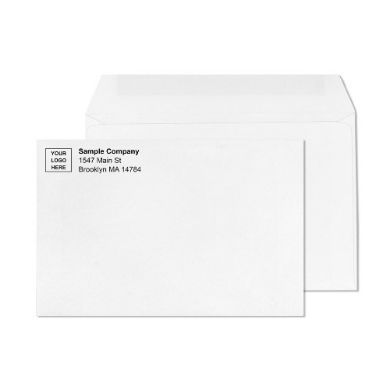
Custom printed envelopes reinforce the firm's brand across all correspondence types: client updates, billing statements, court filings, retainer letters, and routine notices. The investment is modest per envelope, and the visual result is far more polished than affixing address labels to plain stock.
Common printing options for law firm envelopes include:
- Firm name and mailing address in a clean serif or sans-serif typeface, matching the firm's letterhead
- Firm logo or seal for firms with a formal graphic identity
- "ATTORNEY AT LAW" or practice group designations for professional credentialing visibility
- "CONFIDENTIAL" or "PRIVILEGED AND CONFIDENTIAL" printed on envelopes used for sensitive client matter correspondence
- Return address only, without a logo, for firms that prefer a restrained look
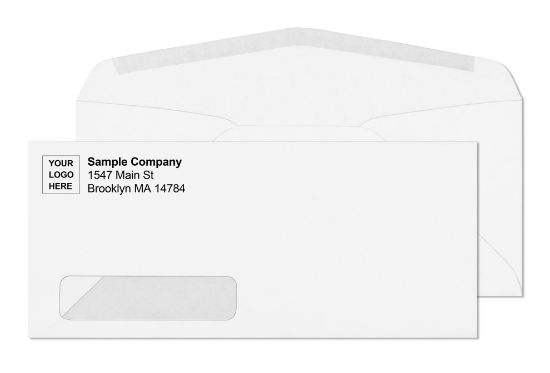
Custom printing is available on both #10 and #14 sizes, and on window and non-window styles. Window envelopes with a printed return address are particularly efficient: the firm's return address is already on the envelope, and the client's address shows through the window from the printed document inside, so no labels or hand-addressing are needed at any point in the process.
Explore custom printed envelopes for law firms
What Size Envelope Fits Legal Documents Sent Unfolded?
When a law firm sends a document that should not be folded, such as a signed contract, a deed, an exhibit for court, or a multi-page filing packet, a flat catalog envelope is the right choice. Fold marks on an important legal document can affect presentation and occasionally cause issues with court filing systems that scan or stamp documents on receipt.
The two most common flat envelope sizes used in legal practice are:
- 9 x 12 inches: Holds standard letter-size documents (8.5 x 11) without folding, with about a quarter inch of clearance on each side. This is the most widely used flat envelope size for legal correspondence requiring unfolded mail.
- 10 x 13 inches: Holds legal-size documents (8.5 x 14) without folding, with comfortable margins on all sides. The right choice when the document itself is on full legal paper and must arrive flat.