

Quick answer: Envelope paper weight is the basis weight of the paper stock expressed as the weight in pounds of 500 sheets at a standard sheet size. For business envelopes, the three standard weights are 20 lb (75 GSM, thin), 24 lb (90 GSM, standard), and 28 lb (104 GSM, heavyweight). Most office envelopes use 24 lb white wove. Brown kraft clasp and catalog envelopes use 28 lb. Tyvek envelopes are 14 lb equivalent but are not paper. For laser printing, 24 lb is the recommended minimum.
When you order envelopes in bulk, the paper weight on the box determines how the envelope performs , in your printer, through the postal system, and in the hands of whoever receives it. A number like 24 lb or 28 lb is not just a specification. It affects whether the envelope feeds through a laser printer reliably, whether the contents show through, whether the flap seals cleanly, and whether the piece feels professional when it arrives.
This envelope paper weight guide explains what the numbers mean, how the US pound system relates to GSM, what the USPS requires, and which weight to choose for each mailing scenario. All specifications in this guide are based on standard industry paper weight references and USPS Publication 25. For practical guidance on printing, see the Complete Guide for Laser, Inkjet, and Bulk Office Printing.
What Is Envelope Paper Weight?
Envelope paper weight is measured as basis weight: the weight in pounds of 500 sheets of paper at the standard base sheet size for that paper grade. For bond paper , the grade used for white wove business envelopes , the base sheet size is 17 x 22 inches. For kraft paper , used in brown clasp and catalog envelopes , the base sheet size is 24 x 36 inches.
This base-sheet system explains a common point of confusion. A 28 lb bond envelope and a 70 lb text sheet are the same physical thickness, because 70 lb text paper is measured from a larger 25 x 38 inch base sheet. The number alone does not tell you the thickness unless you know which paper grade it refers to.
Bond weight vs text weight: the key conversion
| Bond Weight (lb) | Text Weight (lb) | GSM | Caliper (inches) | Common Use |
|---|---|---|---|---|
| 20 lb | 50 lb | ~75 GSM | 0.0038" | High-volume inkjet, lightweight correspondence |
| 24 lb | 60 lb | ~90 GSM | 0.0048" | Standard office envelopes, laser and inkjet printing |
| 28 lb | 70 lb | ~104 GSM | 0.0058" | Heavyweight clasp and catalog envelopes, premium business mail |
GSM (grams per square meter) is the international standard for paper weight. It measures weight over the same unit area regardless of paper grade, making it a reliable cross-grade comparator. When comparing envelopes from different manufacturers or sourcing internationally, GSM is the more consistent reference.
The Three Standard Envelope Paper Weights: A Practical Breakdown
20 lb bond (75 GSM): lightweight stock
The thinnest standard envelope stock. At 0.0038 inches caliper, 20 lb envelopes are noticeably flexible and light to the touch. They work adequately in most inkjet printers and pass through standard letter-rate postal sorting. They meet the USPS Publication 25 minimum of 50 lb book weight (equivalent to 20 lb bond) for sealed mailpieces.
The practical limitations of 20 lb stock appear in three areas:
- Laser printing: Some laser printers struggle to feed 20 lb envelopes reliably. The thin stock can curl under fuser heat, causing jams and misfeeds. A test batch of 5 to 10 envelopes before a full run is essential.
- Opacity: At 75 GSM, 20 lb stock offers less opacity than heavier weights. Contents printed in dark ink may show through the envelope face, which is a concern for invoices, statements, or any mail with private information.
- Durability: Thinner stock is more prone to corner creasing and edge damage in transit, especially in flat-document formats.
24 lb bond (90 GSM): the standard for business envelopes
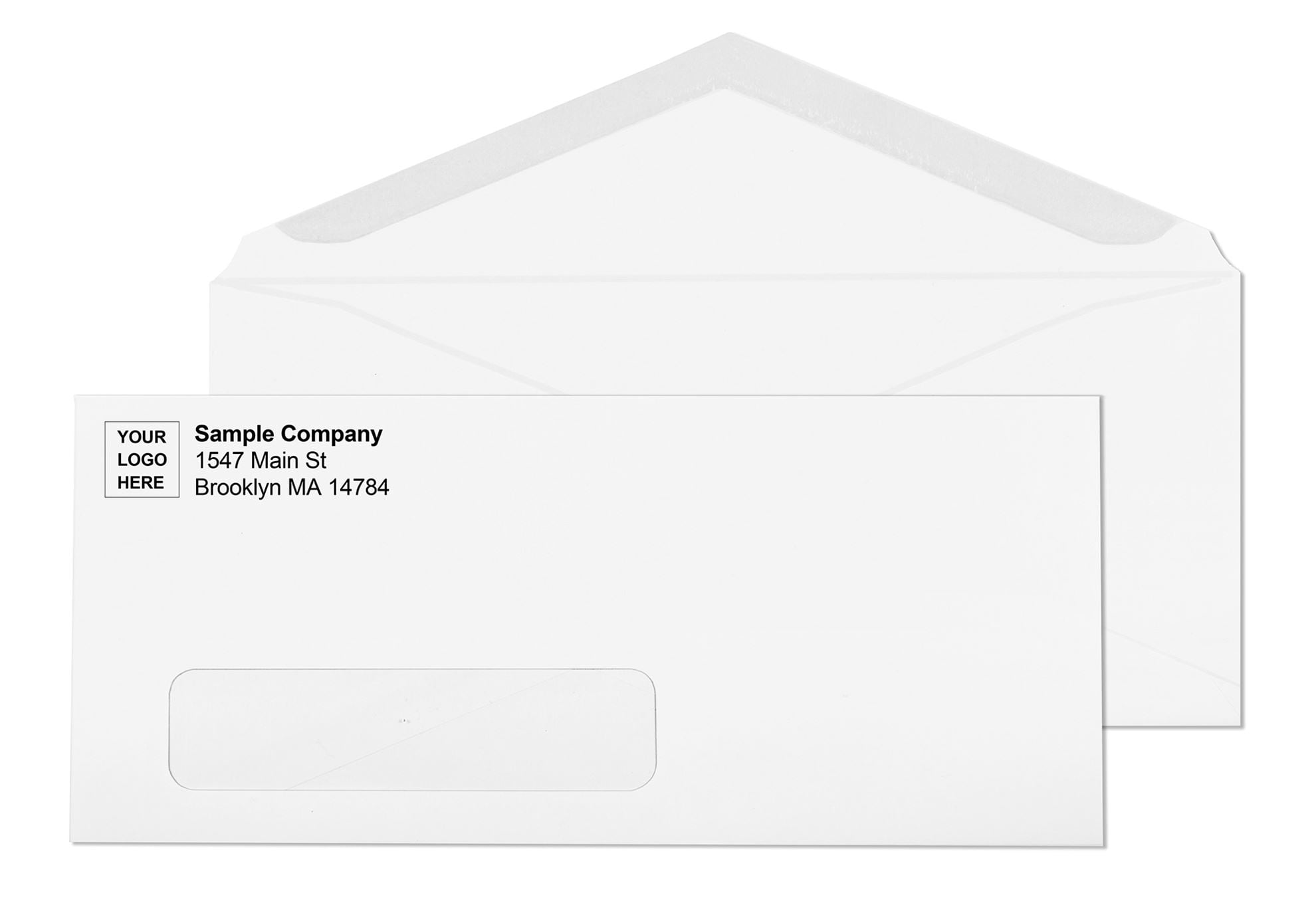
The most common envelope paper weight in commercial mailing. At 0.0048 inches caliper, 24 lb white wove provides the balance of opacity, rigidity, and printer compatibility that office mailing programs require. Almost all standard commercial envelope formats use 24 lb white wove as the default stock.
- Laser printing: 24 lb feeds reliably in office laser printers through the manual feed tray. The caliper is sufficient to resist curl under fuser heat, and the surface holds toner without smearing.
- Inkjet printing: Compatible with all standard office inkjet printers. The surface accepts water-based inks cleanly without excessive bleed.
- Opacity: Adequate for most business mail. Security-sensitive mail (statements, checks, financial notices) benefits from a security-tinted envelope that adds a printed interior pattern, rather than requiring a heavier stock.
- Automated insertion: 24 lb stock feeds consistently through inserter machines. It is the recommended weight for any program using automated mailing equipment.
Standard white wove, window, security tinted, and colored envelope formats at Business Envelopes all use 24 lb bond as the default stock. See the full range at regular envelopes and window envelopes.
28 lb bond (104 GSM): heavyweight stock
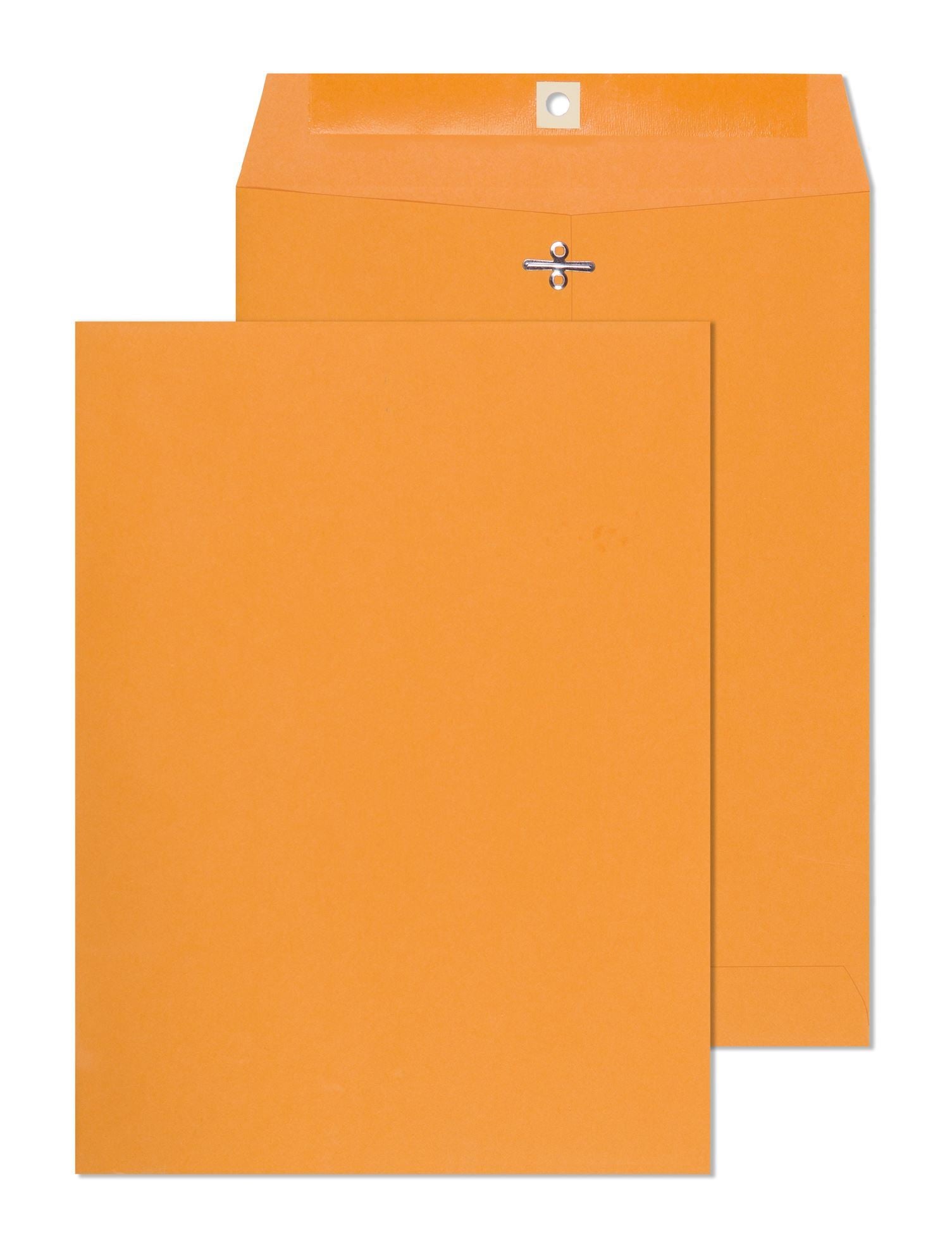
The heaviest standard commercial envelope stock. At 0.0058 inches caliper, 28 lb paper provides noticeably greater rigidity, opacity, and tear resistance than 24 lb. It is the standard stock for brown kraft clasp and catalog envelopes used in flat-document mailing programs.
- Tear resistance: 28 lb kraft resists tearing and corner damage better than lighter white wove, which is why it is the standard for heavier document packets sent in catalog formats.
- Opacity: At 104 GSM, 28 lb brown kraft is fully opaque. Contents do not show through even when the envelope is held to light.
- Printing: 28 lb white wove formats are laser-safe. 28 lb brown kraft does not print cleanly on standard office inkjet or laser printers because the kraft surface is not optimized for office printing. Custom logo and return address printing on 28 lb kraft envelopes is done at the factory through commercial offset printing.
- Rigid contents: The heavier stock handles thicker insert stacks without deforming. For multi-page legal documents, financial reports, and catalog packets, 28 lb provides the structural integrity that lighter stock cannot.
For a complete guide to the 28 lb kraft format and all available sizes, see Heavyweight Brown Clasp Envelopes: 28 lb Kraft, 5 Sizes.
Envelope Paper Weight by Format: Quick Reference
Different envelope formats use different paper weights by design. This table shows the standard weight for each format available at Business Envelopes.
| Envelope Format | Standard Weight | GSM | Material | Laser Safe |
|---|---|---|---|---|
| White wove (#10, #9, #6 3/4) | 24 lb bond | ~90 GSM | White wove | Yes |
| Window envelopes (#10, #9) | 24 lb bond | ~90 GSM | White wove | Yes |
| Security tinted envelopes | 24 lb bond | ~90 GSM | White wove + tint | Yes |
| Colored envelopes | 24 lb bond | ~90 GSM | Colored wove | Yes |
| Brown kraft clasp envelopes | 28 lb kraft | ~104 GSM | Brown kraft | No (kraft surface) |
| White wove 10x13 peel-and-seal | 28 lb bond | ~104 GSM | White wove | Yes |
| Tyvek envelopes | 14 lb equivalent | ~54 GSM | Woven polyethylene | No (material, not paper) |
USPS Minimum Paper Weight Requirements
USPS Publication 25 states that mailpieces sealed on all four sides must use paper with a minimum basis weight of 50 lb book grade. In bond weight terms, that is equivalent to 20 lb bond. All standard commercial envelopes (20 lb, 24 lb, 28 lb bond) meet this minimum.
The minimum requirement primarily affects custom-manufactured envelopes and specialty formats. For any standard commercial envelope purchased from a reputable supplier, USPS weight compliance is built in.
How to Choose the Right Envelope Paper Weight
The right envelope paper weight depends on four factors: the printing method, the contents, the privacy requirement, and the recipient experience.
Choose by printing method
- Laser printer: Use 24 lb white wove minimum. 20 lb can cause curl and feed failures under fuser heat. 24 lb feeds consistently and holds toner without curling.
- Inkjet printer: 20 lb works but 24 lb is more reliable. The additional caliper reduces warping from water-based ink absorption.
- No office printing (custom-printed from factory): Any weight is suitable. Factory commercial printing is done on flat sheets before converting to envelopes, so the stock does not need to feed through an office printer. See all custom-printed options at printed envelopes.
Choose by content weight and type
- Single letter, invoice, or statement (1-3 pages): 24 lb white wove. The standard format for most billing and correspondence programs.
- Multiple documents (4+ pages, thick inserts): 28 lb white wove open-end or 28 lb brown kraft clasp. The heavier stock holds its shape under the additional insert weight.
- Flat documents (8.5x11 unfolded): 28 lb brown kraft in 9x12, 10x13, or 10x15 format. The heavier kraft stock protects flat documents through postal handling.
- Waterproof or tear-proof requirement: Tyvek. Paper weight does not apply. See Tyvek envelopes for available formats.
Choose by privacy requirement
- Standard correspondence: 24 lb white wove provides adequate opacity for most business mail where contents are not sensitive.
- Statements, financial notices, medical correspondence: Use a security tinted envelope rather than a heavier stock. Security tinting adds a printed interior pattern that prevents show-through without increasing paper weight or postage cost. See security tinted envelopes guide for the full explanation.
- Maximum opacity: 28 lb brown kraft is fully opaque. It is the right choice when contents must not be visible under any lighting condition.
Choose by recipient experience
- High-volume utility mail (invoices, remittances, statements): 24 lb is the standard. The cost and postage efficiency of lighter stock is appropriate where the mailing is purely functional.
- Client-facing correspondence, proposals, legal filings: 28 lb white wove or 28 lb kraft provides a noticeably heavier feel that signals professionalism and care.
- Direct mail with brand objectives: 24 lb with a custom-printed logo and return address is the practical choice for most business direct mail programs. The custom printing, not the paper weight, drives the brand impression.
Envelope Paper Weight and Storage
Paper weight also affects how envelope stock behaves in long-term storage. Thinner 20 lb stock is more susceptible to humidity-driven warping and gum flap pre-activation in high-humidity storage conditions. The additional caliper of 24 lb and 28 lb stock provides greater dimensional stability across normal temperature and humidity fluctuations.
For complete guidance on storing envelope stock of any weight, see How to Store Envelopes: Temperature, Humidity, Shelf Life, and Seal Type Guide.
Common Mistakes When Choosing Envelope Paper Weight
- Assuming heavier is always better: 28 lb stock is not automatically better than 24 lb for every program. For standard laser-printed correspondence, 24 lb is the optimal choice. 28 lb adds unnecessary rigidity for programs using automated insertion equipment calibrated for standard stock.
- Using 20 lb for laser printing without testing: 20 lb stock feeds inconsistently in many laser printer manual trays. Always test a small batch before committing to a full print run on 20 lb envelopes.
- Confusing bond weight with text weight: A 28 lb bond envelope and a 70 lb text envelope are the same physical weight and thickness. Do not compare bond-weight envelopes to text-weight specifications without converting first.
- Using security tinting only as a backup: For privacy-sensitive mail, a security tinted 24 lb envelope is more cost-effective than upgrading to 28 lb for opacity. The tint pattern prevents show-through without the additional paper cost or potential postage impact of heavier stock.
- Ordering flip-and-stick envelopes in heavy weights for long storage: Flip-and-stick latex adhesive degrades in storage regardless of paper weight. For bulk stock ordered months in advance, choose gum flap or peel-and-seal formats at any weight.
Why Business Envelopes for Envelope Paper Weight Selection
Business Envelopes has supplied US businesses with commercial envelope stock since 1997. Every format in the catalog uses clearly specified paper weight: 24 lb white wove across all standard commercial formats, 28 lb white wove on select flat-document peel-and-seal formats, and 28 lb brown kraft across all clasp and catalog formats. No minimum order applies to any size or format.
- No minimums on any order
- Free ground shipping to the contiguous 48 states on every order
- Paper weight specifications listed on every product page
- Blank stock ships same or next business day
- Custom-printed orders available on white wove and kraft formats