

Quick answer: The window in a standard business envelope is made from polypropylene (PP), a thin clear plastic film. Glassine, a semi-transparent paper-based alternative, is also available. Polypropylene is the standard for commercial billing programs because it feeds reliably through inserter machines and survives laser printer heat. Glassine is the choice for organizations with sustainability requirements because the entire envelope can be recycled together in standard paper recycling.
Most people who use window envelopes every day have never thought about what the window is actually made of. It looks like glass. It feels slightly stiff. It lets the address show through. That is all most programs need to know.
Until the laser printer fuses a cheap window flat. Until the recycling program rejects an envelope. Until procurement asks whether the organization's envelopes meet its sustainability commitments. Then the envelope window material matters quite a lot.
This guide explains the two main envelope window materials, how each performs in a laser printer, what USPS requires from window film, and which material to order based on how the program actually operates. For the full window envelope buying guide including sizes, formats, and closure types, see Business Envelopes With Window: Complete Buyer's Guide.
What Is the Window in an Envelope Made Of?
The transparent panel on the face of a window envelope is a thin film patch bonded to the inside of a die-cut opening in the envelope body. The film is held in place by a hot-melt adhesive applied along the edges of the opening during manufacturing. The film must be optically clear enough for postal equipment to read the address through it. It also must be thin enough to lie flat without causing inserter jams, and stable enough to survive laser fuser heat without warping.
Two materials are in common use for this film in the US commercial envelope market:
- Polypropylene (PP): A petroleum-based clear plastic film. The standard material in commercial business envelopes for billing, invoicing, and statement programs.
- Glassine: A semi-transparent paper-based material made from cellulose fiber. The preferred option for organizations with sustainability or paper-recyclability requirements.
Polypropylene Window Film: The Commercial Standard
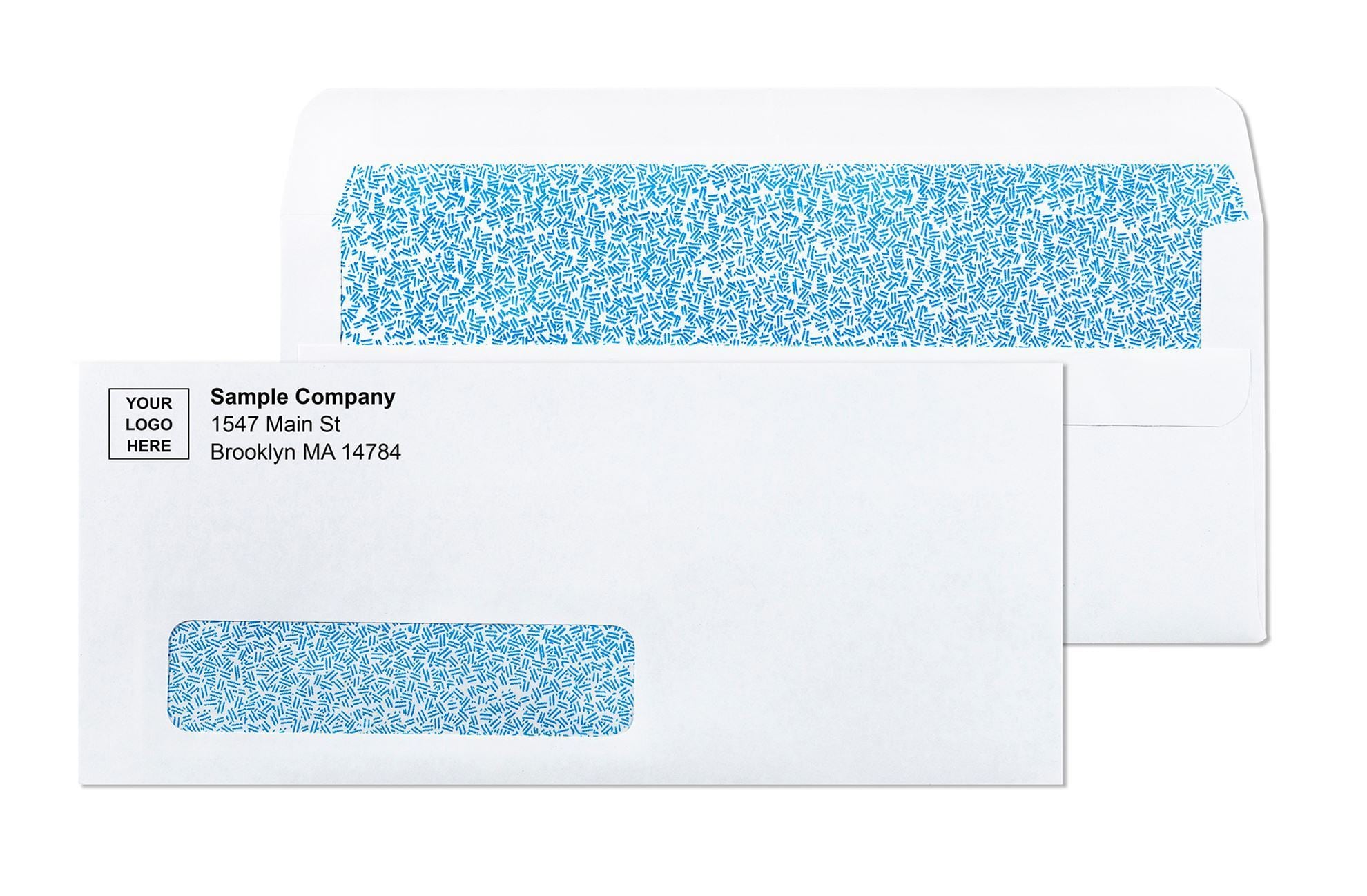
Polypropylene (PP) is the envelope window material used in the vast majority of commercial business envelopes sold in the United States. It is a thin, flexible, clear plastic film formulated specifically for envelope manufacturing. The commercial envelope version differs from general-purpose polypropylene in that it is engineered for the specific requirements of envelope inserting equipment, USPS postal sorting, and laser printer compatibility.
Properties of polypropylene window film
- Optical clarity: High. Polypropylene produces a sharp, clear window. The address on the enclosed document reads through without distortion, glare reduction, or haze that could interfere with USPS OCR scanning.
- Laser printer compatibility: Laser-safe grades of polypropylene window film are formulated to withstand fuser temperatures up to 230 degrees C without softening, warping, or releasing material that could contaminate the fuser roller. Standard commercial window envelopes from established suppliers use laser-safe PP film.
- Inserter machine performance: Polypropylene film is calibrated for the friction coefficients that inserter equipment requires. It feeds without sticking to machine components and maintains dimensional stability through mechanical folding and insertion.
- Recyclability: The paper body of a polypropylene window envelope is recyclable in standard paper recycling. The PP film patch must be separated from the paper body before paper recycling in most curbside programs. The PP film may be accepted at plastic film drop-off locations, but this varies by municipality.
★★★★★
"No transparency, adhesion works great and price is great!"
Joe Morgan | Verified buyer, #10 Window Business Envelopes Peel and Seal Security Tinted
Source: businessenvelopes.com product reviews
Glassine Window Film: The Recyclable Alternative
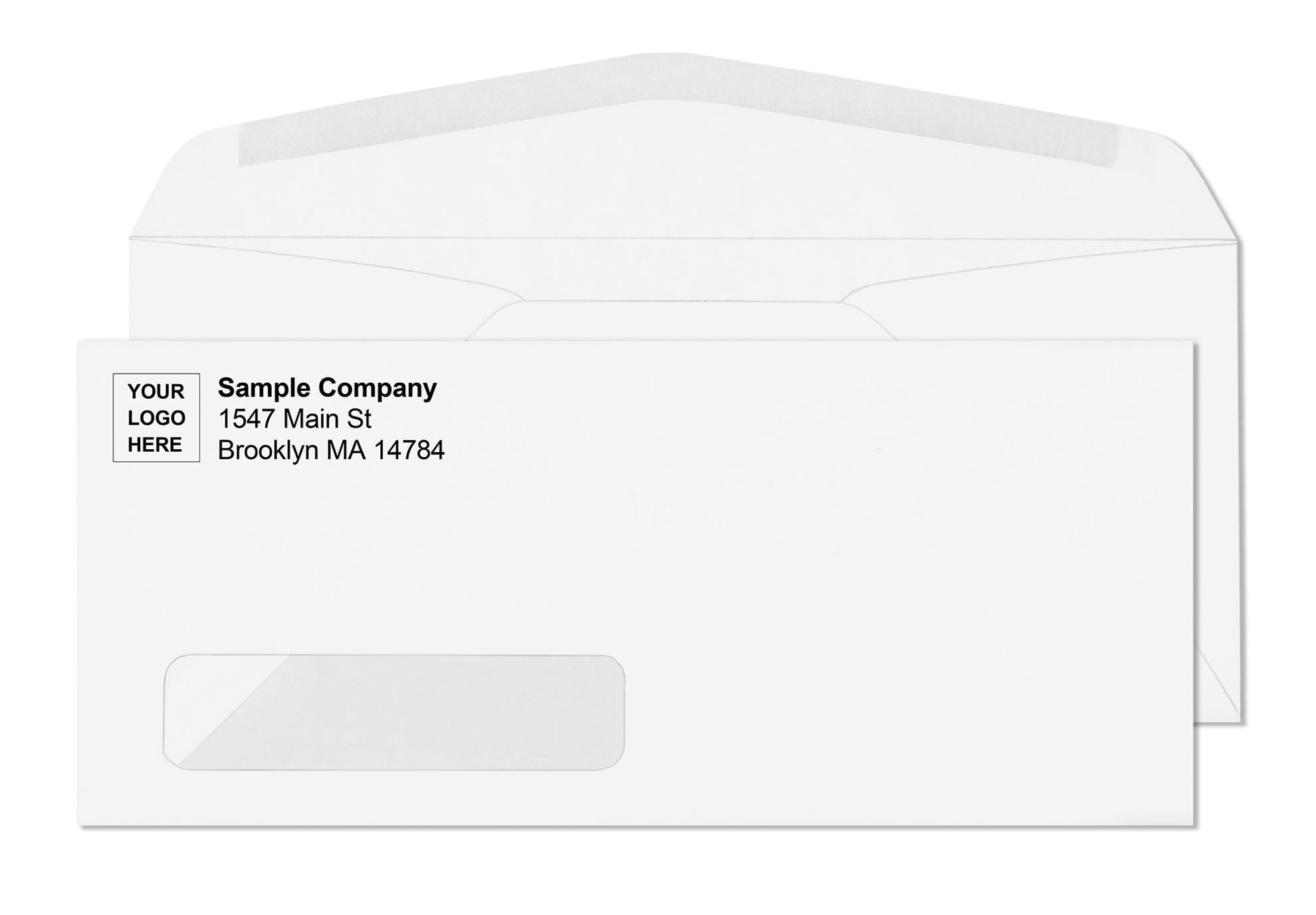
Glassine is a semi-transparent paper-based film made from cellulose fiber. It is produced by processing cellulose pulp to a high degree of refinement that produces a smooth, dense, slightly translucent sheet. Because glassine is paper-derived, it is compatible with standard paper recycling streams. An envelope with a glassine window can be recycled as a complete unit in most paper recycling programs without removing the window material first.
Properties of glassine window film
- Optical clarity: Moderate. Glassine windows appear slightly more matte and less optically sharp than polypropylene. The address remains readable through the window, but the clarity difference is visible when the two materials are compared side by side.
- Laser printer compatibility: Glassine is paper-based and generally more heat-tolerant than plastic films. However, always confirm laser compatibility with the supplier for the specific product before running through a laser printer.
- Recyclability: The primary advantage. Glassine is cellulose-based and compatible with paper pulping processes. The envelope body and window film can be recycled together in standard paper recycling. For organizations with sustainability targets, ESG commitments, or procurement policies requiring recyclable packaging, glassine windows allow the entire envelope to be disposed of in the paper recycling stream.
- Appearance: Slightly matte and less optically sharp than polypropylene. Some postal programs note that the reduced glare from glassine can be an advantage for USPS optical character recognition scanning in certain lighting conditions, though both materials meet USPS readability standards when properly manufactured.
Polypropylene vs Glassine: Side-by-Side Comparison
| Property | Polypropylene (PP) | Glassine |
|---|---|---|
| Optical clarity | High , sharp, clear window | Moderate , semi-transparent, matte finish |
| Laser printer safe | Yes , laser-safe grades withstand 230°C fuser | Generally yes , paper-based; confirm per product |
| Inserter machine performance | Excellent , calibrated for commercial inserters | Good , less widely tested across all inserter types |
| Paper recyclability | Film must be removed first in most programs | Recyclable with envelope body in standard paper recycling |
| Availability | Standard , all commercial window envelopes | Specialty , available from select suppliers on request |
| Best for | Standard billing, invoicing, check programs | Sustainability programs, ESG requirements |
USPS Requirements for Envelope Window Film
USPS automated sorting equipment reads the delivery address through the envelope window using optical character recognition (OCR). For postal processing to work correctly, the envelope window material must meet several requirements:
- Clarity: The film must be sufficiently transparent for OCR equipment to read the address. Excessive haze, distortion, or glare that prevents barcode scanning causes the piece to be pulled from automation and processed manually, which increases postage cost.
- Window position: The window must be positioned at least 1/2 inch from the left edge and at least 5/8 inch from the bottom edge of the envelope to place the address within the USPS delivery address clear zone.
- Flat and uniform surface: The window film must lie flat without bubbling, warping, or creating an uneven surface that interferes with automated sorting equipment.
- No dark patterns near the window: The area immediately around the window must not have dark ink or pattern that could interfere with address reading.
Standard commercial window envelopes from established suppliers are manufactured to meet these requirements. The window material, position, and construction are specced to USPS standards. See all window envelope formats at window envelopes.
Envelope Window Material and Laser Printer Safety
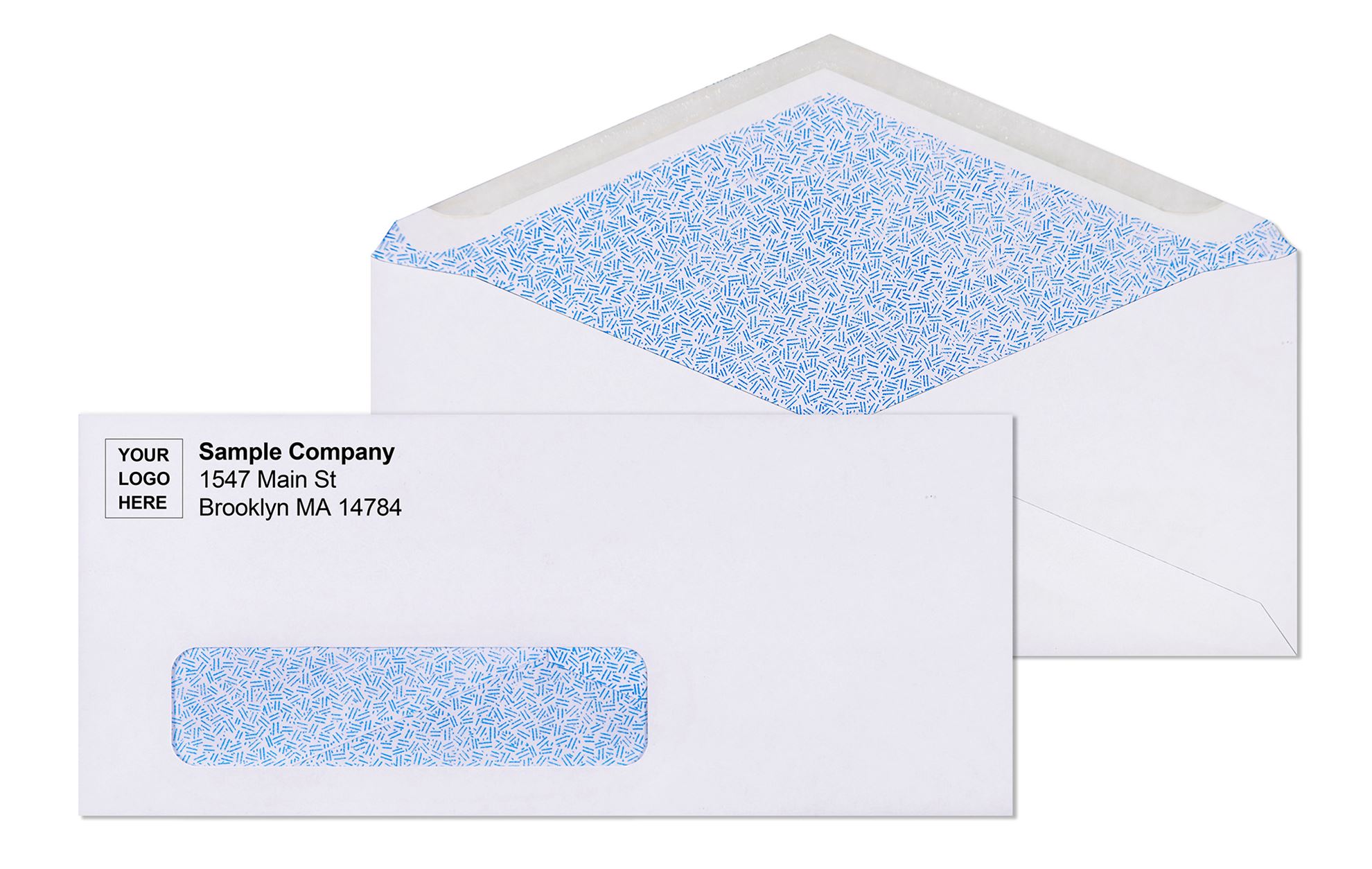
Laser printer safety is the most operationally critical property of the envelope window material for organizations that print directly onto envelopes or run envelopes through laser printers for address or data printing.
A laser printer uses a fuser unit to bond toner to paper by applying heat and pressure. Fuser temperatures typically run between 180 and 230 degrees C. Every envelope that passes through a laser printer travels through that fuser. Window film that is not rated laser-safe softens or warps at fuser temperatures. A warped or partially melted window film contaminates the fuser roller, damages the fuser unit, and voids most printer warranties.
All window envelope formats at Business Envelopes use poly-film that will not wrinkle or distort under laser printer heat. The paper stock also handles laser printing without tearing or curling under fuser pressure.
★★★★★
"These envelopes are a great choice, the price and quality and peel-seal make them my favorites to purchase."
Barbra Chin | Verified buyer, #10 Window Business Envelopes Peel and Seal Security Tinted
Source: businessenvelopes.com product reviews
Does Security Tinting Affect the Window Film?
No. Security tinting and the window film are entirely separate elements of the envelope. Security tinting is an interior pattern printed on the paper body of the envelope. It blocks the document contents from showing through the paper when held to light. The window film itself remains fully clear and unaffected by the tinting pattern.
The two work independently: the tinting protects the document contents from view through the paper body, while the window film continues to display the recipient's address normally through the clear window opening. For billing, financial, healthcare, and legal correspondence, security-tinted window envelopes combine both functions in one format. For the complete guide to security tinting, see Security Tinted Envelopes: What They Are and When to Use.
How to Choose the Right Envelope Window Material
Three questions determine which window material to order:
- Will the envelopes go through a laser printer? If yes, confirm the envelope is rated laser-safe regardless of whether the film is polypropylene or glassine. Polypropylene is the more reliable choice for laser-printing programs because its laser-safe formulation is the established standard.
- Does the organization have sustainability or recycling commitments? If recycling the complete envelope in standard paper recycling is a requirement, glassine film is the correct choice. Check with your supplier on availability before committing to glassine for a high-volume program.
- Does the program use an inserter machine? If yes, confirm inserter compatibility before ordering glassine, since glassine has less published inserter testing data than polypropylene. Most high-volume automated programs use polypropylene as the default.
For standard commercial billing, invoicing, statement, and check programs, polypropylene window film is the correct choice. It is laser-safe, inserter-tested, USPS-compliant, and widely available. For the full window envelope range, see window envelopes and the complete format guide at the Business Envelopes With Window: Complete Buyer's Guide.
Why Business Envelopes for Window Envelope Orders
Business Envelopes has supplied window envelopes to billing departments, healthcare offices, accounting firms, and direct mail operations across the United States since 1997. Every window envelope in the catalog uses poly-film that will not wrinkle or distort under laser printer heat. Window positions are manufactured to USPS standards and align with the standard address output of QuickBooks, Sage, and all major US billing platforms. Custom printing is available on all formats via custom printed envelopes.
- No minimums on any order
- Free ground shipping to the contiguous 48 states on every order
- Blank stock ships same or next business day
- All window formats laser-safe as standard
- Single window, double window, security tinted, gum flap, peel-and-seal, and flip-and-stick formats stocked