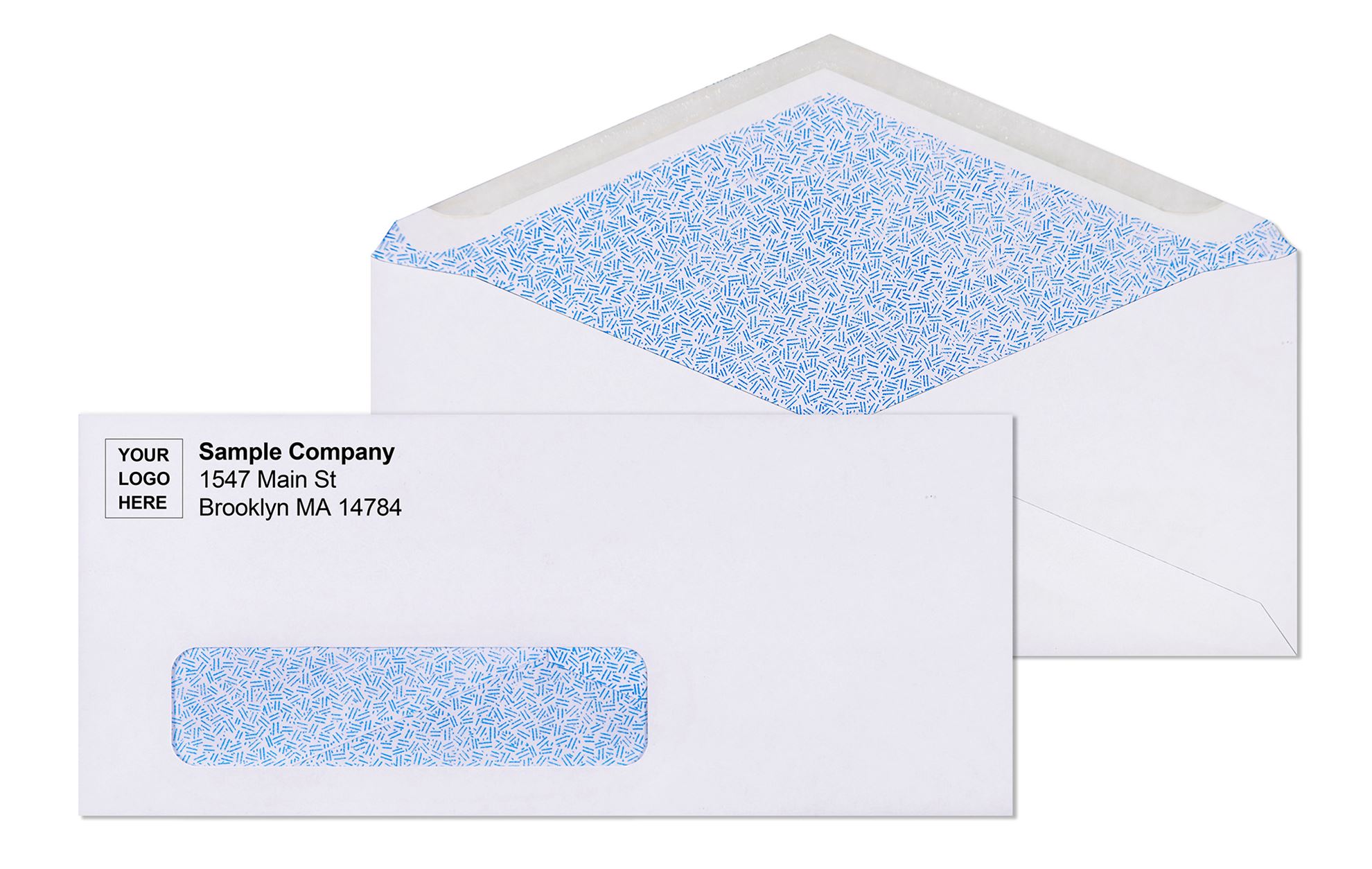
A business reply envelope is a pre-addressed return envelope enclosed in outgoing correspondence so the recipient can respond without providing their own envelope, address, or in the case of Business Reply Mail, their own postage. The phrase covers two distinct USPS programs: Business Reply Mail (BRM), where the sender pays postage only on pieces returned, and Courtesy Reply Mail (CRM), where the recipient affixes their own stamp. Both use the same envelope size. The difference is in the face layout, the postage arrangement, and whether a USPS permit is required.
This guide covers the business reply envelope size standard, USPS BRE specifications, and the difference between BRM and CRM. It also explains how to set up each type of program, which #9 envelope format to order, and how custom printing fits into a return mail program. Business Envelopes has supplied #9 business reply envelopes to billing departments, nonprofits, law firms, and membership organizations across the United States since 1997.
Business Reply Envelope Size: The #9 Standard
The business reply envelope size used in virtually all US commercial return mail programs is the #9. The #9 envelope measures 3-7/8 inches tall by 8-7/8 inches wide, with an interior clearance of approximately 3-5/8 x 8-5/8 inches. This size is the industry standard for one specific reason: it fits inside a #10 outgoing envelope with approximately 1/4 inch of clearance on each side.
That nesting fit is the entire operational basis of business reply mail. The #10 outgoing envelope carries the invoice, statement, or solicitation letter. The unsealed #9 is enclosed inside. The recipient removes the #9, inserts their payment, signature, or response form, and returns it. No separate envelope needed. No address lookup. No label. Just a pre-fitted return piece that eliminates every barrier between receiving the outgoing mail and completing the response.
| Specification | Detail |
|---|---|
| Standard size | #9 envelope: 3-7/8 x 8-7/8 inches |
| Interior clearance | Approximately 3-5/8 x 8-5/8 inches |
| Nests inside | #10 envelope with 1/4 inch clearance on each side |
| USPS classification | First-Class letter rate |
| 2026 return postage (CRM) | $0.82 per ounce (recipient affixes stamp) |
| 2026 return postage (BRM) | $0.82 + per-piece permit fee (sender pays on pieces returned) |
| USPS size limits (BRM) | Minimum 3-1/2 x 5 inches, maximum 6-1/8 x 11-1/2 inches |
| Paper stock | 24 lb white wove; security-tinted interior available |
| Common closures | Gum flap (moistenable), peel-and-seal |
The #9 fits within USPS letter-rate dimensional limits on all sides and qualifies for automation pricing when the face is formatted to current USPS specifications. For the complete #9 range including all variants, see #9 envelopes.
Business Reply Mail vs Courtesy Reply Mail: Which Program Is Right for Your Operation
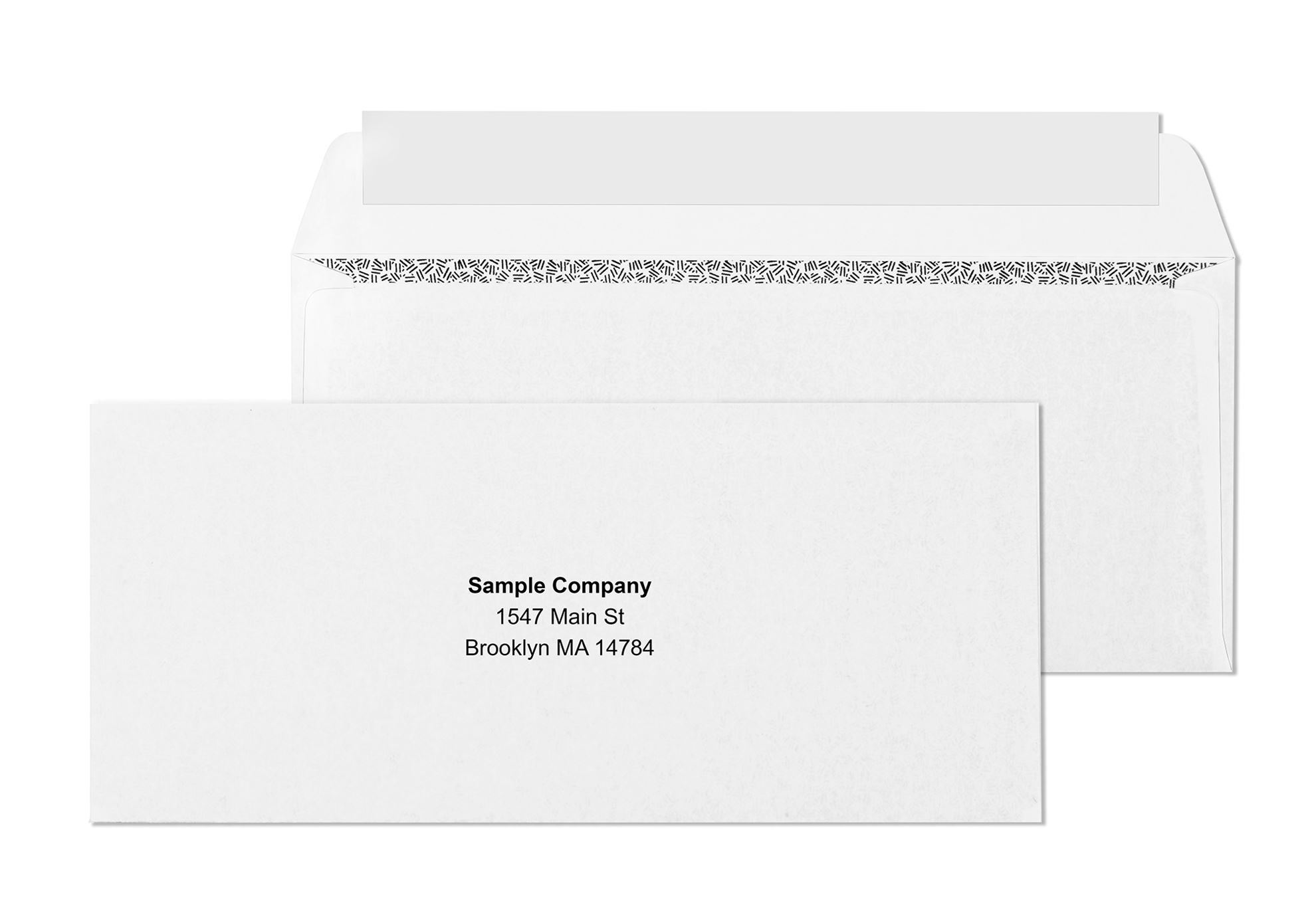
The term "business reply envelope" is used colloquially for both BRM and CRM programs. Operationally they are different. Understanding the distinction before printing envelopes is important because a BRM envelope cannot be used as a CRM envelope and vice versa , the face layouts, USPS compliance requirements, and postage arrangements are completely different.
Courtesy Reply Mail (CRM)
Courtesy Reply Mail is a pre-printed, pre-addressed #9 envelope enclosed in outgoing mail. The recipient affixes their own postage before mailing it back. The organization bears the printing cost but not the return postage. CRM is the standard format for billing reply envelopes, donation response pieces, membership renewal packets, and any program where the response rate is predictable and the per-piece stamp cost is manageable.
CRM requires no USPS permit. The face carries the organization's return address printed in the standard upper-left position. The envelope can be plain white wove or security-tinted, with a gum flap or peel-and-seal closure. No special barcode or permit imprint is required. The face is functionally similar to any other return address envelope, but formatted and distributed specifically as an enclosed return piece.
Business Reply Mail (BRM)
Business Reply Mail is a USPS-permitted program where the organization pays postage only on reply envelopes actually returned. The organization obtains a USPS BRM permit, a unique ZIP+4 code assigned by USPS for each mail category, and must format the envelope face to USPS BRM specifications before distribution. USPS must approve a proof before printing.
The BRM envelope face carries specific required elements: the permit number, the Facing Identification Mark (FIM C pattern), the organization's address, and the USPS-assigned ZIP+4. These elements must be positioned and sized to USPS standards. The USPS Automated Business Reply Mail (ABRM) tool at the Business Customer Gateway generates approved artwork that meets all specification requirements.
| Factor | Courtesy Reply Mail (CRM) | Business Reply Mail (BRM) |
|---|---|---|
| Who pays return postage | Recipient (affixes own stamp) | Sender (pays per piece returned) |
| USPS permit required | No | Yes , PS Form 3615 at receiving Post Office |
| Annual permit fee | None | Yes , paid annually |
| Advance deposit account | Not required | Required to cover per-piece charges |
| Face layout | Standard return address in upper left | Specific BRM layout with FIM, permit number, ZIP+4 |
| USPS proof approval | Not required | Required before printing |
| Window envelope permitted | Yes | No , windowless envelopes only for BRM labels |
| Best for | Billing, donations, membership , consistent return rates | Programs with low expected return rates and high outgoing volumes |
How to Set Up a Business Reply Mail Program
Setting up a Business Reply Mail program involves a sequence of USPS steps before any envelopes are printed. The setup happens at the Post Office where returned mail will be received, not the Post Office closest to the organization's physical location.
- File PS Form 3615 at the receiving Post Office. This is the permit application for Business Reply Mail. The annual permit fee is assessed at filing and renewed annually. The Post Office assigns a BRM permit number.
- Obtain a USPS ZIP+4 code. USPS assigns a unique ZIP+4 for each category of BRM (card-size vs letter-size). This ZIP+4 is specific to your BRM account and must appear on every piece.
- Open an advance deposit account. BRM return postage and per-piece fees are charged against a prepaid advance deposit account maintained at the Post Office. The account must have sufficient funds to cover returned pieces.
- Design the envelope face using the ABRM tool. The USPS Automated Business Reply Mail application at the Business Customer Gateway generates USPS-approved artwork for BRM pieces. The tool produces artwork files in PDF and EPS formats that meet all FIM, barcode, and layout specifications.
- Submit proof for USPS approval. Before printing any envelopes, USPS must approve the face artwork. For regular BRM, a proof must be approved before distribution. For Qualified Business Reply Mail (QBRM), an Intelligent Mail barcode (IMb) is required and must be included in the proof.
- Order and print envelopes. After USPS approves the artwork, envelopes are ordered and custom-printed with the approved face design. The #9 is the standard size for letter-size BRM pieces.
Choosing the Right #9 Business Reply Envelope Format
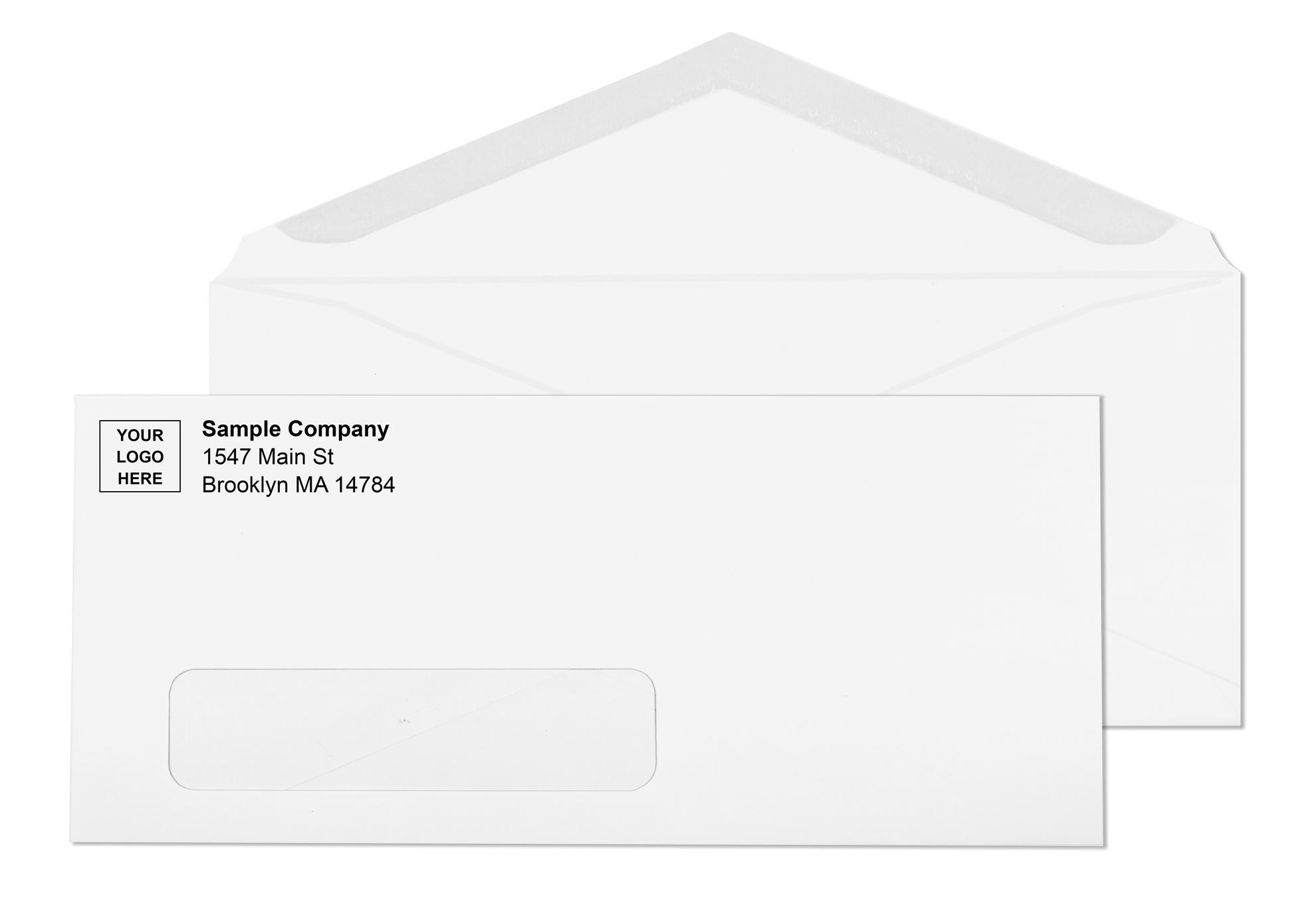
The #9 envelope for business reply programs comes in several formats. Choosing correctly depends on whether the program is BRM or CRM, whether the return contents are sensitive, and how the recipient will seal the envelope.
Plain white wove #9, gum flap
The baseline format for CRM programs where the contents are non-sensitive correspondence. The gum flap requires the recipient to moisten the adhesive before sealing. For programs where recipients are motivated to respond and the contents do not carry private data, plain white wove gum flap is the most economical option. Available blank or with custom return address and logo printing.
Security-tinted #9, gum flap
The interior is printed with a reflex pattern that blocks document contents from showing through the paper when held to light. For programs where the return envelope will carry payment information, account numbers, personal data, or any confidential content, security tinting is the professional standard. This is the most widely ordered #9 format for billing, healthcare, and financial services return programs.
★★★★★
"I use these #9 envelopes as return envelopes, which I insert into the #10s. Thanks to their security tint, I can rest assured that the information inside will not be publicly exposed."
Chris Bellhorn | Verified buyer, #9 Security Tinted Window Envelopes Gum Flap Reply Return
Source: businessenvelopes.com product reviews
Security-tinted #9, peel-and-seal
Same security-tinted interior with a pressure-sensitive peel-and-seal closure. No moisture needed , the recipient peels the liner and presses the flap. For return programs where the recipient seals the envelope, peel-and-seal is more reliable than gum flap because the adhesive bond is consistent regardless of how much effort the recipient puts into moistening. This is the recommended format when the enclosed return envelope will be sealed by someone outside the organization.
Window #9 for CRM programs
A window format is available on the #9 for CRM programs. The window displays a return address from the enclosed reply card or form, eliminating the need to print the return address separately on the envelope face. Note that window formats are NOT compatible with Business Reply Mail label applications. Window #9 envelopes are appropriate for CRM programs only.