 FREE Shipping

Church Offering Envelopes: Sizes, Printing and What to Include
Last updated: November 19, 2026
Church offering envelopes look simple, but the wrong choice causes real problems on Monday morning. Envelopes that are too small force members to fold checks. Missing name lines leave the counting team guessing who gave what. Unclear fund lines mean a building fund gift lands in the general offering.
This guide covers what church offering envelopes are, which sizes work and what to print on them. It also compares offering and remittance envelopes and explains how to order custom printed envelopes for your congregation.
Key Observations
Church offering envelopes are small envelopes members use to give tithes and offerings, with lines for their name, the amount and the fund they are giving to. The #6 3/4 envelope, 3 5/8 x 6 1/2 inches, is a practical size because it holds cash and a personal check. Churches can use a plain #6 3/4 printed with a giving form, or a #6 3/4 remittance envelope with a large printable flap.
- Size matters for checks: a #6 3/4 envelope takes an insert of about 3 3/8 x 6 1/4 inches, enough for folded bills and a personal check.
- Records are the main reason to use envelopes: a name or envelope number on every gift lets the church record giving and send accurate giving statements.
- Fund lines prevent misallocated gifts: separate lines for tithe, offering, missions and building fund show where each gift should go.
- Remittance envelopes suit pledges and mailed gifts: their large flap holds a full giving form and can be mailed back to the church.
- Custom printing keeps the layout consistent: print your church name, fund lines and contact details once, then reorder the same design.
- Buyers search by envelope type: on our store, "remittance envelopes" has been searched 124 times, plus searches for "offering", "tithe" and "donation".
| Envelope | How it works | Best for |
|---|---|---|
| #6 3/4 printed offering envelope | Giving form printed on the front, gift sealed inside | Weekly tithes and offerings in the plate |
| #6 3/4 remittance envelope | Giving form printed on a large flap that closes over the gift | Pledges, special appeals and gifts mailed back |
| #6 3/4 colored envelope | Same size, different paper color | Special collections that should stand out from weekly giving |
| #9 reply envelope | Return envelope enclosed in a #10 mailing | Year-end appeals and mailed giving |
Ready to order? Browse #6 3/4 envelopes for offering envelopes, or request a quote for custom printed envelopes with your church name and giving form.
What is in this guide
- What are church offering envelopes?
- Why do churches use offering envelopes?
- What size are church offering envelopes?
- What should you print on an offering envelope?
- Offering envelopes vs remittance envelopes: which should your church use?
- How many offering envelopes does a church need?
- What do churches search for when buying offering envelopes?
- How do you order custom printed offering envelopes?
- How should a church handle offering envelopes after the service?
- Why churches choose Business Envelopes
What Are Church Offering Envelopes?
Church offering envelopes, also called tithe envelopes or giving envelopes, are small envelopes that members fill in and drop into the offering plate with their gift. The front carries lines for the giver's name or envelope number, the date, the amount and the fund. The cash or check goes inside, and the counting team records the details after the service.
Offering envelopes do two jobs at once. They protect the gift, and they turn each gift into a record the church can use. Without a name or number on the envelope, a cash gift is anonymous and cannot appear on the giver's year-end statement.
- Tithe envelopes: used for regular giving, often weekly or monthly.
- Special offering envelopes: used for missions, building funds, holidays or one-time needs.
- Pledge envelopes: used to record a promised amount over a set period.
- Visitor or pew envelopes: kept in the pew racks for guests who want to give.
Why Do Churches Use Offering Envelopes?
Churches use offering envelopes mainly for accurate giving records. When every gift carries a name or envelope number, the treasurer can post it to the right person and the right fund. That makes year-end giving statements possible. IRS Publication 1771 explains when a church must give donors a written acknowledgment of their contributions, and those acknowledgments depend on good records.
Envelopes also add privacy and order to the offering. Members can give cash discreetly, and the counting team works from a consistent form instead of loose bills and notes.
- Accurate records: every gift is tied to a giver and a fund.
- Clear designation: fund lines show whether a gift is for the general budget, missions or a building project.
- Privacy: the gift is sealed, so neighbors in the pew do not see the amount.
- Faster counting: a standard layout lets volunteers read and record each envelope the same way.
What Size Are Church Offering Envelopes?
The #6 3/4 envelope, 3 5/8 x 6 1/2 inches, is a common size for church offering envelopes. It takes an insert of about 3 3/8 x 6 1/4 inches, so it holds folded bills and a personal check. It also fits easily in a pew rack or offering plate. Some churches also use a slightly smaller pew envelope, but #6 3/4 is the size we carry for offering and remittance envelopes.
| Envelope | Size (inches) | Church use |
|---|---|---|
| #6 3/4 regular | 3 5/8 x 6 1/2 | Weekly offering and tithe envelopes |
| #6 3/4 remittance | 3 5/8 x 6 1/2 | Pledges and appeals with a full giving form on the flap |
| #9 reply | 3 7/8 x 8 7/8 | Return envelope for mailed gifts |
| #10 regular or window | 4 1/8 x 9 1/2 | Mailing giving statements and appeal letters |
Our #6 3/4 envelope guide covers this size in more detail, including window and security tinted versions.

What Should You Print on an Offering Envelope?
An offering envelope should carry your church name, lines for the giver's name or envelope number, the date, the amount, and a line for each fund you collect for. Keep the layout simple enough to complete with a pen in the pew, and put the fields in the order your counting team records them.
- Church name and logo: at the top, so envelopes are never confused with another organization's.
- Name or envelope number: the line that ties the gift to a giver's record.
- Date: so gifts post to the right week and year.
- Fund lines: for example tithe, offering, missions and building fund, each with its own amount box.
- Total: a separate total line makes counting faster and catches errors.
- Cash or check boxes: optional, but useful when reconciling the deposit.
- A short message: a verse or thank you, kept small so it does not crowd the form.
What should a member write on a tithe envelope?
A member should write their name or envelope number, the date, the amount for each fund, and the total. If they give by check, the check should match the total written on the envelope. Clear handwriting in the name line matters most, since that is how the gift reaches their giving record.
Should offering envelopes be numbered?
Numbering helps when members want privacy or when names are hard to read. Each household gets a number, and the treasurer matches numbers to names in the giving records. If you number envelopes, keep a secure list that matches each number to a household.
Offering Envelopes vs Remittance Envelopes: Which Should Your Church Use?
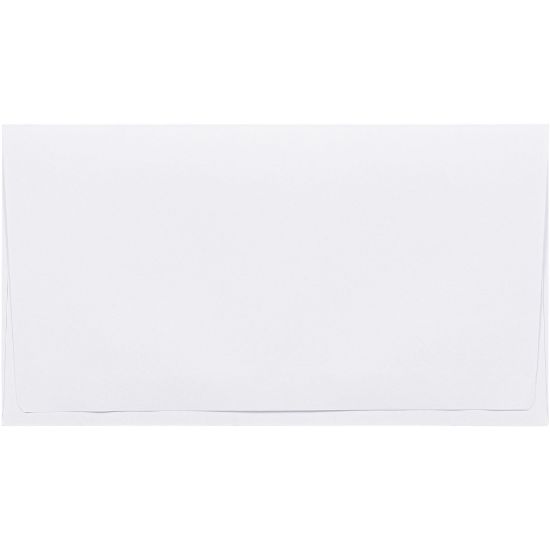
Use a printed offering envelope for weekly giving in the plate, and a remittance envelope when you need a longer giving form or want members to mail gifts back. A remittance envelope has a large back flap with a printable surface, so the full form sits on the flap and closes over the gift. According to our remittance envelope guide, that flap can carry the church name, the giving purpose and a pledge amount table.
| Feature | Printed offering envelope | Remittance envelope |
|---|---|---|
| Where the form goes | Front of the envelope | Large back flap |
| Space for fields | A few short lines | A full form with pledge amounts |
| Privacy of details | Visible on the front | Covered when the flap is sealed |
| Mailing back | Usually hand delivered | Can be addressed and mailed to the church |
| Best for | Weekly tithes and offerings | Pledge drives, building funds, annual appeals |
Many churches use both: printed #6 3/4 envelopes in the pews each week, and remittance envelopes for pledge season or a building campaign. Our remittance envelope guide explains flap layouts in detail.
How Many Offering Envelopes Does a Church Need?
A church needs enough offering envelopes for every giving household for each service in the ordering period, plus extras for visitors and special collections. A simple way to estimate is to multiply giving households by the number of weeks you want to cover, then add a buffer for pew racks.
For example, a church with 120 giving households ordering for 13 weeks needs 1,560 weekly envelopes before extras. That is a worked calculation, not a rule, so adjust it for how many members give by envelope and how many give online. Business Envelopes has no minimum order, and the custom printing quote form covers quantities from 250 to 10,000 envelopes.
- Weekly envelopes: giving households multiplied by the weeks you want to cover.
- Pew and visitor envelopes: enough to refill pew racks between orders.
- Special collections: a separate run for each appeal, often in a different color.

What Do Churches Search for When Buying Offering Envelopes?
Churches and nonprofits usually search by envelope type rather than by the word "church". Our store's site search report, as of November 2026, shows that pattern clearly. "Remittance envelopes" leads with 124 searches, while "offering" and "tithe" appear far less often.
| Search term | Searches |
|---|---|
| remittance envelopes | 124 |
| remittance | 76 |
| offering | 17 |
| #6 3/4 | 16 |
| tithe | 6 |
| donation | 6 |
The takeaway for church buyers is practical. If a store has no "offering envelope" category, search for #6 3/4 or remittance envelopes instead. Those are the formats most church giving forms are printed on.
How Do You Order Custom Printed Offering Envelopes?
To order custom printed offering envelopes, choose the envelope, prepare your layout, approve a proof, and allow time for printing and delivery. At Business Envelopes, every custom printed order gets a PDF proof before anything prints, and printed orders ship in 7 to 10 business days from proof approval.
- Choose the envelope: a #6 3/4 regular envelope for weekly giving, or a #6 3/4 remittance envelope for pledges.
- Draft the layout: church name, giver lines, date, fund lines and total.
- Send your artwork or details: use the quote form to share quantity and printing needs.
- Review the proof: check spelling, fund names and line spacing with a pen test.
- Approve and receive: printing starts after approval, and artwork stays on file for reorders.
Order before you need the envelopes, especially ahead of the new year, Easter or a pledge campaign. You can browse all custom printed envelopes by size.
How Should a Church Handle Offering Envelopes After the Service?
A church should count offering envelopes with at least two people present, record each envelope before the cash and checks are separated, and store the envelopes securely. Many churches follow this practice because it protects both the gifts and the volunteers who count them. IRS Publication 1771 is a useful reference for the records a church keeps to acknowledge contributions.
- Count in pairs: two unrelated people count and sign the tally together.
- Record before separating: log name, number, fund and amount from each envelope first.
- Match checks to envelopes: the check amount should match the total written on the envelope.
- Store securely: keep envelopes with the deposit records for as long as your church's record policy requires.
How long to keep offering envelopes depends on your church's record retention policy. Ask your accountant or denomination for the period that applies to you. Our guide to envelopes for nonprofits covers the other envelopes a church office uses through the year.
Why Churches Choose Business Envelopes
The sizes church giving uses. #6 3/4 regular, colored and remittance envelopes for giving, #9 reply envelopes for mailed gifts, and #10 envelopes for giving statements.
Custom printing with a proof. Every printed order gets a PDF proof first, and your artwork stays on file so each reorder matches.
No minimum order. Order a small run for a special collection or a larger run for the year, and mix envelope types in one order.
Free ground shipping. Ground shipping is free on every order within the contiguous US, with a few regions excluded at checkout.
Supplying churches since 1997. Business Envelopes has supplied envelope stock to US businesses, nonprofits and churches since 1997.
Planning envelopes for the new year? Call 845-781-7678, email sales@businessenvelopes.com or contact our team.