 FREE Shipping

How to Mail a Check Safely: Steps, Envelopes and Tips
Last updated: November 10, 2026
Mailing a check still gets rent paid, vendors settled and payroll delivered for millions of businesses and households. The problem is that a paper check carries your name, your bank's routing number, your account number and your signature, which makes it a target once it leaves your hands.
This guide shows you how to mail a check the safe way: how to fill it out, which envelope to use, where to drop it off, which USPS service to pick for important payments, and what to do if a check goes missing. It also covers how businesses that mail checks in batches can cut their risk.
Quick Summary
To mail a check safely, fill it out completely in permanent dark ink, sign it, put it in a security tinted envelope that hides the contents, address the envelope clearly with a return address, add First-Class postage and hand it in at the Post Office or drop it in a collection box before the last pickup. For high-value or deadline payments, add Certified Mail so you get proof of mailing and delivery.
- Fill out every line: date, payee, amount in numbers and words, and draw a line through any blank space so nothing can be added.
- Use permanent ink: indelible black gel ink is harder to wash off than ordinary ballpoint ink.
- Hide the check: a security tinted envelope blocks anyone from reading the check through the paper.
- Mail it from a secure spot: the letter slot inside the Post Office is safer than a home mailbox with the flag up.
- Track important payments: Certified Mail gives you a mailing receipt and a delivery record.
- Follow up: ask the payee to confirm receipt and watch your account until the check clears.
| Decision | Safest choice | Why it helps |
|---|---|---|
| Pen | Permanent black gel ink | Resists chemical washing better than standard ink |
| Envelope | Security tinted #10 or double window check envelope | Hides the check and keeps account numbers out of sight |
| Drop-off point | Inside the Post Office | Mail goes straight into USPS custody |
| Mail service | First-Class Mail, plus Certified Mail for important payments | Certified Mail adds proof of mailing and delivery |
| After mailing | Confirm receipt and watch your account | You catch a stolen or altered check early |
Mailing checks every week? Shop security check envelopes with free ground shipping and no minimum order, or request a quote for custom printed envelopes.
What is in this guide
- How do you mail a check, step by step?
- How should you fill out a check before you mail it?
- What kind of envelope should you use to mail a check?
- Should you fold a check to mail it?
- Where is the safest place to drop off a check?
- Which USPS service should you use for an important check?
- Is it safe to mail a check today?
- What is check washing and how do you prevent it?
- What should you do if a mailed check is lost or stolen?
- How can businesses mail checks in bulk more securely?
- Why businesses choose Business Envelopes for check mailing
How Do You Mail a Check, Step by Step?
Mailing a check takes seven steps: fill out the check, record it, conceal it, choose the right envelope, address it, add postage and drop it off somewhere secure. Each step closes a gap that a thief or a simple mistake could use.
- Fill out the check completely: write the date, the payee's full legal name, the amount in numbers and words, and a memo such as an invoice or account number.
- Record the payment: note the check number, payee, amount and date in your register or accounting software.
- Conceal the check: fold it inside a letter, invoice stub or remittance slip so it cannot be seen through the envelope.
- Pick a security envelope: a security tinted #10 envelope works for most checks, and double window envelopes suit printed business checks.
- Address it clearly: print the recipient address and your full return address so the check can come back to you if it cannot be delivered.
- Add First-Class postage: a standard check in a #10 envelope usually mails as a regular one-ounce letter.
- Mail it from a secure location: use the Post Office lobby slot or the counter, and add Certified Mail if you need proof.
The rest of this guide explains the details behind each step, starting with the check itself.
How Should You Fill Out a Check Before You Mail It?
A check you mail should be filled out completely, in permanent ink, with no empty space left on the payee or amount lines. Thieves look for checks they can change, so the goal is to leave nothing to alter and nothing extra to steal.
Which pen should you use?
Use an indelible black gel pen. Gel ink soaks into the paper fibers, which makes it harder to remove with the chemicals used in check washing. Ordinary ballpoint ink sits more on the surface and can lift more easily.
Keep in mind that gel ink only protects against washing. It does not stop a criminal from copying your routing and account numbers to print fake checks, which is why the envelope and the drop-off point matter just as much.
What should you leave off the check?
Leave personal details off the check entirely. Do not write your Social Security number, driver's license number or phone number on it. If the payee needs an account or invoice number, put it on the memo line or on the remittance slip instead.
How do you stop someone from changing the amount?
- Start at the far left: begin the payee name and written amount right against the left edge of each line.
- Fill the gaps: draw a straight line from the end of your writing to the end of the line.
- Match both amounts: make sure the numeric box and the written amount agree exactly.
- Use the full legal name: write "ABC Supply Company Inc." rather than "ABC," which is easier to extend.
What Kind of Envelope Should You Use to Mail a Check?
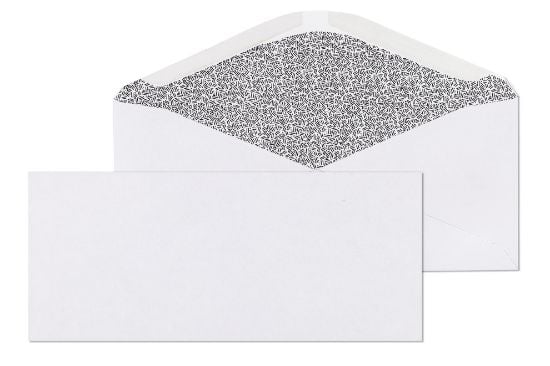
The best envelope for mailing a check is a security tinted envelope sized to the check and its paperwork. A security tint is a printed pattern on the inside of the envelope that blocks light, so nobody can read the check, the amount or the account numbers by holding the envelope up to a window.
A plain white envelope can work in a pinch, but thin paper often shows the check right through it. That is exactly the information a thief wants.
| How you mail checks | Envelope to use | Why |
|---|---|---|
| A personal or one-off business check with a letter | #10 security tinted envelope | Standard business size with a pattern that hides the contents |
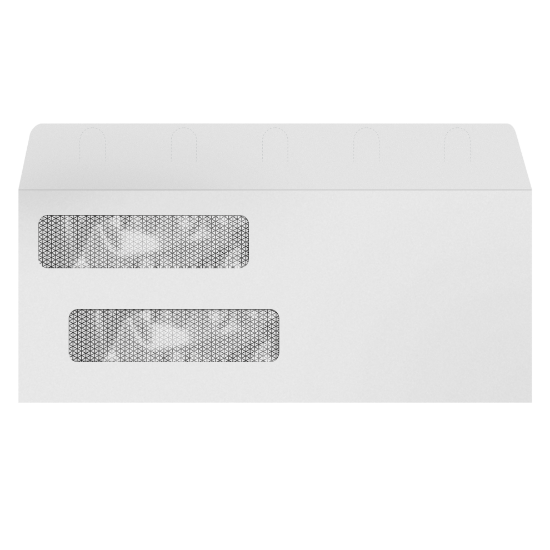
| Printed checks from QuickBooks, Quicken or Sage | Double window security check envelope | The payee address and your return address show through the windows, so no hand addressing |
| Checks your customers send back to you | #9 security tinted reply envelope | Fits inside a #10 envelope and keeps returned payments private |
| A check with a thick contract or several pages | 9x12 or 10x13 catalog envelope | Lets documents travel flat without bulging |
Security tinted vs plain envelopes: is the tint worth it?
Security tint is worth it for anything that contains a check, a bank statement or payroll information. The pattern costs nothing extra in effort and removes the easiest way to spot a valuable envelope. Our security tinted envelopes guide explains how the different tint patterns work.
#9 vs #10 vs double window: which size fits your checks?
A #10 envelope measures 4-1/8 x 9-1/2 inches and fits a check folded inside a standard letter. A #9 envelope is slightly smaller at 3-7/8 x 8-7/8 inches, which is why businesses include it as a return envelope inside a #10 mailing.
If you print checks from accounting software, a double window envelope saves the most time. The check layout lines up both addresses with the windows, so you fold, insert and seal. See our guide to envelopes for QuickBooks checks for the alignment details.
Self-seal or gummed flap: which closure is better for checks?
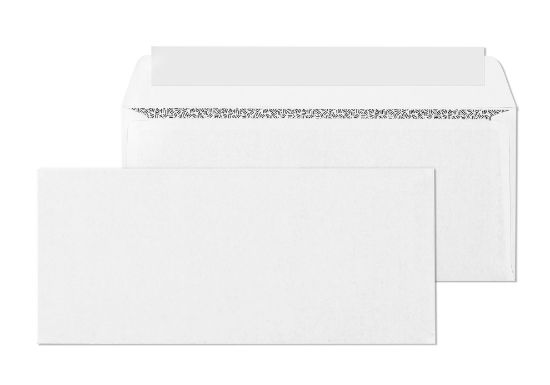
Both closures seal securely. A self-seal or peel and seal flap gives a firm bond the moment you press it, with no moistening, which suits people sealing a handful of checks at a desk. A gummed flap is the traditional choice for mailing machines that moisten flaps automatically.
Should You Fold a Check to Mail It?
Yes, you can fold a check to mail it. Folding a check in thirds with a letter, or folding the letter around the check, is normal and does not make the check invalid. What matters is that the check stays readable and is hidden from view.
- Fold it with paperwork: wrap the check inside a letter or remittance slip so it does not slide around.
- Keep folds clean: one or two crisp folds are better than crumpling a check into a small envelope.
- Protect the bottom line: try to keep folds away from the row of numbers along the bottom of the check, which banks read by machine.
- Do not tape or staple the check: tape and staple holes can damage the check and make processing harder.
If your check comes from a double window layout, fold along the perforations so the addresses land in the windows. Our window envelope alignment guide shows how to test the fold before a batch run.
Where Is the Safest Place to Drop Off a Check?
The safest place to mail a check is inside the Post Office, either at the counter or through the lobby letter slot. The U.S. Postal Inspection Service recommends mailing at the Post Office or putting mail in a blue collection box before the last pickup time, so it does not sit overnight.
| Drop-off point | Risk level | Tip |
|---|---|---|
| Post Office counter | Lowest | Required if you want a postmarked Certified Mail receipt |
| Letter slot inside the Post Office | Low | Mail goes straight into USPS custody |
| Blue collection box, before the last pickup | Moderate | Check the posted pickup time and never mail after it |
| Office mailroom pickup | Moderate | Keep outgoing checks in a locked tray until the carrier arrives |
| Home mailbox with the flag up | Highest | The raised flag signals outgoing mail, so avoid it for checks |
Are blue collection boxes safe for checks?
Blue collection boxes are reasonably safe when you mail before the last pickup of the day. USPS has also been installing high-security collection boxes across the country. Mail left in a box overnight gives thieves more time, so the timing matters more than the box itself.
What about a home mailbox?
A curbside or residential mailbox is the easiest target for mail theft, especially with the flag raised. If you have no other option, put the check out right before your carrier arrives, and sign up for Informed Delivery so you can watch for mail you expect.
Which USPS Service Should You Use for an Important Check?
For most checks, regular First-Class Mail is fine. For a large payment, a legal deadline or a payment you may need to prove later, add Certified Mail. Certified Mail gives you a mailing receipt, a tracking number and a record of delivery, and it travels at the same speed as First-Class Mail.
| Service | What you get | Best for |
|---|---|---|
| First-Class Mail | Standard delivery, usually within 1 to 5 days, no tracking | Routine bills and small payments |
| Certified Mail | Mailing receipt, tracking and delivery record, with optional return receipt | Rent, tax payments, legal settlements and deadline payments |
| Registered Mail | The highest security USPS offers, handed to a postal employee | Very high-value checks |
| Priority Mail | Faster delivery with tracking included | Payments that need to arrive quickly |
Our guide to mailing letters compares First-Class Mail and Certified Mail in more detail.
Is It Safe to Mail a Check Today?
Mailing a check is still safe enough for most payments when you use a security envelope, permanent ink and a secure drop-off point. The risk has grown, though. A Financial Crimes Enforcement Network alert reported that suspicious activity reports tied to check fraud rose from more than 350,000 in 2021 to more than 680,000 in 2022, with mail theft a major driver.
The practical takeaway is simple: the habits in this guide matter more than they did a few years ago. A check that is hidden, written in permanent ink and handed straight to USPS is a much harder target than one in a thin envelope sitting in a mailbox overnight.
When is a mailed check still the right choice?
- The payee requires it: many landlords, government offices and smaller vendors still ask for paper checks.
- You need a paper trail: a canceled check plus a Certified Mail receipt is strong proof of payment.
- You pay through accounts payable: many businesses run weekly check batches from their accounting software.
What Is Check Washing and How Do You Prevent It?
Check washing is a type of fraud in which a criminal steals a check, uses chemicals to remove the ink, and rewrites the payee name and often the amount. The U.S. Postal Inspection Service also warns that some fraudsters copy or scan stolen checks to print counterfeits using the account details.
How do you protect a check from washing?
- Write in permanent black gel ink so the writing is harder to dissolve.
- Leave no blank space on the payee or amount lines.
- Use a security tinted envelope so nobody can spot a check inside.
- Mail it inside the Post Office or before the last collection box pickup.
- Review cleared checks in online banking and compare the payee and amount to your records.
What are the warning signs that a check was washed?
Watch for a check that clears for a different amount, a payee name you do not recognize, or a check number that clears out of order. A vendor saying they never received your payment is another early warning. Ask your bank for an image of the cleared check whenever something looks off.
What Should You Do If a Mailed Check Is Lost or Stolen?
If a check you mailed is lost or stolen, contact your bank right away and ask for a stop payment, then report the theft to the U.S. Postal Inspection Service. Acting quickly gives you the best chance of stopping the check before it is cashed.
- Call your bank: ask whether the check has cleared and place a stop payment if it has not. Banks may charge a fee.
- Put the stop payment in writing: a written stop payment order generally lasts six months under most state laws, while a verbal one may expire sooner.
- Get copies if it cleared: request front and back images of any altered check.
- Report it: file a report with the U.S. Postal Inspection Service at 1-877-876-2455 and with your local police.
- Have the details ready: the mailing date, where you mailed it, the mail class and the payee.
- Consider closing the account: if your account details were exposed, ask your bank about opening a new account.
Once the stop payment is in place, send a replacement check using the precautions above, and consider Certified Mail for the second attempt.
How Can Businesses Mail Checks in Bulk More Securely?
Businesses that mail checks in batches can reduce risk by combining secure envelopes, consistent processes and bank tools. A weekly accounts payable run puts dozens of checks in the mail at once, so a small weakness repeats across every payment.
- Use positive pay: this bank service compares each check presented against the list of checks you issued and flags mismatches.
- Standardize on security envelopes: double window security envelopes keep every check hidden and every address aligned.
- Lock up outgoing mail: keep sealed check envelopes in a locked tray or hand them straight to the carrier.
- Separate duties: the person who prints checks should not be the only one who reconciles the account.
- Include a remittance stub: it tells the payee what the check covers and doubles as a concealing layer.
If you send invoices that customers pay by check, enclose a remittance envelope so payments come back in a secure, correctly addressed envelope. For a full overview of the styles that suit payment mail, see our check envelopes guide.
Why Businesses Choose Business Envelopes for Check Mailing
Security tint built in. Our security tinted #9 and #10 envelopes hide checks, statements and payroll details from view.
Made for accounting software checks. Our double window envelopes are designed for QuickBooks, Quicken and Sage check layouts, with gummed or flip and stick closures.
Your logo on every envelope. Most styles can be custom printed with your business name and return address.
Free ground shipping, no minimum. Ground shipping is free site wide with no minimum order, with a few regions excluded at checkout.
Questions about the right check envelope? Call 845-781-7678, email sales@businessenvelopes.com or contact our team.