

Quick answer: In 2026, USPS First-Class metered mail costs $0.78 per ounce versus $0.82 for a Forever Stamp , a 4-cent difference per piece. At 500 letters per month, that saves $240 per year on postage before meter lease costs. Stamps win at low volume. Metered mail wins at high volume. Online postage platforms offer a middle path with no hardware. The right answer also depends on your envelope type , gummed flap envelopes work with meter sealers; peel-and-seal envelopes do not. This guide covers both the financial decision and the envelope compatibility side that most postage guides never explain.
Every business that mails regularly faces the same question eventually: is it worth switching from stamps to metered mail? The postage cost difference is real but modest per piece. The labor savings can be significant at volume. The equipment costs add a layer of complexity. The envelope side of the equation matters too: which formats work with a postage meter, which require a different approach, and how to set up your mailing program correctly from the envelope outward.
This guide covers the 2026 cost comparison, the break-even calculation, the three postage options available to US businesses, and the envelope compatibility factors that determine whether a meter setup actually delivers the efficiency it promises. For a complete guide to USPS stamp types and purchasing options, see USPS Postage Stamps: Complete Buying Guide for 2026.
What Is Metered Mail and How Does It Differ from Stamped Mail?
Stamped mail is the traditional method: you buy adhesive stamps and apply them by hand to each envelope. The stamp amount is fixed, which means a single Forever Stamp covers a one-ounce First-Class letter regardless of whether the piece weighs 0.4 ounces or a full ounce. For pieces under the letter-rate maximum, you pay the same stamp amount either way. For pieces over one ounce, you apply additional postage on top.
Metered mail replaces the stamp with a printed mark called an indicia. A postage meter or online postage platform calculates the exact postage for each piece based on its weight and mail class, then prints the indicia in the upper-right corner of the envelope. The indicia includes the date, the postage amount, a unique identifier, and a machine-readable barcode. USPS requires that all postage meters use Intelligent Mail Indicia (IMI) technology, which provides the digital audit trail USPS automation expects.
The practical difference is precision plus a discount. Metered mail pays the exact postage for each piece rather than a rounded-up stamp denomination, and USPS grants a small rate discount for metered First-Class Mail compared to retail stamps.
Metered Mail vs Stamps: 2026 Cost Comparison
The rate difference between metered mail and stamps in 2026 is small per piece but real. Here is the full comparison for First-Class Mail letter rates effective July 12, 2026.
| Weight | Stamp Rate | Metered Rate | Savings per Piece |
|---|---|---|---|
| Up to 1 oz | $0.82 | $0.78 | $0.04 |
| Up to 2 oz | $1.11 | $1.07 | $0.04 |
| Up to 3 oz | $1.40 | $1.36 | $0.04 |
| Up to 3.5 oz | $1.69 | $1.65 | $0.04 |
Source: USPS Notice 123, effective July 12, 2026. Rates subject to change.
The 4-cent per piece saving is consistent across letter weights. Priority Mail and flat-rate products show larger percentage savings for metered mail, but First-Class letters are where most business envelope programs operate.
Monthly savings by volume
| Monthly Mail Volume | Annual Stamp Cost | Annual Metered Cost (postage only) | Annual Postage Savings |
|---|---|---|---|
| 100 letters/month | $93.60 | $88.80 | $4.80 |
| 250 letters/month | $234.00 | $222.00 | $12.00 |
| 500 letters/month | $468.00 | $444.00 | $24.00 |
| 1,000 letters/month | $936.00 | $888.00 | $48.00 |
| 2,500 letters/month | $2,340.00 | $2,220.00 | $120.00 |
The Break-Even Calculation: When Metered Mail Makes Financial Sense
Break-even formula
Monthly volume needed to break even on postage savings alone:
Monthly meter cost ($) divided by per-piece savings ($0.04) = break-even letter count
Example: $30 monthly lease cost divided by $0.04 = 750 letters per month to break even on postage savings alone.
At 750 letters per month, postage savings exactly offset the meter lease. Above 750, each additional letter generates net savings. Below 750, stamps cost less in total.
Labor savings change the math significantly. If a staff member spends 90 minutes per week applying stamps manually at any wage, that time has a real cost. A postage meter processes the same volume in minutes. For operations where time is a genuine constraint, labor savings can justify a meter at far lower volumes than the postage math suggests.
When stamps win
- Fewer than 200 to 300 letters per month , postage savings do not cover any reasonable meter lease
- Irregular or seasonal mailing , a meter lease runs monthly whether you mail or not
- Mixed format mailing , if you mail a combination of letter-rate pieces and flats, the meter savings on flats are larger but envelope format variety adds complexity
- Operations without administrative overhead , a solo operator or very small team where stamp application is not a bottleneck
When metered mail wins
- Consistent volume above 500 to 750 letters per month depending on lease cost
- Operations where weighing accuracy matters , metered postage on heavier pieces prevents the over-stamping that happens when staff guess at weight
- High-volume billing or payroll programs where speed of processing is worth more than the lease cost
- Organizations that use USPS First-Class presort or Marketing Mail where the rate discount is substantial
- Mailrooms with folder-inserter machines , the meter integrates directly with the inserter, automating the entire fold, insert, seal, and meter sequence
The Third Option: Online Postage Platforms
Between stamps and a dedicated postage meter sits a third category that most postage comparisons undercover: online postage platforms. These services let you print metered-rate postage directly from your computer to a laser or inkjet printer, using standard label stock or directly on the envelope. The rate is the same as physical meter rates, there is no hardware to lease, and the subscription cost is lower than most meter leases.
| Feature | Stamps | Online Postage | Postage Meter |
|---|---|---|---|
| Rate vs retail stamp | Same (retail) | Metered rate (save 4 cents/letter) | Metered rate (save 4 cents/letter) |
| Hardware required | None | Printer + scale | Meter machine (leased) |
| Monthly cost | None | $15 to $25 typical | $20 to $100+ typical |
| Break-even volume | N/A | ~375 to 625 letters/month | ~500 to 2,500+ letters/month |
| Seals envelopes | No , manual or self-seal | No , manual or self-seal | Yes , gum flap automatic sealing |
| Inserter compatible | No | No | Yes , direct integration |
| Best envelope type | Any | Any , self-seal preferred | Gummed flap required for sealing |
For most small businesses mailing 200 to 600 pieces per month, online postage provides the metered rate discount with significantly lower overhead than a meter lease. The envelope compatibility difference is important: online postage works with any envelope including self-seal formats, while a postage meter's built-in sealing unit only works with gummed flap envelopes.
Envelope Compatibility: The Factor Most Postage Guides Skip
Every discussion of metered mail vs stamps focuses on postage cost. Almost none of them explain how your choice of postage method interacts with your choice of envelope. This matters more than most buyers expect, especially when a postage meter is involved.
Gummed flap envelopes and postage meters
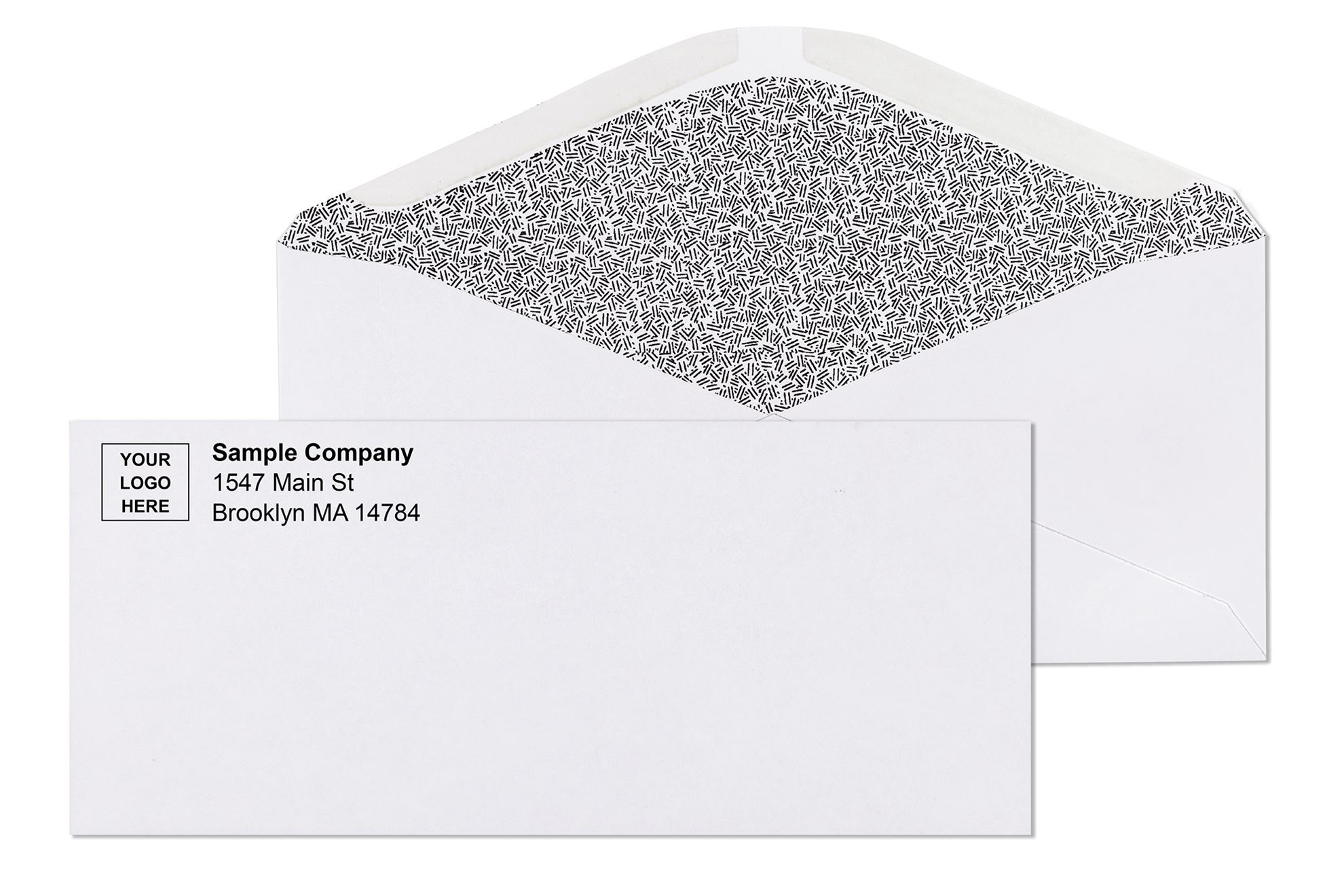
Gummed flap envelopes use a moistenable adhesive strip on the flap. When water is applied, the adhesive activates and the flap bonds closed. Most postage meters include a sealing unit that does this automatically in a single pass: the envelope travels through the feeder, the meter wets the flap, presses it closed, and prints the postage in one continuous motion.
This is the standard setup for high-volume business mailing programs. The meter handles both sealing and postage in one step, which is where the real labor savings come from in batch operations. If you are planning to use a postage meter primarily for this integrated workflow, regular envelopes with gummed flap closures are the correct choice. All standard #10, #9, and large-format gummed flap envelopes at Business Envelopes are compatible with commercial postage meter sealing units.
Peel-and-seal and flip-and-stick envelopes with postage meters
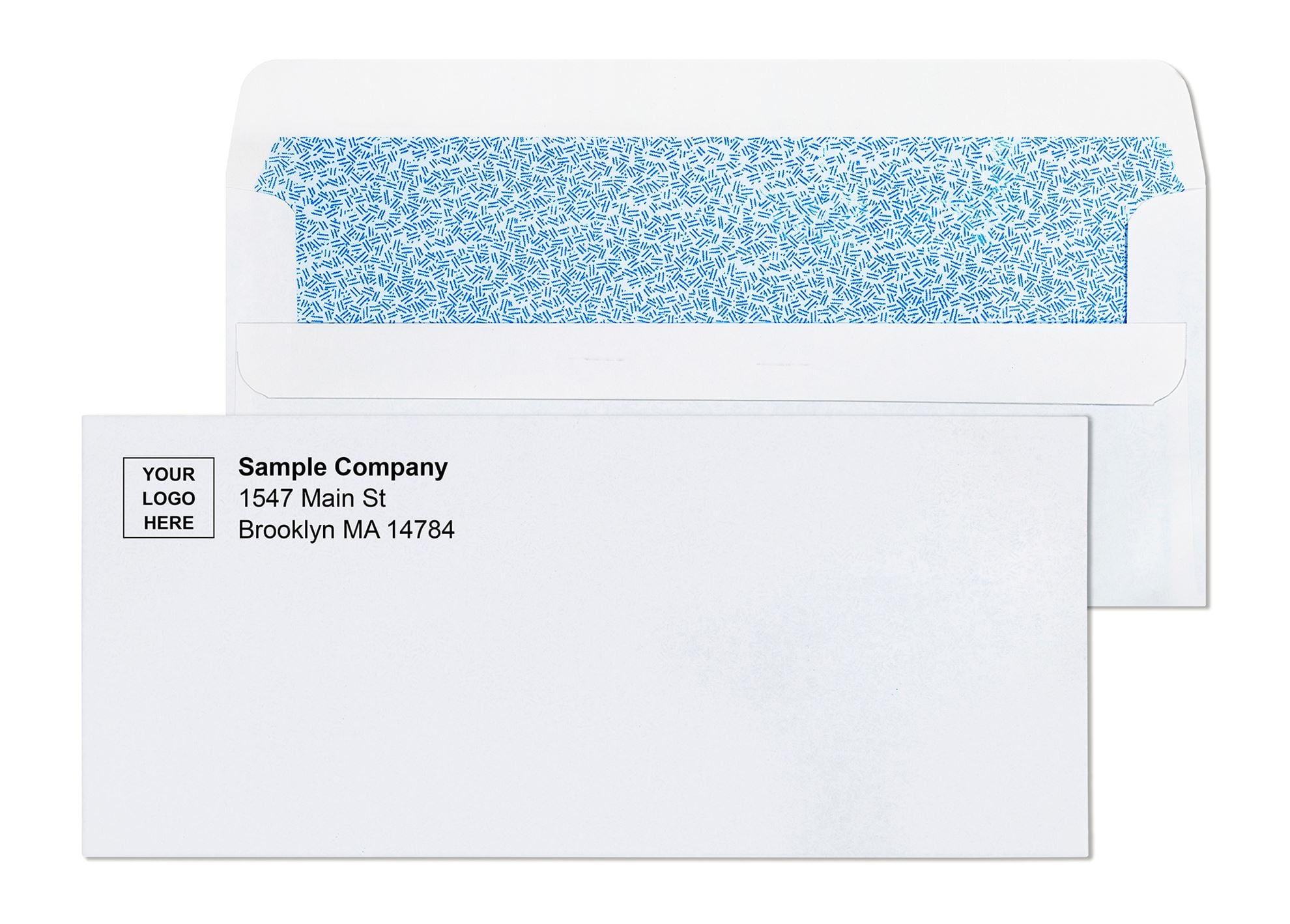
Peel-and-seal and flip-and-stick envelopes use pressure-sensitive adhesives that do not require moisture. They seal cleanly without any liquid, which is their primary advantage for batch operations without a meter. However, this means the meter's built-in sealing unit cannot activate the closure , it applies water, which does nothing to pressure-sensitive adhesive.
If you use self seal envelopes in a metered mail program, you seal them manually before or after metering. The meter still prints accurate postage on the envelope face , it simply does not seal the flap. For operations where the sealing step happens separately from the metering step (a common setup in smaller offices), this is not a problem. For operations where the integrated seal-and-meter sequence is important, switch to gummed flap envelopes.
For a complete breakdown of peel-and-seal vs flip-and-stick closures and when each is preferable, see Self-Seal Envelopes: Peel-and-Seal vs Flip-and-Stick Guide.
Window envelopes and metered mail programs
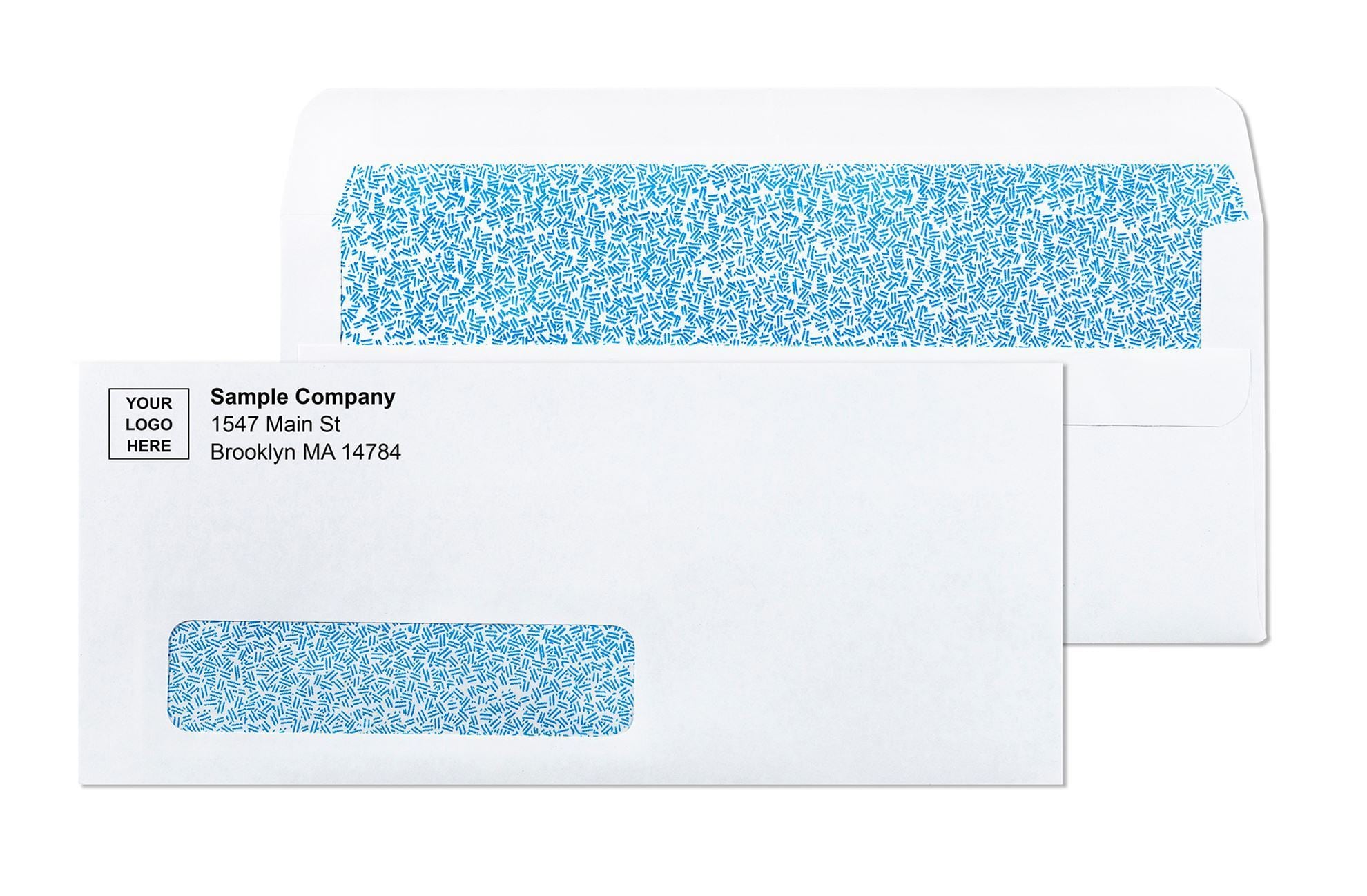
Window envelopes work well with metered mail programs and online postage platforms. The window displays the recipient's address from the document inside, eliminating manual addressing. The postage prints in the upper-right corner of the envelope face. No interaction between the window and the postage position creates any issue. For billing departments running high invoice volumes, the combination of window envelopes with metered postage is the standard setup. Address handling is automatic through the window. Postage is accurate through the meter. The gummed flap seals in the same meter pass.
The postage zone rule
Regardless of postage method, the upper-right corner of the envelope face must remain clear for postage. USPS requires the postage zone to be free of any design elements, logos, text, or decorative graphics. This applies to stamps, metered indicia, and permit indicia equally. Custom printed envelopes with logo and return address in the upper-left corner have no conflict with this rule. For organizations printing permit indicia directly on the envelope stock as part of a presort or Marketing Mail program, the indicia position must be reviewed and approved at the design stage.
Indicia Printing: The Alternative to Both Stamps and Meters
For organizations running consistent, high-volume mailing programs under a USPS permit, a third path avoids both stamps and per-piece metering: permit indicia printed directly on the envelope stock. The indicia is part of the envelope's custom printing , it appears in the upper-right corner alongside the logo and return address in the upper-left corner.
This approach works for USPS Bulk Mail (Marketing Mail), First-Class presort, and Nonprofit Mail permit holders. The postage amount is settled in advance with USPS rather than printed per piece. The envelopes arrive ready to stuff and mail, with no stamps to apply and no meter to run. For organizations mailing thousands of pieces per cycle with consistent content, this is frequently the lowest per-piece postage cost available. For more on custom envelope printing including permit indicia placement, see Custom Printed Envelopes: Logo Return Address Design Guide.
Choosing the Right Envelope Format for Your Postage Method
| Envelope Format | Stamps | Online Postage | Postage Meter (seal + print) | Permit Indicia |
|---|---|---|---|---|
| Gummed flap (#10, window, large) | Yes | Yes | Yes , full integration | Yes |
| Peel-and-seal | Yes | Yes | Postage only , seal manually | Yes |
| Flip-and-stick | Yes | Yes | Postage only , seal manually | Yes |
| Window (gummed flap) | Yes | Yes | Yes , full integration | Yes |
| Non-standard size / square | Yes + surcharge | Yes + surcharge | Usually not , check meter specs | Not eligible for automation rates |
Direct Mail and Bulk Programs: Different Math
The metered mail vs stamps comparison above applies to standard First-Class Mail. For direct mail programs running under USPS Marketing Mail (formerly Bulk Mail) or First-Class Presort, the economics are different and usually more favorable.
Marketing Mail postage rates for letters start around $0.20 to $0.35 per piece depending on presort level and address quality, compared to $0.82 for a First-Class stamp. The tradeoff is a minimum of 200 pieces per mailing and slower delivery (3 to 10 business days vs 2 to 5 for First-Class). For direct mail campaigns mailing 1,000 or more pieces per cycle, Marketing Mail dramatically reduces per-piece postage regardless of meter vs stamp method. For more on direct mail envelope selection and postage considerations, see Direct Mail Envelopes: Format, Size, and Design Guide.
For high-volume programs where the mailing is going out in large batches, see Wholesale Envelopes: Complete Business Buying Guide for ordering formats and pricing that match production-scale programs.
Setting Up a Metered Mail Program: What to Verify Before You Order Envelopes
Before committing to a postage meter lease, the four questions that most affect your envelope program:
- Does the meter seal envelopes or just print postage? All commercial postage meters print postage. Not all include a sealing unit. Confirm whether the meter you are evaluating includes flap-sealing capability before switching from self-seal to gummed flap envelopes.
- What envelope sizes does the meter accept? Standard commercial meters handle #10 letter-size envelopes and most common business formats. Verify that the meter's feeder accepts your envelope dimensions before ordering volume stock.
- Does your mailing software integrate with the meter? For billing and payroll programs that run checks or invoices through QuickBooks, Xero, or similar platforms, confirm that your software's print output is compatible with the envelope format and that address positioning works correctly through the window.
- Is the postage zone on your custom printed envelopes clear? If your envelopes have existing custom printing, verify that the upper-right corner is completely free of any design element. The meter prints the indicia there and any overlap creates a compliance issue with USPS. See Business Envelopes with Logo and Return Address: Brand Every Mail You Send for correct layout specifications.
Why Business Envelopes for Your Mailing Program
The envelope formats at Business Envelopes cover every configuration: gummed flap for meter sealing programs, peel-and-seal and flip-and-stick for moisture-free batch operations, window formats for automated address display, and custom printed formats for branded programs including permit indicia placement.
- All standard commercial formats stocked , #10, #9, #6-3/4, 6x9, 9x12, 10x13
- Gummed flap and self-seal closures available in every size
- Window and double window formats for billing and payroll
- Custom printing with logo, return address, and permit indicia placement
- No minimum order on any format
- Same or next business day shipping on blank stock
- Free ground shipping on every order
For the complete guide to sealing options and which closure type fits each mailing scenario, see How to Seal an Envelope: The Right Way for Every Type and Volume.