 Free shipping

Can You Reuse a Peel and Seal Envelope? The Complete Answer
You sealed the envelope, then realized you forgot the enclosure. Or you are ordering peel and seal envelopes for your operation and want to know upfront whether they can be opened and reused before committing to a bulk purchase. Either way, the question is the same: can you reuse a peel and seal envelope?
The answer is no, and it is not a defect. The reason is tied directly to how pressure-sensitive adhesive works and why that one-time bond is actually the most important feature a peel and seal envelope has. This guide covers everything: the chemistry, the visual evidence of tamper attempts, what competitors' content leaves out, what the mailing community asks most often, and which envelope type to reach for when reusability is genuinely what you need.
Quick Answer
No. Peel and seal envelopes cannot be reliably reused. Once you remove the release liner and press the flap closed, the pressure-sensitive adhesive forms a permanent bond. Reopening damages the adhesive and the paper surface. The envelope cannot reseal securely without tape or glue, and a compromised seal may fail during postal processing. This is by design: the same bond that prevents reuse makes peel and seal envelopes tamper-evident, which is a critical security feature for checks, invoices, and confidential business mail.
- How peel and seal adhesive actually works
- What happens when you try to reuse one
- Can you reseal with tape or glue?
- Why reuse is impossible and tamper evidence is the point
- Peel and seal vs gummed flap: which can be reused?
- Full closure comparison table
- What to do if you sealed the wrong envelope
- How long does the adhesive stay active before sealing?
- Choosing the right peel and seal envelope for your program
- Common mistakes when using peel and seal envelopes
- Frequently asked questions
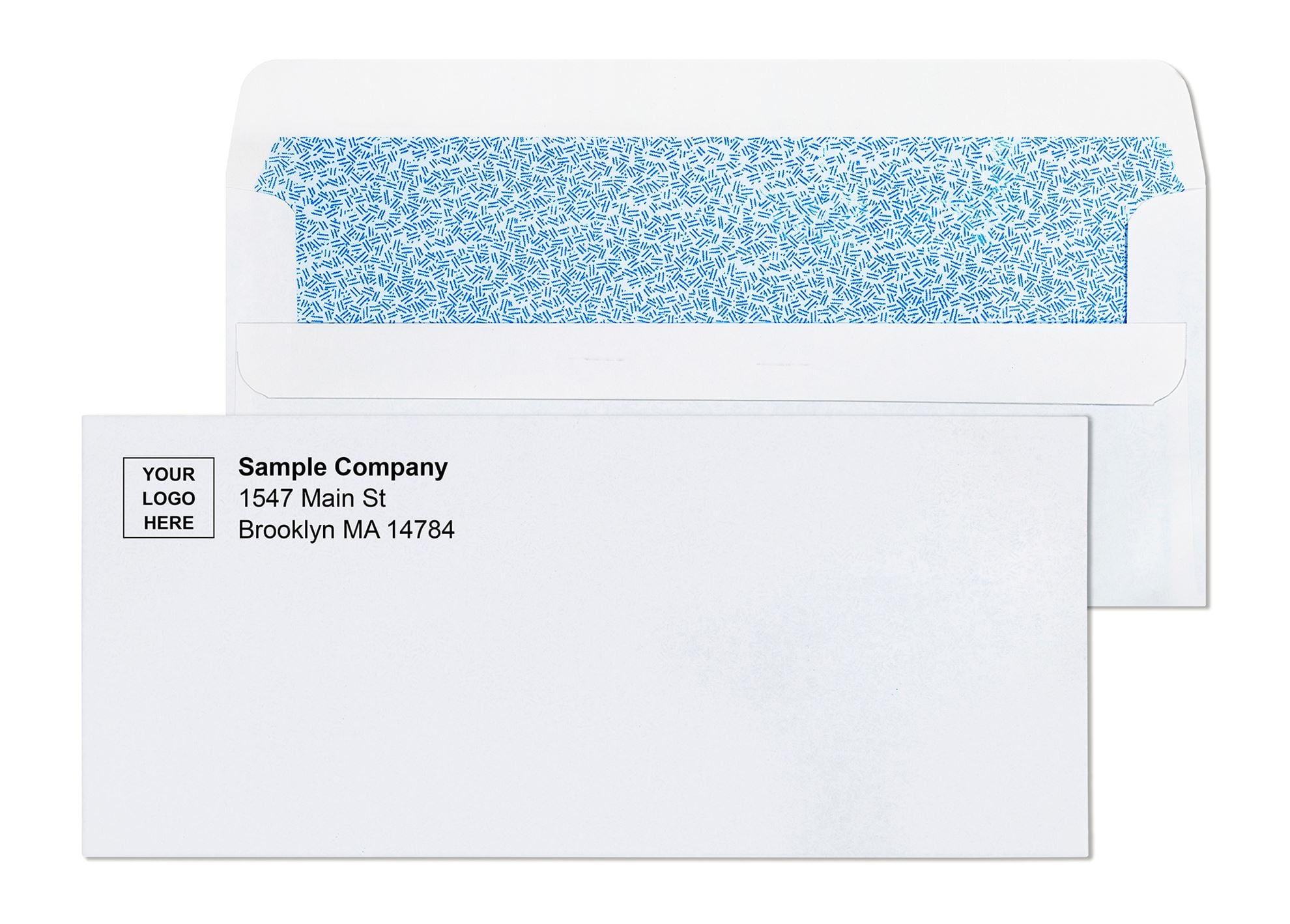
A #10 peel and seal security-tinted business envelope with the release liner still intact
How Does Peel and Seal Adhesive Actually Work?
To understand why reuse is not possible, you need to understand what actually happens during the sealing process, and this is something no competing page currently explains with accuracy.
A peel and seal envelope has a strip of pressure-sensitive adhesive applied to the inside of the flap. That adhesive is protected by a release liner: a thin strip of silicone-coated paper that prevents the adhesive from bonding prematurely. When you peel off the liner, you expose the adhesive. When you press the flap down against the envelope body, the adhesive forms a bond through contact pressure alone. No moisture, no heat, no chemical activation is required.
What Is Pressure-Sensitive Adhesive and Why Does It Not Reseal?
Pressure-sensitive adhesives work through intermolecular van der Waals forces. The moment the exposed adhesive surface contacts the paper of the envelope body, it begins forming thousands of micro-level adhesion points across the entire bond area. The longer the surfaces are in contact and the more pressure applied, the stronger and more complete those adhesion points become.
When you try to separate the flap after sealing, you are mechanically breaking those adhesion points. What happens next depends on which surface the adhesive prefers:
- The adhesive may stay mostly on the flap, leaving the envelope body surface undamaged but the adhesive itself weakened and unable to form a new complete bond.
- The adhesive may partially transfer to the envelope body, splitting the adhesive mass and reducing bonding capacity on both surfaces.
- The adhesive may pull paper fibers from one or both surfaces, leaving torn or delaminated patches that further reduce the bonding area.
In every scenario, the adhesive is no longer capable of forming the secure, complete bond it achieved the first time. The physics of the first seal cannot be undone.
What Happens When You Try to Reuse a Peel and Seal Envelope?
If you attempt to open a sealed peel and seal envelope and reseal it, here is what you will observe in practice:
- The flap will not stay closed. The adhesive has lost most of its bonding capacity. It will feel slightly tacky but will not form a seal that holds without applied pressure.
- The paper surface will show visible distortion. Opening a sealed peel and seal envelope typically causes small tears, lifted fibers, or surface delamination at the bond line. These are visible without a magnifying glass.
- The release liner cannot be replaced. Once peeled, the liner is gone. The adhesive is permanently exposed and will attract dust, debris, and may bond inadvertently to other surfaces in a mailing stack.
- The envelope is likely to fail in postal handling. USPS automated sorting equipment applies mechanical stress at multiple points. A compromised adhesive bond that is holding by pressure alone is unlikely to survive a mail processing run intact.
- The recipient will see the evidence. Even if the envelope makes it through processing, the distorted flap line and damaged adhesive strip will signal to the recipient that the envelope was opened after sealing. For business mail, this is a serious credibility and security issue.
Does It Matter How Soon After Sealing You Try to Open It?
This is a question mailing teams often ask. The answer is yes, timing matters, but only within a very narrow window.
In the first two to three seconds immediately after sealing, before the adhesive has achieved full contact across the entire bond area, very careful separation at one corner may be possible. But even within this window, the adhesive is already partially committed and the flap is compromised for any secure reuse. For any formal mailing, this is not a viable workaround. A fresh envelope is always the correct solution.
Can You Reseal a Peel and Seal Envelope With Tape or Glue?
Technically, yes. Practically, there are two significant problems with doing this for business mail.
The first problem is structural. The original adhesive has already weakened the paper surface at the flap line. Tape or glue applied over a damaged surface has less to grip. The seal produced is uneven and physically weaker than a fresh peel and seal bond.
The second problem is professional and legal. A visibly resealed envelope signals to the recipient that the contents were changed or re-inserted after initial sealing. For invoices, payroll, medical documents, or any business correspondence where authenticity matters, a resealed envelope undermines the integrity of the piece.
For personal correspondence, tape may work. For business mail, the answer is a fresh envelope.
Why the Answer Is "No" and Why That Is the Whole Point
The fact that you cannot reuse a peel and seal envelope is often framed as a limitation. It is not. It is the most important feature of the format.
How Do You Tell If a Peel and Seal Envelope Has Been Opened?
This is one of the top community questions about this topic, and it is directly connected to the reuse question. Because the pressure-sensitive adhesive bond is permanent, any attempt to open a sealed peel and seal envelope leaves physical, visible evidence:
- Surface delamination or lifted paper fibers along the flap edge
- A broken, stretched, or lifted adhesive strip
- An uneven or distorted flap closure line
- Tape, glue, or residue applied over the original seal
- Wrinkling or bubbling of the flap paper from steam or heat attempts
This is what makes peel and seal envelopes tamper-evident. A recipient who checks the flap will know. And for business programs mailing checks, financial statements, payroll, medical correspondence, or legal documents, that visible evidence of tampering is not an inconvenience. It is a protection.
Are Peel and Seal Envelopes Tamper-Proof?
Tamper-evident and tamper-proof are different things, and this distinction matters for security programs. Peel and seal envelopes are tamper-evident: they show evidence of tampering but do not physically prevent it. A determined person can force open any paper-based mailing.
What peel and seal provides is a visible record of interference. Combined with security tinting on the interior of the envelope, which prevents contents from being read by holding the envelope to a light, peel and seal envelopes form a practical security layer for standard business correspondence that does not require specialized courier services.
The security envelopes for business guide covers when and how to combine peel and seal closure with security-tinted interiors for programs that require maximum protection.
Can You Reuse a Gummed Flap Envelope? How Does It Compare to Peel and Seal?
This is the right follow-up question, and most pages skip it entirely. The difference in reuse behavior comes directly from the difference in adhesive chemistry.
Gummed flap envelopes use a dextrin-based or polyvinyl alcohol-based adhesive that is applied in a dry state and requires moisture to activate. When you moisten the flap and press it down, the glue activates and forms a bond. If you act immediately, within the first few seconds while the glue is still wet, you may be able to separate the flap without tearing.
This does not mean gummed flap envelopes are reliably reusable. The bond weakens with each attempt, the paper becomes wet and may tear, and the gummed strip eventually loses adhesive integrity entirely. But the moisture-activated chemistry does allow a narrow window for separation that pressure-sensitive adhesive does not.
Peel and seal adhesive activates instantly on contact, with no moisture step. There is no wet window. The bond begins forming the moment the surfaces touch. This is why peel and seal envelopes seal more securely and more consistently than gummed flaps, and why their tamper evidence is more reliable.
Envelope Closure Types Compared: Which Can Be Reused?
Peel and Seal
Cannot Be ReusedPressure-sensitive adhesive activates on contact. One-time permanent bond. Tamper-evident. The release liner cannot be replaced.
Flip-and-Stick
Cannot Be ReusedSame permanent pressure-sensitive adhesive mechanism as peel and seal, but without a liner to remove. Bond is equally permanent.
Gummed Flap
Very LimitedWater-activated adhesive. Brief separation window immediately after sealing while glue is still wet. Bond weakens with every attempt.
Clasp / String and Button
Yes, Fully ReusableMechanical closure. Can be opened and re-closed many times without any adhesive. The right choice for interoffice routing.
If your program requires a closure that can be opened and re-closed reliably, clasp envelopes are the correct product. The clasp mechanism is entirely mechanical with no adhesive involved, and the envelope can be accessed and re-secured as many times as needed.
For a full side-by-side technical comparison of peel and seal versus flip-and-stick closure mechanics, see the peel-and-seal vs flip-and-stick guide. For a broader overview of all envelope closure types and formats available for business use, the types of business envelopes guide provides a complete reference.
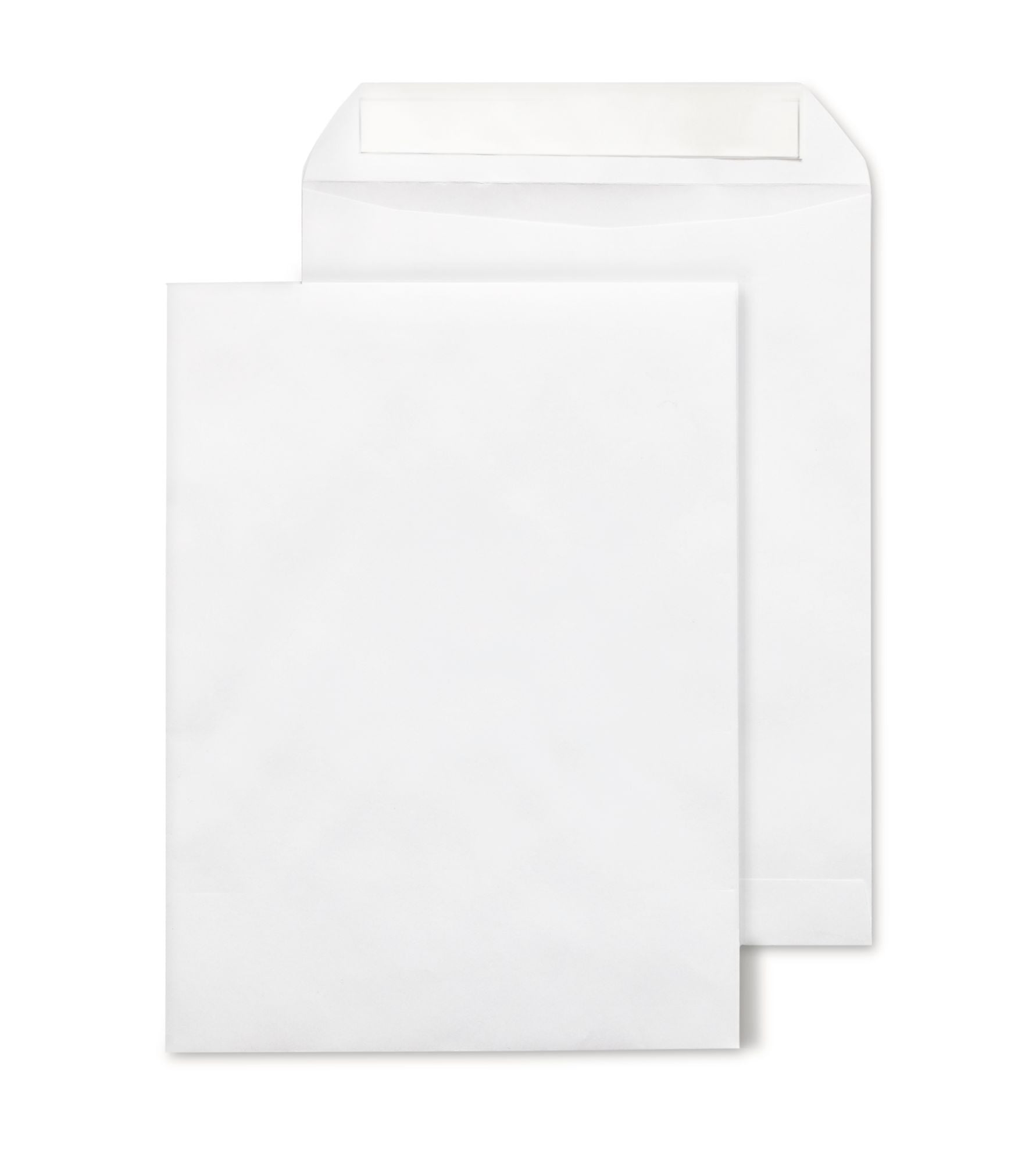
9x12 peel and seal open-end envelopes: the flat-document standard for business mailing programs
What to Do If You Accidentally Sealed the Wrong Envelope
This is the most common real-world situation behind this search query. You sealed the envelope, then realized something is wrong: wrong document inside, missing enclosure, wrong recipient. Here is the practical approach, step by step.
- Stop and assess before touching the seal. The longer you wait, the stronger the bond becomes. If you notice the error immediately, proceed to step 2. If the envelope has been sealed for more than a minute, skip to step 4.
- If fresh, try very gentle separation at one corner. Using a bone folder or the flat edge of a letter opener, slide carefully under the very tip of one corner of the flap. This only works in the first few seconds and only if the flap was pressed lightly. Never force it.
- Do not use steam, heat, or a hairdryer on peel and seal envelopes. Unlike gummed flap envelopes, where steam can reactivate the water-based adhesive, heat has minimal effect on pressure-sensitive adhesive and will cause the paper to warp and wrinkle without releasing the bond.
- Use a letter opener to cut cleanly across the top edge. Position the letter opener at the top opening of the envelope and cut straight across. Do not try to peel the flap. Cutting across the top preserves the document inside and gives you the cleanest access.
- Remove the contents carefully and start with a fresh envelope. This is always the right answer. A fresh envelope takes less than ten seconds to seal and guarantees a professional, secure result. The damaged envelope should be discarded.
Does Peel and Seal Adhesive Lose Effectiveness Before You Seal the Envelope?
This is a separate but related question that comes up frequently in mailing operations and office settings. People who store envelopes for extended periods want to know whether the adhesive degrades over time while the liner is still in place.
The answer is no, with the liner intact and storage conditions within normal parameters. The release liner keeps the pressure-sensitive adhesive completely isolated from air, humidity, and contact until you deliberately remove it. Peel and seal envelopes stored correctly retain full adhesive effectiveness for years.
What Storage Conditions Can Degrade the Adhesive Before Sealing?
While the liner protects the adhesive from activation, extreme environmental conditions can affect the adhesive's molecular structure over time:
- High humidity above normal office conditions can cause the liner itself to soften or separate partially from the adhesive strip, reducing the liner's release properties.
- Sustained high temperatures can cause some pressure-sensitive adhesive formulations to flow slightly, reducing viscosity and potentially affecting bond strength.
- Physical pressure on stored boxes that is heavy enough to deform the envelope stack can cause the liner to shift or the adhesive to take on a set that affects release characteristics.
- Extended storage near exterior walls, windows, or heating systems combines temperature fluctuation with humidity variation in ways that age adhesives faster than stable interior storage.
The how to store envelopes guide covers all storage conditions and shelf life by seal type in full detail.
How to Choose the Right Peel and Seal Envelope for Your Mailing Program
If you have confirmed that peel and seal is the right closure for your operation, the next decision is size and format. Here is a practical overview of the main categories available.
Which Size Peel and Seal Envelope Do I Need for Letters and Invoices?
The #10 size (4-1/8 x 9-1/2 inches) is the standard for business letters, invoices, statements, and single-sheet correspondence. A tri-folded standard 8.5 x 11 sheet fits the #10 exactly. Available with and without windows, with and without security tinting. Browse the peel-and-seal #10 envelopes including security-tinted options for confidential mail.
Which Peel and Seal Envelope Is Best for Documents That Should Not Be Folded?
The 9x12 size is the flat-document standard. A full 8.5 x 11 sheet fits without any fold, making this the right choice for contracts, legal papers, certificates, and any material that must arrive flat and uncreased. Available in open-end and booklet formats. The 9x12 peel-and-seal envelopes are available in both opening styles.
When Should I Use 6x9 Peel and Seal Envelopes?
The 6x9 size is commonly used for booklets, brochures, and multi-page inserts that fit without additional folding. The booklet format opens on the long edge for easy inserting. Browse the 6x9 peel-and-seal envelopes for specifications and available quantities.
Do Window Peel and Seal Envelopes Offer the Same Security?
Yes. Window peel and seal envelopes use the same pressure-sensitive adhesive and offer the same tamper-evident bond. The window simply eliminates the need to print or address the envelope separately, because the recipient address on the enclosed document is visible through the window. These are used extensively in billing, payroll, and check mailing programs. The #10 window self-sealing envelopes combine a self-seal closure with security tinting.
What Is the Difference Between 24 lb and 28 lb Peel and Seal Envelopes?
Paper weight affects envelope feel, opacity, and tear resistance. A 24 lb envelope is the standard for routine business correspondence. A 28 lb envelope has a more substantial feel, greater opacity for sensitive documents, and more durability for heavier contents. The envelope paper weight guide explains what the numbers mean and how to choose the right weight for your application.
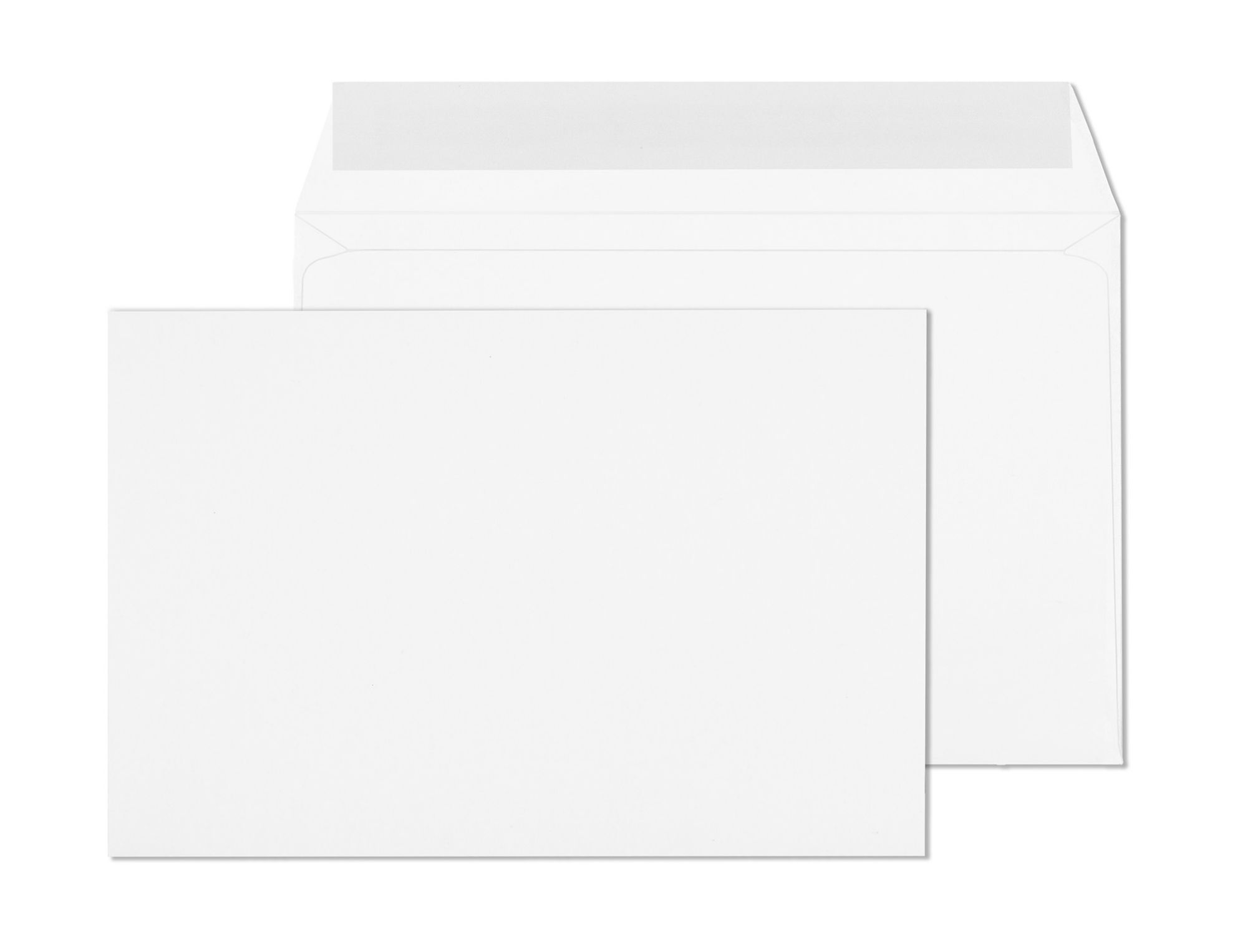
6x9 peel and seal booklet envelopes for business correspondence and multi-page document mailing
Common Mistakes When Using Peel and Seal Envelopes
Even with a simple closure type, a few consistent errors reduce seal quality in mailing operations. These come directly from what business buyers and mailing staff report most often.
- Removing the liner before the insert is ready. Once the liner is off, the clock is running. The exposed adhesive picks up dust and may bond inadvertently if set down on another surface. Only remove the liner when you are ready to close immediately.
- Insufficient pressure across the full flap. Peel and seal adhesive bonds through pressure. A single finger stroke down the center of the flap leaves the edges incompletely bonded. Press firmly across the entire length of the flap for a complete seal.
- Sealing in very high humidity. Humidity does not block peel and seal adhesive from bonding, but paper absorbs moisture and expands, which can cause the flap to pucker or bow slightly after sealing. Process mail in climate-controlled conditions when possible.
- Stacking freshly sealed envelopes under heavy weight immediately. Allow a few seconds for the seal to set before stacking. Heavy pressure immediately after sealing can shift the flap slightly before the bond fully establishes.
- Confusing peel and seal with gummed flap when troubleshooting. Tips that apply to gummed flap issues (humidity, moisture, storage temperature) do not apply the same way to peel and seal. The adhesive chemistry is different. Troubleshoot based on the specific closure type you are using.
- Using the same envelope after the liner has been reinstalled manually. Some staff members attempt to press the liner back onto the adhesive after accidentally removing it. This does not work. The release coating on the liner that prevents permanent bonding only works reliably in one direction, and the liner itself may have picked up debris. Discard the envelope and start fresh.
Shop Peel and Seal Envelopes at Business Envelopes
All sizes, formats, and order quantities. Family-owned since 1997. Serving over 53,526 customers.
All Self-Seal Envelopes Peel-and-Seal #10 9x12 Peel-and-SealWhat Customers Say About Peel and Seal Adhesive Quality
★★★★★
"Thank you for these amazing Envelopes they are excellent quality the adhesive works perfectly! Will reorder pretty soon."
★★★★★
"They are made with good paper stock, have privacy print on the inside, and they self seal like a dream. Will definitely buy again if available."
★★★★★
"Came packaged nicely and compactly in a box. Adhesive is great, and windowless for privacy."
Self-Seal Envelope Resources and Further Reading
These guides cover related topics that buyers working with peel and seal envelopes commonly need:
- self-seal envelopes guide - Complete overview of both peel and seal and flip-and-stick formats, including shelf life by seal type and mailing machine compatibility.
- peel-and-seal vs flip-and-stick guide - Side-by-side technical comparison of both self-seal closure types: mechanics, speed, cost, and machine compatibility.
- how to seal an envelope - Correct sealing technique for every closure type including gummed, peel and seal, and flip-and-stick.
- how to store envelopes - Storage conditions and shelf life by seal type for long-term inventory management.
- security envelopes for business - When and how to use tamper-evident closure with security-tinted interiors for sensitive mailing programs.
- envelope paper weight guide - What 20 lb, 24 lb, and 28 lb paper weights mean for business envelope selection.
- types of business envelopes - Full reference across every business envelope category, closure type, and format.