 Free shipping

How to Stop an Envelope From Coming Unsealed: Causes, Fixes, and Prevention
Quick Answer
Envelopes come unsealed for five main reasons: insufficient moisture on a gummed flap, insufficient pressure on a self-seal envelope, ambient humidity partially activating gummed adhesive in storage, aged or expired adhesive, and paper weight mismatch. The fix is specific to the closure type. For recurring seal failures in humid or high-volume environments, switching from gummed flap to peel-and-seal envelopes eliminates the moisture dependency and produces a permanent, consistent bond.
- Why do envelopes keep coming open? The root causes
- How to stop a gummed envelope from coming open
- Why sealing the corners first matters
- Why is my self-seal envelope not sticking?
- How humidity causes envelope seals to fail
- How storage conditions degrade adhesive before mailing
- Does paper weight affect seal quality?
- Why envelopes open during postal transit
- What is the best way to seal envelopes in bulk?
- Which envelope closure is least likely to come open?
- When to stop troubleshooting and switch closure types
- Prevention checklist
- Frequently asked questions
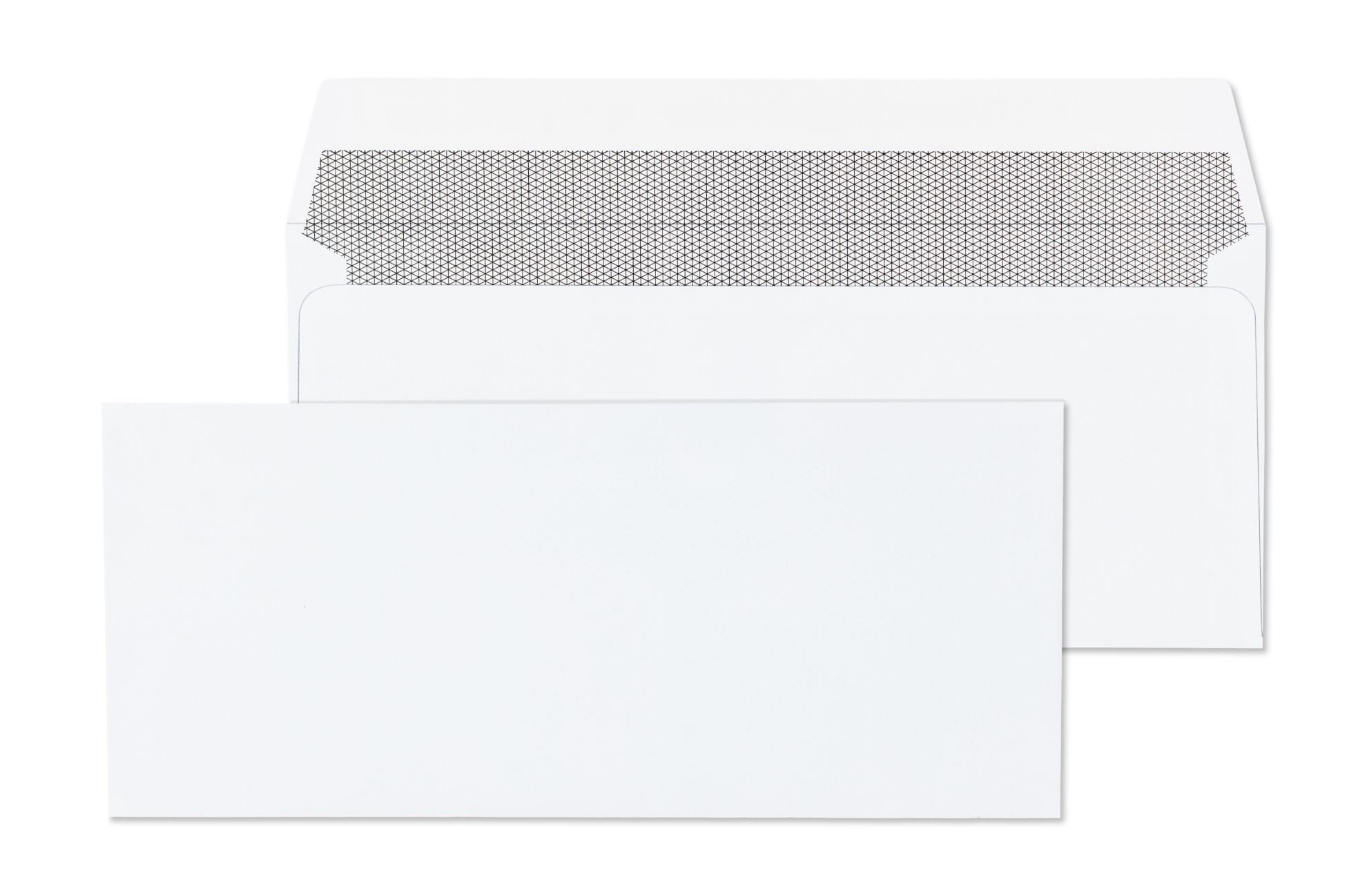
A #10 security-tinted peel-and-seal business envelope. Pressure-sensitive adhesive is not moisture-dependent and forms a consistent permanent bond. Click to view product.
Why Do Envelopes Keep Coming Open? The Root Causes
An envelope seal fails when the adhesive bond between the flap and the envelope body is weaker than the forces pulling it apart. Those forces include the pressure of contents from inside, mechanical stress from postal sorting equipment, and, for gummed adhesive, the ongoing effect of humidity both in storage and during transit.
Identifying the cause requires knowing which closure type you have. The root causes and fixes for gummed flap envelopes and self-seal envelopes are completely different. A fix that works for one may do nothing for the other.
Gummed Flap Failure Causes
Humidity Sensitive- Insufficient moisture on the gummed strip
- Moisture applied only to the centre, not the full strip
- Humidity pre-activating adhesive in storage
- Expired or dried-out gummed adhesive
- Paper weight too thin for the contents
- Not holding the flap down long enough
Self-Seal Failure Causes
Not Humidity Sensitive- Insufficient pressure across the full adhesive strip
- Release liner not fully removed before sealing
- Adhesive contaminated by dust after liner removal
- Extreme heat or cold degrading stored adhesive
- Sliding motion during pressing instead of firm press
- Paper weight too thin for the contents
How to Stop a Gummed Envelope From Coming Open
A gummed flap envelope uses a dextrin-based, gum arabic-based, or polyvinyl alcohol-based adhesive applied in dry form to the inner surface of the flap. It only activates when it contacts moisture. Once moistened and pressed, the glue bonds with the paper fibers of the envelope body and sets as it dries.
When this seal fails, the cause is nearly always one of the following.
Why Is the Gummed Strip Not Sealing Properly?
The most frequent cause is uneven or insufficient moisture. People often dab or lick only the centre of the strip, leaving the edges and corners of the flap dry. Those unbonded areas lift first, especially at the pointed tip of a diamond flap or the corners of a straight flap.
The fix: Moisten the full length of the gummed strip evenly from one end to the other using a damp sponge, foam roller moistener, or moistening bottle. Do not oversaturate. A heavy application of water warps the paper, which causes the flap to curl away from the envelope body as it dries, breaking the bond. A light, even pass that makes the adhesive feel tacky without being wet is the target.
Why You Should Seal the Corners First
This is a sealing technique tip that most general guides skip. The corners and edges of the flap are the first points to lift under any stress. Pressing only the flat centre of the flap and leaving the corners to seal themselves under general pressure produces a weaker result than pressing the corners deliberately first.
The technique: After moistening, press the two corners of the flap against the envelope body first, holding each for two seconds. Then press the full length of the flap from corner to corner with firm, even pressure. Hold the entire flap for three to five seconds before releasing. This sequence produces the most complete and consistent bond from a gummed strip.
What to Do When the Gummed Adhesive Has Dried Out
Gummed adhesive has a shelf life. Envelopes stored for several years, particularly in conditions that are not climate-controlled, can develop adhesive that appears dull, powdery, or crumbly. When moistened, it does not feel tacky. It may appear wet but will not form a cohesive bond.
The fix: There is no way to restore dried-out gummed adhesive. Replace the stock. Test a sample envelope from any batch that has been in storage for more than two years before committing to a mailing run. The how to store envelopes guide covers correct conditions and shelf life by adhesive type.
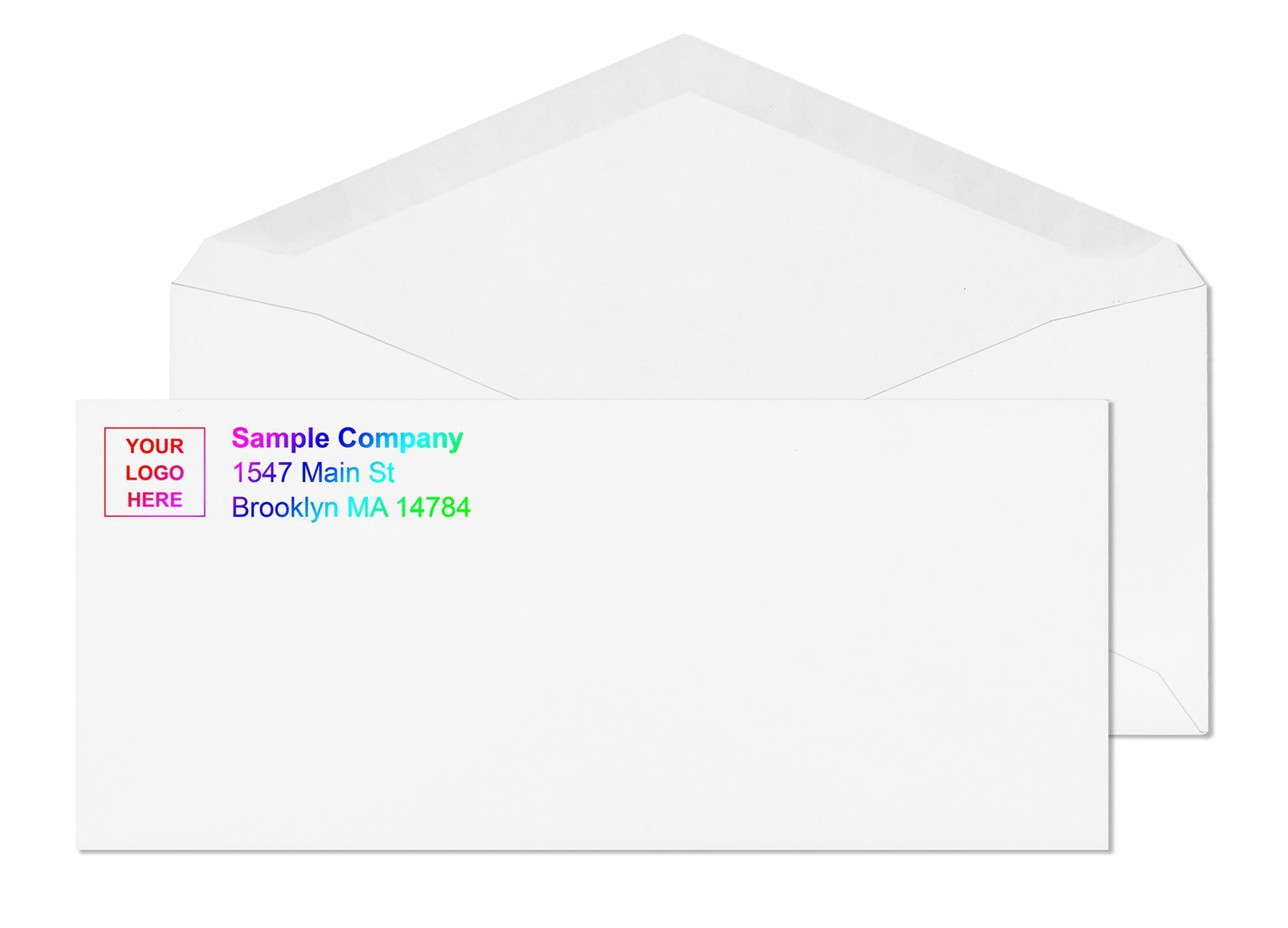
A gummed flap #10 white wove business envelope. The water-activated adhesive requires even moisture and firm corner-first pressure for a complete seal. Click to view product.
Why Is My Self-Seal Envelope Not Sticking?
Self-seal envelopes use a pressure-sensitive adhesive rather than a moisture-activated one. This includes peel-and-seal envelopes, where you remove a release liner to expose the adhesive, and flip-and-stick envelopes, where a fold-down strip with adhesive on both faces is pressed together. Because these closures do not need moisture, they are far more resistant to humid environments than gummed flap envelopes.
When a self-seal envelope fails to stick, the cause is almost always one of three things.
Insufficient Pressure Across the Full Adhesive Strip
Pressure-sensitive adhesive bonds through physical contact and compression. Pressing only the centre of the flap produces a full bond in the centre and little or no bond at the edges. Those edges lift first under handling and postal stress.
The fix: After closing the flap, press firmly from one end of the adhesive strip to the other using even downward pressure. Hold for two to three seconds. Do not slide your finger along the flap, which can shift it before the bond sets. Press straight down across the whole width.
Why Did My Peel-and-Seal Envelope Seal But Then Come Open?
If a peel-and-seal envelope seals initially but then loses its hold, the adhesive may have been contaminated before sealing. Once the release liner is removed, the adhesive is exposed. Setting the envelope down face-up on a desk picks up dust, paper fibers, and debris that reduce bonding capacity across the strip. The seal feels complete when first pressed but fails under handling stress hours later.
The fix: Remove the liner only immediately before sealing. Do not remove the liner and set the envelope aside. Seal each envelope as soon as the liner is removed. For peel-and-seal questions specific to reuse and tamper evidence, the guide on can you reuse a peel and seal envelope covers adhesive chemistry in depth.
Can Temperature Affect Envelope Seal Quality?
Yes. Pressure-sensitive adhesive is stable under the release liner through a wide temperature range in normal storage. However, sustained exposure to extreme heat, such as a storage room that reaches high temperatures in summer, can cause some adhesive formulations to soften and lose their bonding viscosity. Sustained exposure to freezing temperatures can make the adhesive brittle. Both extremes reduce seal performance when the envelope is finally used.
The fix: Store peel-and-seal envelopes in a climate-controlled interior space. Avoid storage on loading docks, in outdoor storage units, or near heat sources such as boilers and HVAC equipment.
How Humidity Causes Envelope Seals to Fail
Humidity is one of the most common and least diagnosed causes of gummed flap seal failure in business mailing operations. Many offices and mail rooms do not connect their recurring seal problems to the ambient humidity in the space.
Why Does My Envelope Seal Fail in Humid Weather?
Gummed adhesive is made of a water-soluble polymer that activates when moisture reaches it. In a high-humidity environment, water molecules from the air reach the adhesive strip even through the closed box. The adhesive becomes slightly tacky, and the flap, which sits adjacent to the gummed strip when the envelope is in its unopened position, makes light contact with it during storage. This creates a partial, weak pre-seal.
When you then attempt to seal the envelope by moistening and pressing the flap, the adhesive is no longer in its dry, ready state. The resulting bond is weak and inconsistent. It may hold under hand pressure but fail in the mail.
This was precisely the scenario described by gardening community members who stored boxes of gummed envelopes in a humid home environment: almost every flap had pre-sealed itself by the time they opened the box, and attempts to open and re-seal them produced torn, unusable envelopes.
The fix: Store gummed envelopes in a space with relative humidity consistently below 60 percent. If your building does not maintain this in summer, consider switching to peel-and-seal envelopes for any mail that must be processed reliably. Peel-and-seal adhesive does not respond to ambient humidity because it is pressure-activated, not moisture-activated.
| Closure Type | Humidity Risk | How Humidity Causes Failure | Best Prevention |
|---|---|---|---|
| Gummed Flap | High | Adhesive partially activates during storage, creating weak bond | Store below 60% RH; climate-controlled mail room |
| Peel-and-Seal | Very Low | Liner protects adhesive until deliberate removal; humidity has minimal effect | Standard storage; remove liner only when ready to seal |
| Flip-and-Stick | Low | Latex/acrylic adhesive is not moisture-activated; humidity has minimal effect on stored envelopes | Standard storage conditions |
How Storage Conditions Degrade Adhesive Before You Even Mail
Most envelope seal failures that seem like a sealing technique problem are actually a storage problem. The adhesive degrades before the envelope is ever sealed, and no amount of correct sealing technique can fully compensate.
How Do I Stop Envelopes From Sticking Together in Storage?
This is a specific problem reported by people who store gummed envelopes in boxes for extended periods in humid conditions. The flaps begin to adhere to the backs of adjacent envelopes in the stack. Opening the box reveals envelopes sealed to each other or partially sealed to themselves.
The most practical solutions are:
- Store in sealed boxes in a climate-controlled interior location. The box itself provides some moisture barrier, but only if the humidity in the room is within acceptable range.
- Use older stock first. Rotate your envelope inventory and never leave gummed envelopes sitting unused for years.
- Place wax paper sheets between stacks in marginally humid conditions. Wax paper acts as a physical moisture barrier between envelope flaps and adjacent paper, slowing the rate at which ambient humidity reaches the adhesive. This is a workaround, not a permanent fix, but it is useful for short-term storage in imperfect conditions.
- Switch to peel-and-seal for any high-volume or time-sensitive program. The release liner is a complete barrier. Peel-and-seal envelopes stored correctly will not pre-seal regardless of ambient humidity within normal office ranges.
How Long Does Envelope Glue Last?
Gummed adhesive properly stored in a climate-controlled environment remains effective for two to three years in most cases. Beyond this, performance becomes variable and testing is required before any large mailing. Peel-and-seal adhesive under its liner is stable for longer, typically several years, under correct storage conditions.
The practical rule: test a sealed sample from any envelope batch that has been in storage for more than 18 months before running it through a batch mailing. Press and let it dry for 10 minutes. Try to pull the flap open. If it separates cleanly with light force, the adhesive is no longer reliable.
Does Paper Weight Affect Envelope Seal Quality?
Yes, and this is a cause of seal failure that almost no guide addresses. Paper weight directly affects how well a seal holds under the stress of postal handling.
A heavier paper weight means a thicker, stiffer flap. That stiffness has two benefits for seal quality. First, the flap holds more firmly against the envelope body under pressure, maximizing the contact area of the adhesive strip. Second, it resists bending under the pressure of contents pushing outward from inside the envelope. Contents that expand slightly during handling, such as multiple sheets, a booklet, or a folded document with some spring, will push against the flap from the inside. A thin, flexible flap bends under this pressure and the corners lift. A heavier paper weight resists this.
For heavy contents, envelopes with 24 lb or 28 lb paper provide more reliable seals than 20 lb alternatives. The envelope paper weight guide explains what these weight numbers mean for your specific application.
Why Did My Envelope Open During Postal Transit?
A seal that holds when you hand-deliver an envelope to the post office may still fail during automated processing. Automated mail sorting equipment applies mechanical stress to every piece it processes: bending, compression, friction from rollers, and stacking under pressure in trays. A seal with partial adhesive contact, particularly at the corners and edges, will often hold under gentle hand pressure but separate under this repeated mechanical stress.
There is also a specific postal sorting problem worth knowing. A partially open flap on one envelope can catch on the contents or flap of an adjacent envelope as both pieces move through sorting equipment. A real postal user described exactly this scenario: their sealed-with-tape birthday envelope delayed their friend's letter by a week because something in the processing caused their piece to interfere with another. A partially open flap is one of the most common causes of this kind of delay.
For operations mailing bulk programs: Automated insertion machines, which open the envelope, insert the contents, and then seal the flap mechanically, require envelopes specifically designed for machine insertion. Issues like curled flaps, flaps that shingle (overlap) during stacking, or flaps that are too short or too long for the machine's sealing mechanism can all cause failures. Paper weights of 20 lb and 24 lb generally run better on most inserting machines than heavier weights. If you are using folder-inserters, confirm your envelope format is compatible with your equipment specification. The types of business envelopes guide covers envelope format considerations including seam style and flap geometry.
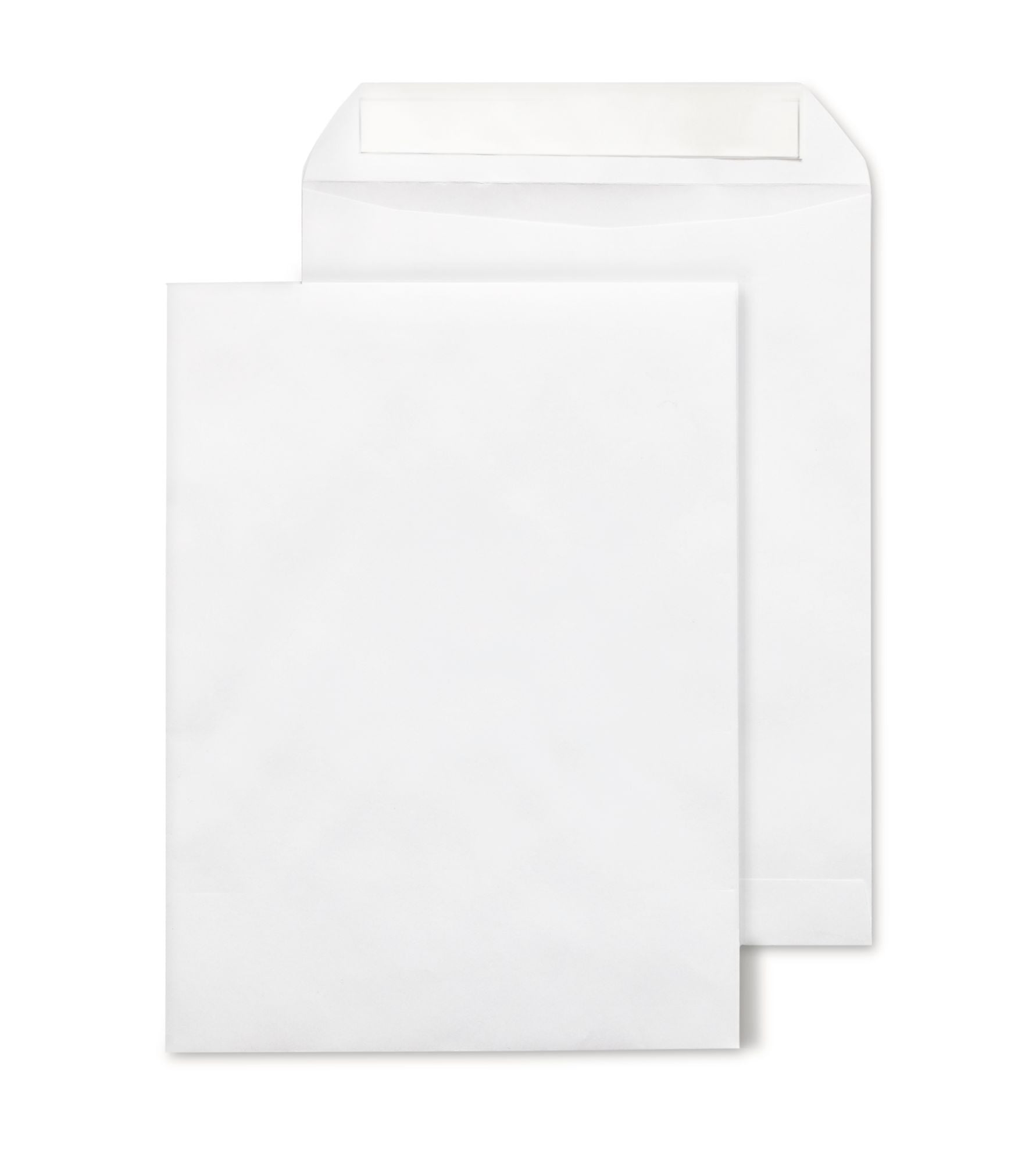
9x12 peel-and-seal open-end envelopes for flat document mailing. Reliable pressure-sensitive closure that holds through automated postal processing. Click to view product.
What Is the Best Way to Seal Envelopes in Bulk?
For any operation sealing more than a few dozen envelopes, sealing technique becomes an efficiency and reliability concern at the same time.
How to Seal Gummed Envelopes in Bulk Correctly
Licking gummed flaps in bulk is inconsistent, unhygienic in shared office environments, and produces variable moisture levels. The better tools for high-volume gummed sealing are:
- Foam roller moisteners. A tank holds water and feeds it to a foam roller that the envelope flap passes over. Moisture is applied evenly at a consistent level across every envelope.
- Sponge moistener cups. A small shallow cup with a wet sponge. Dragging the envelope flap across the surface applies even moisture. Simpler than a roller but effective for moderate volumes.
- Envelope moistening bottles. A squeeze bottle with a moistening tip allows controlled moisture application along the full length of the gummed strip.
Regardless of the moistening tool, the sealing technique remains the same: press the corners first, then seal the full flap with firm even pressure, and stand sealed envelopes upright or flat for at least 30 seconds before stacking. Always test one sealed envelope at the start of a run before processing the full batch.
Why Peel-and-Seal Is Faster and More Consistent for High Volumes
For billing departments, insurance companies, and any operation sealing hundreds of envelopes per week, the switch to peel-and-seal eliminates the moistening step entirely. Removing the liner and pressing each piece takes less time than moistening a gummed flap and waiting for it to set. There is no moisture tool to maintain, no water to refill, and no variability from inconsistent moistening. The self-seal envelopes guide covers format and volume considerations for self-seal switching decisions.
Which Envelope Closure Is Least Likely to Come Open?
| Closure Type | Adhesive Type | Humidity Risk | Seal Reliability | Best Use |
|---|---|---|---|---|
| Gummed Flap | Dextrin / gum arabic (moisture-activated) | High | Good when used correctly in ideal conditions | Dry environments, personal correspondence, machine insertion |
| Peel-and-Seal | Pressure-sensitive acrylic | Very Low | Highest. Permanent tamper-evident bond on contact | Business mail, checks, invoices, any humid environment |
| Flip-and-Stick | Latex-on-latex contact | Low | High. No liner step required, slightly faster than peel-and-seal | Business mail, high-volume hand sealing |
| Clasp / String-and-Button | Mechanical only (no adhesive) | None | Reusable, not tamper-evident, not suitable for secure postal mail | Interoffice routing, internal document transit only |
For a detailed comparison of peel-and-seal against flip-and-stick, including which is faster, which is more widely available, and how they differ for machine insertion, see the peel-and-seal vs flip-and-stick guide.
When to Stop Troubleshooting and Switch Closure Types
Correct sealing technique, proper storage, and appropriate paper weight solve most seal failure problems with gummed flap envelopes. But some situations call for a permanent solution rather than ongoing maintenance of a marginal process.
Switch to peel-and-seal envelopes when:
- Your mail room is in a building without reliable climate control in summer
- Gummed envelopes frequently come out of storage partially pre-sealed
- Your operation seals more than 50 envelopes per day and moistening tools are adding complexity
- Seal failures are causing returned mail or recipient complaints
- Your mailing program involves checks, financial documents, or any content where a failed seal creates a security or compliance issue
Peel-and-seal envelopes are available in every major business size and format. The self-seal envelopes category includes #10, 6x9, 9x12, and window formats. The security envelopes for business guide covers when to combine peel-and-seal closure with security-tinted interiors for sensitive business mail programs.
How to Stop an Envelope From Coming Unsealed: Prevention Checklist
- Test a sealed sample before every large batch. Press one envelope, let it dry for 10 minutes, then try to pull the flap open with moderate force. If it separates easily, identify and fix the cause before running the batch.
- Seal corners first on gummed flaps. Press each corner against the envelope body before sealing the full flap. Corners are the first failure points under postal stress.
- Apply moisture evenly across the full gummed strip. Never moisten only the centre. Use a foam roller or sponge moistener for consistency in high-volume operations.
- Remove the release liner immediately before sealing peel-and-seal envelopes. Do not remove the liner and set the envelope aside. Exposed adhesive picks up dust in seconds.
- Press with firm even pressure, not a sliding motion. For peel-and-seal, press straight down across the full flap length. Sliding shifts the flap before the bond sets.
- Allow sealed gummed envelopes to stand for 30 seconds before stacking. This prevents the still-setting bond from shifting under the weight of stacked pieces.
- Store envelopes in climate-controlled conditions below 60 percent relative humidity. Move stock away from exterior walls, windows, and HVAC equipment.
- Check your stock age before any important mailing. Test any envelope batch that has been in storage for more than two years before committing it to a large run.
- Match paper weight to contents. Heavier or multi-sheet contents need 24 lb or 28 lb paper for a reliable seal. 20 lb paper is appropriate for single-sheet light correspondence only.
- Switch closure types if problems are recurring. If you are experiencing repeated gummed flap seal failures in your environment, peel-and-seal is the long-term solution, not more careful technique.
Shop Reliable Peel-and-Seal Envelopes
Family-owned since 1997. Over 53,526 customers. All standard business sizes in stock.
All Self-Seal Envelopes Peel-and-Seal #10 9x12 Peel-and-SealWhat Customers Say About Seal Reliability
★★★★★
"Thank you for these amazing Envelopes they are excellent quality the adhesive works perfectly! Will reorder pretty soon."
★★★★★
"They are made with good paper stock, have privacy print on the inside, and they self seal like a dream. Will definitely buy again if available."
★★★★★
"Came packaged nicely and compactly in a box. Adhesive is great, and windowless for privacy."
Related Guides at Business Envelopes
- how to seal an envelope - Correct sealing technique for every closure type: gummed, peel-and-seal, and flip-and-stick
- how to store envelopes - Storage conditions and shelf life by adhesive type
- self-seal envelopes guide - Complete overview of peel-and-seal and flip-and-stick formats, volume considerations, and shelf life
- peel-and-seal vs flip-and-stick guide - Side-by-side technical comparison of both self-seal closure types
- can you reuse a peel and seal envelope - How pressure-sensitive adhesive creates a one-time permanent tamper-evident bond
- envelope paper weight guide - Choosing the right paper weight for your mailing program and contents
- security envelopes for business - Combining tamper-evident closure with security-tinted interiors for sensitive mail
- regular envelopes - Full range of gummed flap business envelopes in all standard sizes