 FREE Shipping

Certified Mail Envelope: Sizes, Sticker Placement and Steps
Last updated: November 11, 2026
Certified Mail is how businesses, landlords and law offices prove they sent something important and that it arrived. Yet one of the most common questions at the Post Office counter is a simple one: what kind of envelope do I need, and where does the green sticker go?
This guide answers both. You will learn which envelope sizes work for Certified Mail, how window envelopes fit in, exactly where the label and return receipt go, and how to send a certified letter step by step without the mistakes that cause delays.
Quick Summary
A certified mail envelope is any standard letter or large envelope that has a Certified Mail label (PS Form 3800) attached. USPS does not sell or require a special envelope. You can use a #10 business envelope for folded letters or a 9x12 or 10x13 envelope for flat documents, as long as it meets normal letter or flat size rules and carries a full return address.
- No special envelope is needed: Certified Mail is an extra service added to First-Class Mail or Priority Mail, not a type of envelope.
- The label goes above the address: place the barcoded Certified Mail label above the delivery address and to the right of the return address.
- Size follows normal rules: letters can be up to 6-1/8 x 11-1/2 inches and flats up to 12 x 15 inches.
- Window envelopes work: the full address must stay visible through the window with clear space on every side.
- Return receipts are optional: choose a green card (PS Form 3811) or an electronic return receipt when you mail.
- Get a postmarked receipt at the counter: only items presented at a Post Office get a round-dated mailing receipt.
| What you are sending | Envelope | Mail shape |
|---|---|---|
| A one to five page letter, notice or check | #10 envelope (4-1/8 x 9-1/2) | Letter |
| A thicker letter or folded legal forms | #11 or #12 envelope | Letter, if under 1/4 inch thick |
| Documents that must stay unfolded | 9x12 envelope | Large envelope (flat) |
| Contracts, reports or legal size pages | 10x13 envelope | Large envelope (flat) |
| Printed notices from software | #10 window envelope | Letter |
Sending certified notices in volume? Order custom printed envelopes with your return address already on them, or request a quote. Ground shipping is free with no minimum.
What is in this guide
- Do you need a special envelope for Certified Mail?
- What size envelope should you use for Certified Mail?
- Can you use a window envelope for Certified Mail?
- Where does the Certified Mail sticker go on the envelope?
- How do you fill out PS Form 3800?
- How do you add a return receipt?
- What is Certified Mail Restricted Delivery?
- How do you send Certified Mail step by step?
- How do you track Certified Mail and keep records?
- What mistakes should you avoid with certified mail envelopes?
- Why businesses choose Business Envelopes for certified mailings
Do You Need a Special Envelope for Certified Mail?
No, you do not need a special envelope for Certified Mail. Certified Mail is an extra service that USPS adds to First-Class Mail or Priority Mail. It gives you a mailing receipt and a record of delivery, but the envelope itself can be any standard business envelope that meets USPS size and shape rules.
That means the same #10 envelopes you use for everyday letters work perfectly for certified letters. What makes the piece "certified" is the PS Form 3800 label, the endorsement and the postage, not the paper.
What does Certified Mail actually prove?
- Proof of mailing: a receipt showing you sent the item, postmarked if you mail at the counter.
- Proof of delivery: a delivery record, including the date and time of delivery or attempted delivery.
- A signature, if you add a return receipt: the green card or electronic return receipt shows who signed.
What Certified Mail does not include
Certified Mail does not include insurance, and it does not make the mail travel faster. The piece moves at the speed of its mail class. It is also only available for domestic mail, including APO, FPO and DPO addresses, not for international mail.
What Size Envelope Should You Use for Certified Mail?
The right certified mail envelope size depends on how many pages you send and whether they can be folded. Folded letters go in #10 or #11 envelopes and mail as letters. Documents that must stay flat go in 9x12 or 10x13 envelopes and mail as large envelopes, which USPS calls flats.
| Mail shape | Minimum size | Maximum size | Maximum thickness |
|---|---|---|---|
| Letter | 3-1/2 x 5 inches | 6-1/8 x 11-1/2 inches | 1/4 inch |
| Large envelope (flat) | Larger than a letter in at least one dimension | 12 x 15 inches | 3/4 inch |
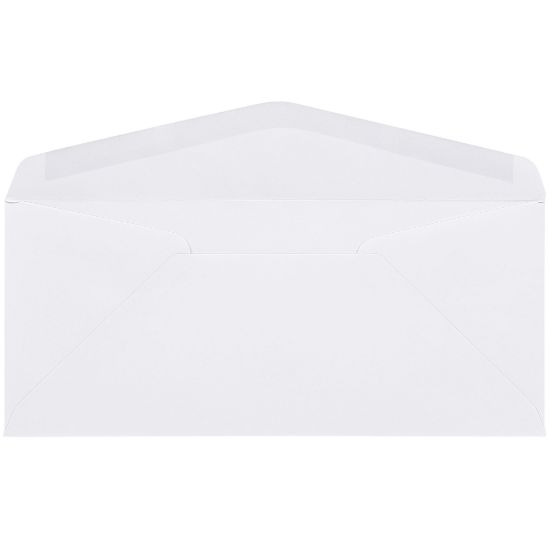
#9 and #10 envelopes for folded letters
A #10 envelope is the standard choice for certified letters, demand notices, lease notices and payments. It holds a few sheets of letter paper folded in thirds. Use a #11 or #12 envelope when you are sending a thicker set of pages that still needs to stay under 1/4 inch.
6x9, 9x12 and 10x13 envelopes for flat documents
Contracts, court filings, signed agreements and certificates often need to arrive unfolded. A 9x12 envelope holds 8-1/2 x 11 pages flat, and a 10x13 envelope gives extra room for legal size pages or thicker stacks. Our 9x12 envelope guide covers capacity and paper weight in more detail.
Can you use a clasp envelope for Certified Mail?
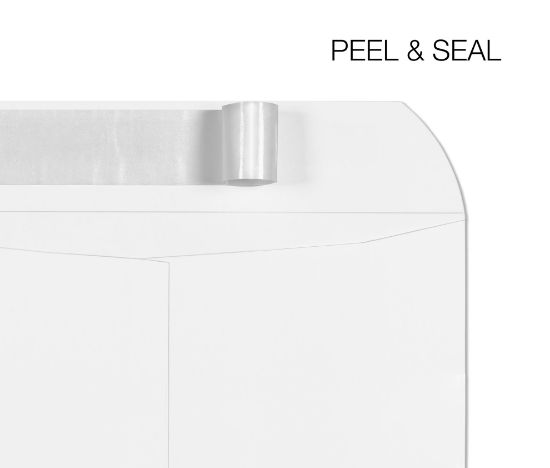
You can, but a clasp makes a letter-size piece nonmachinable, which adds a surcharge, and a bulky clasp can make a large envelope uneven. If you use a clasp envelope, seal the gummed flap as well so it does not open in processing. A self-seal catalog envelope is usually the simpler choice.
Can You Use a Window Envelope for Certified Mail?
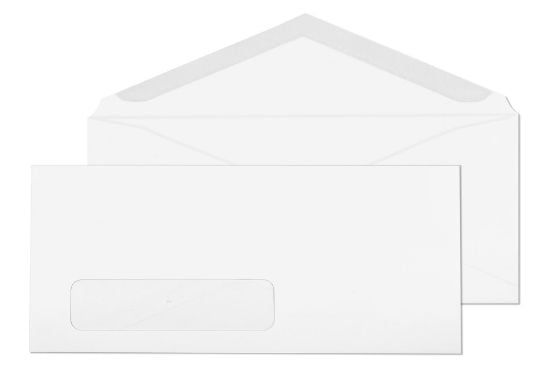
Yes, you can use a window envelope for Certified Mail. USPS rules for window envelopes still apply: the complete delivery address and any barcode must stay visible through the window even when the letter shifts inside, with at least 1/8 inch of clear space on all four sides.
- Keep the address on light paper: the address must print on white or very light paper.
- Use a clear window: the window film must be clear so the address can be read.
- Test the fold: fold one letter, slide it to the top, bottom and sides, and confirm nothing disappears.
- Leave room for the label: make sure the Certified Mail label sits above the window without covering it.
Window envelopes are popular for certified notices printed from property management, collections and legal software because the address prints once. Our window envelope alignment guide shows how to position the address block.
Where Does the Certified Mail Sticker Go on the Envelope?
The Certified Mail sticker goes above the delivery address and to the right of the return address. This is the barcoded green label from PS Form 3800. On a parcel, it can also go to the left of the delivery address. Postage stays in the top right corner as usual.
| Element | Placement |
|---|---|
| Return address | Top left corner, complete with street, city, state and ZIP |
| Certified Mail label (PS Form 3800) | Above the delivery address, to the right of the return address |
| Postage | Top right corner |
| "Return Receipt Requested" endorsement | Near the Certified Mail label, only if you use a green card |
| Green card (PS Form 3811) | Back of a small envelope, or front of a large envelope if it does not cover the address |
| Delivery address | Center of the envelope, or in the window |
Does the sticker need to go on the front?
Yes. The Certified Mail label belongs on the address side. Putting it on the back flap means the carrier may not scan it, and the item may be handled as regular mail.
How Do You Fill Out PS Form 3800?
PS Form 3800 is the Certified Mail receipt. It has two parts: a green barcoded label that you stick on the envelope, and a receipt that you keep. You fill in the recipient details on the receipt so you have a record of what you sent and to whom.
- Write the recipient's name and address on the receipt portion.
- Check the extra services you want, such as return receipt or restricted delivery.
- Peel the barcoded label and place it above the delivery address on the envelope.
- Keep the receipt with the tracking number, and have it postmarked at the counter if you want dated proof of mailing.
Many businesses print Certified Mail labels from mailing software instead of using the paper form. Those labels follow the same placement rule.
How Do You Add a Return Receipt?
A return receipt is an add-on that shows who signed for your Certified Mail. You choose it at the time of mailing, either as the green card (PS Form 3811) or as an electronic return receipt sent to you by email.
Green card (PS Form 3811)
The green card is a postcard that the recipient signs and USPS mails back to you. Fill in your own address on the card, write the recipient's address on the front, and endorse the envelope "Return Receipt Requested" near the Certified Mail label. Attach the card to the back of a small envelope, or to the front of a large envelope as long as it does not cover the address. The card's weight does not count toward postage.
Electronic return receipt
An electronic return receipt sends a PDF of the delivery record and signature by email. It needs no endorsement on the envelope. It is not available for APO, FPO or DPO addresses or some U.S. territories.
What if the green card never comes back?
If your return receipt does not arrive, you can request the delivery record within 90 days using PS Form 3811-A.
What Is Certified Mail Restricted Delivery?
Certified Mail Restricted Delivery limits delivery to one named person or that person's authorized agent. It is used when a legal notice must reach a specific individual rather than anyone at the address. The envelope must be addressed to a named individual, not just a company, and marked "Restricted Delivery" above the address and to the right of the return address.
How Do You Send Certified Mail Step by Step?
To send Certified Mail, prepare a standard envelope with a full return address, attach the PS Form 3800 label above the delivery address, add any return receipt, apply postage and either hand it in at the Post Office or drop it in a collection box.
- Choose the envelope that fits your pages: #10 for folded letters, 9x12 or 10x13 for flat documents.
- Print or write both addresses clearly, with your complete return address in the top left.
- Attach the Certified Mail label above the delivery address.
- Add a return receipt if you need a signature, and endorse the envelope if you use the green card.
- Seal the envelope firmly. A self-seal flap avoids gaps that can catch in equipment.
- Mail it at the counter for a postmarked receipt, or detach your receipt and drop it in a collection box.
- Save the receipt and tracking number with your records.
Counter or collection box: which should you use?
Mail at the counter if you need dated proof that you sent the item before a deadline. A collection box works when the tracking record is enough, but you will not get a postmarked receipt.
How Do You Track Certified Mail and Keep Records?
You track Certified Mail with the tracking number on your PS Form 3800 receipt. USPS keeps tracking information for signature items available for two years, and a paid add-on called USPS Tracking Plus can extend access for longer.
- Scan or photograph receipts: store them with the letter, notice or contract they belong to.
- Save the delivery record: download it from tracking once the item is delivered.
- File the return receipt: keep green cards or electronic receipts with the same record.
- Note unclaimed items: USPS holds unclaimed Certified Mail for 15 days and returns it to the sender after that.
What Mistakes Should You Avoid with Certified Mail Envelopes?
Most Certified Mail problems come from the envelope, not the service. These mistakes cause surcharges, delays or a missing delivery record.
| Mistake | What happens | Fix |
|---|---|---|
| Overstuffing a #10 envelope | Piece goes over 1/4 inch and may be charged as a large envelope | Move to a 9x12 envelope |
| Using a square envelope | Nonmachinable surcharge applies | Use a rectangular business envelope |
| Label covering the address or window | Delivery address cannot be read | Place the label above the address area |
| Missing return address | Return receipt and returned mail cannot reach you | Use preprinted return address envelopes |
| Restricted Delivery addressed to a company | The service cannot be applied correctly | Address it to a named person |
For more on size and shape surcharges, see our nonmachinable envelope guide. For legal documents, our guide to envelopes for legal documents covers paper weight and closures.
Why Businesses Choose Business Envelopes for Certified Mailings
Every size you need. From #10 and #11 letter envelopes to 10x13 envelopes for flat documents, all in one order.
Preprinted return addresses. Custom printing puts your business name and full return address on every envelope, so return receipts always find their way back.
Self-seal options. Peel and seal closures give a clean, secure seal on important notices without moistening.
Free ground shipping, no minimum. Ground shipping is free site wide with no minimum order, with a few regions excluded at checkout.
Need help choosing? Call 845-781-7678, email sales@businessenvelopes.com or contact our team.