 Free shipping

6x9 vs #10 Envelope: Size, Postage, and When to Use Each
Two envelope sizes handle the majority of business and direct mail in the United States. The 6x9 envelope and the #10 envelope each serve a different purpose, carry different postage implications under certain conditions, and produce a different experience for the person opening the mail. Yet they are often confused or used interchangeably, when the wrong choice quietly adds postage costs, forces awkward folds, or sends the wrong impression to the recipient.
This guide covers the exact dimensions, USPS classification rules, folding requirements, postage tiers, content capacity, and real-world use cases for both sizes. By the end, you will know which envelope fits your mailing project and why.
What Are the Exact Dimensions of a #10 Envelope vs a 6x9 Envelope?
The size difference between these two envelopes is significant. While both are common in business settings, they are built for completely different content and content presentation.
What Size Is a #10 Envelope?
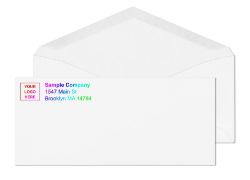
A standard #10 envelope measures 4-1/8 inches by 9-1/2 inches. This is the envelope found in virtually every office, used for payroll stubs, invoices, business letters, and statement mailings. The long, narrow shape is designed around one specific task: holding an 8.5 x 11 inch sheet folded in thirds.
The #10 is sometimes called a commercial envelope or a standard business envelope. It is the default in the United States for formal correspondence. Its dimensions comply with USPS letter mail standards, which means it processes automatically through postal sorting equipment and qualifies for base First-Class letter postage at standard weight.
What Size Is a 6x9 Envelope?
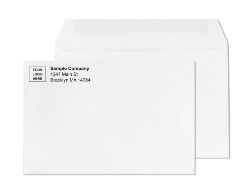
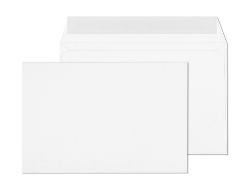
A 6x9 envelope measures 6 inches by 9 inches, making it noticeably wider and taller than a #10. Because of its width, this envelope belongs to the booklet or catalog envelope family. It is designed for content that should not be tri-folded. A 6x9 accepts an 8.5 x 11 inch sheet folded in half (5.5 x 8.5 inches) with comfortable clearance on all sides.
The 6x9 is also called a flat mailer, a booklet envelope, or simply a 6 by 9. It is a popular choice for direct mail marketing pieces, brochures, product lookbooks, and multi-page inserts that need to arrive without a crease down the center.
Side-by-Side Dimensions: 6x9 vs #10 Envelope
| Feature | #10 Envelope | 6x9 Envelope |
|---|---|---|
| Dimensions | 4-1/8 x 9-1/2 inches | 6 x 9 inches |
| Envelope Family | Commercial / Business | Booklet / Catalog / Flat Mailer |
| Flap Position | Open-side (long side opens) | Open-end or open-side depending on style |
| Best Content Fit | 8.5x11 sheet folded in thirds | 8.5x11 sheet folded in half, or 5.5x8.5 inserts |
| USPS Classification | First-Class Letter | Letter (lightly filled) or Flat (overstuffed or rigid) |
| Window Version Available | Yes | Yes |
| Security Tint Available | Yes | Yes |
| Machine Insertable | Yes (standard for inserters) | Yes (when contents are flat and uniform) |
| Typical Uses | Business letters, invoices, statements, payroll, tax forms, checks | Brochures, proposals, direct mail campaigns, marketing kits |
Is a 6x9 Envelope a Flat or a Letter According to USPS?
This is one of the most frequently asked questions about 6x9 envelopes, and the answer depends on the physical condition of the mailed piece, not just the envelope's empty dimensions.
When Does a 6x9 Qualify as a USPS Letter?
USPS letter mail must meet all of the following requirements:
- Minimum: 3.5 inches high, 5 inches long, 0.007 inches thick
- Maximum: 6.125 inches high, 11.5 inches long, 0.25 inches thick
- Must be rectangular and flexible
- Must weigh 3.5 ounces or less
- Aspect ratio between 1:1.3 and 1:2.5
A standard, lightly loaded 6x9 envelope meets these requirements. At 6 inches high and 9 inches long, it falls inside the letter limits. A single Forever Stamp covers a 6x9 envelope at 1 ounce or less when it qualifies as a letter.
When Does a 6x9 Get Reclassified as a USPS Flat?
Several conditions can push a 6x9 envelope out of letter classification and into the flat (large envelope) category, which carries a higher postage rate:
- Overstuffed contents: When the loaded envelope exceeds 0.25 inches in thickness
- Rigid contents: A stiff insert such as a heavy card, a DVD, or a thick product sample triggers nonmachinable or flat postage
- Clasps or string closures: These closures make the envelope nonmachinable even if the dimensions otherwise qualify for letter rates
- Weight over 3.5 oz: Any mail piece over 3.5 ounces is automatically a flat regardless of size
A practical rule: weigh and measure your fully loaded, sealed 6x9 before ordering in volume. A small test mailing of 10 to 25 pieces before full production can catch postage surprises early.
Does a #10 Envelope Ever Get Reclassified?
Yes, but it is less common. A #10 envelope can be reclassified as a flat or nonmachinable letter if it contains a rigid insert, uses a clasp closure, or is stuffed past the 0.25-inch thickness limit. Standard business mailings with a #10 and a single letter sheet rarely encounter this issue.
How Does the Folding Requirement Differ Between a 6x9 and a #10?
The fold is where the practical difference between these two sizes becomes most visible in everyday use.
What Fold Does a #10 Envelope Require?
A #10 envelope requires a tri-fold, also called a letter fold. An 8.5 x 11 inch sheet is folded into three roughly equal horizontal sections, creating a finished insert approximately 3.67 x 8.5 inches. This slides into the 4.125-inch-high #10 with a small clearance margin.
The tri-fold is standard for nearly all formal business correspondence, but it is a poor choice for:
- High-resolution photos or design-heavy brochures (the fold crease bisects the visual)
- Thick card stock (creasing is difficult and can crack the surface)
- Multi-panel inserts that need to open flat
- Documents that will be filed or scanned (a tri-fold crease interferes with flat scanning)
What Fold Does a 6x9 Envelope Require?
A 6x9 envelope is designed for a half-fold or no fold at all. An 8.5 x 11 inch sheet folded once in the center produces a 5.5 x 8.5 inch insert that fits comfortably inside a 6 x 9 inch cavity with proper clearance on all sides.
The 6x9 is the right choice when the insert must arrive with minimal creasing. This makes it valuable for:
- Brochures where the design runs edge to edge
- Documents that recipients will file, scan, or refer back to repeatedly
- Pieces printed on heavier stock that does not tri-fold cleanly
- Multi-sheet inserts or marketing kits where a tri-fold would create excess thickness
Clearance Rule That Applies to Both Sizes
Regardless of which size you use, leave at least 1/4 inch of clearance on each side between the folded insert and the inside cavity of the envelope. Tight fits make machine insertion difficult, increase jam risk, and can make the envelope look overstuffed when sealed.
Which Costs Less to Mail: a 6x9 or a #10 Envelope?
Postage is the ongoing operating cost that often tips the decision when mailing in volume. Both envelopes can qualify for the same First-Class letter rate, but the 6x9 is more likely to tip into a higher tier because of how it tends to be used.
Why Does a #10 Envelope Usually Cost Less to Mail?
The #10 is a narrow envelope with a cavity just large enough for a tri-folded letter. It is difficult to overstuff. A standard business letter with one or two sheets stays well within the 1-ounce and 0.25-inch limits that define First-Class letter rates. For most standard #10 business mailings, one Forever Stamp is sufficient.
Why Does a 6x9 Envelope Sometimes Cost More to Mail?
The 6x9's larger cavity invites larger and heavier contents. A half-folded brochure, a reply card, a return envelope, and a marketing insert can quickly push the total weight past 1 ounce, adding postage for each additional ounce. Fill the same 6x9 past 0.25 inches of thickness and the entire piece reclassifies as a flat, which carries a meaningfully higher base rate than a letter.
What Is the Nonmachinable Surcharge and When Does It Apply?
The nonmachinable surcharge applies to letter-class mail that USPS cannot process through automated equipment. Common triggers include:
- Aspect ratio below 1:1.3 (square or near-square envelopes)
- Rigid or unevenly thick contents
- Clasps, strings, buttons, or metal fasteners as closures
- Contents that cause the envelope to feel lumpy or uneven
- Poly envelopes or padded mailers used in place of standard paper envelopes
The #10 is the shape least likely to trigger this surcharge in normal business use. If your 6x9 uses a standard gummed or self-seal flap and holds flat, uniform content, it will generally process at letter rates without issue.
Postage Classification Quick Reference
| Scenario | #10 Envelope | 6x9 Envelope |
|---|---|---|
| Single letter sheet, 1 oz or less | First-Class Letter rate | First-Class Letter rate |
| Multi-page insert, 1 to 2 oz | Letter rate + additional ounce surcharge | Letter rate + additional ounce surcharge |
| Over 0.25 inches thick when sealed | Flat rate | Flat rate |
| Over 3.5 ounces | Flat rate | Flat rate |
| Clasp or string closure | Nonmachinable surcharge | Nonmachinable surcharge |
Always weigh your fully loaded, sealed envelope before placing a large order. Postage costs compound quickly across thousands of pieces, and a small per-piece difference adds up significantly over a campaign run.
How Many Sheets Can a 6x9 vs #10 Envelope Hold?
Capacity varies based on paper weight, but as a general guideline using standard 20 lb bond paper:
Content Capacity for a #10 Envelope
- Up to 4 or 5 sheets at 1 ounce or under
- Roughly 8 to 10 sheets before approaching the 0.25-inch thickness threshold
Heavier stock reduces capacity. A single sheet of 60 lb text stock weighs more than a standard 20 lb bond sheet, so content printed on marketing-grade paper fills a #10 faster than office paper.
Content Capacity for a 6x9 Envelope
- Up to 4 or 5 sheets of 20 lb bond at 1 ounce or under (similar weight limit per ounce, but each sheet is larger)
- A half-folded 8.5x11 brochure printed on 60 lb text stock, plus a reply card, typically stays near 1 ounce
The critical difference is that the 6x9 cavity is wide enough to hold a brochure, a reply card, a return envelope, and a covering letter without triple-folding any piece. A #10 cannot hold a comparable kit without adding extra folds that damage the presentation of design-heavy materials.
When Should You Use a #10 Envelope?
The #10 is the right envelope for the majority of standard business correspondence. Its strengths are efficiency, familiarity, and postage economy at standard content loads.
Best Uses for a #10 Envelope
- Business letters and correspondence: Any formal letter printed on standard letterhead fits naturally in a #10
- Invoices and billing statements: A #10 with a window front aligns the address block through the window, eliminating the need for a separate label or envelope printing
- Payroll and checks: Security-tinted #10 envelopes are the standard for payroll and check mailings, blocking contents from being read against light
- Tax forms and official notices: Government agencies and accounting firms use #10 envelopes because they are the standard for formal correspondence
- Reply and return mail: A #9 reply envelope nests inside a #10 for bill-and-return and remittance mailings
- Direct mail letters: Fundraising letters, sales letters, and appointment reminder mailings sent as personal-style correspondence typically use a #10 to look like a letter rather than a promotional package
Why a Plain #10 Can Be Effective for Direct Mail
In direct mail, the envelope is the first selling tool. A plain white #10 that looks like a personal letter can outperform an obviously promotional piece in some campaigns because recipients are more likely to open something that appears to be individual correspondence rather than mass mail. This is a well-established strategy in fundraising and financial services direct mail campaigns.
Explore #10 envelopes for business correspondence, window options, and security tint styles. See the complete #10 envelope size and styles guide for full specifications.
When Should You Use a 6x9 Envelope?
The 6x9 envelope is the right choice when your content needs space, when visual presentation matters, or when the insert should arrive without the crease that a tri-fold creates.
Best Uses for a 6x9 Envelope
- Brochures and catalogs: A half-folded brochure printed on 60 lb or 70 lb text stock slides into a 6x9 without damage to the design
- Direct mail marketing kits: When your mailing includes a brochure, a reply card, a return envelope, and a letter, the 6x9 holds the complete kit without over-folding any component
- Proposals and presentations: A proposal that will be retained by the recipient arrives in better condition in a 6x9 than tri-folded in a #10
- Legal documents: Documents that will be filed or scanned should not be tri-folded. A 6x9 half-fold is easier to unfold and scan flat
- Thick card stock mailings: Postcards, announcement cards, or product samples printed on heavy stock that would crack or wrinkle if tri-folded
- Photography and print proofs: Any piece where a crease would damage visual quality
Why a 6x9 Envelope Can Stand Out in a Mailbox
In a stack of #10 envelopes, a 6x9 immediately looks different. It is wider, presents a larger face, and its proportions signal something other than routine correspondence. For direct mail campaigns where standing out at the mailbox matters, the 6x9 format can attract more attention without the added cost of an oversized 9x12 catalog envelope. This is a meaningful advantage in high-volume campaigns where even a small lift in open rate produces measurable results across the run.
Explore 6x9 envelopes across available styles and quantities. See the best 6x9 envelope guide for a deeper look at material, closure, and printing options.
Which Envelope Is Better for Direct Mail: 6x9 or #10?
Direct mail practitioners have used both sizes for decades, and the evidence consistently shows that neither size universally outperforms the other. The right choice depends on your campaign type, content, and testing history.
How Does the 6x9 Format Affect Direct Mail Open Rates?
The 6x9 stands out in a stack of standard #10s. Because it is wider and taller, it cannot be shuffled in with routine business letters, which means it tends to get picked up first or noticed more readily. In some campaigns this visual differentiation has produced a modest lift in open rates. However, the lift is not guaranteed, and the 6x9 often costs more per piece when the content is heavier or when postage tips into the flat category.
When Does a #10 Outperform a 6x9 in Direct Mail?
A #10 envelope that mimics personal mail (no teaser copy, plain white, first-class stamp, individually addressed) can outperform a more obviously promotional 6x9 in campaigns that rely on curiosity and a personal tone. This approach is widely used in letter-format fundraising, insurance mailings, and financial services prospecting where the message benefits from appearing to come from one person rather than a marketing department.
What Is the Right Envelope for a Direct Mail Kit With Multiple Inserts?
If your mailing kit includes a letter plus one or more additional pieces (a brochure, a reply card, a return envelope), the 6x9 is almost always the better technical choice. A multi-piece kit tri-folded into a #10 becomes thick, difficult to fold uniformly, and prone to looking overstuffed or misshapen when sealed. The same kit slides cleanly into a 6x9 with appropriate clearance on all sides.
The most defensible approach for any direct mail campaign is to test. Run the same offer, the same letter copy, and the same insert in both a #10 and a 6x9 to matched recipient groups. Track open rate, response rate, and cost per response. The results will tell you more about your specific audience than any general guideline.
See the direct mail envelopes guide for a detailed breakdown of envelope formats used across campaign types.
Do 6x9 and #10 Envelopes Both Come in Window Styles?
Yes. Both sizes are widely available in window configurations. The window allows the recipient's address to show through from the printed insert, eliminating the need for address printing on the envelope itself or for separate mailing labels.
USPS Window Envelope Rules for Both Sizes
For a window envelope to qualify for standard First-Class letter processing, USPS requires:
- The address must be fully visible through the window with at least 1/8 inch of clearance on all sides
- The address must not shift out of the window when the envelope is tipped or handled
- The window must not obscure the address with any material or ink
Window Alignment Difference Between #10 and 6x9
For a #10 window envelope, the standard window position is designed for a tri-folded 8.5x11 letter where the address block sits in the lower left of the letter. Confirm your letterhead or billing statement layout aligns with the window before ordering in volume.
For a 6x9 window envelope, the window is positioned for a half-folded insert. If you are converting a #10 mailing to a 6x9 format, your address block position may need to shift in your template to align with the window in the new envelope size.
Learn more in the window envelope vs regular envelope guide and the open-end vs open-side envelope guide.
Can You Print Custom Branding on a 6x9 or #10 Envelope?
Yes. Both sizes support custom printing for logos, return addresses, teaser copy, and full-color designs. The 6x9 provides a larger print canvas on the face of the envelope, which is an advantage for marketing campaigns that use the outer envelope as a branding surface.
What Custom Printing Looks Like on a #10 Envelope
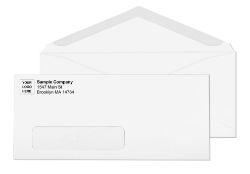
A #10 envelope is typically printed with a return address and logo in the upper left corner. Teaser copy can appear across the front. Full-bleed color printing on a #10 is available and used for premium direct mail campaigns, though simple logo-and-return-address printing is more common.
What Custom Printing Looks Like on a 6x9 Envelope
The wider face of a 6x9 gives considerably more room for a headline, a brand image, a tagline, or a visual that supports the campaign inside. This space advantage is one of the primary reasons direct mailers choose the 6x9 when the outer envelope itself needs to do selling work.
One important note for custom printing on either size: keep the recipient address zone clear of heavy ink and design elements. USPS optical character recognition scans the address area, and heavy ink coverage in that zone can cause scanning errors, delays, or manual handling fees.
See the custom printed envelopes guide and the complete envelope printing guide for setup instructions across laser, inkjet, and bulk printing methods.
Which Size Is Better for Confidential or Security-Sensitive Mailings?
Both sizes are available with security features, but the #10 is the established standard for sensitive business mail including checks, payroll, and financial statements.
Security Features Available for Both Sizes
- Security tint (check safety pattern): An interior pattern printed inside the envelope that prevents contents from being read when held up to light. Standard for checks, payroll, and financial statements
- Tamper-evident seals: Some security envelopes include sealing strips that show visible evidence if the envelope has been opened
- Peel-and-seal closures: Eliminate the need to moisten a gummed flap, which improves sealing consistency in high-volume production environments
For checks, payroll, remittance, and any mailing where contents should not be legible through the envelope, a security-tinted envelope in either size provides appropriate protection. The types of business envelopes guide covers the full range of security and specialty options available.
Which Envelope Works Better for Machine Insertion in High-Volume Mailings?
Machine insertion is a key consideration for high-volume mailings. When envelopes are loaded by machine rather than by hand, the envelope and its contents must meet specific consistency requirements to avoid jams and misfeeds.
#10 Envelopes and Machine Insertion
The #10 is the standard format for inserter machines used in billing, statement, and transactional mailing environments. Most insertion equipment is designed around the #10 size and the tri-fold format, which means setup is straightforward and jam rates are low with standard content.
6x9 Envelopes and Machine Insertion
A 6x9 can be machine inserted, but it requires equipment configured for the larger booklet format. If your mailing operation uses standard transactional inserters sized for #10, confirm compatibility with your production team before switching to 6x9. Content consistency also matters: a mixed-weight kit or irregular-size insert can cause misfeeds even on equipment that handles 6x9 envelopes normally.
For high-volume production mailings, test the full kit through your actual insertion equipment before committing to a print run. A small test batch of 25 to 50 pieces will identify problems before they multiply across the full campaign.
What Are the Most Common Mistakes When Choosing Between a 6x9 and #10 Envelope?
Assuming a 6x9 Always Costs More to Mail
A lightly loaded 6x9 envelope with a single half-folded sheet qualifies for the same First-Class letter rate as a #10. The postage difference only appears when the 6x9 is filled with heavier content. Writing off the 6x9 on postage grounds without actually weighing the loaded piece is the mistake.
Tri-Folding Content Into a 6x9 Envelope
A 6x9 envelope is wider than necessary for a tri-folded letter. Using a tri-fold in a 6x9 means the insert will shift and rattle inside the envelope, which looks unprofessional when opened and can cause the insert to slide out of alignment in the window. Use a half-fold for 6x9 mailings.
Ignoring Window Alignment When Switching Sizes
If you use a window envelope and switch from a #10 to a 6x9, the window position changes. Many businesses have discovered this after printing a large insert run and ordering the wrong window envelope size. Always mock up the insert in the actual envelope and check window alignment before finalizing a print run.
Using a Clasp Closure and Expecting Letter Postage
Clasp-closure envelopes are nonmachinable regardless of size. If your 6x9 or #10 uses a metal clasp, it will not qualify for standard First-Class letter processing. Use peel-and-seal or gummed closures for any mailing where standard postage rates matter.
Not Measuring Thickness After Sealing
Both envelopes are classified based on the sealed, loaded piece. A kit that looks thin during assembly may be thicker than expected once the flap is sealed and the contents compress. Measure with a caliper after sealing, not before assembly.
What Should You Consider Before Ordering 6x9 or #10 Envelopes in Bulk?
Test-Insert the Actual Contents Before You Order
The single most important step before a bulk order is to test-insert the actual contents into the actual envelope. Print the insert at final size on final-weight stock, fold it exactly as it will be folded in production, and insert it into the envelope. Seal it. Measure it. Weigh it. This takes 15 minutes and eliminates the most common ordering errors.
Order a Sample Pack to Confirm Fit
If you are not certain which size fits your mailing, a sample pack lets you test fit, confirm window alignment, and check the presentation before committing to quantity. See the business envelope sample guide for ordering a sample set across multiple sizes.
Match the Closure Type to Your Production Method
For hand-sealing a small run, gummed or peel-and-seal closures are both practical. For machine insertion or high-volume hand production, peel-and-seal closures are faster and produce more consistent seals. If your run involves moisture-sealing a gummed flap, test adhesion on your specific stock in the temperature and humidity conditions of your mailing room.
Review the business envelope size and ordering guide for a full breakdown of what to consider across quantity tiers.
How Do 6x9 and #10 Envelopes Compare to Other Common Business Sizes?
Understanding how these two sizes fit into the broader envelope landscape helps when your content or mailing requirements fall outside what either option handles well.
- #9 envelope (3-7/8 x 8-7/8 inches): Slightly smaller than a #10, designed to nest inside it for bill-and-return mailings. See the 6-3/4 envelope guide for the even smaller reply size
- 9x12 catalog envelope: The step up from a 6x9 for full-size flat documents. Holds an 8.5x11 sheet completely unfolded. Classified as a flat regardless of content weight
- A-series envelopes (A2, A6, A7): Invitation and greeting card sizes. Not to be confused with ISO A-series paper sizes, which use a different naming convention
See the large envelope sizes guide for the full range of catalog and booklet sizes above 6x9, and the regular size envelopes guide for the complete commercial size chart. The envelope sizes chart guide covers all sizes with dimensions in one reference.
Related Envelope Guides on BusinessEnvelopes.com
- 6x9 Envelopes Complete Guide - Full specifications, paper types, closure options, and use cases
- #10 Envelope Size and Styles Guide - Complete breakdown of dimensions, window options, and security features
- 6x9 Envelope Postage Guide - Detailed postage classification rules for 6x9 mailers
- How Many Stamps Do I Need? - Stamp and postage reference organized by envelope size
- Direct Mail Envelopes Guide - Envelope formats used across direct mail campaign types
- How to Address an Envelope - USPS formatting rules for recipient and return address placement
- Custom Printed Envelopes Guide - Available printing options and what to specify
Where Can You Learn More About USPS Mailing Rules?
USPS publishes detailed size and weight standards covering all mail classifications. If you have questions about whether a specific piece qualifies for letter, flat, or parcel pricing, consult the official USPS Domestic Mail Manual (DMM), available through the USPS website. The DMM covers all mail classes, size standards, weight limits, and shape requirements for business mailers.
For printing specifications, USPS also publishes guidelines on address clear zones, OCR readability, and barcode placement that apply to both #10 and 6x9 envelopes whenever custom printing is involved. These are available directly through the USPS postal explorer and business mail tools online.
For a quick reference on postage by envelope size, see the how many stamps do I need by envelope size guide on BusinessEnvelopes.com.
Choosing Between a 6x9 and a #10 Envelope: Summary
The choice between a 6x9 vs #10 envelope comes down to what you are mailing and how you need it to arrive.
Use a #10 envelope when your content is a standard letter-size document folded in thirds, when postage efficiency matters above all else, when the mailing is formal correspondence, or when your inserter equipment is set up for the #10 format.
Use a 6x9 envelope when your content should arrive flat or half-folded, when you are mailing a brochure or multi-piece kit, when the outer envelope needs to carry branding or marketing copy, or when you want a format that stands out from a standard letter stack at the mailbox.
In either case, weigh and measure the loaded, sealed envelope before placing a large order. Postage classification is determined by the physical condition of the mailed piece, not the envelope's empty dimensions. A test mailing of 25 pieces before full production is the simplest way to confirm your classification and avoid postage surprises at scale.
Shop 6x9 envelopes or shop #10 envelopes to find the right size, style, and quantity for your mailing. For help choosing, see the complete business envelope size guide or request a sample pack to test fit before committing to a full quantity.
About the Author
BusinessEnvelopes.com is a family-owned business founded in 1997, located at 308 Museum Village Rd, Monroe, NY 10950. With over 20 years supplying business envelopes to more than 53,526 customers across the United States, the team writes envelope guides based on direct product knowledge and daily work with business mailers. Learn more on the About Us page.