

Quick answer: For 4x6 and 5x7 prints, a 6x9 envelope holds the photo flat at First-Class letter rate ($0.82/oz in 2026). For 8x10 prints, a 9x12 envelope holds the photo completely unfolded at flat rate ($1.63/oz). For weather-risk routes or irreplaceable prints, a 9x12 Tyvek envelope adds waterproof and tearproof protection. No rigid chipboard is required when the envelope size is correctly matched to the print size.
Photos arrive damaged for one consistent reason: the envelope is too large. When a print has room to shift inside the mailer, automated postal sorting flexes it across its unsupported edges and creases arrive. Get the size right and a standard paper envelope delivers a photo just as flat as a rigid chipboard mailer, at a fraction of the cost per piece.
This guide covers envelope size selection for each print size, Tyvek vs paper for moisture risk, the non-machinable surcharge and how to avoid it, postage costs by format, and how to address photo envelopes correctly.
Why Standard Paper Envelopes Work for Mailing Photos
The assumption that photos require rigid chipboard mailers to survive the mail is wrong in most circumstances. Chipboard mailers solve a real problem, but the problem they solve is not about the mailer material , it is about interior space. When a photo has room to slide, it bends. When a photo fits snugly inside an envelope that matches its dimensions, it cannot pivot across an unsupported edge and arrives flat.
Automated postal sorting equipment runs mail through roller-style mechanisms at high speed. A letter-size piece that is properly sized, sealed, and within thickness limits passes through cleanly. A piece where the contents shift inside the envelope flexes with each roller contact. The mailer's rigidity matters less than the interior fit.
The practical rule: match the envelope size to the print size with a quarter-inch to half-inch clearance on each edge. The photo rests flat, the envelope seals flush, and the piece handles like standard flat mail.
Photo Mailer Envelope Size Guide: Which Envelope for Which Print
| Print Size | Best Envelope | Interior Clearance | USPS Class | Postage (2026, 1 oz) |
|---|---|---|---|---|
| 4x6 inches | 6x9 open-end | 1 in each short side, 1.5 in each long side | First-Class Letter | $0.82 |
| 5x7 inches | 6x9 open-end | 0.5 in each short side, 1 in each long side | First-Class Letter | $0.82 |
| 8x10 inches | 9x12 open-end | 0.375 in each side | First-Class Flat | $1.63 |
| 8.5x11 inches | 9x12 open-end | 0.125 in each side , tight; use 10x13 for mounted prints | First-Class Flat | $1.63 |
| 11x14 inches | 10x13 + folded, or tube roll | Does not fit flat in standard catalog envelopes | Package | Package rate |
6x9 envelope for 4x6 and 5x7 photos
A 6x9 catalog envelope (open-end, flap on the short edge) holds a 4x6 print flat with approximately one inch of clearance on the short sides and one and a half inches on the long sides. A 5x7 print fits with a half-inch margin on the short sides and one inch on the long sides. Both fits are clean enough that the print cannot slide and flex during transit.
The postage advantage of the 6x9 is significant: at exactly 6 inches tall, the 6x9 clears the USPS letter-rate height maximum of 6-1/8 inches and mails at First-Class letter rate ($0.82 per ounce in 2026). The same print in a 9x12 envelope would mail at flat rate ($1.63 per ounce). On a batch of 100 photo mailings, choosing 6x9 over 9x12 where the print fits saves $81 in postage. For postage details, see 6x9 Envelopes: Letter-Rate Postage, Sizes and Uses Guide.
9x12 envelope for 8x10 photos
A 9x12 catalog or booklet envelope holds an 8x10 print flat with a quarter-inch margin on each side. No folding. No center crease. The 8x10 slides into the 9x12 cleanly and arrives exactly as it left. A 9x12 always mails at USPS First-Class flat rate regardless of weight or contents. In 2026 that is $1.63 per ounce.
For prints that are mounted, matted, or have a backing board added for extra rigidity, the 9x12 may be tight. In that case, use a 10x13 envelope, which gives an 8x10 print over a full inch of clearance on each side even with added material. Browse the full 9x12 range at 9x12 envelopes and the complete format guide at 9x12 Envelope: Size, Uses, Formats, and When to Use It.
Tyvek Photo Mailer Envelopes: When to Upgrade
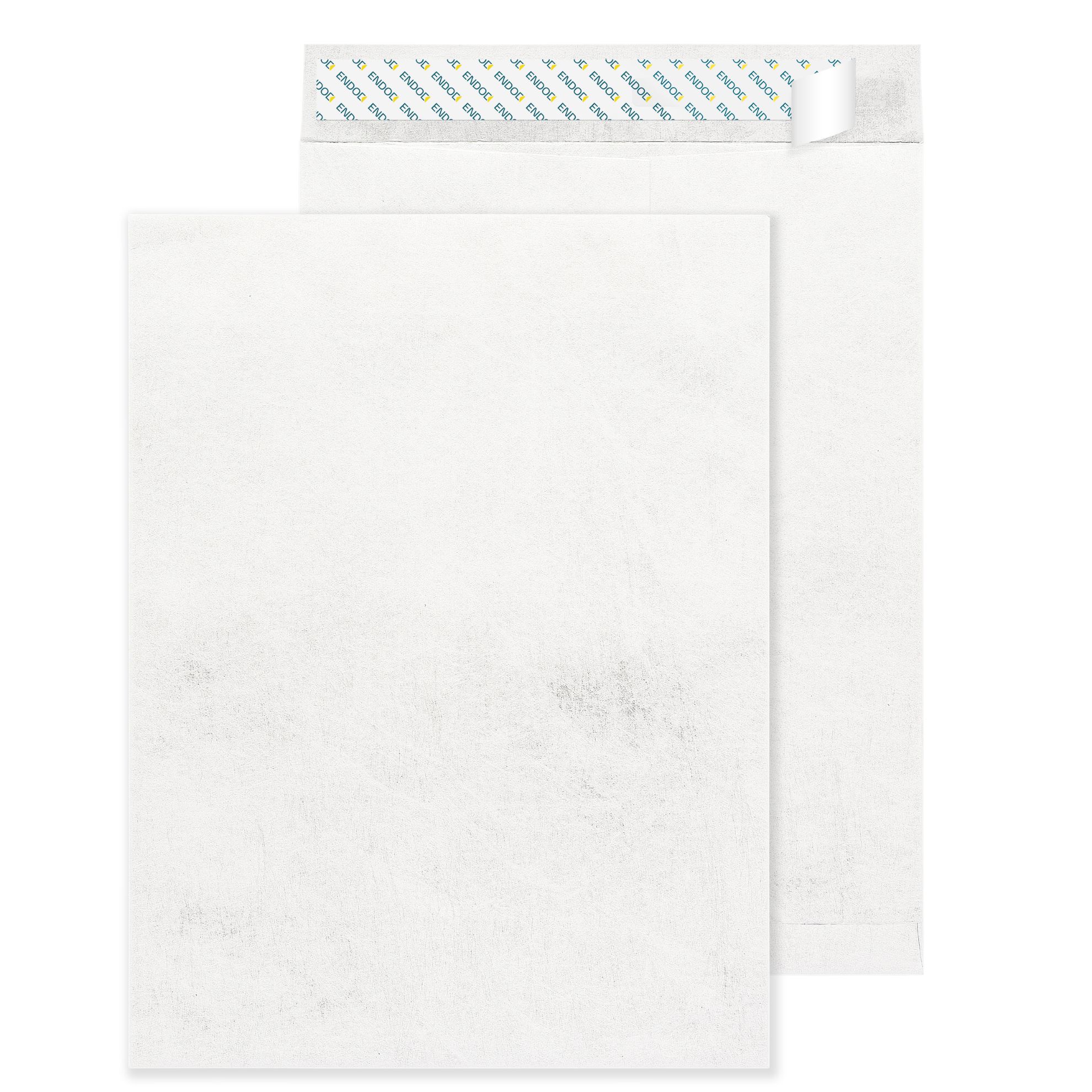
A standard paper envelope in the correct size delivers photos flat in typical conditions. Tyvek is the right choice when the mailing faces specific risks that paper cannot handle.
What Tyvek does for photo mailing
Tyvek is a spunbonded high-density polyethylene material that repels water, resists tearing, and does not soften or disintegrate in wet conditions. A paper envelope caught in heavy rain during delivery can arrive with contents damaged by moisture or by the softened envelope collapsing around the print. A Tyvek envelope in the same conditions arrives intact.
For prints that are irreplaceable (original darkroom prints, signed photographer proofs, artwork prints), Tyvek eliminates the weather-damage risk that standard paper carries. The peel-and-seal closure on Tyvek envelopes creates a tamper-evident bond that also resists moisture penetration at the seal line.
When to use Tyvek vs standard paper for photos
| Situation | Standard Paper 9x12 | Tyvek 9x12 |
|---|---|---|
| Standard prints, indoor delivery | Correct choice | Overkill , paper is adequate |
| Weather-risk route or outdoor delivery box | Risk of moisture damage | Use Tyvek |
| Irreplaceable originals (signed prints, darkroom) | Risk , cannot replace if damaged | Use Tyvek |
| High-volume batch mailing of proofs | Cost-effective choice | Significantly more expensive per piece |
| International photo mailing | Higher transit risk | Use Tyvek , longer routes, more handling |
For the complete guide to Tyvek construction and when to use it for important document and photo mailing, see Tyvek Envelopes: Tear-Proof and Waterproof Mailing Guide. Browse the 9x12 Tyvek format at Premium 9 x 12 Tyvek Envelopes with Kwik-Tak Closure and the 10x13 format at 10 x 13 Tyvek Envelopes Peel and Seal.
Clasp Envelopes for Reusable Photo Mailing Programs
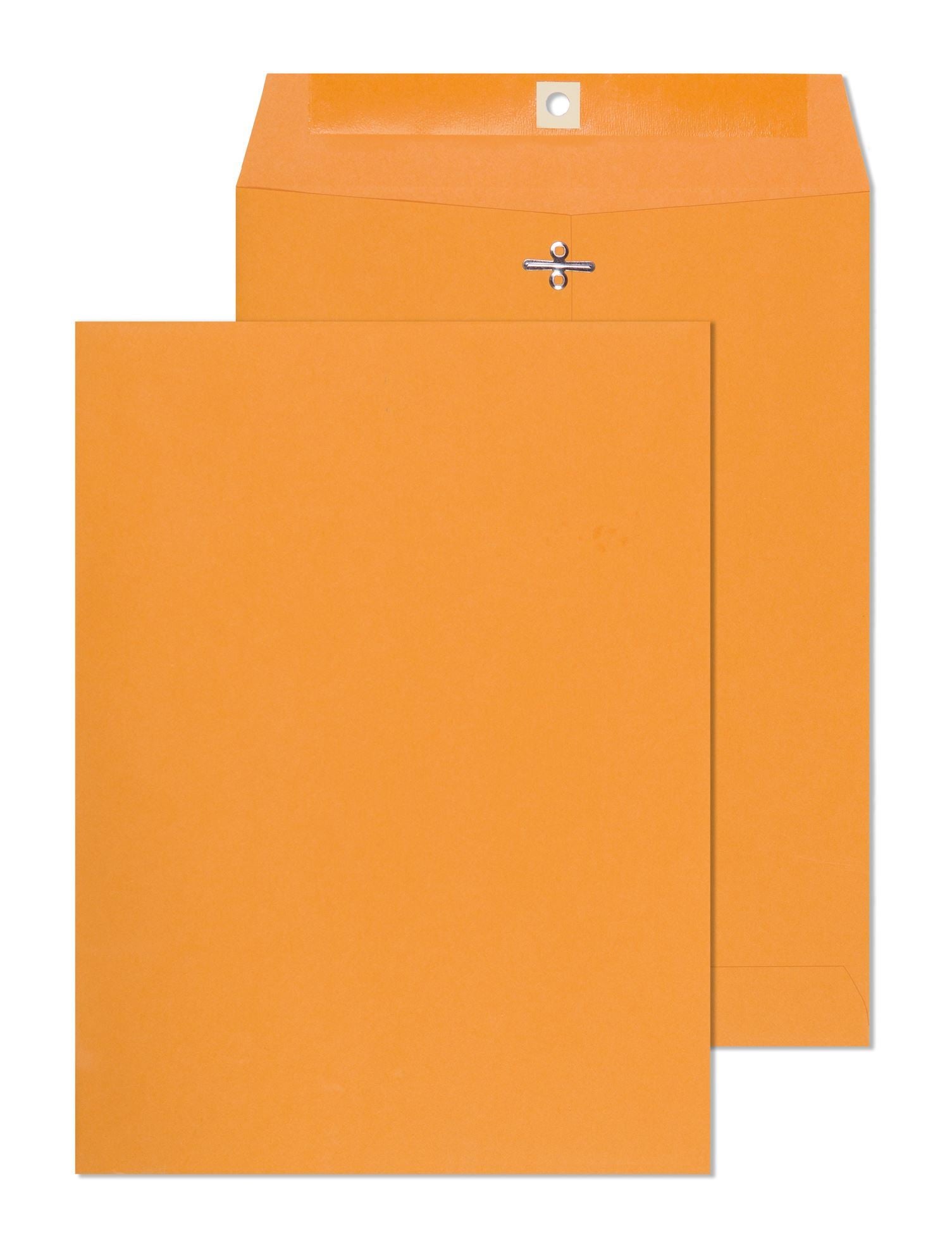
Photography studios and professional photo labs that route prints through multiple quality-check stages before sealing and mailing often use clasp envelopes. The ribbed metal clasp opens and reseals cleanly across multiple cycles without losing structural integrity, making it the right format when the same envelope handles the print through internal review before outgoing mail.
The 28 lb brown kraft construction at 104 GSM is denser than standard white wove, which resists the corner bending that can happen during internal handling. The gummed flap seals permanently for outgoing mail once the clasp is in its final position. Browse the 9x12 clasp format at 9x12 Brown Kraft Clasp Catalog Envelopes and see the full clasp guide at Clasp Envelopes: Complete Guide to Sizes, Uses, Mailing Rules.
The Non-Machinable Surcharge: What Rigid Inserts Do to Postage
If you add a rigid backing board, chipboard card, or any stiff insert to a letter-size envelope, the piece may trigger the USPS non-machinable surcharge of $0.49 per piece (2026 rate). This applies to letters that are too thick, too rigid, or too stiff to pass through automated sorting equipment.
A plain photo in a correctly sized 6x9 envelope does not trigger this surcharge , a photo print is paper and passes through sorting machinery normally. The surcharge becomes relevant when buyers add a backing board to a letter-size envelope. If the sealed 6x9 exceeds 1/4 inch in thickness or becomes rigid enough to fail the postal flexibility test, it becomes non-machinable and costs $0.49 more per piece.
For flat-rate 9x12 envelopes, the non-machinable surcharge does not apply because 9x12 envelopes are already classified as flats and processed on flat-sorting equipment rather than letter-sorting machinery. Adding a backing board to a 9x12 is safe from a surcharge perspective. For the full surcharge rules, see Non-Machinable Envelope Guide: Surcharge Rules Explained.
USPS Postage for Photo Mailer Envelopes: 2026 Rate Table
| Envelope | Class | 1 oz (2026) | 2 oz (2026) | Best For |
|---|---|---|---|---|
| 6x9 | First-Class Letter | $0.82 | $1.09 | 4x6, 5x7 prints |
| 9x12 | First-Class Flat | $1.63 | $1.90 | 8x10 prints, matted photos |
| 10x13 | First-Class Flat | $1.63 | $1.90 | 8x10 with backing board, 8.5x11 |
| Non-machinable surcharge | +$0.49 per piece | Applies to letter-size envelopes with rigid inserts over 1/4 inch thick | , | Avoid by using 9x12 flat for stiff contents |
For the complete 2026 postage guide by envelope size, see How Much Does It Cost to Mail a Letter in 2026? and How Many Stamps Do I Need? The Complete Guide by Envelope Size.
How to Address a Photo Mailer Envelope
Addressing a photo mailer envelope follows the same rules as any USPS First-Class mailing. For 9x12 flat envelopes, write or print the delivery address in the lower right quadrant of the face, keeping it clear of the edges. Return address goes in the upper left corner. USPS optical character recognition reads the delivery address and routes the piece automatically, so clear printing and correct positioning matter.
Adding "Do Not Bend" or "Photos Enclosed" to the envelope face is optional and has limited practical effect on automated sorting, which processes mechanically rather than checking handwritten notes. The functional protection against bending is the correct envelope size, not the notation. If you do add a notation, write it below the return address or along the left margin where it will not interfere with the delivery address block.
For the complete addressing guide, see Mailing and Sending Letters: The Complete US Business Guide.
Common Mistakes When Mailing Photos
- Using an oversized envelope. A 4x6 print in a 9x12 envelope slides 3-4 inches in every direction. Each movement across an unsupported edge creates a crease. Match the envelope size to the print with a quarter to half-inch margin on each side.
- Skipping the correct size in favor of a larger "safe" envelope. Bigger is not safer. A correctly sized 6x9 delivers a 4x6 photo more reliably than a loose 9x12 with the same print floating inside.
- Adding a rigid backing board in a letter-size envelope. A stiff insert in a 6x9 can trigger the $0.49 non-machinable surcharge. If you need rigid backing, use a 9x12 flat envelope where the surcharge does not apply.
- Sealing multiple loose prints together without a sleeve. Multiple prints stacked loose in an envelope slide against each other, scratching glossy surfaces and creasing at the contact points. Interleave prints with tissue paper or enclose in a protective sleeve before loading the envelope.
- Forgetting that 9x12 envelopes always mail at flat rate. No matter what the contents weigh or how thin the material, a 9x12 never qualifies for letter rate. Budget flat rate ($1.63/oz in 2026) for every 9x12 mailing.
What Customers Say About Business Envelopes
★★★★★ Baila, Verified Buyer | 9x12 White Booklet Peel-Seal Envelopes
"These are so useful! Perfect for Mailing a Variety of Big Documents including: Photography, cards, invoices, catalogs, oversized wedding invitations, forms... and what not?!"
★★★★★ Jacob, Verified Buyer | 9x12 White Open-End Printed Envelopes
"Very happy with these envelopes. They arrived in pristine condition and are just great for mailing letter sized documents."
★★★★★ Jacob, Verified Buyer | 9x12 Starburst Booklet Printed Envelopes
"I am a photographer and use the Pink Starburst colors for my printed pics. Everyone is thrilled when they receive a Hot Pink envelope in the mail... we all know some photos are in there."