

Quick answer: A catalog envelope is a large flat-document mailing envelope that opens on the short edge , the flap is on the narrow end. It is also called an open-end envelope. These two names refer to the same format. The 9x12 catalog envelope is the most widely ordered size, holds an unfolded 8.5 x 11 sheet, and mails at USPS First-Class flat rate. Catalog envelopes use center seam construction for strength, but they cannot run through folder inserter machines. If your operation uses an inserter, order a booklet envelope instead.
The word "catalog" on an envelope product page trips up a surprising number of buyers. They see "catalog envelope" or "open-end envelope" listed side by side and assume they are two different products. They are not. Both names describe the same format: a large flat-document envelope where the flap sits on the short edge and documents load from the top. The catalog envelope name comes from decades of use as the standard format for mailing printed product catalogs and flat document packets.
This guide covers what a catalog envelope is, how it differs from a booklet envelope, every size with exact dimensions, center seam construction, materials, who uses it, and the one operational constraint that matters most: inserter incompatibility.
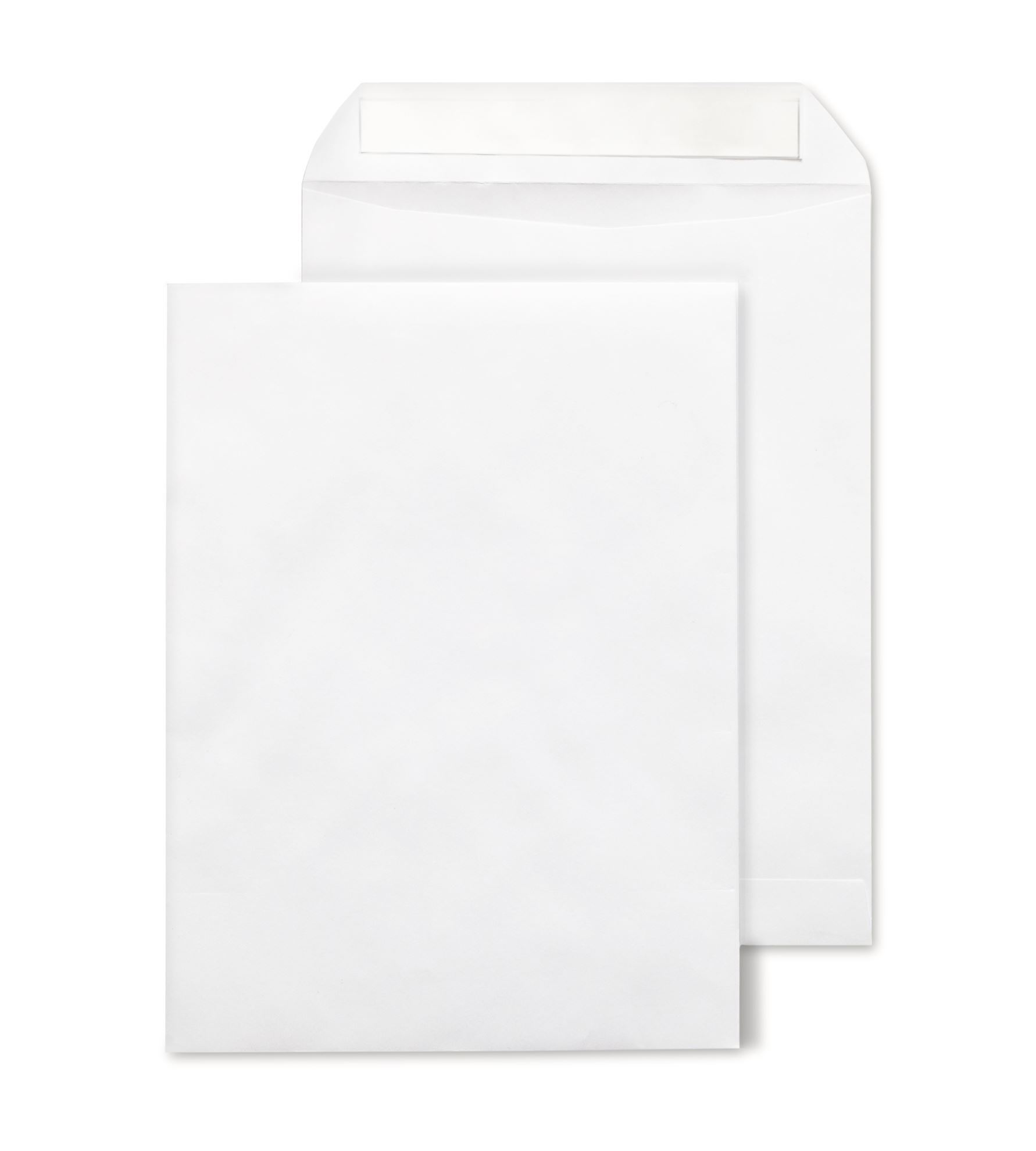
What Is a Catalog Envelope?
A catalog envelope is a large envelope where the opening and flap are positioned on the short (narrow) edge. When you hold a 9x12 catalog envelope with the 12-inch length vertical, the flap is at the top of the 9-inch width. Documents slide in from the top, short-side first.
The construction that makes this possible is the center seam. Unlike a booklet envelope , where the seam runs along one side , a catalog envelope has a seam running down the center of the back panel. This center seam construction is stronger under load, which is why catalog envelopes are preferred for heavy document packets, thick stacks of paper, and interoffice routing that cycles through multiple hands.
The naming is the most common source of confusion when ordering:
- Catalog envelope = open-end envelope. Both terms refer to the same format. You will see both used in product listings, often for the same item.
- Booklet envelope = open-side envelope. These also share names and refer to the same competing format, where the flap is on the long edge.
The only structural difference between a catalog and a booklet envelope in the same size (say, 9x12) is the opening direction and the seam placement. Dimensions are identical. Postage is identical. The choice between them is determined entirely by how your operation inserts and handles the envelope. For the complete comparison, see Open End vs Open Side Envelope: What the Difference Means and Which to Order.
Catalog Envelope vs Booklet Envelope: The One Difference That Matters
| Factor | Catalog Envelope (Open-End) | Booklet Envelope (Open-Side) |
|---|---|---|
| Opening direction | Short edge , flap on narrow end | Long edge , flap along full length |
| Also called | Open-end envelope | Open-side envelope |
| Seam construction | Center seam , runs down middle of back panel | Side seam , runs along one edge of back panel |
| Strength under heavy load | Higher , center seam distributes pressure | Lower , side seam can split under outward pressure |
| Inserter machine compatible | No , inserters require long-edge opening | Yes , designed for automated feeding from long side |
| Laser printer compatible | No , short-edge opening causes feed jams | Yes , long-edge opening feeds correctly |
| Loading method | Manual , documents slide in from top | Manual or automated , documents slide in from side |
| Standard sizes | 6x9, 9x12, 10x13 | 6x9, 9x12, 10x13 |
| Postage classification | Letter rate (6x9 at 1 oz) or flat rate (9x12, 10x13) | Letter rate (6x9 at 1 oz) or flat rate (9x12, 10x13) |
| Best for | Heavy document packets, interoffice routing, thick contents | Inserter programs, laser printing, automated mailing operations |
Catalog Envelope Sizes: All Three Formats with Dimensions
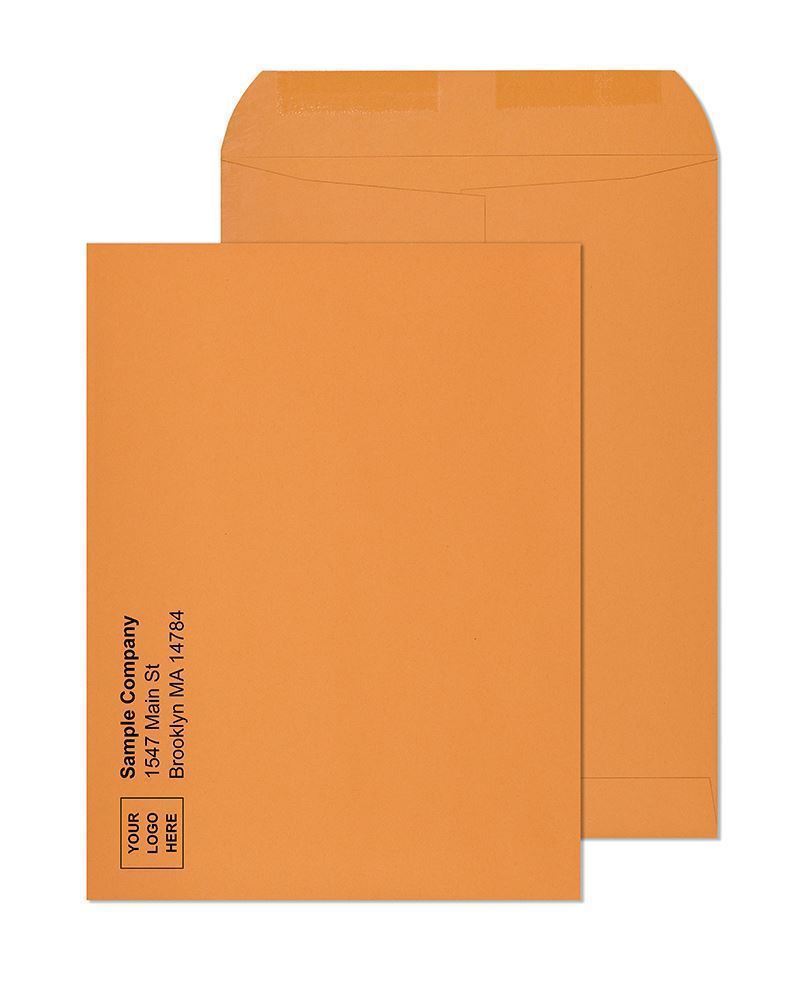
Catalog envelopes come in three standard sizes. Each has a specific interior capacity and a different USPS postage classification that affects cost for any volume mailing program.
| Size | Outer Dimensions | Interior Clearance | What Fits | Postage (2026) |
|---|---|---|---|---|
| 6x9 catalog | 6 x 9 inches | 5-3/4 x 8-3/4 in | Half-folded 8.5 x 11 sheet, 5x8 cards, photos, small documents | $0.82 (letter rate, 1 oz) |
| 9x12 catalog | 9 x 12 inches | 8-3/4 x 11-3/4 in | Unfolded 8.5 x 11 sheet, reports, contracts, document packets | $1.63 (flat rate, 1 oz) |
| 10x13 catalog | 10 x 13 inches | 9-3/4 x 12-3/4 in | Legal-size 8.5 x 14 sheets flat, thick multi-page packets, oversized documents | $1.63 (flat rate, 1 oz) |
6x9 catalog envelope
The smallest standard catalog size holds a half-folded 8.5 x 11 sheet or any document that measures under 5-3/4 x 8-3/4 inches flat. At 1 ounce, the 6x9 qualifies for USPS First-Class letter rate ($0.82 in 2026), making it the most economical format when content fits without forcing. Browse options at 6x9 envelopes.
9x12 catalog envelope
The 9x12 is the most widely ordered catalog envelope size by a significant margin. It holds a standard 8.5 x 11 sheet completely flat without any folding. Reports, contracts, legal notices, tax documents, client packets, and any full-size flat correspondence go in cleanly. The interior clearance of 8-3/4 x 11-3/4 inches provides a quarter-inch margin on each side.
A 9x12 envelope always mails at USPS First-Class flat rate , currently $1.63 for 1 ounce in 2026. This applies regardless of content or material. Browse the full range at 9x12 envelopes, and see the complete specification guide at 9x12 Envelope: Size, Uses, Formats, and When to Use It.
10x13 catalog envelope
The 10x13 is correct when content either exceeds 8.5 x 11 in one dimension (legal-size sheets at 8.5 x 14 inches) or when the document stack is thick enough to create seam stress in a 9x12. The extra inch on each dimension reduces outward pressure on the seam and makes reliable sealing easier on heavy packets. For detailed guidance on when to use 10x13 vs 9x12, see 10x13 Envelopes: When to Size Up from 9x12 and What Fits.
Center Seam Construction: Why It Makes Catalog Envelopes Stronger
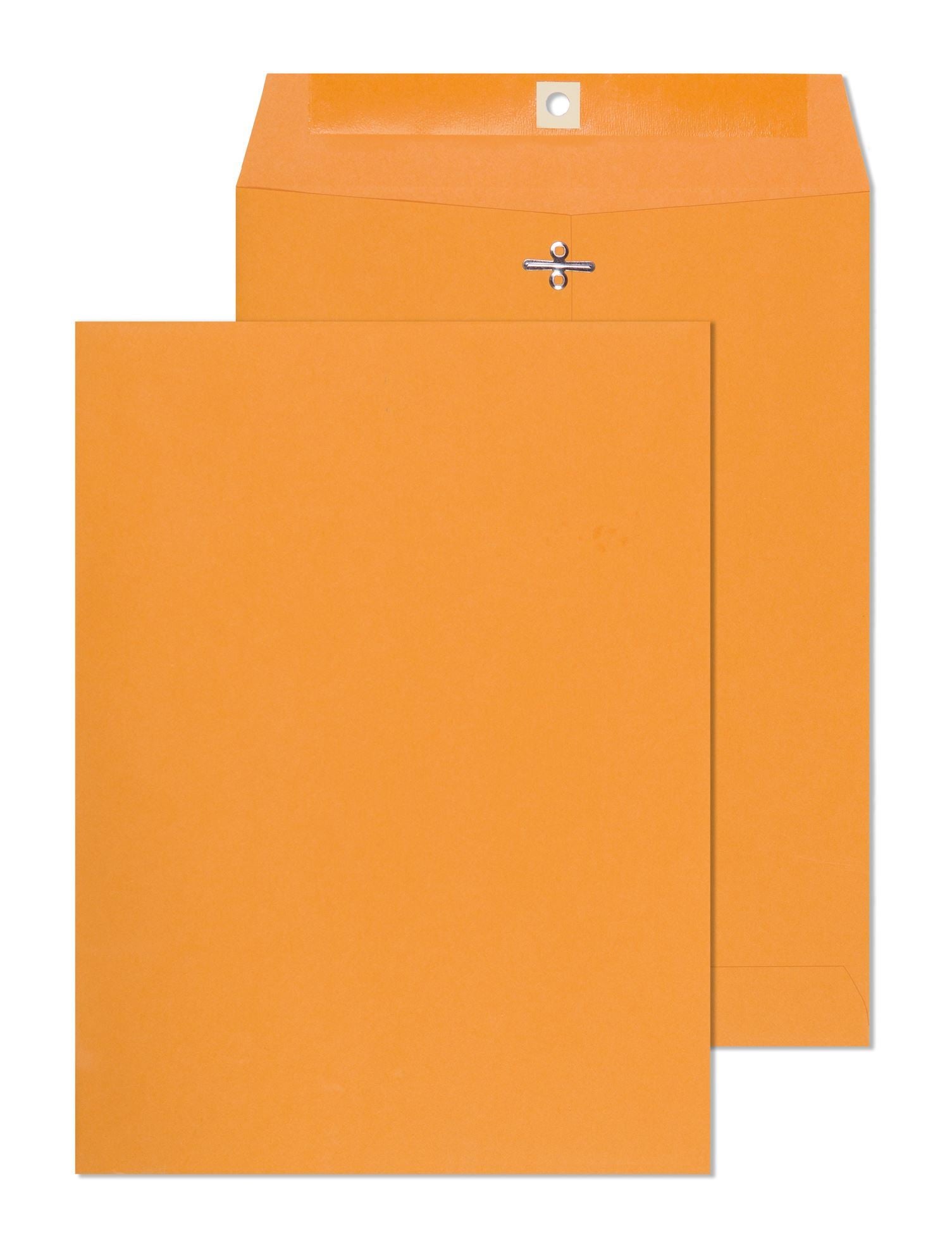
Every catalog envelope is built with center seam construction. Understanding what this means makes it easier to choose between catalog and booklet formats for specific programs.
On a booklet envelope (open-side), the back panel seam runs along one vertical edge , close to one corner of the envelope. When heavy contents press outward from inside, the pressure concentrates at that single seam location. If contents shift during handling or shipping, the side seam can separate.
On a catalog envelope (open-end), the back panel seam runs down the center of the envelope face. Outward pressure from contents is distributed evenly toward both sides of the seam rather than concentrated at one edge. This makes center seam envelopes more resistant to seam failure under heavy loads, repeated handling, and interoffice routing cycles where the same envelope changes hands many times.
The trade-off is automation compatibility. The center seam construction and short-edge opening that make catalog envelopes strong also make them incompatible with standard inserter machines, which require a long-edge opening to feed correctly.
Catalog Envelope Materials: White, Brown Kraft, and Tyvek
Catalog envelopes are available in three materials, each suited to a different type of mailing program:
White wove catalog envelope
White wove is the standard for professional correspondence, client-facing document mailing, and any program where the exterior appearance is part of the presentation. White catalog envelopes accept custom printing cleanly and present a consistent professional appearance across every piece going out. Available with gum flap, peel-and-seal, and clasp closures in 9x12 and 10x13 sizes.
Brown kraft catalog envelope
Brown kraft is the standard for interoffice routing, internal document transfer, and high-volume operational mailing where durability matters more than appearance. Kraft stock is heavier and more resistant to tearing than standard white wove. Clasp catalog envelopes in brown kraft are the default for any program where the envelope will be opened and resealed multiple times. See the full range at 9x12 Brown Kraft Clasp Catalog Envelopes.
Tyvek catalog envelope
Tyvek catalog envelopes are the correct format when content must arrive undamaged regardless of weather, postal handling conditions, or transit time. Tyvek is a spunbonded high-density polyethylene material that resists tearing, repels moisture, and does not soften or disintegrate in wet conditions. A paper envelope in rain or a mishandled sorting facility can arrive with damaged contents. A Tyvek catalog envelope in the same conditions arrives intact. For the complete Tyvek guide, see Tyvek Envelopes: Tear-Proof and Waterproof Mailing Guide.
Who Uses Catalog Envelopes
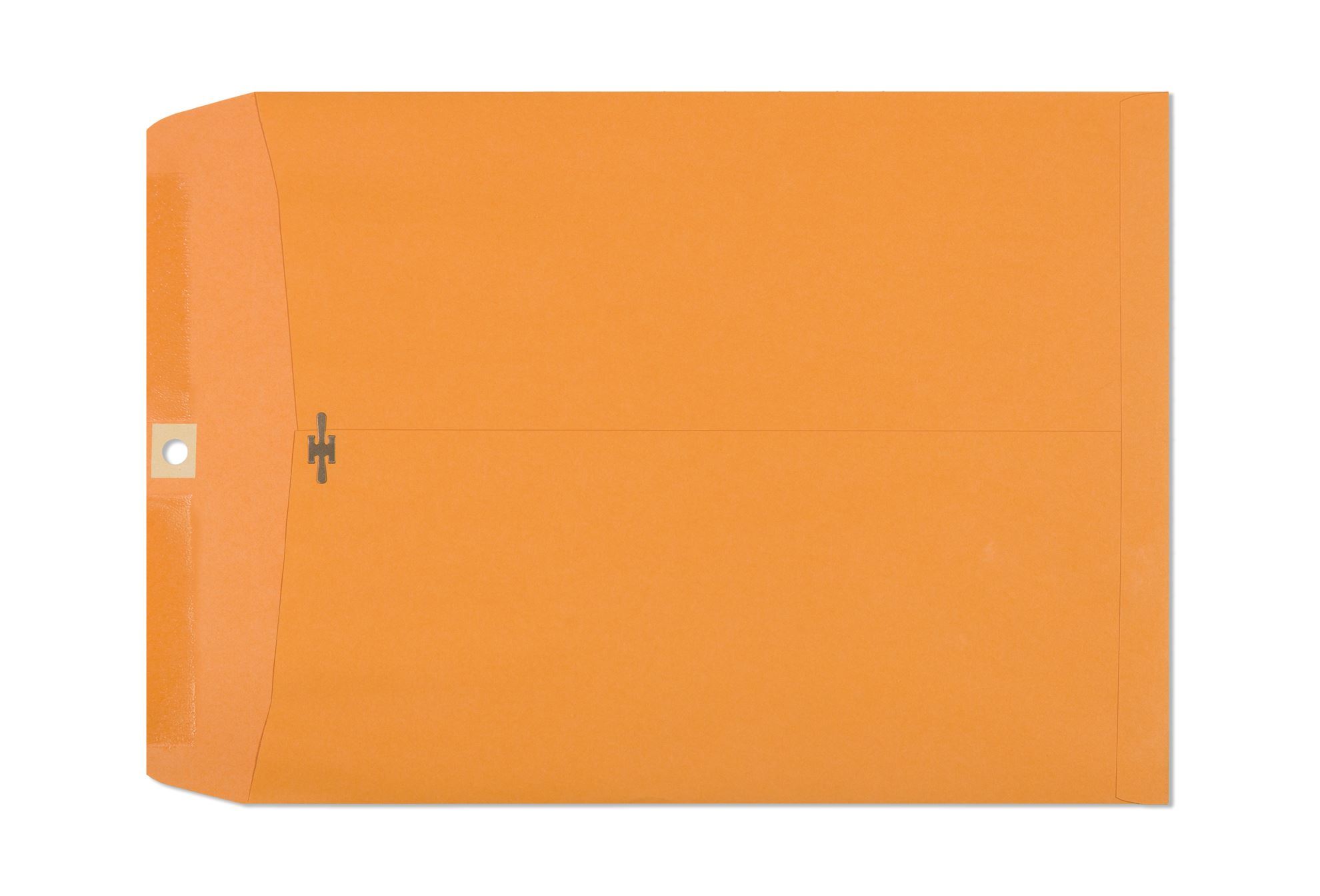
Catalog envelopes are the standard format across a wide range of professional operations. The consistent use case is flat document mailing where the content cannot be folded without damaging its presentation or legibility.
Legal and professional services
Law firms, accounting firms, and financial services organizations mail executed contracts, disclosure packages, tax packets, and client correspondence that must arrive flat and undamaged. A 9x12 or 10x13 white catalog envelope with a peel-and-seal or gum flap closure is the standard format for this mailing category.
Healthcare and medical administration
Medical offices mail explanation of benefits (EOB) documents, patient correspondence, insurance forms, and clinical reports in formats that cannot be folded without compromising the information. 9x12 catalog envelopes in security-tinted formats protect patient data during transit. For heavy multi-page medical record packets, the 10x13 format provides the additional interior space without seam stress.
Education and schools
Registrars, admissions offices, and school district administrators mail transcripts, diplomas, enrollment packets, and financial aid correspondence in catalog envelopes that hold documents flat. A sealed transcript in a 9x12 catalog envelope maintains its official integrity from the registrar's office to the recipient.
Corporate interoffice routing
Brown kraft clasp catalog envelopes are the interoffice mail standard in corporate and institutional environments. A single envelope can be opened and resealed dozens of times as it routes through departments, collecting signatures, approvals, and responses. The clasp closure and center seam construction make this format durable enough for continuous reuse across an entire document routing cycle.
Direct mail and marketing
For direct mail programs mailing unfolded property flyers, catalogs, product brochures, or full-size marketing materials that cannot be folded, 9x12 catalog envelopes are the standard outer envelope format. White wove with custom printing accepts logo and return address branding, and starburst or colored catalog envelopes increase mailbox visibility for acquisition campaigns.
Closures for Catalog Envelopes
Catalog envelopes are available with three closure types, each suited to a different mailing program:
- Gum flap: Water-activated adhesive on the flap edge. Sealed by moistening the gum strip and pressing the flap closed. The standard closure for single-use outgoing mail programs. Not compatible with folder inserters , catalog envelopes cannot run through standard inserter equipment regardless of closure type.
- Peel-and-seal: A protective liner covers a pressure-sensitive adhesive strip. Peel the liner, press the flap closed, and the tamper-evident bond holds. No moisture required. The standard for professional outgoing mail sealed by hand, particularly for legal, financial, and healthcare documents where tamper evidence matters. Browse 9x12 White Open End Envelopes.
- Metal clasp: A metal brad on the flap folds over a reinforced slot on the envelope body. Opens and reseals without adhesive. The standard for interoffice routing programs and any envelope that will be opened and resealed repeatedly. Clasp envelopes are available in brown kraft for high-durability routing programs. Browse 9x12 Brown Kraft Clasp Catalog Envelopes.
Custom Printing on Catalog Envelopes
Custom printing is available across all catalog envelope sizes and materials. Logo, return address, and any additional brand or compliance elements are pre-printed on the exterior face before the envelope ships. Custom-printed catalog envelopes eliminate the manual return address step, ensure consistent positioning across every outgoing piece, and reinforce brand identity on client-facing correspondence.
For the full guide to custom printing options, file requirements, and the proof process, see Custom Printed Envelopes: Logo Return Address Design Guide. No minimum order applies on custom printed catalog envelopes at Business Envelopes. A PDF proof is provided before production and artwork files are stored for automatic reorders.
USPS Postage and Mailing Classification
Catalog envelope postage classification is determined by size and weight, not by format. The key thresholds:
- 6x9 catalog envelope at 1 oz: $0.82 First-Class letter rate (2026). Qualifies as a letter because the 6x9 falls within USPS letter dimensions. Each additional ounce adds $0.27. For non-machinable surcharge triggers at 6x9, see Non-Machinable Envelope Guide: Surcharge Rules Explained.
- 9x12 and 10x13 catalog envelopes: Always mail at USPS First-Class flat rate, currently $1.63 for 1 ounce in 2026. The 9x12 and 10x13 are too large to qualify for letter rate regardless of content weight.
For a complete breakdown of large envelope postage across all sizes, see Large Envelope Sizes: 9x12, 10x13, and Every Format Explained.
Paper Weight: What the Specifications Mean for Catalog Envelopes
Catalog envelopes are most commonly available in 28 lb white wove and 28 lb brown kraft. The 28 lb specification refers to the basis weight of the paper stock , heavier than standard copy paper (20 lb) and the common 24 lb envelope stock. Higher paper weight means greater durability, better print quality on custom-printed pieces, and more resistance to tearing during postal handling. For the full explanation of envelope paper weight specifications, see Envelope Paper Weight Guide: 20 lb, 24 lb, 28 lb Explained.
What Customers Say About Business Envelopes Catalog Envelopes
★★★★★ Jacob, Verified Buyer | 9x12 White Open End Envelopes
"Very happy with these envelopes. They arrived in pristine condition and are just great for mailing letter sized documents."
★★★★★ Gitty, Verified Buyer | 9x12 Brown Kraft Clasp Catalog Envelopes
"These envelopes were good quality and very good price/quantity."
★★★★★ Moshe, Verified Buyer | 9x12 Brown Kraft Clasp Catalog Envelopes
"Best envelopes ever bought."