 Free shipping

10x15 Envelope Postage: Stamps and Cost Guide 2026
Home › Blog › 10x15 Envelope Postage Guide 2026
Quick Answer: A 10x15 envelope always mails at the USPS First-Class flat rate, never at letter rate. The flat rate is calculated by weight, with additional ounce charges stacking up from the first ounce through the 13-ounce First-Class maximum. You will need multiple stamps, but stacking whole Forever stamps typically results in overpayment since flat-mail rates do not align to stamp denominations. The metal clasp, if left engaged, triggers a non-machinable surcharge. Envelope material (Tyvek vs. kraft) does not change the postage classification. For current postage rates, check the USPS Price Calculator at usps.com.
Why a 10x15 Envelope Always Mails at Flat Rate
USPS divides domestic First-Class Mail into three shape categories: postcards, letters, and large envelopes (also called flats). Each shape has its own rate table. The category your envelope falls into is determined entirely by its physical dimensions, not by what is inside it.
For an envelope to qualify as a letter, all three of these conditions must be true:
- Height (shortest side): no more than 6-1/8 inches
- Length (longest side): no more than 11-1/2 inches
- Thickness: no more than 1/4 inch
A 10x15 envelope measures 15 inches on its longest side. That single dimension exceeds the 11.5-inch letter-rate length limit by 3.5 inches, which automatically places it in the large envelope (flat) category. There is no workaround: the 10x15 always mails at flat rate regardless of how light it is, what is inside it, or which seal type it uses.
This distinction matters because the flat rate is significantly higher than the letter rate. Understanding the classification before ordering or mailing saves money on large programs, especially when you can consider format alternatives for content that could be folded to fit a smaller envelope.
For a full breakdown of how USPS classifies all large envelope sizes, see the large envelope sizes guide.
10x15 Envelope Weight Guide and Postage Tiers
USPS First-Class flat-mail postage is calculated by weight. The rate starts at a base amount for the first ounce and increases with each additional ounce, up to the 13-ounce maximum for First-Class Mail. The table below shows how each weight tier maps to the number of Forever stamps needed and the expected mailing classification.
| Weight | USPS Classification | Forever Stamps Needed (min.) | Postage Accuracy Note |
|---|---|---|---|
| 1 oz | First-Class Flat | Multiple stamps required | Exact postage from meter avoids overpayment |
| 2 oz | First-Class Flat | Multiple stamps required | Exact postage from meter avoids overpayment |
| 3 oz | First-Class Flat | Multiple stamps required | Exact postage from meter avoids overpayment |
| 4 oz | First-Class Flat | More stamps than lighter tiers | Weigh sealed envelope before applying postage |
| 5 oz | First-Class Flat | More stamps than lighter tiers | Weigh sealed envelope before applying postage |
| 6 oz | First-Class Flat | More stamps than lighter tiers | Weigh sealed envelope before applying postage |
| 7 oz | First-Class Flat | More stamps than lighter tiers | Weigh sealed envelope before applying postage |
| 8 oz | First-Class Flat | More stamps than lighter tiers | Weigh sealed envelope before applying postage |
| 9 oz | First-Class Flat | More stamps than lighter tiers | Weigh sealed envelope before applying postage |
| 10 oz | First-Class Flat | More stamps than lighter tiers | Weigh sealed envelope before applying postage |
| 11 oz | First-Class Flat | More stamps than lighter tiers | Weigh sealed envelope before applying postage |
| 12 oz | First-Class Flat | More stamps than lighter tiers | Weigh sealed envelope before applying postage |
| 13 oz | First-Class Flat (maximum) | Most stamps of any FC flat tier | Above 13 oz requires Priority Mail or another class |
For exact postage amounts at each weight, use the USPS Price Calculator at usps.com. Always weigh sealed pieces on a calibrated postal scale before applying postage.
How Many Stamps for a 10x15 Envelope?
You will always need multiple stamps for a 10x15 envelope. A single Forever stamp does not cover the flat-mail rate at any weight. The exact number depends on the total weight of the sealed piece and the current postage rate for that weight tier.
Light mailings (1 to 3 oz)
A 10x15 envelope containing a single folded architectural drawing, a thin proposal, or a small catalog will typically fall in the 1 to 3 ounce range. Several Forever stamps will cover the flat rate for these weights, though some overpayment is likely when using whole stamps. A postage meter paying the exact rate is more efficient for any meaningful volume.
Medium mailings (4 to 6 oz)
Multi-page contracts, product brochures with thick inserts, and small catalogs often land in this range. More stamps are needed than for lighter pieces. Weigh the sealed envelope before applying postage rather than estimating.
Heavy mailings (7 to 13 oz)
Large document sets, oversized booklets, or thick catalog mailings can push a 10x15 envelope toward the upper ounce tiers. The stamp count increases with each additional ounce. Weigh each sealed envelope on a postal scale before applying postage to avoid under- or overpaying. First-Class Mail caps at 13 ounces for large envelopes; anything heavier requires Priority Mail or another service class.
For a complete size-by-size stamp count reference across all envelope sizes, see how many stamps do I need by envelope size.
Tyvek vs. Kraft: Does Envelope Material Change 10x15 Postage?
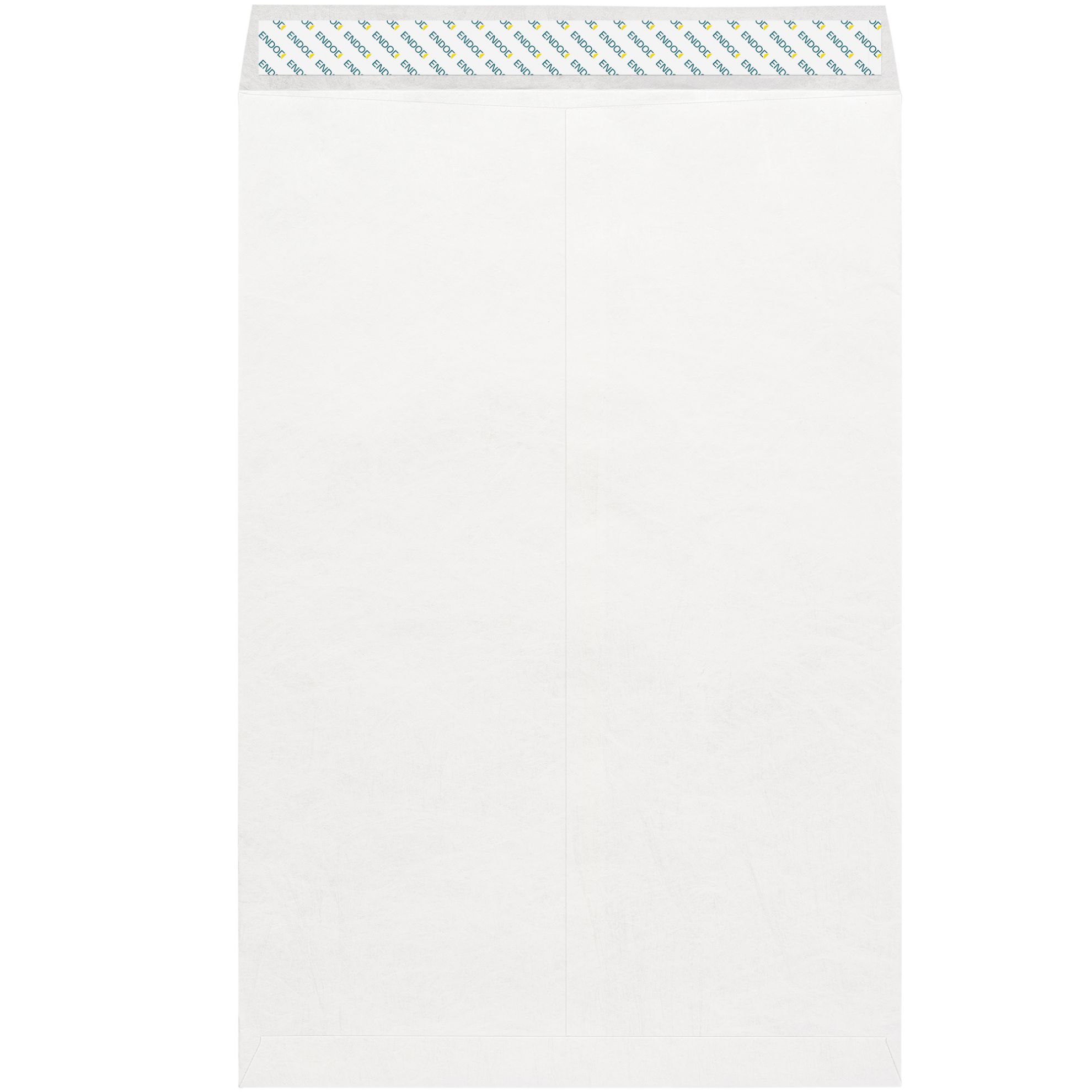
USPS determines postage based on weight and dimensions. The material the envelope is made from does not appear on any USPS rate table and has no effect on the First-Class flat rate.
That said, material does affect the total mailing weight, which in turn affects postage when contents bring the piece close to an ounce tier boundary.
Tyvek 10x15 envelopes
Tyvek is a spun-bonded olefin material manufactured by DuPont. It is significantly lighter than kraft paper of comparable thickness. A 10x15 Tyvek envelope with a 14 lb. material rating weighs roughly half of what a comparable kraft envelope weighs when empty. For mailings where the content weight is close to an ounce tier boundary, the lighter Tyvek envelope can keep the total piece weight in a lower tier, reducing postage.
Tyvek also resists moisture, tears, and punctures during transit, making it the right choice for architectural drawings, original signed documents, or anything that cannot arrive damaged. For a detailed comparison of Tyvek and kraft materials, see the Tyvek vs kraft envelope guide.
Kraft clasp 10x15 envelopes
Brown kraft 10x15 clasp envelopes weigh more than Tyvek options of the same size. The 28 lb. kraft stock adds slightly more to the total mailing weight. For light contents, this rarely pushes the piece into a higher ounce tier. For heavier contents already near a weight boundary, it can.
The clasp mechanism itself introduces a separate postage rule covered in the next section.
For a full guide on Tyvek envelope features, properties, and uses, see the Tyvek envelopes guide.
The Clasp Rule: How the Metal Closure Affects 10x15 Postage
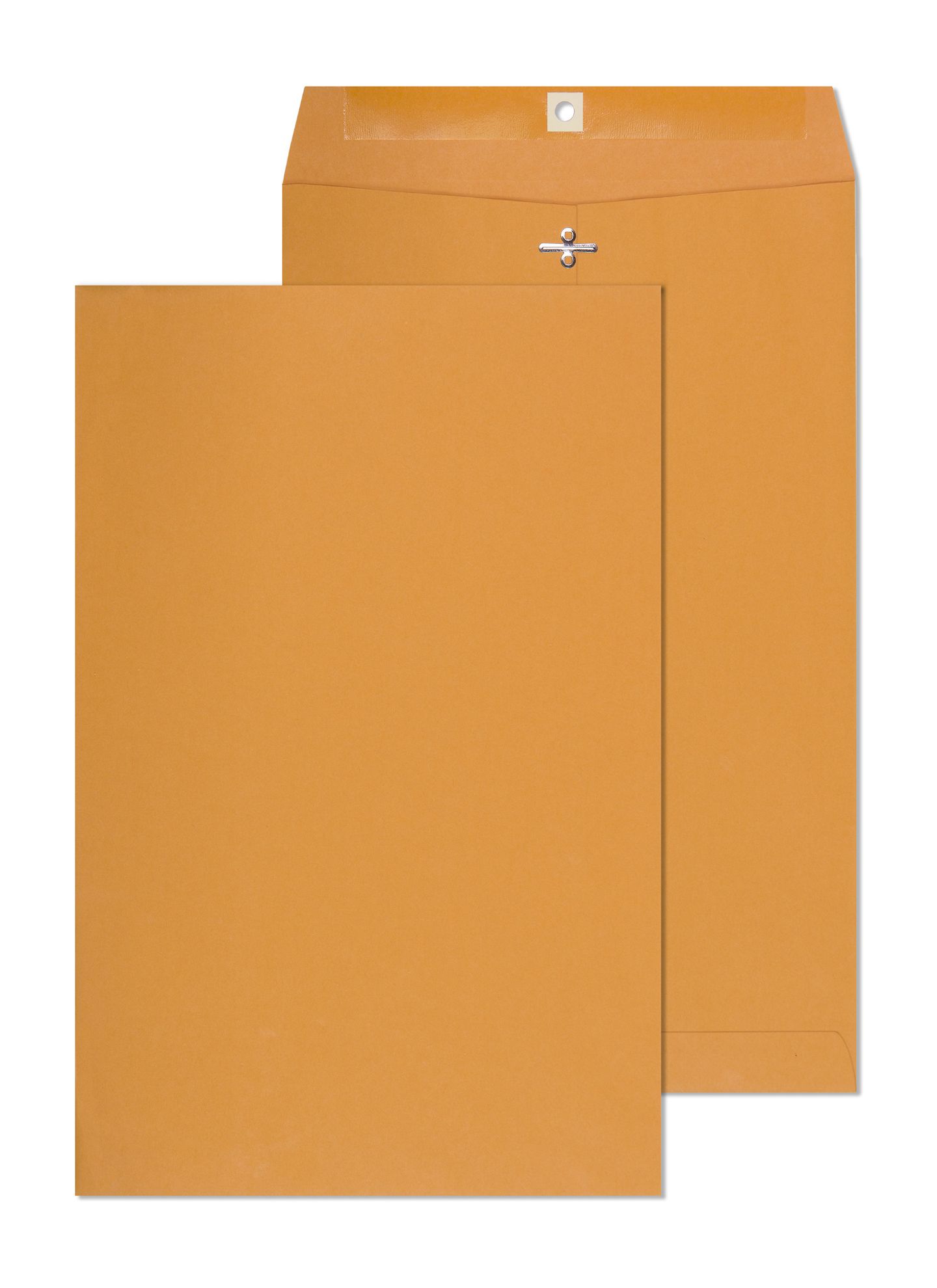
The metal clasp on a 10x15 clasp envelope is designed for repeated office filing and retrieval. For mailing, the clasp creates a specific USPS postage situation that catches many businesses off guard.
What the non-machinable surcharge means
USPS automated sorting equipment processes large envelopes by running them through machines that read barcodes and sort pieces by ZIP code. An envelope with a raised metal clasp fastened on the outside surface cannot pass through this equipment without risk of damage or jamming. USPS classifies such pieces as non-machinable and charges a surcharge on top of standard flat-rate postage. The non-machinable surcharge adds a meaningful amount to each piece, and on high-volume mailings the total additional cost becomes significant.
How to avoid the surcharge
Fold the metal clasp flat against the back of the envelope before sealing. Then close the gum-seal flap over the clasp using moisture or a sponge. The envelope mails at the standard flat rate with no surcharge. The clasp remains intact and reusable when the recipient opens the envelope.
For complete step-by-step instructions on mailing a clasp envelope correctly, see how to mail a clasp envelope. For a full overview of clasp envelope types and uses, see the clasp envelopes guide.
The Flexibility Rule: When a 10x15 Envelope Reclassifies as a Package
USPS flat-mail rates apply only to large envelopes that are flexible and uniformly thick. This rule exists because flat-mail automation equipment cannot process pieces that are stiff, lumpy, or vary significantly in thickness across the envelope's surface.
A 10x15 envelope can be reclassified as a parcel by postal workers if:
- The contents make it rigid and it does not bend when gentle pressure is applied
- Contents create significantly uneven thickness (a rolled tube inside, a box, or stacked items of different sizes)
- The envelope is thicker than 3/4 inch when sealed
Parcel rates are substantially higher than flat rates and vary by zone, weight, and service level. To keep a 10x15 envelope in the flat-mail category, ensure the contents remain flexible when sealed. For rigid documents that cannot bend, consider a rigid mailer or Priority Mail packaging instead.
For additional background on the non-machinable and flexibility rules, see the non-machinable envelope guide.
Metered Mail vs. Stamps for 10x15 Envelopes
For occasional mailings, Forever stamps are a practical option. For any business mailing 10x15 envelopes regularly, the economics of postage meters are worth understanding.
The retail stamp issue
Because flat-mail rates do not divide evenly into Forever stamp denominations, using stamps always results in some degree of overpayment per piece. The amount varies by weight tier. On programs mailing a significant number of 10x15 envelopes each week, the cumulative overpayment across all pieces can become a meaningful line item in the postage budget.
Metered mail savings
A postage meter prints the exact postage for each piece, eliminating all overpayment. Metered mail also qualifies for a small discount per piece compared to the retail stamp rate. For programs mailing at volume, the combination of exact postage plus the metered discount can produce meaningful annual savings. For a detailed analysis of when metered mail makes financial sense, see metered mail vs stamps.
USPS online postage
USPS Click-N-Ship and similar services allow you to print exact postage at home or at the office, paying the precise rate for each piece. This is a practical option for lower volumes where a full postage meter is not warranted.
Real-World Weight Guide for 10x15 Envelope Mailings
Knowing the ounce tiers is useful. Knowing what typical contents actually weigh in a 10x15 envelope makes it actionable. Use this as a starting reference, then always weigh your sealed pieces on a postal scale before applying postage.
| Contents (typical) | Approximate Weight | Tyvek or Kraft Envelope Weight | Likely Total Tier |
|---|---|---|---|
| Single large-format drawing (rolled or folded) | 0.5 to 1 oz | Tyvek: lighter / Kraft: heavier | 1 to 2 oz |
| 10 sheets of standard 24 lb. paper | About 1 oz | Tyvek: lighter / Kraft: heavier | 2 oz |
| 20 sheets of standard 24 lb. paper | About 2 oz | Tyvek: lighter / Kraft: heavier | 3 oz |
| 30-page proposal with cover | 3 to 4 oz | Tyvek: lighter / Kraft: heavier | 4 to 5 oz |
| Small catalog (40 to 60 pages, coated) | 5 to 7 oz | Tyvek: lighter / Kraft: heavier | 6 to 8 oz |
| Legal binder or thick packet | 8 to 11 oz | Tyvek: lighter / Kraft: heavier | 9 to 12 oz |
Weights are approximations. Always weigh sealed pieces on a calibrated postal scale before applying postage. Tyvek envelopes weigh less when empty than kraft envelopes of the same size, which can make a difference when content weight is close to a tier boundary.
Priority Mail vs. First-Class for Heavy 10x15 Mailings

First-Class Mail handles 10x15 envelopes up to 13 ounces. Above that threshold, you need Priority Mail or another service. Even within the 13-ounce limit, there are situations where Priority Mail is worth comparing.
When First-Class is the right choice
For most 10x15 mailings under 6 ounces, First-Class Mail is less expensive than Priority Mail and still delivers within 1 to 5 business days domestically. It does not include tracking by default, though you can add Certified Mail or other tracking options.
When Priority Mail deserves consideration
Priority Mail flat-rate envelopes price by envelope type rather than weight. If a 10x15 piece is close to or above 8 ounces, the Priority Mail flat-rate comparison is worth running. Priority Mail also includes tracking and arrives in 1 to 3 business days, which can matter for time-sensitive legal or financial documents. Any piece above the 13-ounce First-Class maximum must use Priority Mail or another service class.
For a complete breakdown of Priority Mail envelope options, see the Priority Mail envelope guide for 2026.
How to Calculate 10x15 Envelope Postage Before Mailing
Follow these four steps to get the right postage on every 10x15 piece:
- Assemble and seal the envelope with all contents you plan to mail. Do not estimate weight from the empty envelope.
- Weigh the sealed piece on a postal scale or kitchen scale accurate to 0.1 oz. Round up to the next full ounce.
- Look up the current rate using the USPS Price Calculator at usps.com. Select large envelope (flat) and enter the weight to get the exact postage amount.
- Apply exact postage using a postage meter, USPS Click-N-Ship, or exact denomination stamps. If using Forever stamps, use the minimum number that meets or exceeds the postage amount, but be aware some overpayment is unavoidable with whole stamps.
If you are mailing a batch of identical pieces, weigh one sealed sample envelope, calculate the postage for that weight, and apply the same postage to all pieces in the batch. For postage guidance across all common envelope sizes, see the complete postage stamps buying guide.
10x15 Envelopes Available at Business Envelopes
Business Envelopes stocks the 10x15 format in two materials suited to different mailing needs. Both are blank stock available for immediate shipment. Custom printing is available on either type.
10x15 Tyvek Peel-Seal Envelope
The 10x15 Tyvek open-end envelope is built from 14 lb. DuPont Tyvek material with a Kwik-Tak peel-and-seal closure. It is the lighter option, which keeps mailing weight down, and resists moisture, punctures, and tears that would damage paper envelopes. Recommended for original documents, architectural prints, and anything that cannot arrive damaged.
10x15 Brown Kraft Clasp Envelope
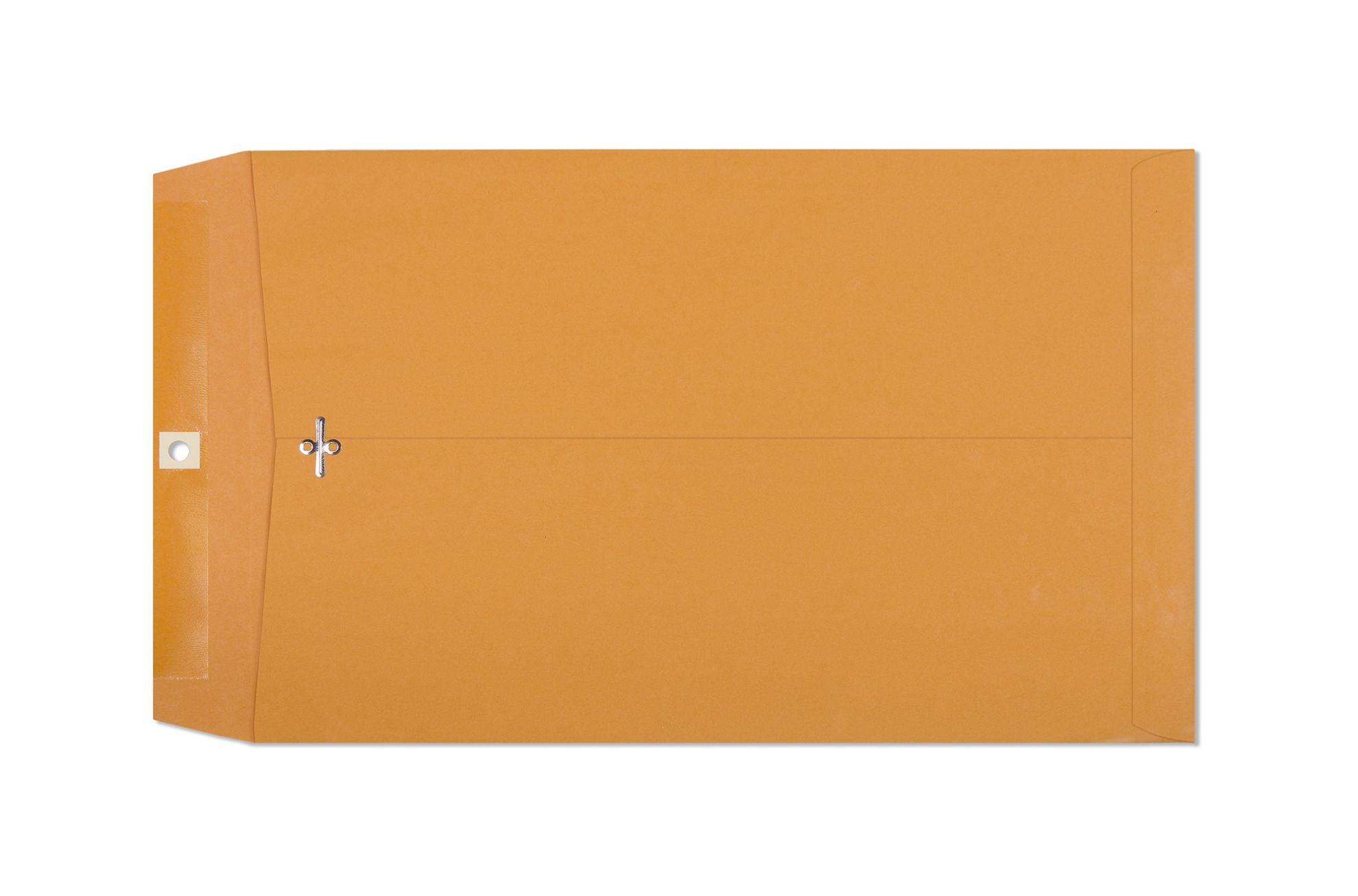
The 10x15 brown kraft clasp envelope is built from 28 lb. kraft stock with a metal double-prong clasp and a gummed seal flap. The clasp allows the envelope to be opened and resealed multiple times, making it practical for in-office document routing before mailing. Remember to fold the clasp flat before sealing for mailing to avoid the non-machinable surcharge.
Browse the complete 10x15 envelope category for all available options.
Why Order 10x15 Envelopes From Business Envelopes
Business Envelopes has supplied blank and custom-printed envelopes to US businesses since 1997. Every 10x15 envelope ships same or next business day on blank stock. Both Tyvek and kraft options are stocked in volume quantities for businesses that need consistent supply without reorder delays.
- Blank stock ready to ship same or next business day
- Custom printing available on 10x15 envelopes for branded mailing programs
- Both Tyvek and kraft formats in stock
- Volume ordering available for high-quantity programs
- All envelopes meet USPS mailing specifications
For custom-printed 10x15 envelopes with your company name or return address, explore the custom printed envelopes options. For guidance on ordering in quantity, see the wholesale envelopes guide.
Related Postage Guides
If you mail other envelope sizes, these guides cover postage rules for each size in the same format as this one:
- 10x13 envelope postage guide: weight-based mailing rules and stamp guidance for the 10x13 flat
- 6x9 envelope postage guide: the 6x9 can qualify for letter rate on light contents
- #10 envelope postage guide: standard business letter-rate postage rules
- 6-3/4 envelope postage guide: one stamp covers most #6-3/4 mailings
- 9x12 envelope guide: dimensions, uses, and mailing details for the 9x12
- catalog envelope guide: which sizes and formats work for catalog mailings
Summary
The 10x15 envelope is the largest standard mailing format for US business use. It always mails at USPS First-Class flat rate, with postage calculated by weight from the first ounce up through the 13-ounce maximum. Envelope material does not change the rate, but lighter Tyvek can help keep total mailing weight in a lower tier. The metal clasp, if left engaged, adds a non-machinable surcharge that is easily avoided by folding the clasp flat before sealing. Overstuffed or rigid contents can reclassify the piece as a parcel.
For current postage rates at each weight tier, use the USPS Price Calculator at usps.com. For programs mailing 10x15 envelopes at volume, a postage meter eliminates stamp overpayment and qualifies for the metered mail discount.
Business Envelopes stocks 10x15 envelopes in both Tyvek peel-seal and brown kraft clasp formats, with same or next-business-day shipping on blank stock and custom printing available for branded mailing programs.