_390.png)
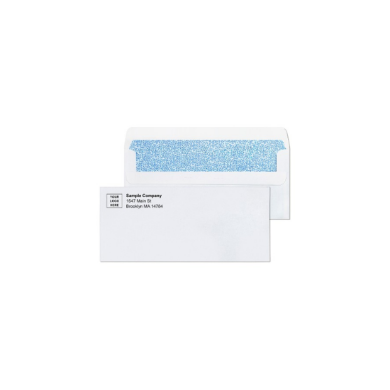
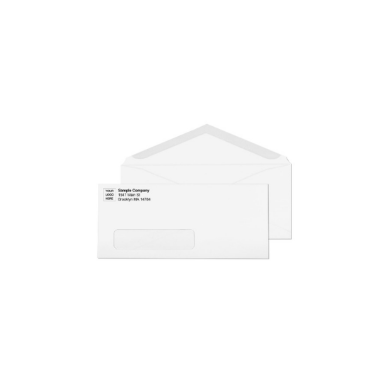
Quick answer: The 4-1/8 x 9-1/2 inch envelope is the standard #10 business envelope, the most widely used commercial format in the United States. It holds a letter sheet folded in thirds and mails at USPS First-Class letter rate ($0.82 in 2026). Variants cover every mailing need: plain white gum flap for inserter machines, security tinted peel-and-seal or flip-and-stick for payroll and financial mail, single window for invoices and statements, and double window for QuickBooks check programs. No minimum order. Free ground shipping on every order at Business Envelopes.
Introduction
Searching for 4-1/8 x 9-1/2 envelopes puts you in a specific category: you know the size, and now you need the right variant. This dimension is the #10 business envelope, the most widely used commercial envelope format in the United States. What most buyers find out mid-order is that "4-1/8 x 9-1/2" covers a wide range of products: different closures, different interiors, different window configurations. Choosing the wrong one does not affect fit. It affects how secure your mail is, how fast your team processes it, and whether your operation runs cleanly at volume. This guide covers every variant in this size, what separates them, and which one belongs in your mailing workflow.
Is a 4-1/8 x 9-1/2 Envelope the Same as a #10?
Yes. The 4-1/8 x 9-1/2 inch dimension is the exact measurement of the standard #10 envelope. The two names refer to the same product. Suppliers may list it as "4-1/8 x 9-1/2," "#10," "No. 10," or "number 10." They all mean the same envelope. The interior enclosure space measures 4 x 9-1/4 inches, slightly smaller than the outer dimension due to seam and flap construction. In metric, this envelope measures 104.775 x 241.3 millimeters.
Its length-to-height ratio of approximately 2.3 falls within the USPS automation compatibility range of 1.3 to 2.5, which means it qualifies for first-class letter rate and automated sorting discounts on contents under 3.5 ounces. For the complete dimension breakdown across every style and variant, see the #10 Envelope Size, Styles, and Uses Guide.
Why Is It Called a #10 Envelope?
The "#10" designation has nothing to do with the envelope's dimensions. It comes from a commercial envelope numbering system developed by William Irwin Martin and published in the Stationers' Handbook in 1876. Before Martin's system, US envelope manufacturers used inconsistent labels that created confusion across the industry. Martin standardized commercial envelopes with numbered designations. The number 10 is a historical catalog identifier, not a reference to any inch or metric measurement. The same numbering system gives us #6 3/4, #9, #11, #12, and #14. None of these numbers correspond to their actual dimensions.
Understanding the origin matters when you are comparing specifications with international suppliers. The DL envelope (110 x 220 mm), the European equivalent of the #10, is listed by metric dimensions rather than a legacy number. The catalog envelope series used in the US (6x9, 9x12, 10x13) does use actual inch dimensions as names, which is why those formats feel more intuitive to buyers unfamiliar with the commercial numbering system.
How Many Sheets Fit in a 4-1/8 x 9-1/2 Envelope?
The tri-folded 8.5 x 11 letter sheet is the primary use case. Standard business checks, payroll stubs, single-page invoices, explanation-of-benefits letters, medical correspondence, and account statements all fit cleanly. The 4-inch interior width also accommodates a #9 reply envelope nested flat inside the outgoing #10 mailer. A #9 envelope (3-7/8 x 8-7/8 inches) fits inside a #10 with approximately 1/4-inch clearance on each side. This nested configuration is the standard for billing programs, donation appeals, and subscription renewals where the outgoing letter and a return piece go together.
Beyond three sheets of standard 20 to 24 lb letter paper, the envelope starts to feel overstuffed and the flap may not seat properly. At that fill level, the piece also approaches the USPS 0.25-inch thickness limit for letter-rate mail. Exceeding that limit triggers either a $0.49 non-machinable surcharge or a reclassification to flat rate. For thicker packets, contracts, or multi-page documents, a 6x9 envelope or 9x12 booklet envelope is the right format. For the full comparison of envelope sizes and when each applies, see the Envelope Sizes Chart Guide.
Every Variant That Comes in the 4-1/8 x 9-1/2 Size
Plain White Wove, Gum Flap
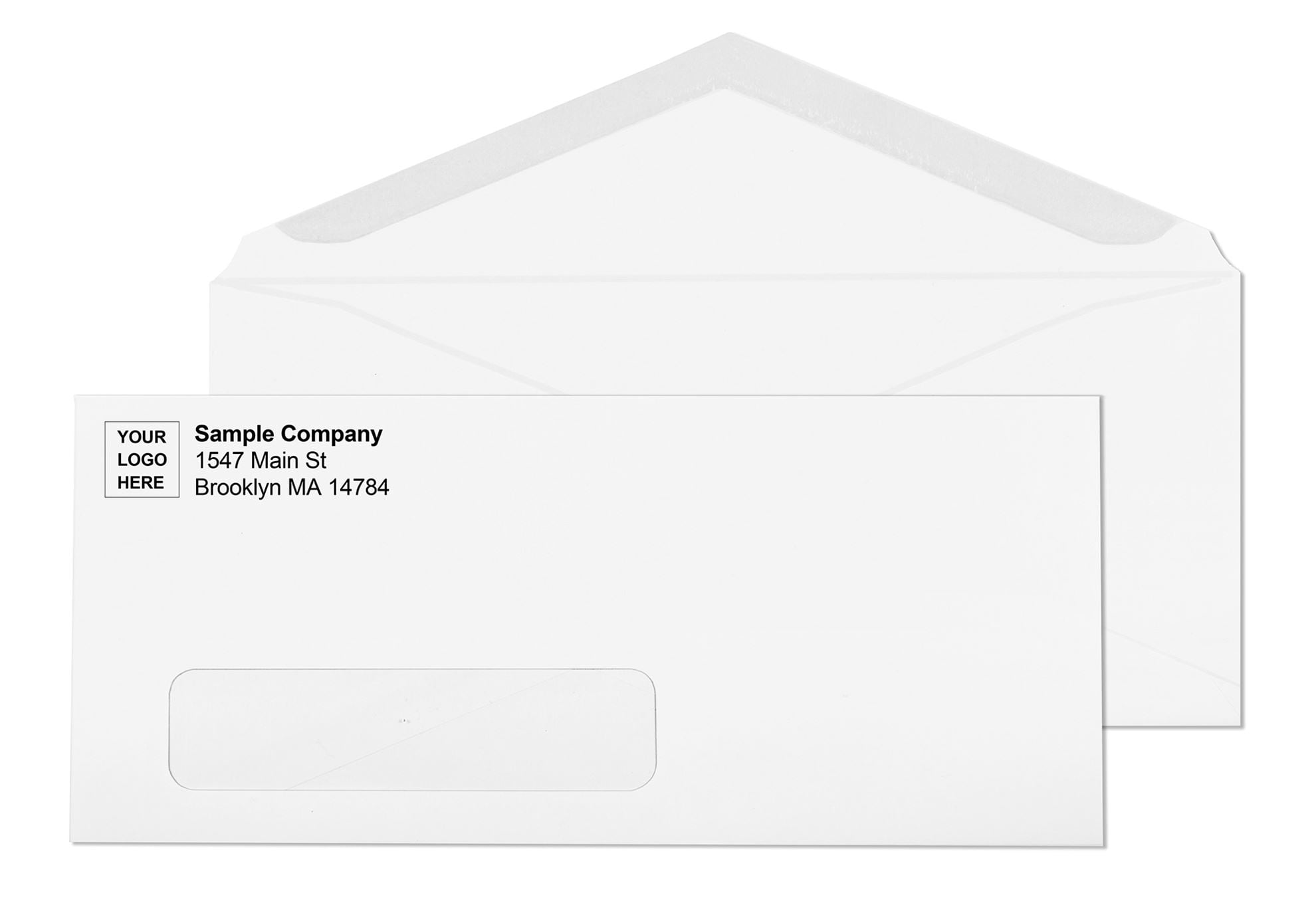
24 lb bright white wove stock, V-shaped diagonal-seam commercial flap, moistenable gum adhesive on the flap edge. This is the baseline format and the correct choice for automatic mail insertion equipment. Inserter machines (Pitney Bowes, Neopost, Bell and Howell) are calibrated for gum flap stock because the flap activates only when moisture is applied at the sealing stage of the insertion cycle. Self seal closures are not compatible with automatic inserters. Plain wove without tinting is appropriate for general correspondence where contents are not sensitive.
Security Tinted, Gum Flap
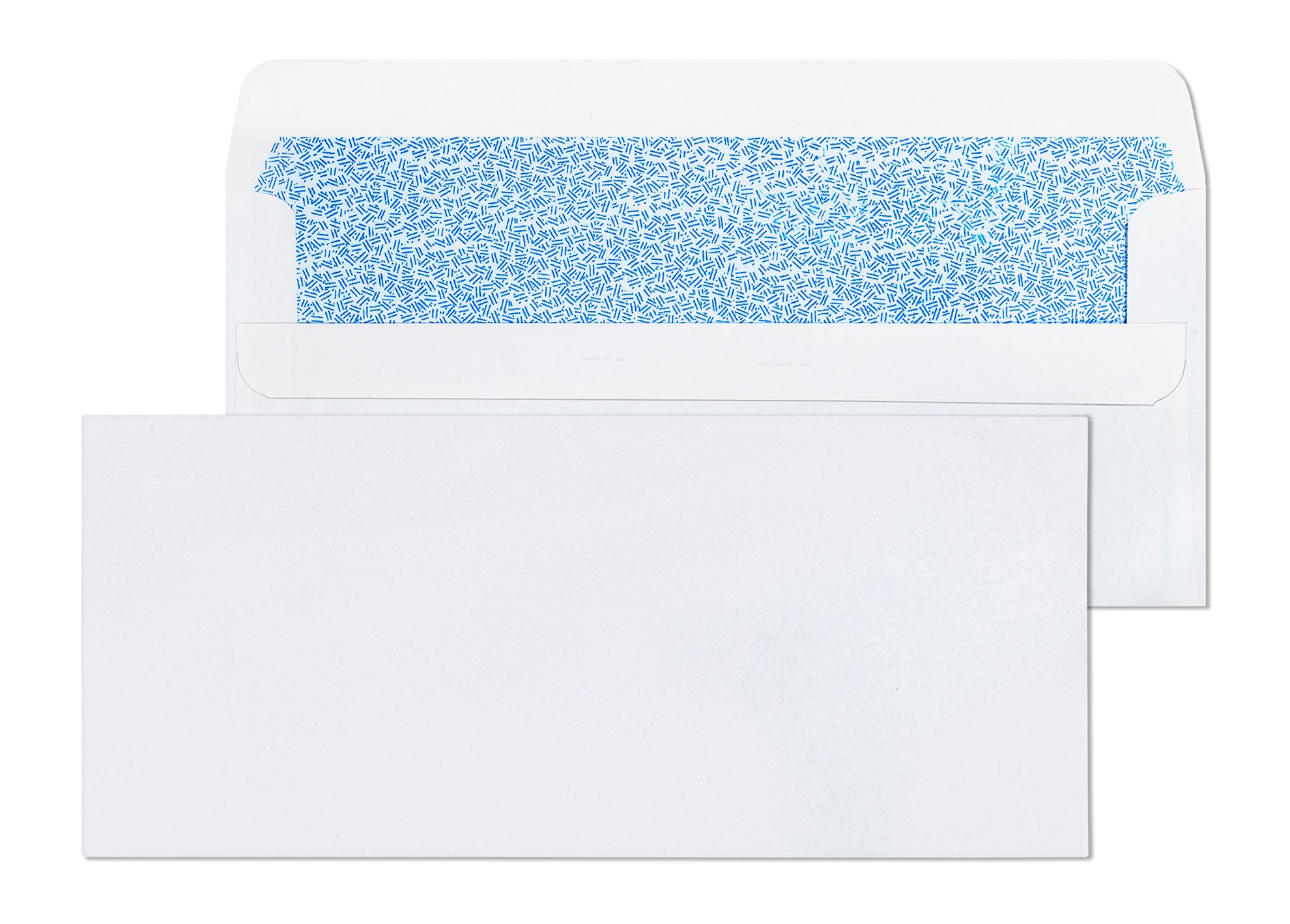
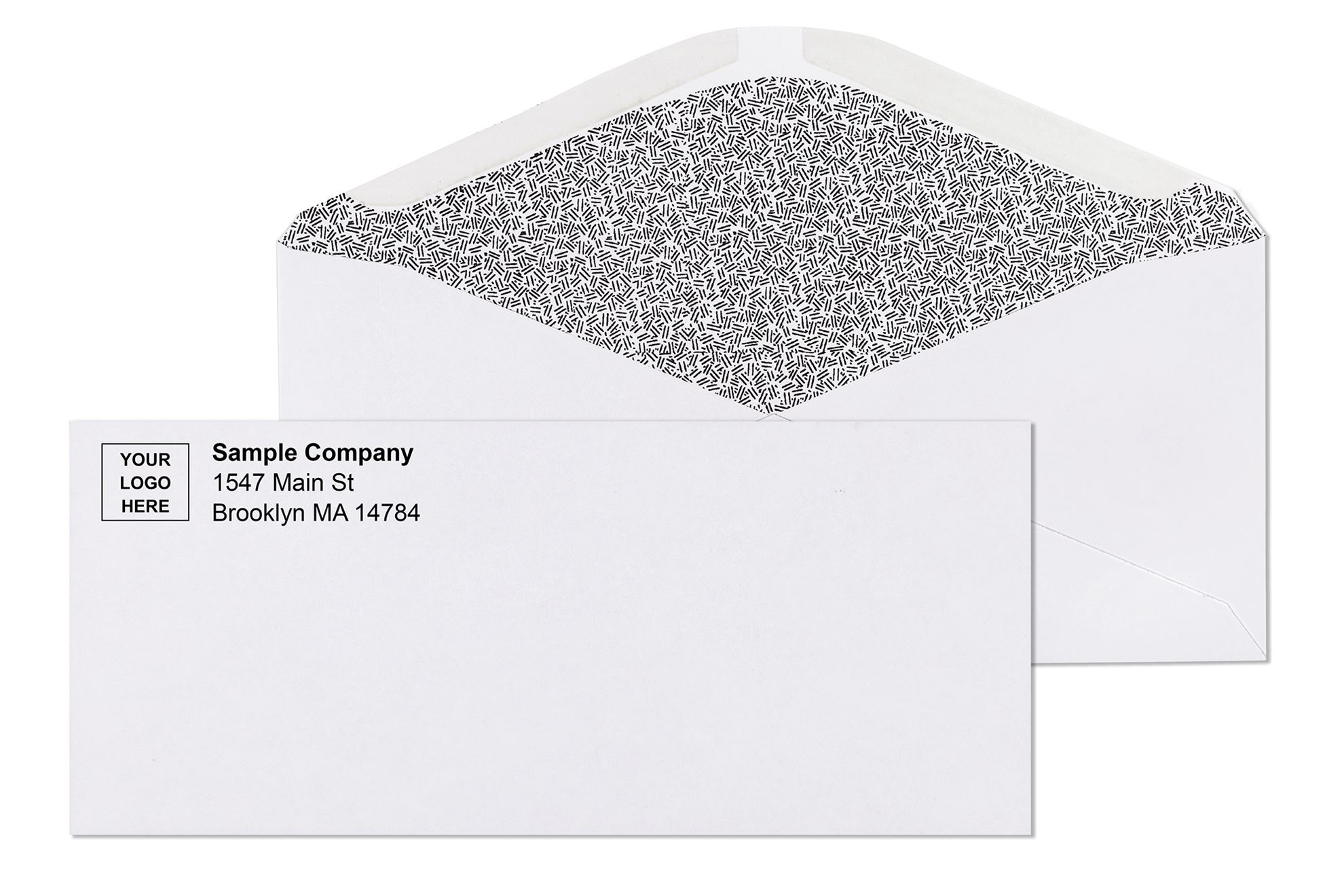
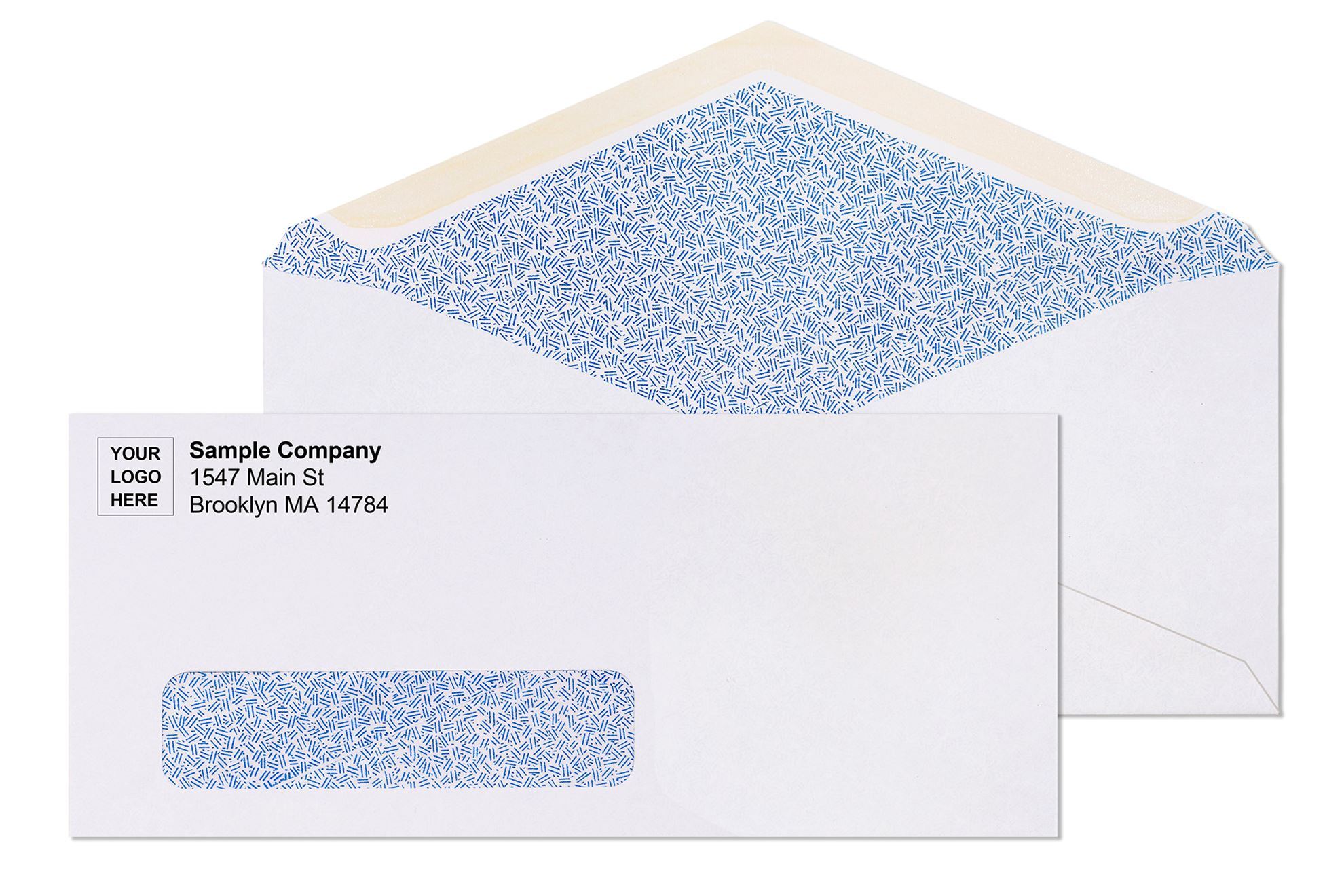
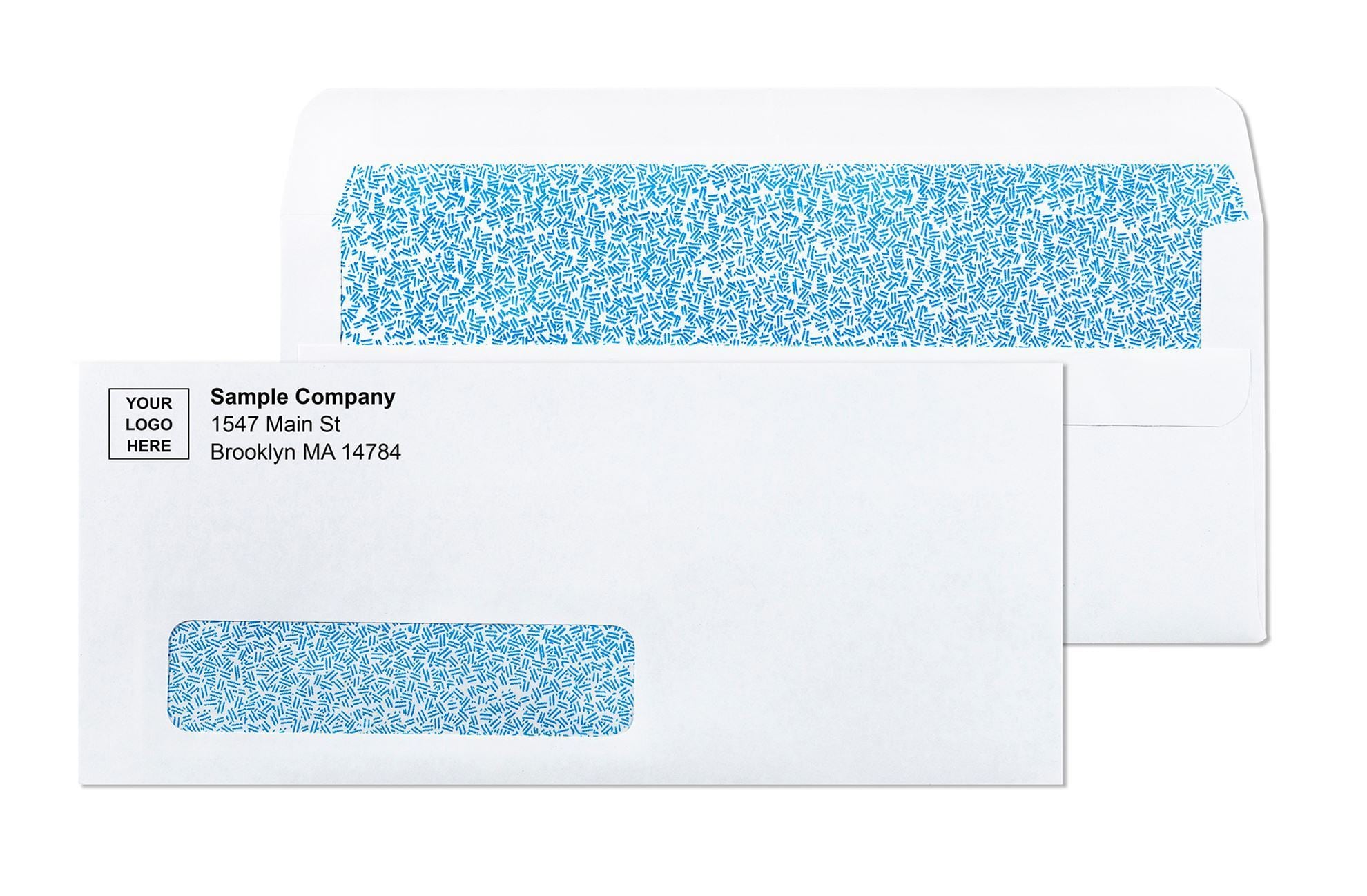
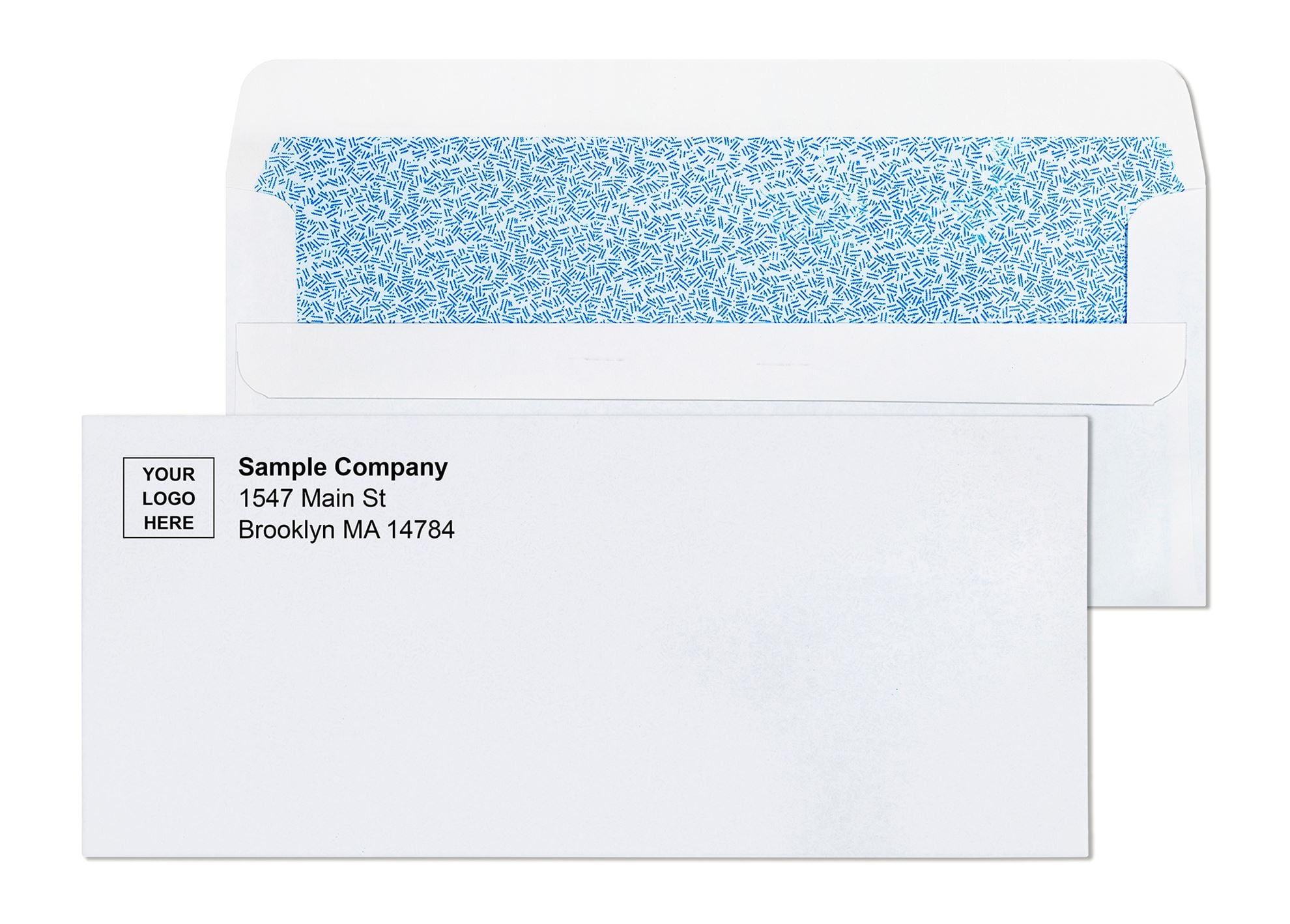
Identical construction to plain wove, with a printed reflex blue security pattern on the interior. Reflex blue is a high-density pigment that creates opacity when printed on the inside of the envelope wall. When a sealed security tinted envelope is held up to a light source, the pattern blocks the contents from showing through the paper. This is the same interior treatment used by the IRS, Social Security Administration, and healthcare providers for mailing sensitive correspondence covered by HIPAA and similar privacy standards. The gum flap closure makes this format compatible with inserter machines.
Security Tinted, Self Seal (Peel and Seal)
Security tint interior with a peel-and-seal closure: a pressure-sensitive adhesive strip on the flap protected by a silicone-coated release liner. Peeling the liner exposes the adhesive; pressing the flap down bonds it on contact. No moisture required. The release liner keeps the adhesive inactive during storage, which means pre-stuffed envelopes can sit for an extended period before a mailing run without adhesive degradation. Most peel-and-seal formats include perforated security slits along the flap edge that tear visibly if someone attempts to open a sealed piece, a tamper-evident feature that matters for payroll, legal, and financial correspondence.
Security Tinted, Self Seal (Flip and Stick)
The #10 security tinted flip and stick envelope is the format billing departments and payroll operations use most. No liner to remove. Two pressure-sensitive latex adhesive tabs sit on the inside face of the flap. A short lower section folds up to expose the contact surface, the flap presses down, and the tabs bond immediately. No liner disposal, no peel step, one motion per envelope.
One verified buyer describes it precisely: "no annoying strip to peel makes this the only choice." Another notes the tabs are "not sticky at all unless you press them together," which means no accidental pre-sealing in the box. At 500 pieces per billing cycle, skipping the liner removal step produces real time savings. Laser safe, 24 lb bright white wove, V-shaped flap, dual diagonal seams, windowless.
Single Window Variants
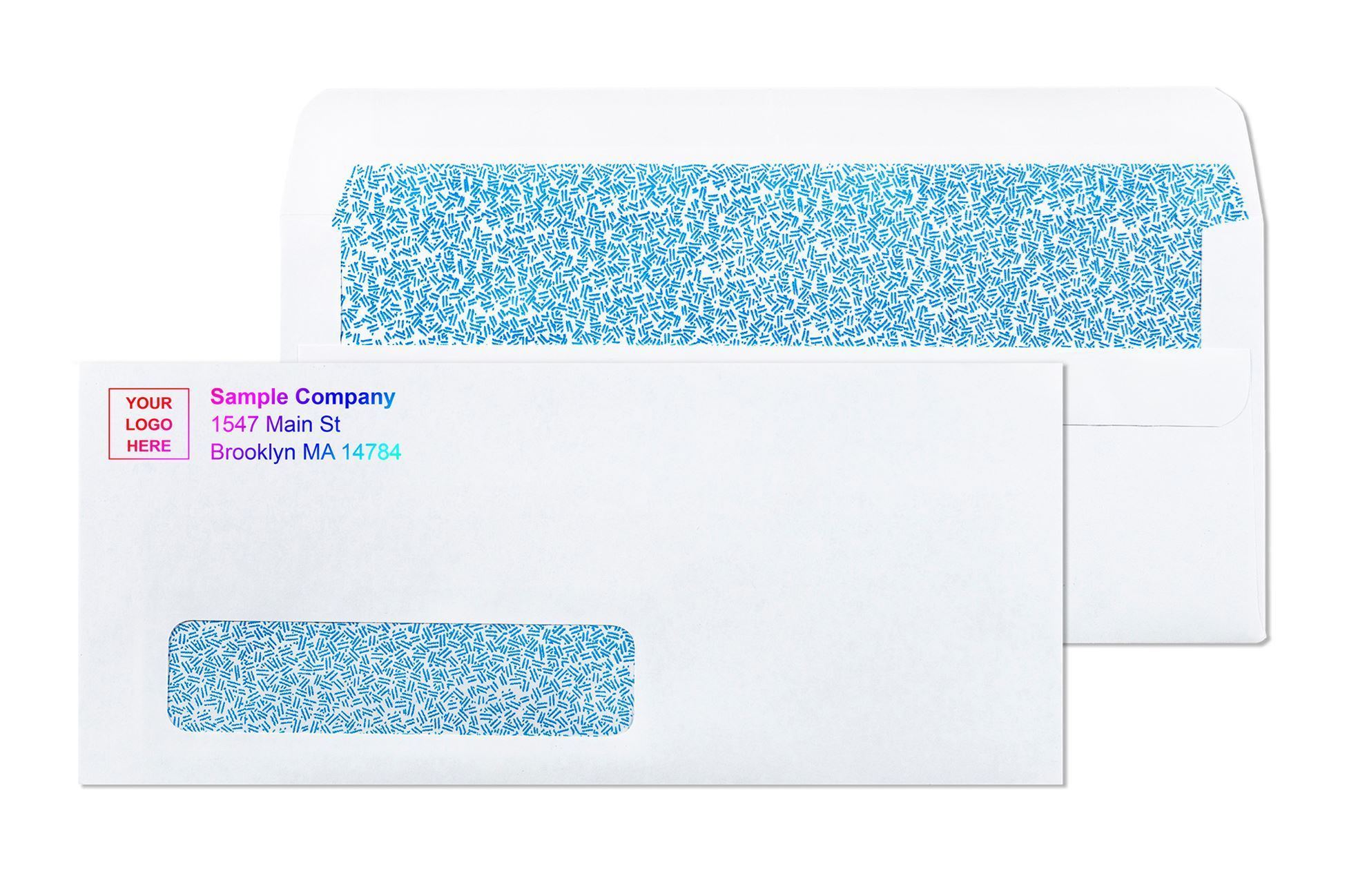
A single poly-film window cut into the face of the envelope displays the recipient address from the enclosed document, removing the separate addressing step. Standard positioning is lower-left, sized at 1-1/8 x 4-1/2 inches, set 7/8 inch from the left edge and 1/2 inch from the bottom. USPS requires a clear zone around the window to ensure address readability by automated sorting equipment. This positioning accommodates standard invoice and statement address block layouts. Available in security tinted and plain configurations, with gum flap or self seal closure. Browse window envelopes for all configurations.
Double Window for Checks and QuickBooks Formats

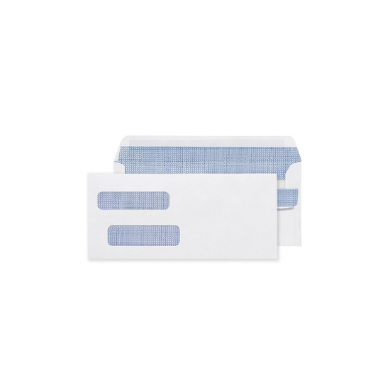
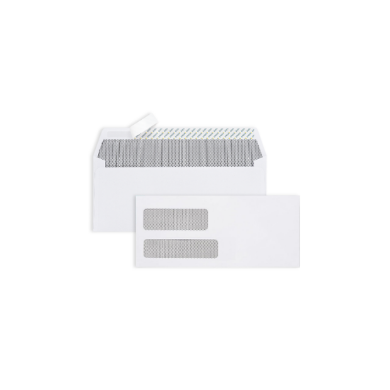
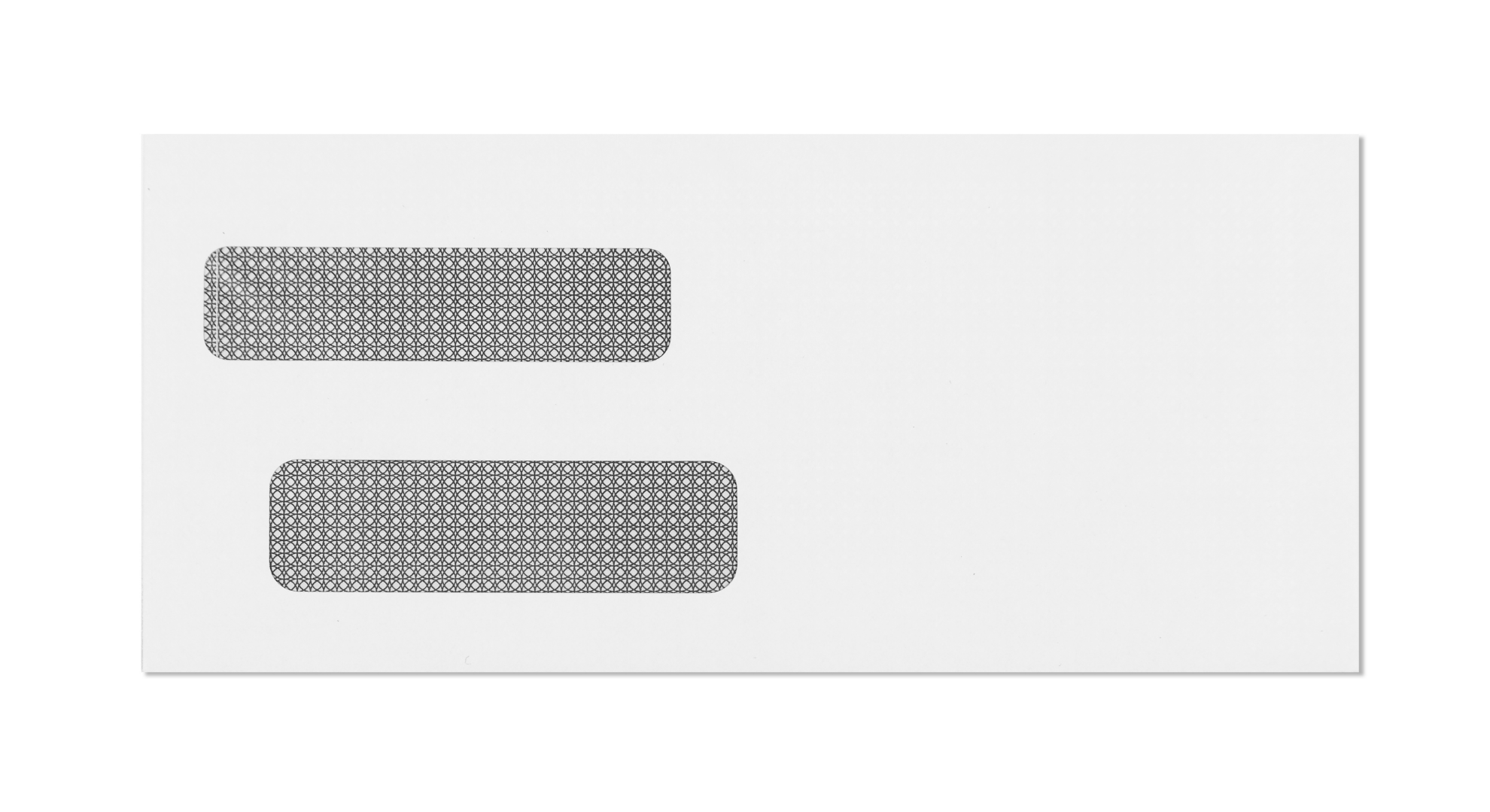
Two poly-film windows: upper-right for the return address, lower-left for the recipient. Both pull directly from a standard laser-printed check or statement, which means neither window requires a label, handwritten address, or merge-print on the envelope face itself. The window dimensions and positions are pre-aligned to QuickBooks, Quicken, Sage, and standard laser check formats used by most US accounting software.
This format removes three steps from check mailing: addressing, labeling, and return address printing on the envelope. The double window envelopes range covers both flip and stick and peel and seal closures.
Colored and Starburst Variants
The 4-1/8 x 9-1/2 size is also available in colored stock for organizations that want visual distinction in the mailbox. Colored envelopes are used for seasonal campaigns, member communications, and fundraising appeals where standing out from the stack of white envelopes matters. Starburst envelopes carry a die-cut pattern on the face for additional visual impact and are used in direct mail acquisition programs where the outer envelope needs to capture attention before the recipient sorts the day's mail. Both are available in this size with peel-and-seal closure and custom printing.
Security Tinted vs Plain: How to Decide
The decision rule is straightforward. If any of the following applies to your mailing, security tinted is the correct specification:
- The piece carries a check, a check amount, a bank account number, or a routing number
- The piece contains salary, payroll, or HR information covered by employment privacy standards
- The piece carries protected health information (PHI) governed by HIPAA
- The correspondence passes through a shared building mailroom, an office mail desk, or any intermediate handler before reaching the recipient directly
Plain white wove without interior tinting is appropriate for general business correspondence, marketing mail, and any outgoing piece where contents are not sensitive. For billing operations, payroll departments, healthcare providers, and financial services firms, security tinting is the functional standard specification, not an optional upgrade. For the complete reference, see Security Tinted Envelopes: What They Are and When to Use and Security Envelopes for Business: The Complete Guide.
Gum Flap, Peel and Seal, or Flip and Stick: Which Do You Need?
| Closure Type | Machine Compatible? | Best For | Shelf Life |
|---|---|---|---|
| Gum Flap | Yes | Inserter machine programs; low-volume hand sealing | Years (dry storage) |
| Peel and Seal | No | Staged batch mailings; tamper-evident compliance mail | Years (liner protects adhesive) |
| Flip and Stick | No | High-volume continuous batch runs, all processed at once | 6 to 12 months |
Gum flap is non-negotiable if your operation uses automatic mail insertion equipment. Beyond that, it suits low-volume operations where moistening a flap individually does not represent meaningful labor cost.
Peel and seal is the correct choice for operations that stage mail before dispatch. Because the silicone liner keeps the adhesive inactive until intentional removal, a batch of stuffed envelopes can sit between prep and mailing without any seal degradation. The tamper-evident perforation on the flap adds a compliance layer for financial and legal correspondence.
Flip and stick produces the fastest per-piece sealing in a continuous high-volume run processed all at once. No liner step, one motion, immediate bond. This is the format used by accounting offices, billing departments, and payroll operations running recurring batch mailings where throughput speed is the operational priority.
All three closures are available across the full self seal envelope lineup. For the complete head-to-head comparison of peel-and-seal versus flip-and-stick, see Peel-and-Seal vs Flip-and-Stick: The Full Guide.
How Long Do Self-Seal Envelopes Last in Storage?
This is one of the most common questions from billing offices that order in bulk. The answer depends on closure type and storage conditions.
Peel-and-seal envelopes last several years when stored correctly. The silicone release liner protects the adhesive strip from ambient air, humidity, and heat until you intentionally remove it. Pre-stuffed peel-and-seal envelopes can sit for days or weeks before a mailing run without seal degradation.
Flip-and-stick envelopes have an exposed adhesive panel with no liner protecting it. The adhesive begins to degrade over time, particularly in warm or humid environments. Most manufacturers recommend using flip-and-stick envelopes within 6 to 12 months of purchase. Ordering more than a 12-month supply of flip-and-stick creates adhesive failure risk on older stock.
For the complete self-seal adhesive reference, see Self Adhesive Envelopes: Types, Uses, and How to Choose and Self Seal Envelopes Guide.
Can I Print Directly on a 4-1/8 x 9-1/2 Envelope?
Yes. All 4-1/8 x 9-1/2 envelope formats at Business Envelopes are laser safe. The envelope can run through a standard office laser printer for return address, recipient address, or logo printing directly on the envelope face. The adhesive on self-seal formats sits on the flap only, so it does not interfere with the print surface or cause jams in the printer feed path.
One practical note from commercial print operators: on some high-volume production presses, #10 envelopes feed best through the bypass tray rather than the main paper cassette. If you experience feed issues on a new press, try the bypass tray first before calling a technician. Running a 10-piece test batch through a new printer or inserter configuration before committing to a full mailing run is the standard practice among experienced billing operations.
Paper Weight and Build Specs for 4-1/8 x 9-1/2 Envelopes
Paper Weight
24 lb bond (90 gsm) bright white wove. Heavier than standard 20 lb copy paper, improving opacity and reducing show-through even without security tinting. Commercial-grade stock, not the lighter paper that warehouse suppliers substitute to hit lower price points.
Seam Construction
Diagonal V-seam construction on the reverse face. Dual diagonal seams on self-seal formats. The diagonal seam minimizes bulk at fold points and prevents paper jam issues in inserter machines on gum flap stock.
Flap Style
Commercial flap (pointed V-shape) is the standard for business mail and inserter machine compatibility. Square flap variants exist for branded marketing mail but are not compatible with automated inserting equipment due to their flat-edge geometry.
Window Material
Clear poly-film. Non-fogging, USPS approved. All window formats include a minimum 1/8-inch clearance zone around the window opening for USPS address readability compliance and automated sorting equipment requirements.
For the complete paper specification guide and what each weight means for your mailing program, see Envelope Paper Weight Guide.
What Does It Cost to Mail a 4-1/8 x 9-1/2 Envelope in 2026?
| Weight | Forever Stamp | Metered | Notes |
|---|---|---|---|
| Under 1 oz | $0.82 | $0.78 | Single tri-folded sheet; standard business letter |
| 1 to 2 oz | $1.09 | $1.05 | Two to three sheets of 24 lb paper |
| 2 to 3 oz | $1.36 | $1.32 | Approaching fill limit; weigh before running |
| Over 3.5 oz | Flat rate | Flat rate | Upgrade to 6x9 or 9x12 flat envelope |
High-volume mailers using presorted Marketing Mail rates can mail #10 envelopes at $0.372 to $0.433 per piece depending on presort level and destination distance. For the complete 2026 postage guide including Forever stamp purchasing strategy, see #10 Envelope Postage: Stamps and Cost Guide for 2026..
Rates per USPS Notice 123, effective July 12, 2026. Verify current rates at usps.com before large runs.
Which Industries Use 4-1/8 x 9-1/2 Envelopes?
The #10 is the single most versatile commercial envelope format in US business. Every major industry touches it in some form:
Financial Services and Accounting
Monthly statements, invoice mailings, 1099 and W-2 distribution, check mailing. Double-window security tinted flip-and-stick is the standard format for accounts payable and payroll programs.
Healthcare and Insurance
Explanation-of-benefits (EOB) letters, HIPAA-covered patient correspondence, billing notices, and appointment reminders. Security tinted stock is the standard to protect PHI during transit and handling.
Government and Municipal Offices
Tax notices, utility bills, public notices, permit renewals, and compliance mail. High-volume government programs typically use gum flap stock with inserter machines for automated processing.
Nonprofits and Fundraising
Donation appeals, membership renewals, and annual fund campaigns. The standard configuration is a plain or colored outer #10 with a tri-folded letter and a #9 reply envelope nested inside.
Legal and Professional Services
Client letters, engagement agreements, billing invoices, and routine professional correspondence. Security tinted peel-and-seal is common for client-facing correspondence with sensitive matter details.
Direct Mail and Marketing
Acquisition campaigns, offer letters, promotional notices, and cold outreach. Colored, starburst, or custom-printed #10 envelopes are used to increase open rates on cold list programs.
For the complete industry-by-industry breakdown of envelope formats and when each type applies, see Types of Business Envelopes: Which Format You Actually Need.
Using 4-1/8 x 9-1/2 Envelopes for Direct Mail
The #10 envelope is not just a transactional format. It is the most widely used outer envelope in US direct mail campaigns. According to ANA benchmarks, letter-sized envelopes achieve a 4.3% average response rate across tested programs, compared to less than 0.4% for most digital channels. For house lists (existing customers or members), tested response rates for well-executed letter packages reach 5.3%.
For direct mail programs, the outer envelope is the first decision point for the recipient. Several outer envelope choices improve open rates for acquisition mail:
- Teaser copy on the outer face signals the offer before the recipient opens the piece, which reduces discard rates among interested prospects
- Colored stock creates visual distinction in the mailbox from the dominant stack of white envelopes
- Starburst envelopes use a die-cut pattern to create immediate visual impact for promotions and seasonal campaigns
- Variable data printing (VDP) personalizes the outer envelope with the recipient's name or offer, which tested direct mail programs show increases response rates significantly on house lists
- Official document appearance (plain white, minimal exterior, printed return address) performs best for financial services and healthcare correspondence where recipients expect formal mail
For high-volume automated direct mail, gum flap #10 envelopes are required. Inserter machines process the outer envelope at speed and cannot seal self-seal closures. For the complete direct mail format guide including size selection and campaign structure, see Direct Mail Envelopes: Format, Size, and Design Guide.
How to Stuff and Seal a #10 Envelope Correctly
Improper stuffing is the leading cause of flap failure, postal returns, and window misalignment in window formats. Following the correct sequence eliminates these problems:
- Fold the document correctly. Fold an 8.5 x 11 sheet into thirds using a standard Z-fold. Place the top third face down, then fold the bottom third over it. When inserted, the fold opens from the top for the recipient, which is the conventional professional presentation.
- Check fill weight and thickness. Do not exceed three sheets of standard 20 to 24 lb paper. Beyond that thickness the piece exceeds the USPS 0.25-inch limit for letter-rate mail, triggering a surcharge or flat-rate reclassification. For heavier packets, use a 6x9 or 9x12 envelope.
- Insert documents cleanly. Slide the folded document in with the open edge entering first. For window formats, verify the address block sits cleanly inside the window with at least 1/8-inch clearance on all four window edges. Misaligned windows cause USPS scanning failures and returned mail.
- Seal correctly by closure type. Gum flap: moisten lightly and press firmly. Peel and seal: remove the silicone liner fully before pressing the flap. Flip and stick: fold the lower tab up first, then press the flap down in one motion. All three should be sealed immediately after stuffing, never pre-sealed before loading.
- Weigh before mailing. A filled #10 with one tri-folded sheet typically weighs under 1 ounce. Verify total weight on a postal scale before the mailing run. Contents over 1 ounce require additional postage. For the complete sealing reference by closure type, see How to Seal an Envelope: The Right Way for Every Type and Situation.
Custom Printing on 4-1/8 x 9-1/2 Envelopes
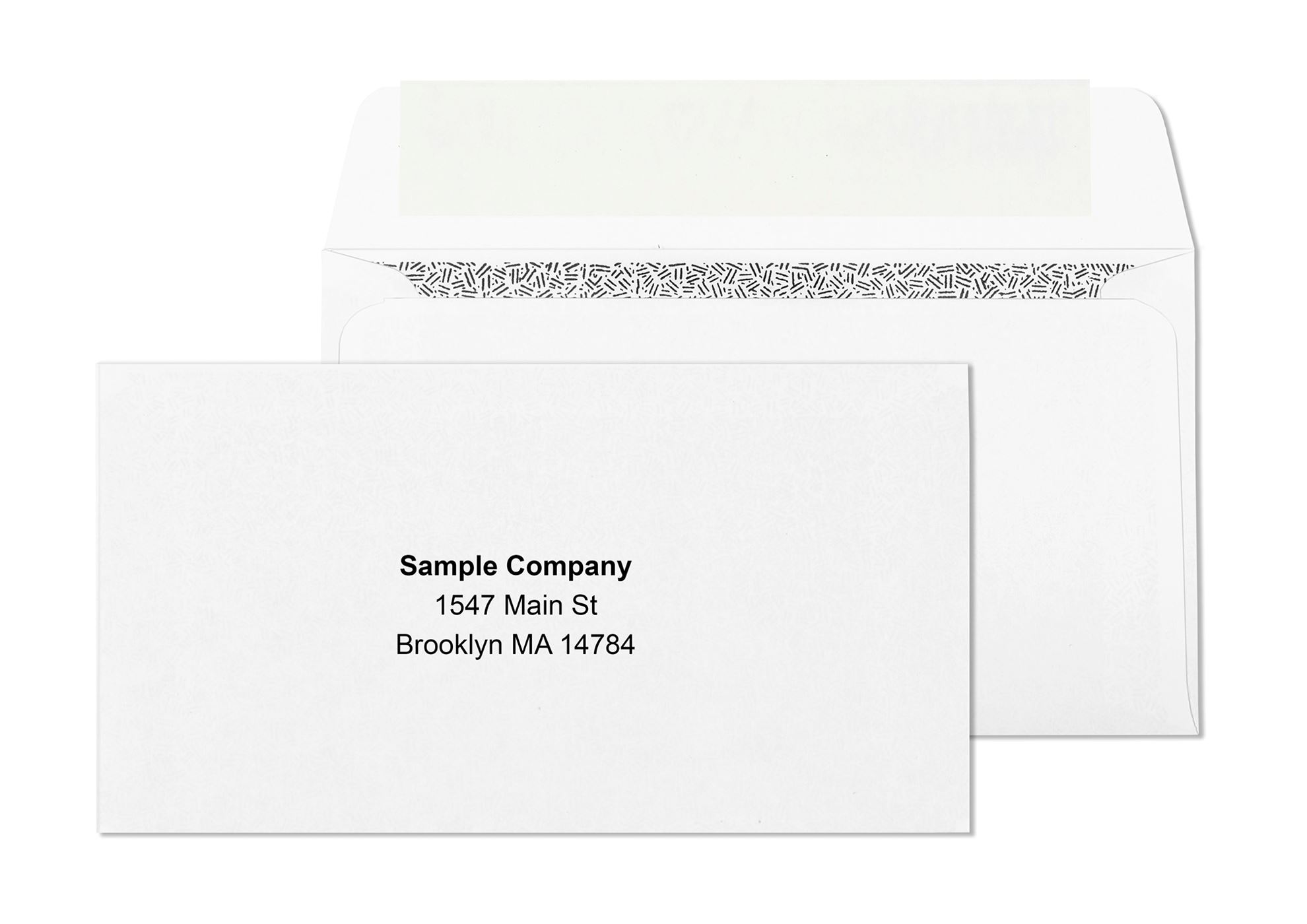
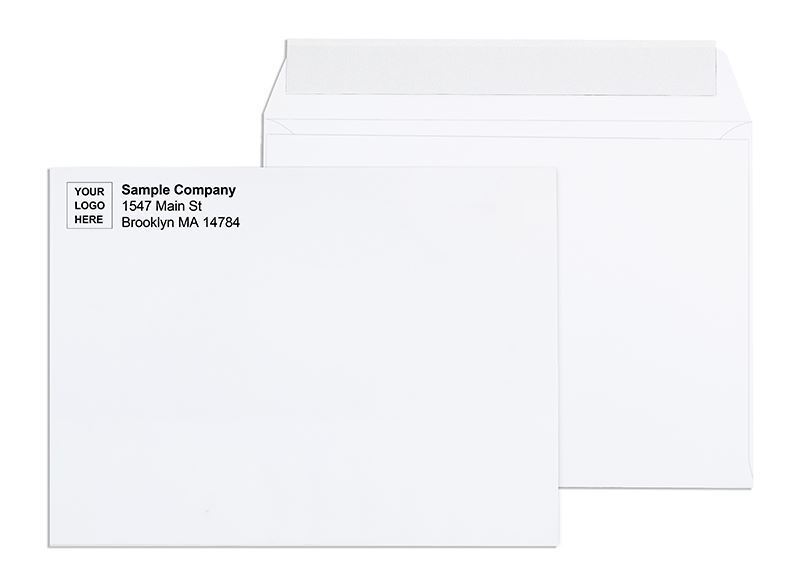
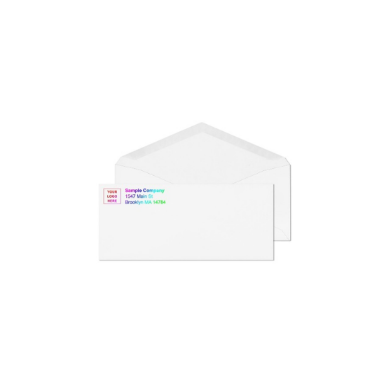
Custom printing is available on every closure type and interior configuration in this size at Business Envelopes. Logo and return address in black and white or full color prints directly on the envelope face. The adhesive sits on the flap only, so the print surface is clean and color registration is consistent from order to order.
There is no minimum order requirement. Once artwork is approved and on file, every reorder of the same format reproduces without re-submitting files or running a new proof cycle. Custom stock ships within 7 to 10 business days from proof sign-off. Blank stock ships same or next business day. Free shipping on every order, site-wide. For full custom printing specifications, see Custom Printed Envelopes Guide.
For accounting departments standardizing on the flip and stick security tinted format, the #10 self seal security tinted envelope is the direct product page. For the full format comparison across all #10 envelopes, the size hub covers every variant in one place. For the complete #10 guide covering styles, anatomy, and flap types, see #10 Envelope Size, Styles, and Uses: Complete Guide.
Is the 4-1/8 x 9-1/2 Envelope Standard Internationally?
The 4-1/8 x 9-1/2 (#10) format is the North American standard. The international equivalent is the DL envelope, measuring 110 x 220 millimeters. The DL is slightly shorter (110mm vs 105mm) and slightly wider (220mm vs 241mm) than the #10. Both hold an A4 or letter-size sheet folded in thirds.
For businesses coordinating international mailing programs, the size difference between #10 and DL matters for inserter machine calibration and postal compliance. USPS systems are calibrated to #10 dimensions. Most European postal systems expect DL. Running a North American #10 through a European postal sorting system is technically possible since both fall within machinable ranges, but verifying with your international logistics partner before a large run is the correct procedure. Metric equivalents to give to international partners: 4-1/8 x 9-1/2 inches = 104.775 x 241.3 millimeters.
Conclusion
The 4-1/8 x 9-1/2 envelope is a fixed dimension with a wide range of operational specifications underneath it. Security tinted or plain, gum flap or self seal, windowed or windowless, single window or double window for QuickBooks: each variant exists because each one solves a specific problem in a specific mailing workflow. The right one for a billing department processing 400 payroll pieces a month is not the same as the right one for a small office mailing twenty general letters a week. Matching the spec to the workflow is what determines whether the mailing operation runs efficiently or creates friction every time. Business Envelopes carries every variant in stock, blank or custom printed, with free shipping and no minimum order on every format.
What Customers Say
#10 Security Tinted Self Seal Envelopes
"I switched from another brand to these because they were half the cost. I did not sacrifice anything in quality though. These are security-lined, and the adhesive is as good, maybe better than the more expensive brand."
#10 Security Tinted Self Seal Envelopes
"These are great, no complaints at all. They print great and the seal is very secure. These are better than the last envelopes I used which had a sticky surface that caused the envelope to tear a bit. These have two tabs that bond immediately."
#10 Plain Gum Flap Custom Printed Envelopes
"The best company to deal with! Their printing is SUPER as well as the quality of the envelopes. It was a pleasure to deal with them. I would recommend everyone to give them a try."