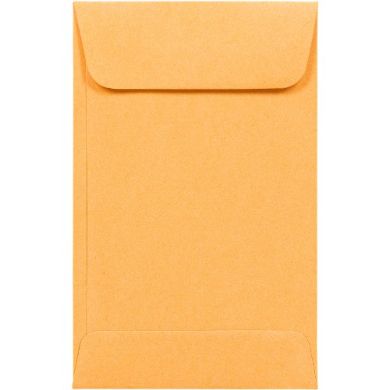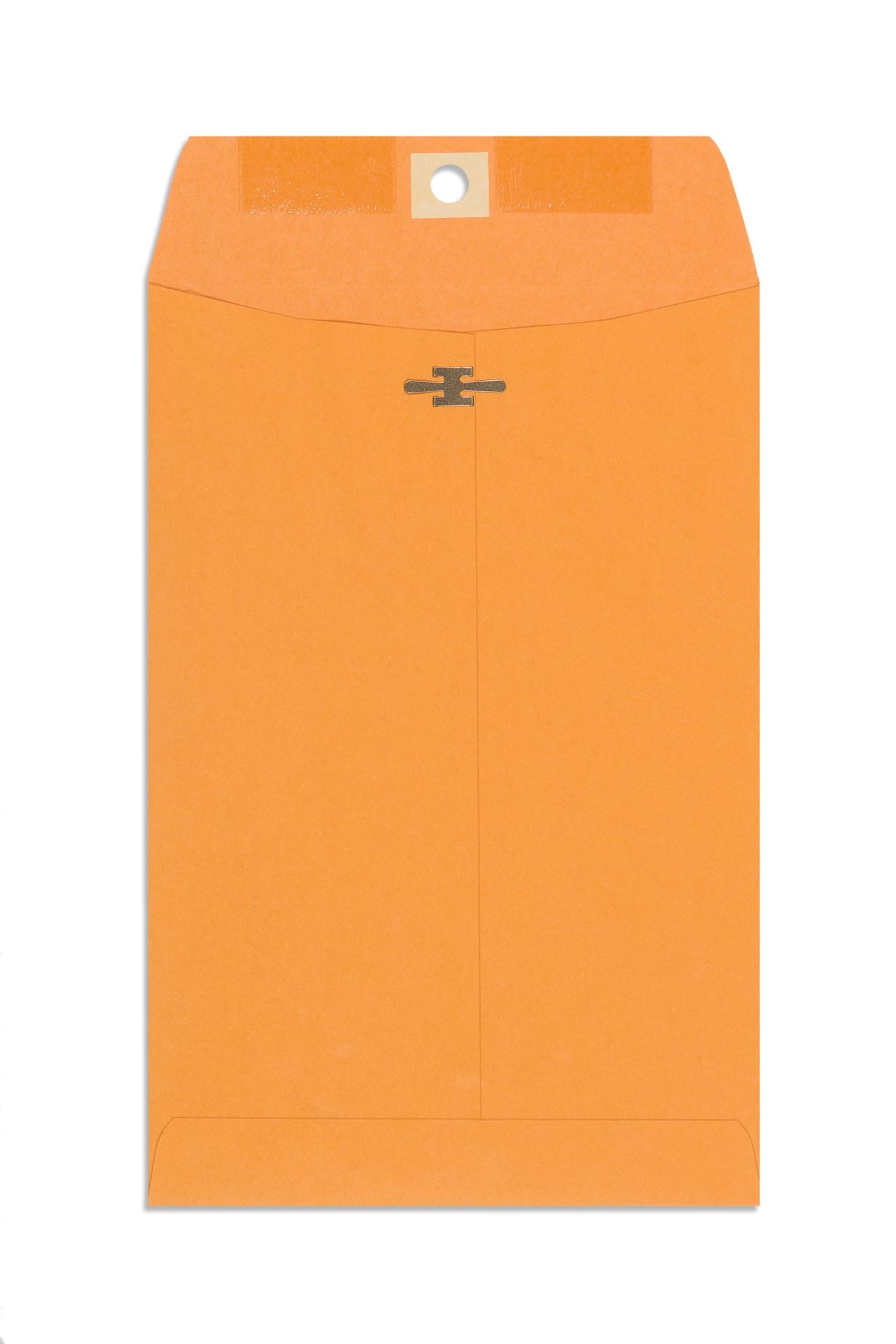

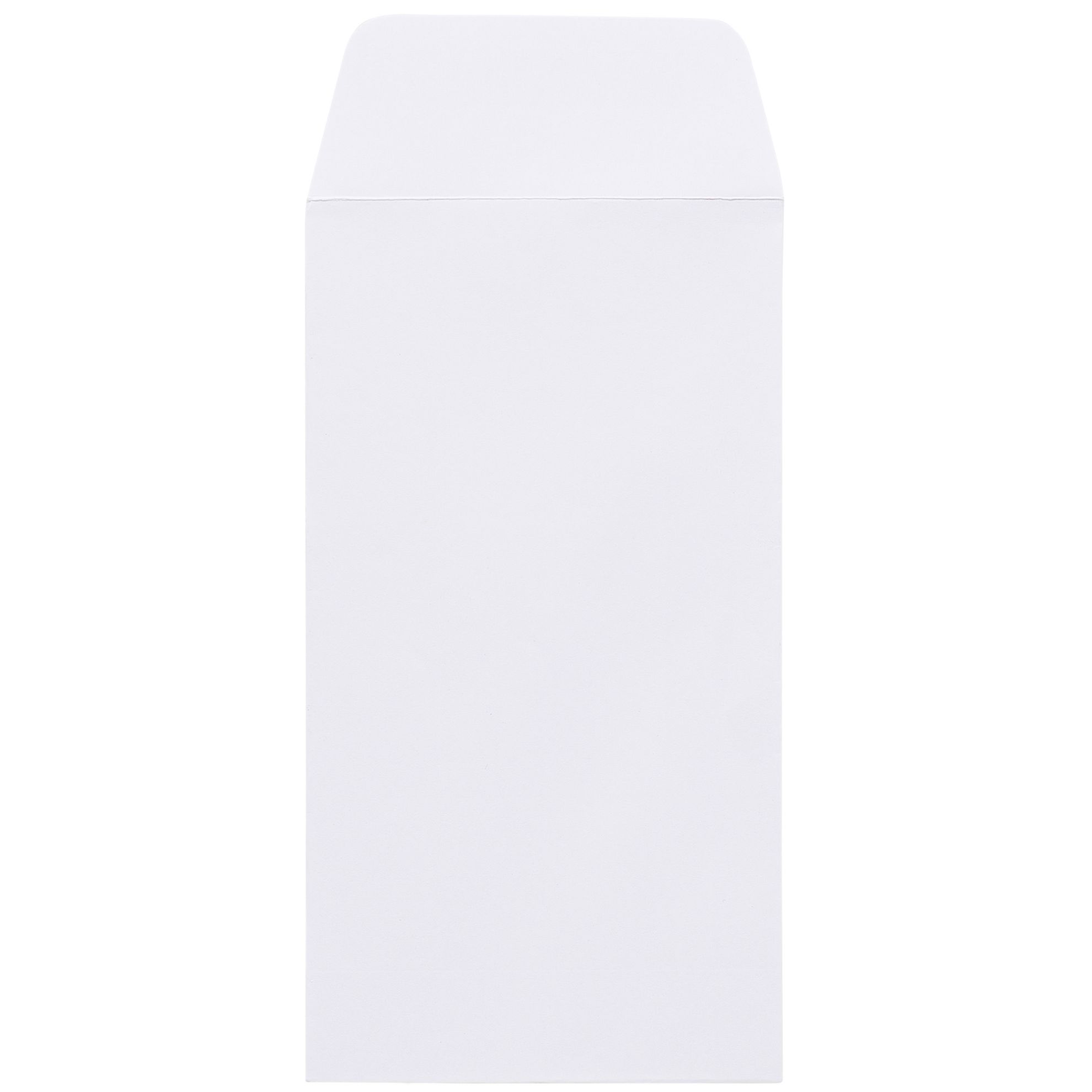
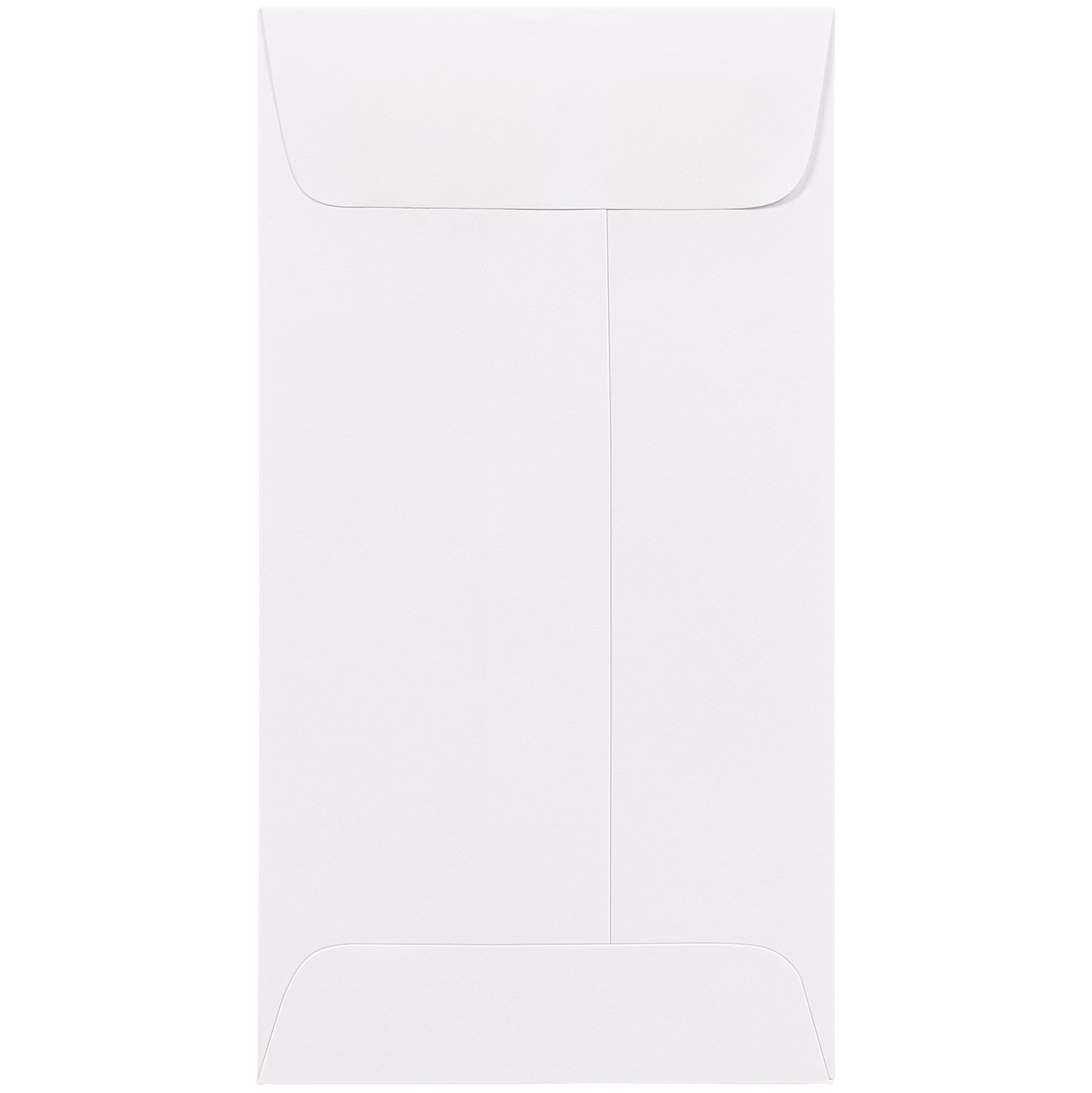

- One Forever stamp ($0.82) covers a standard #6 3/4 envelope at the USPS First-Class letter rate.
- The #6 3/4 always qualifies for letter rate because all its dimensions fall within USPS letter-size limits.
- Metered postage costs $0.78 per piece, saving $0.04 per envelope versus a stamp.
- A non-machinable surcharge of $0.49 applies if the envelope contains coins or rigid contents.
- Business Reply Mail (BRM) envelopes return postage-free to the recipient; your organization pays only on pieces actually returned.
- All rates on this page are effective July 12, 2026, per USPS Notice 123.
- What Is the #6 3/4 Envelope Postage Rate?
- Complete 2026 Postage Rate Table
- How Many Stamps Does a #6 3/4 Envelope Need?
- Weight Guide: What Fits Inside a #6 3/4
- Why a #6 3/4 Always Mails at Letter Rate
- The Non-Machinable Surcharge: When It Applies
- Metered Mail vs Stamps for #6 3/4 Programs
- Business Reply Mail: What Postage Costs You
- Postage When the #6 3/4 Ships Inside a #10
- Which #6 3/4 Format Should You Use?
- Postage Comparison: #6 3/4 vs #9 Reply Envelope
- What Customers Say
- Frequently Asked Questions
The #6 3/4 envelope is the most widely used reply and remittance envelope in the United States. Billing programs, nonprofit donation campaigns, healthcare payment return mail, church collections, and school fundraisers all run on this size. Yet postage for the #6 3/4 confuses buyers more than any other small commercial size because it sits between the familiar #10 and the even smaller coin formats, and because most postage guides only cover the outgoing #10, not the reply piece.
This guide answers the postage question for the #6 3/4 completely, including the full 2026 USPS rate table, how weight affects the stamp count, when the non-machinable surcharge applies, how Business Reply Mail postage works, how metered postage compares, and how the #6 3/4 outgoing cost compares when it is nested inside a #10 outgoing package. For the complete guide to this size across formats and uses, see the #6 3/4 Envelope Size and Format Guide.
What Is the #6 3/4 Envelope Postage Rate in 2026?
The #6 3/4 envelope mails at the USPS First-Class Mail letter rate. As of July 12, 2026 (per USPS Notice 123), the rate is:
- $0.82 per ounce using a Forever stamp
- $0.78 per ounce using metered postage
- $0.29 for each additional ounce beyond the first (up to 3.5 ounces total)
One Forever stamp covers the vast majority of #6 3/4 mailings. The envelope itself weighs 3 to 4 grams, and paper contents kept to a single folded form or check stay well within the 28-gram (one-ounce) first-class threshold. Most reply and remittance programs using the #6 3/4 mail at single-stamp cost for every piece.
For a side-by-side view of how the #6 3/4 postage compares with every other common business envelope size, see How Many Stamps Do I Need? The Complete Guide by Envelope Size.
#6 3/4 Envelope Postage Rates: 2026 Complete Table
All rates below are USPS First-Class letter rates effective July 12, 2026, per USPS Notice 123. The #6 3/4 qualifies for letter rate because its sealed dimensions (3-5/8 inches tall by 6-1/2 inches long) fall within all USPS letter-rate size limits.
| Sealed Weight | USPS Mail Class | Stamp Rate | Metered Rate | Forever Stamps Needed |
|---|---|---|---|---|
| Up to 1 oz (28 g) | First-Class letter | $0.82 | $0.78 | 1 Forever stamp |
| 1 to 2 oz | First-Class letter | $1.11 | $1.07 | 1 Forever + 1 additional oz stamp |
| 2 to 3 oz | First-Class letter | $1.40 | $1.36 | 2 Forever stamps |
| 3 to 3.5 oz | First-Class letter | $1.69 | $1.65 | 3 Forever stamps |
| Over 3.5 oz | Reclassified as flat | $1.69+ | $1.69+ | Requires re-rating as flat |
In practice, a #6 3/4 envelope almost never exceeds 3.5 ounces. To reach that weight with standard 20 lb paper, you would need to enclose more than 14 full sheets, which is unusual for a reply or remittance piece. The non-machinable surcharge, covered below, is a more common cost issue than weight reclassification for this size.
How Many Stamps Does a #6 3/4 Envelope Need?
One Forever stamp covers a standard #6 3/4 envelope for the vast majority of uses. The answer depends on what is inside. The table below gives real-world estimates for the most common #6 3/4 contents.
| Contents | Approximate Weight | Ounce Tier | Stamps Needed |
|---|---|---|---|
| Envelope alone (no contents) | ~3.5 to 4 g | Under 1 oz | 1 Forever stamp |
| 1 check or money order | ~6 to 7 g | Under 1 oz | 1 Forever stamp |
| 1 remittance reply form (half-page) | ~5 to 6 g | Under 1 oz | 1 Forever stamp |
| 1 check + 1 reply slip | ~9 to 11 g | Under 1 oz | 1 Forever stamp |
| 2 full sheets of 20 lb paper | ~13 to 14 g | Under 1 oz | 1 Forever stamp |
| 3 full sheets of 20 lb paper | ~18 to 19 g | Under 1 oz | 1 Forever stamp |
| 4 full sheets of 20 lb paper | ~22 to 24 g | Under 1 oz | 1 Forever stamp |
| 5 or more sheets of 20 lb paper | ~26 to 30 g | Near or over 1 oz | Weigh before mailing |
| Coins (any amount) | Varies; always rigid | Non-machinable | 1 Forever + $0.49 surcharge |
When in doubt, weigh the sealed piece on a postal scale or at a USPS self-service kiosk before mailing. Most post office counters will weigh a single envelope at no cost. For recurring programs that mail identical pieces every cycle, weigh one fully assembled, sealed sample and record the result so every future mailing uses the correct stamp count without guessing.
For guidance on buying Forever stamps in bulk before rate increases and how stamp denominations work across mail classes, see Postage Stamps Buying Guide.
Weight Guide: What Fits Inside a #6 3/4 Envelope
The #6 3/4 envelope interior workspace is approximately 3-3/8 x 6-1/4 inches. Documents inserted flat must be smaller than this. Most programs insert one or two of the following:
- A personal check (standard bank check, approximately 3 x 6 inches, fits without folding)
- A money order
- A half-sheet donation slip or pledge card (4.25 x 5.5 inches folded once)
- A payment authorization form folded to half-sheet size
- A folded 8.5 x 11 letter sheet (requires folding to approximately 3-3/8 x 4.25 inches, fitting with modest clearance)
Standard paper stock at 20 lb bond weighs approximately 5 grams per full 8.5 x 11 sheet. A half-sheet (5.5 x 8.5 inches) weighs approximately 2.5 grams. Added to the envelope weight of 3.5 to 4 grams, virtually every standard reply-envelope use case stays under the 28-gram (one ounce) first-class letter threshold.
Why a #6 3/4 Envelope Always Mails at Letter Rate
USPS classifies mail by the physical characteristics of the sealed piece, not by the envelope size name printed on the box. A piece qualifies for First-Class letter rate when all four of the following are true:
- Height: at least 3-1/2 inches, no more than 6-1/8 inches
- Length: at least 5 inches, no more than 11-1/2 inches
- Thickness: no more than 1/4 inch (6 mm)
- Weight: no more than 3.5 ounces
The #6 3/4 measures 3-5/8 x 6-1/2 inches, placing it comfortably within the letter-rate height and length limits. A sealed #6 3/4 with paper contents stays well under 1/4 inch thick and well under 3.5 ounces. All four letter-rate conditions are met on every standard mailing, which is why the #6 3/4 always mails at the $0.82 letter rate and never reclassifies as a flat.
For context, the 6x9 envelope is the size where letter-rate classification can become uncertain depending on contents and rigidity. The #6 3/4 has no such ambiguity. Its dimensions guarantee letter-rate eligibility on every mailing. For a full breakdown of which envelope sizes mail at letter rate versus flat rate, see Non-Machinable Envelope Guide.
The Non-Machinable Surcharge: When It Applies to a #6 3/4
The USPS non-machinable surcharge of $0.49 applies to letter-rate envelopes that cannot pass through automated sorting equipment, even when the piece meets all size and weight requirements. For #6 3/4 envelopes specifically, the surcharge is triggered by:
- Coins inside the sealed envelope. Any coin, regardless of denomination, makes the piece rigid and uneven in thickness. School and church collection programs are the most common context for this issue.
- Rigid inserts. A plastic card, key fob, or rigid token enclosed with the reply makes the sealed piece non-machinable even when it stays under the thickness limit.
- Uneven thickness. Any contents that create a lumpy or uneven sealed envelope surface, rather than a uniformly flat piece, will trigger the surcharge at USPS processing.
Paper contents, checks, money orders, and standard folded forms do not trigger the non-machinable surcharge. A check is flexible and produces a uniformly flat sealed envelope. The same is true for a folded letter or a donation slip.
When your program expects respondents to include coins, note on the return envelope flap or on your appeal letter that coins inside a sealed envelope may require the sender to add $0.49 additional postage. The more practical instruction is to request checks or money orders in place of cash, which eliminates the surcharge entirely. For the full USPS non-machinable rules and which physical characteristics trigger the surcharge on each envelope size, see Non-Machinable Envelope Guide.
Metered Mail vs Stamps for #6 3/4 Programs
Metered postage costs $0.78 per ounce for a #6 3/4 First-Class letter in 2026. A Forever stamp costs $0.82. The $0.04 difference per piece may sound small, but it scales quickly on programs that mail in volume.
| Monthly Volume | Stamp Cost | Metered Cost | Monthly Savings | Annual Savings |
|---|---|---|---|---|
| 500 pieces | $410.00 | $390.00 | $20.00 | $240 |
| 1,000 pieces | $820.00 | $780.00 | $40.00 | $480 |
| 5,000 pieces | $4,100.00 | $3,900.00 | $200.00 | $2,400 |
| 10,000 pieces | $8,200.00 | $7,800.00 | $400.00 | $4,800 |
The metered discount applies whether the organization meters a standalone #6 3/4 as a reply piece or meters the outgoing #10 that carries the reply envelope. For any program mailing more than 500 outgoing pieces per month, metered postage is the more cost-efficient choice when combined with self-sealing envelopes that eliminate hand-moistening entirely.
Pairing a metered outgoing program with self-seal envelopes on the outgoing side removes both the postage markup and the sealing step from the mailroom workflow. For a detailed comparison of metered mail versus stamps across different mail volumes and envelope types, see Metered Mail vs Stamps Guide.
Business Reply Mail: What Postage Costs You on a #6 3/4
A Business Reply Mail envelope allows the recipient to return it postage-free. Your organization pays the postage only on pieces that come back. The per-piece cost on returned BRM envelopes is higher than a standard Forever stamp, which is the trade-off for removing the postage barrier from the respondent.
BRM postage on a returned #6 3/4 First-Class BRM envelope in 2026 consists of:
- The standard First-Class letter rate ($0.82 for the first ounce)
- A per-piece BRM surcharge set by USPS (typically bringing the total to $0.75 to $1.20 per returned piece depending on your permit type and whether pieces are presorted)
- An annual USPS BRM permit fee (typically $225 to $300 per year depending on permit class)
The BRM surcharge changes periodically with USPS rate cycles. Verify the current per-piece rate with your local post office or the USPS Business Mail Acceptance unit before setting BRM program budgets.
Courtesy Reply Mail (CRM) eliminates the per-piece surcharge entirely. The respondent affixes their own stamp. Your organization pays nothing on envelopes that go unused. For programs where respondents are already motivated to reply (utility bill payments, subscription renewals, active membership programs), CRM is the more cost-efficient choice. For programs where removing postage friction increases response rates meaningfully, such as first-time donor acquisition or lapsed-donor reactivation in nonprofits, BRM earns its cost through better returns.
For the full comparison of BRM and CRM for #6 3/4 programs including permit requirements, FIM mark placement, and Intelligent Mail barcode rules, see Business Reply Envelope Guide and Remittance Envelope Guide.
Postage When the #6 3/4 Ships Inside a #10 Outgoing Envelope
In virtually every program that uses a #6 3/4, the reply envelope is enclosed unsealed inside a #10 outgoing envelope. The postage is paid on the #10 outgoing, not on the enclosed #6 3/4. The #6 3/4 is included as part of the outgoing package.
The assembled outgoing weight for a typical single-sheet billing program looks like this:
| Component | Approximate Weight |
|---|---|
| #10 outgoing envelope | 6 to 7 g |
| One letter sheet (8.5 x 11, 20 lb) | 4.5 to 5 g |
| #6 3/4 reply envelope (enclosed, unsealed) | 3.5 to 4 g |
| Total | 14 to 16 g (under 1 oz / 28 g) |
A standard single-sheet billing package with a #6 3/4 reply envelope enclosed costs exactly one Forever stamp on the outgoing side, the same as mailing the letter alone. The #6 3/4 adds approximately 3.5 to 4 grams, which is well within the first-ounce threshold even when combined with the letter sheet and the #10 outer.
Adding a second insert (a remittance slip, a donation form, or a second letter page) adds another 2.5 to 5 grams to the total. Most two-insert packages still stay under 1 ounce when the inserts are standard paper weight. A package approaching 25 grams should be weighed on a postal scale before sealing the batch.
The #6 3/4 fits inside a #10 with approximately 1/4-inch clearance in height and 2-3/4-inch clearance in length. This is more working clearance than the #9 provides in the same #10 outer, which is one reason programs with multiple inserts often prefer the #6 3/4. For full outgoing postage rates by weight on the #10, see #10 Envelope Postage Guide.
Which #6 3/4 Format Should You Use?
Business Envelopes carries the #6 3/4 in four formats. Each serves a different program type, and the postage rate is the same across all four.
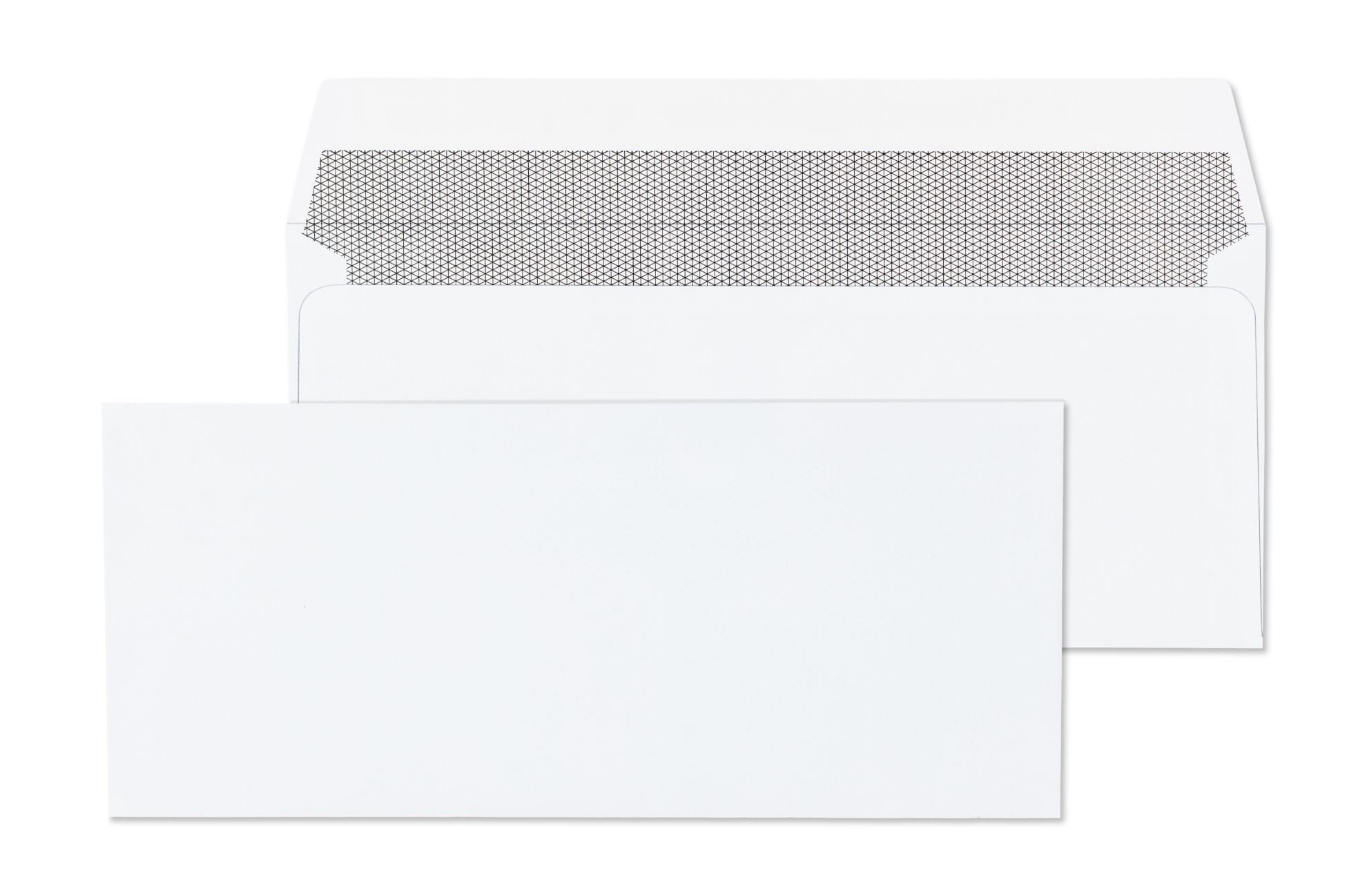
Plain White Wove Gummed Flap
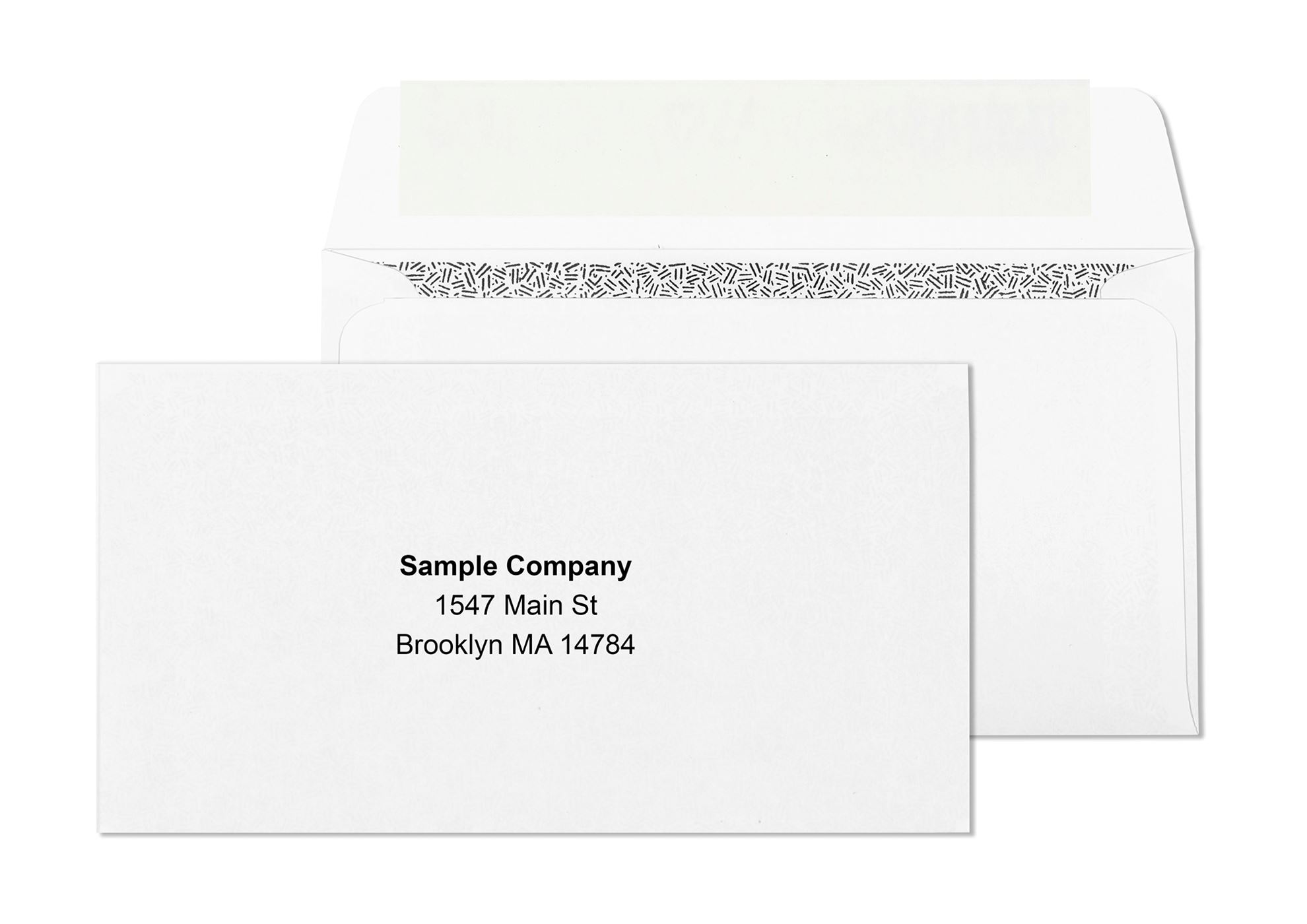
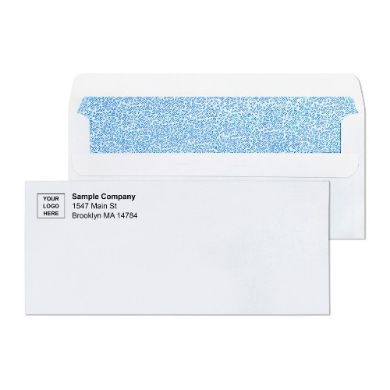
#6 3/4 Security Tinted Peel-and-Seal Envelopes
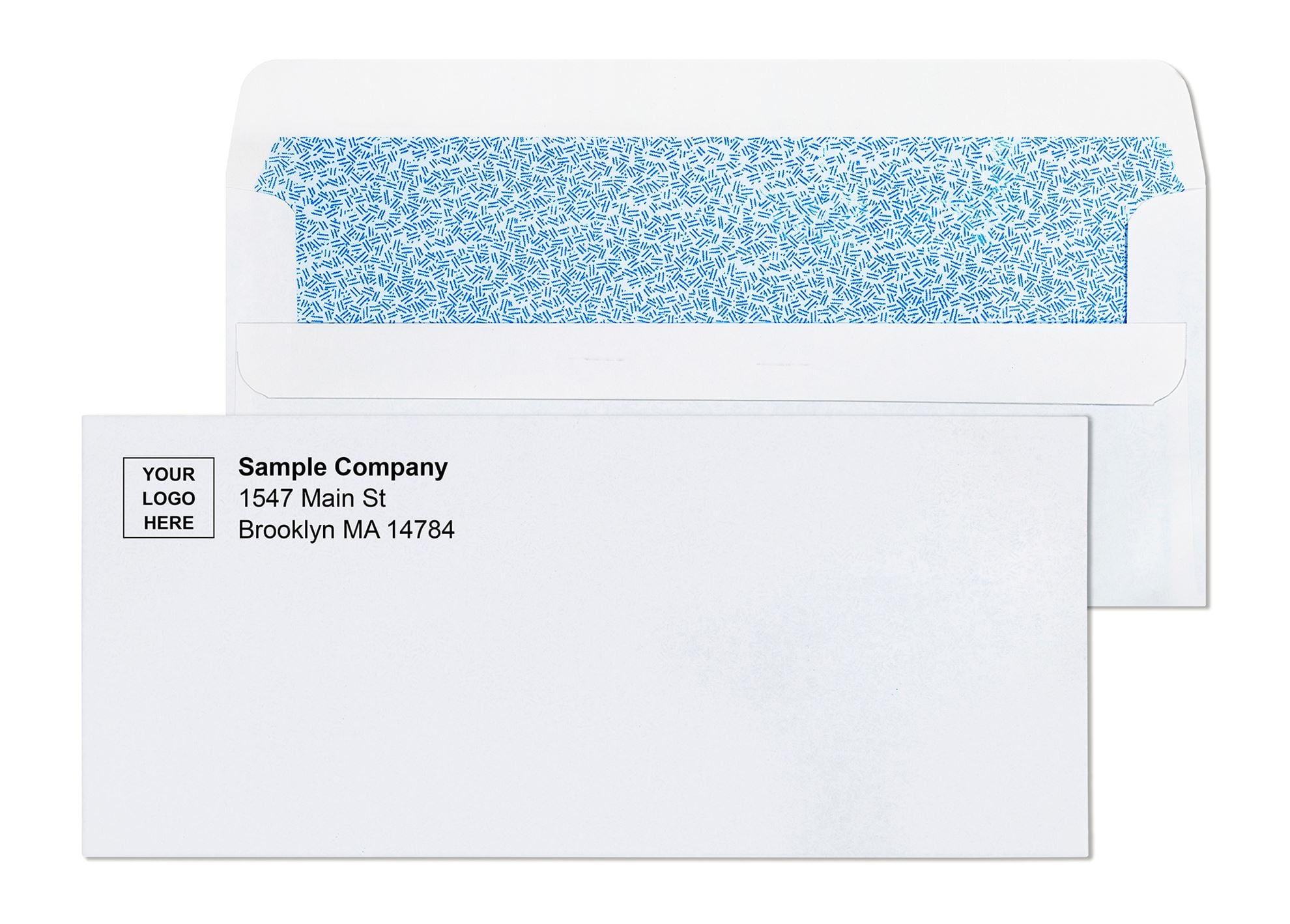
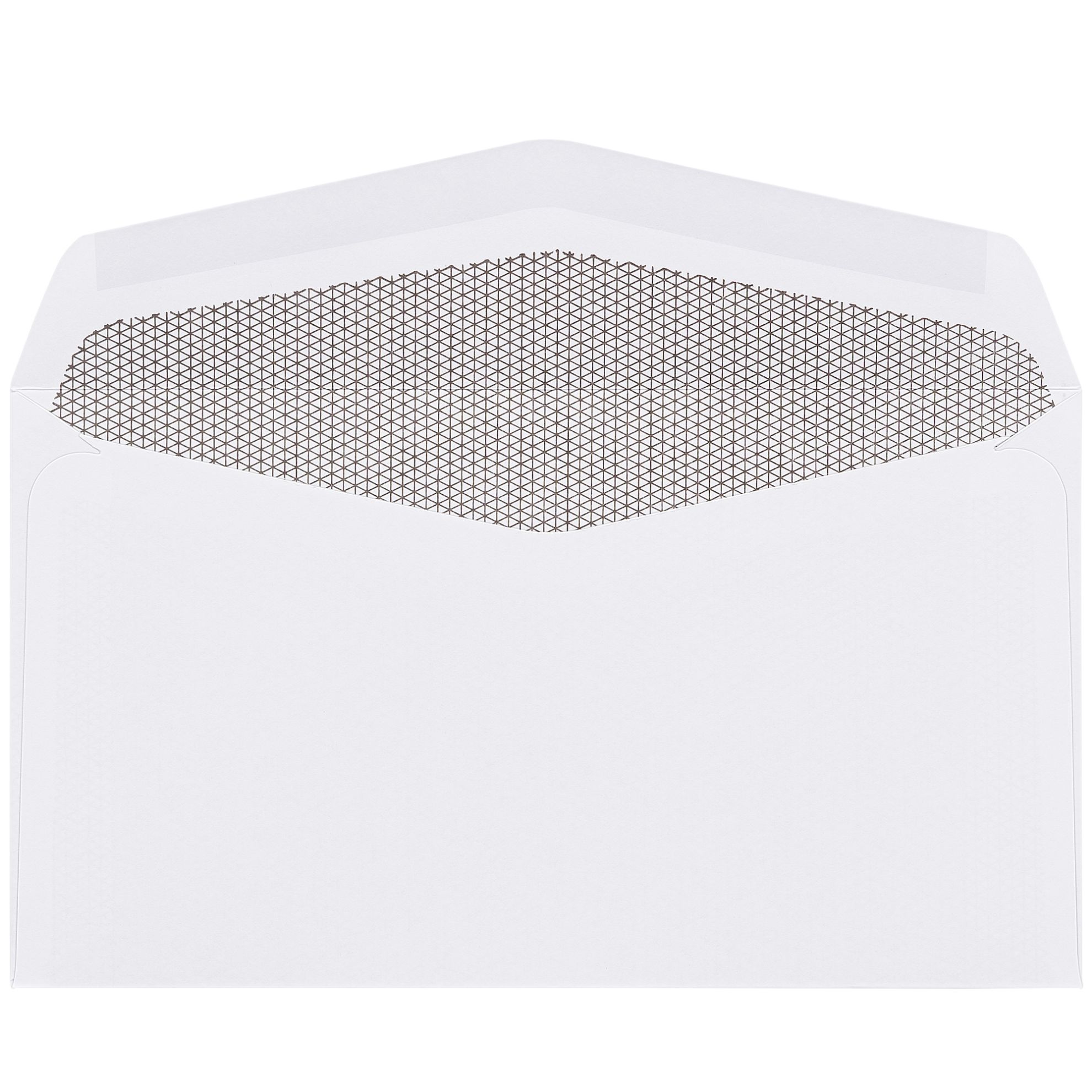
Security tinted interior with a peel-and-seal closure for moisture-free sealing. Peel the liner and press the flap closed. No licking or moistener needed. Preferred for programs serving older respondents or offices without envelope moisteners. The same interior tinting blocks read-through on sensitive returned documents.
Security Tinted Gummed Flap
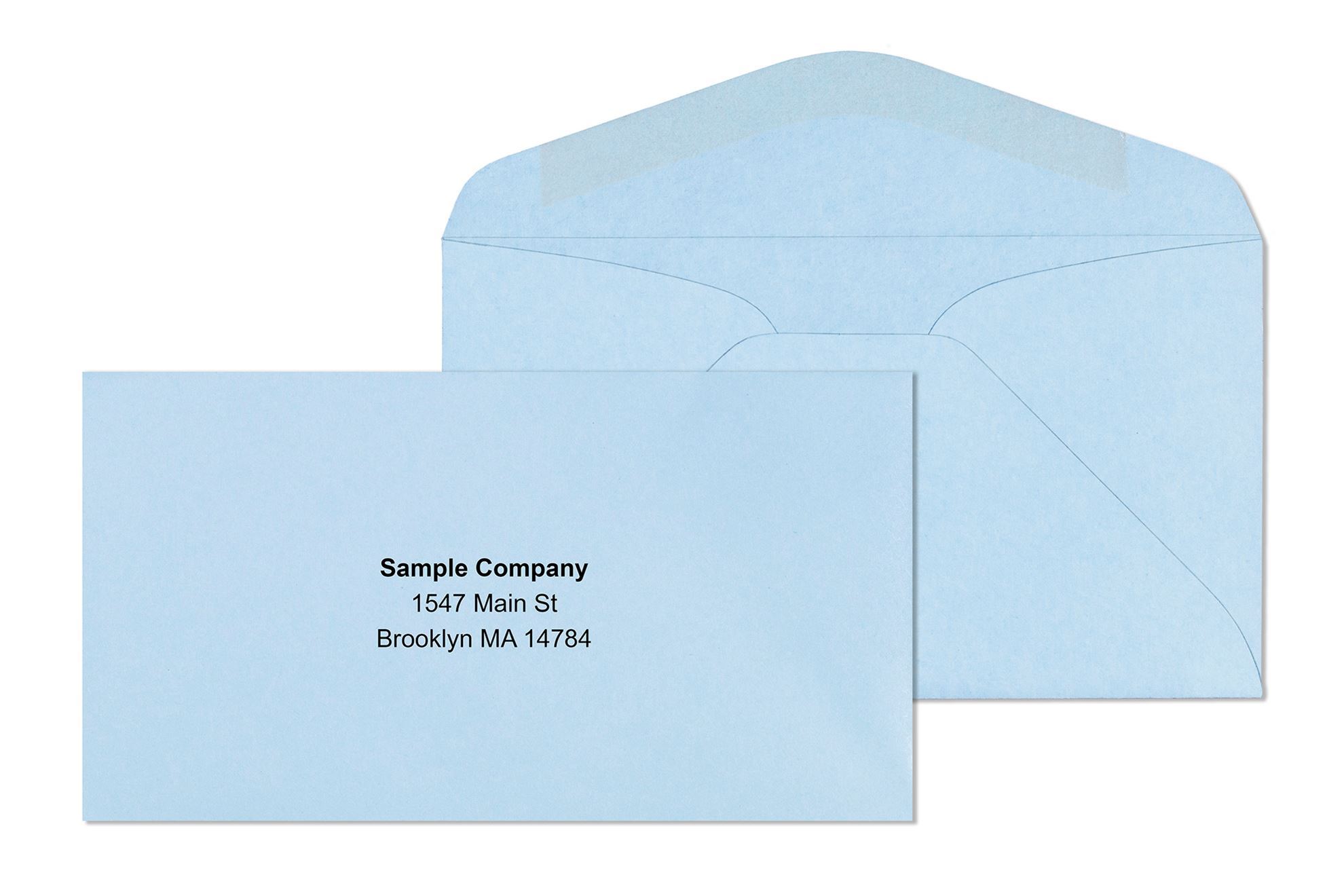
#6 3/4 Colored Wove Gummed Flap Envelopes
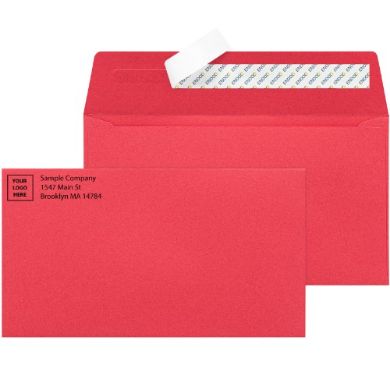
Available in assorted colors with a gummed flap. Used by direct mail programs and billing reply programs that color-code outgoing and return envelopes by account type, department, or campaign. Same 24 lb wove stock as the plain white format. Available with custom printing on the face.
Security Tinted Peel-and-Seal
The security tinted format is also available with a peel-and-seal closure for programs where recipients prefer moisture-free sealing. The peel-and-seal strip is covered by a protective liner. To seal, peel the liner and press the flap closed. No moisture required. This format is preferred for programs serving older respondents or in environments where envelope moisteners are not available. See #6 3/4 Security Tinted Peel-and-Seal Envelopes for full details on this format. For a complete comparison of gummed and peel-and-seal closures across all sizes, see Peel-and-Seal vs Flip-and-Stick Self-Seal Envelope Guide.
Remittance Format with Extended Flap
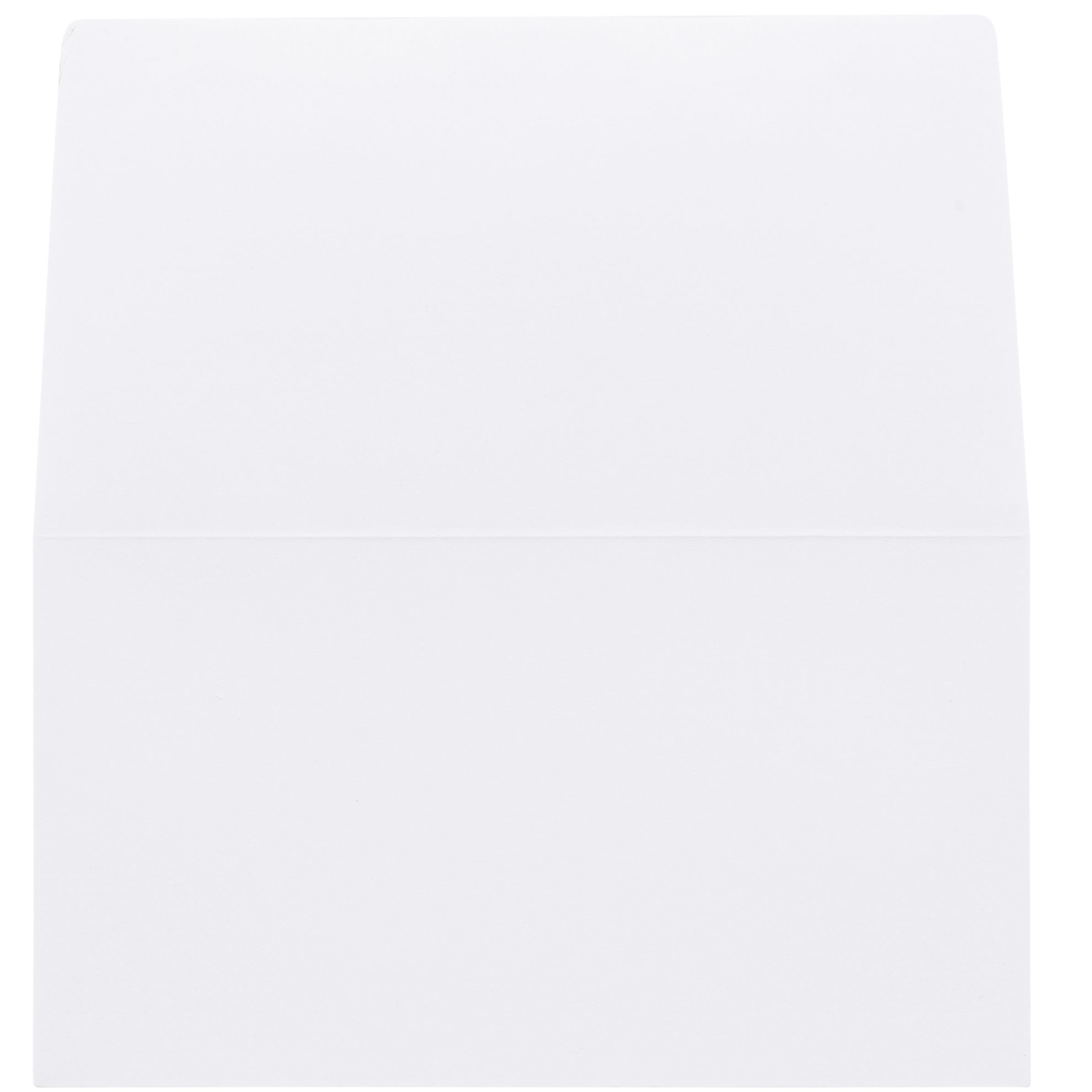
#6 3/4 Remittance Envelopes Gummed Flap
The extended flap is oversized and serves as the printed response form itself. Gift amount checkboxes, donor name fields, payment options, and gift purpose lines are printed directly on the flap. When the donor fills in the form and seals the envelope, the flap folds down to become the outward face of the piece. Replaces a separate reply card in donation programs. Available with custom-printed flap artwork. See the full design guide at the 6 3/4 Remittance Envelope Template Guide.
All four formats mail at the same USPS First-Class letter rate. The format choice affects the program type and the security level of the returned contents, not the postage cost. Browse the complete selection at 6 3/4 Envelopes.
Postage Comparison: #6 3/4 vs #9 Reply Envelope
Both the #6 3/4 and the #9 reply envelope mail at the same USPS First-Class letter rate. The postage rate itself is identical. The practical difference appears in outgoing package weight, which can affect whether a single stamp covers the outgoing #10 or whether a second stamp is required.
| Factor | #6 3/4 Envelope | #9 Reply Envelope |
|---|---|---|
| Dimensions | 3-5/8 x 6-1/2 inches | 3-7/8 x 8-7/8 inches |
| Postage rate (outgoing as CRM) | $0.82 letter rate (1 oz) | $0.82 letter rate (1 oz) |
| Postage rate (return, stamped) | $0.82 letter rate (1 oz) | $0.82 letter rate (1 oz) |
| Envelope weight (enclosed, unsealed) | ~3.5 to 4 g | ~5 to 6 g |
| Outgoing #10 package weight (1 letter + reply envelope) | ~14 to 16 g (under 1 oz) | ~16 to 18 g (near 1 oz) |
| Risk of 2-stamp outgoing cost with multiple inserts | Lower | Higher |
| Clearance inside #10 | 2-3/4 inch length clearance | 3/8 inch length clearance |
| Standard BRM size | Less common | Yes, standard for BRM |
| Remittance large-flap format | Yes, standard | Available |
For programs that use Business Reply Mail at volume, the #9 is more widely specified in USPS BRM design standards and is easier to set up with a BRM permit. For nonprofit and donation programs that include multiple inserts in the outgoing #10 and need meaningful clearance, the #6 3/4 is the more practical choice and more reliably keeps the outgoing package within the single-stamp weight bracket.
For the full #9 reply envelope guide including BRM design requirements, nesting math, and format variants, see #9 Reply Envelope: Complete Guide to Size, Uses, BRM and Formats.
What Customers Say
Verified Purchase: #6 3/4 White Business Envelopes Gummed Flap Wove Custom Printed Reply Return
"I am so happy with my envelopes. Great price and free shipping! AND they arrived fast. Thank you so much! I will be back in the future for more...."
Verified Purchase: #6 3/4 White Business Envelopes Gummed Flap Wove Custom Printed Reply Return
"As always, our order was delivered quickly and printed perfectly! Thank you for the wonderful customer service!"
Verified Purchase: #6 3/4 Security Tinted Business Envelopes Gummed Flap Reply Return Custom Printed
"Envelopes arrived perfect! I love the security tint!! Its a great security feature."
Related Postage Guides by Envelope Size
Business Envelopes publishes postage guides for every major envelope size we carry. If you are managing a mailing program that uses multiple sizes, the links below cover each size with the same level of detail as this guide.
- #10 Envelope Postage: Stamps and Cost Guide for 2026
- 6x9 Envelope Postage: Letter Rate vs Flat Rate Guide
- 10x13 Envelope Postage: Stamps and Cost Guide 2026
- How Many Stamps Do I Need? Complete Guide by Envelope Size
Related Guides for #6 3/4 Programs
The links below cover the operational details of running programs that use #6 3/4 reply and remittance envelopes, from designing the flap to selecting security tinting to setting up automated sealing.
- #6 3/4 Envelope Size and Format Guide
- 6 3/4 Remittance Envelope Template: Design Guide
- Remittance Envelope Guide
- Security Tinted Envelopes Guide
- Envelopes for Nonprofits Guide
- Business Reply Envelope Guide
- Automated Mailing Envelope Guide
- How to Seal an Envelope: The Right Way for Every Seal Type
- Payroll Envelope Guide
- Check Envelope Guide
Why Order #6 3/4 Envelopes from Business Envelopes
Business Envelopes has supplied #6 3/4 reply and remittance envelopes to nonprofits, healthcare billing programs, financial services organizations, schools, and churches across the United States since 1997. Every format in the #6 3/4 range ships from stock with no minimums and free ground shipping on every order to the contiguous 48 states.
- Blank stock ships same or next business day
- Custom-printed orders ship within 7 to 10 business days from proof approval
- PDF proof before every production run
- Artwork stays on file for reorders
- No minimums on any order
- Free ground shipping site-wide
For the complete range of business mail sizes including outgoing envelopes, window formats, and security stock, browse regular envelopes, window envelopes, printed envelopes, and #10 envelopes. For organizations running high-volume automated programs, see the Automated Mailing Envelope Guide for guidance on inserter-compatible formats and stock specifications.